How Long Does Swedish Candy Last? Storage and Shelf Life
How long Swedish candy lasts by type, the storage conditions that matter most, and how retailers rotate pick-and-mix bins with FIFO to keep stock fresh.
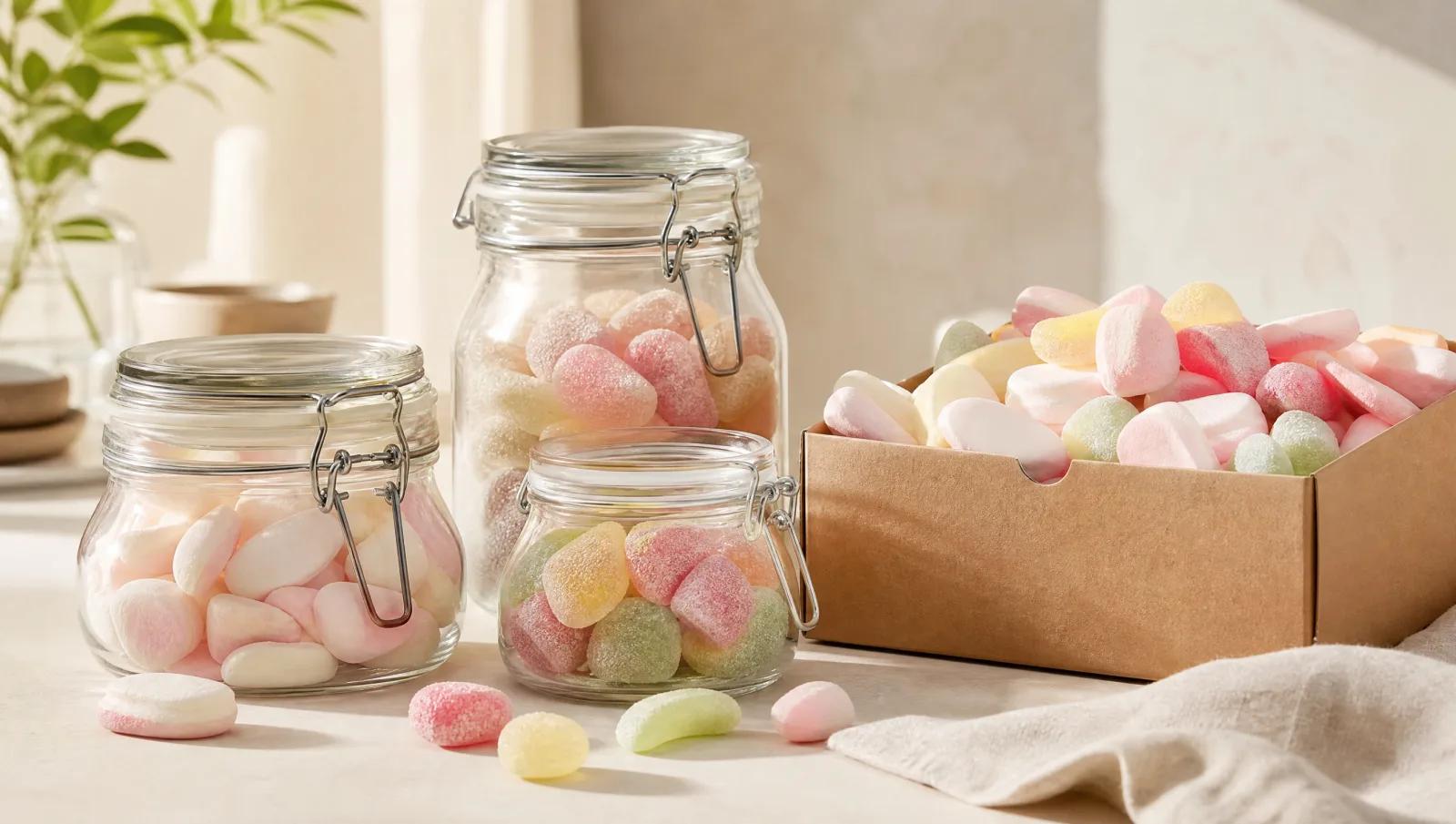
Unopened and stored cool and dry, Swedish candy keeps well past the point most stores sell it. Every case we ship carries a printed best-before date, which is the only number that applies to your stock. Gummies and chews hold up longest, foam candy dries out first, and humidity is the real enemy.
We import Swedish and European candy direct and ship it from our Santa Fe Springs, California warehouse, so we store a lot of candy and watch how it behaves. Below is what happens to each texture over time, how to store it, and how to rotate a pick-and-mix wall so nothing goes tired on you.
Why we will not give you a number
You will find blogs that confidently state a set number of months for gummy candy. We are not going to, because the date is set by the manufacturer for that specific recipe and production run, and it is printed on the case and the retail pack. Two sour gummies from different makers can carry very different windows.
So the rule is simple. The best-before date on the pack is your number, and everything below is about the conditions that decide whether the candy reaches it in good shape.
Note too that best-before is a quality date, not a safety cliff. Sugar confectionery is a low-moisture, high-sugar environment that is inhospitable to microbial growth. What degrades is texture, aroma and appearance, and that degradation is driven almost entirely by heat and humidity.
Shelf life by candy type
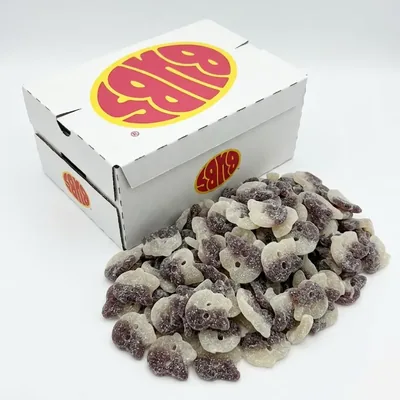
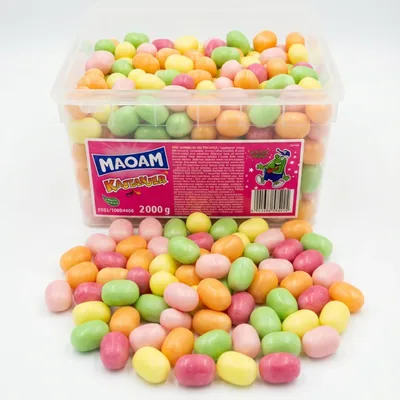
Gummies and chews. This is the most stable end of the category and the backbone of most Swedish assortments. Pieces like the BUBS skulls, BUBS Cola Skulls and Bubs Lemon/Raspberry Skulls, or chews such as Happy Chews from Haribo, hold their bite for a long window when they are kept cool and sealed. Over time they lose moisture and get progressively firmer rather than spoiling.
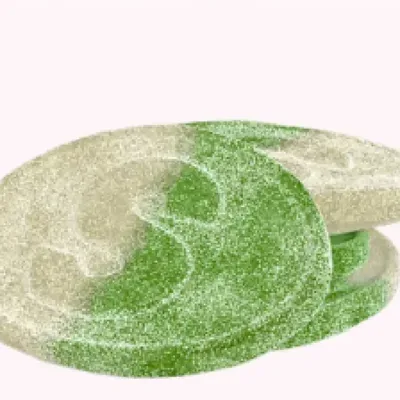
Sugar-coated and sour gummies. These are the ones humidity punishes fastest. The sour coating on lines like S Marke Sour Apple or S Marke Sour Blue Raspberry is hygroscopic, meaning it pulls moisture out of the air. In a warm, humid room the coating dissolves, the pieces go sticky and clump, and the sour hit dulls. The candy is fine, but it no longer looks or eats the way it should.
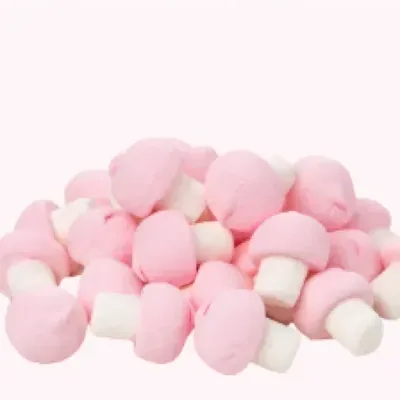
Foam candy, or skum. The shortest practical window in a Swedish range. Foam is mostly trapped air, so it depends on holding a delicate aerated structure. Franssons Foam Strawberries/Skumjordgubbar from Franssons and Bulgari Marshmallow Mushrooms from Bulgari go from pillowy to dense and dry sooner than a gummy will. The same applies to Frisia Cola Foam Skulls Vegan from Frisia. Once foam has dried out it does not come back, so buy it in tighter quantities and sell through it faster. Our guide to Swedish foam candy explains why the texture is so fragile.
Chocolate. Worth mentioning because people ask, though our own range is gummy, chew and foam rather than chocolate. Chocolate is the most temperature-sensitive category in any candy store, because warm and cool cycles pull sugar or fat to the surface and leave a pale bloom, harmless but unsellable. If you carry it, give it the coolest and most stable spot you have.
Textures that age differently

The four things that actually shorten shelf life
Heat. Warm storage softens gummies, accelerates moisture loss and can fuse pieces into a block inside a sealed bag. A stable, moderate room temperature beats a cool room that swings.
Humidity. The biggest single factor for sour and sugar-coated candy. Damp air turns coatings sticky and makes pieces clump. Dry storage matters more than cold storage.
Air. Once a bag or case is opened, the candy starts exchanging moisture with the room. Reseal properly, clip the liner, or decant into an airtight container.
Light. Direct sunlight fades color and raises temperature at the same time. Keep cases away from a sunny window and out of a hot storefront display.
Do not refrigerate gummy candy as a default. Fridges are humid, and moving candy between cold storage and a warm room encourages condensation, which is exactly the stickiness you were trying to avoid. Cool, dry and dark beats cold.
Storing it at home
Keep the bag sealed, in a cupboard rather than on a sunny counter, and clip or reseal anything you have opened. If your home runs humid, an airtight container does more for sour candy than anything else.
Storing it in a store or stockroom
Keep cases off the floor and away from exterior walls, which is where temperature and damp show up first. Give the stockroom stable, dry air. Store foam lines where they are easy to reach, because they are the ones you want to move first. Keep the original case with its printed date until it is empty, so anyone can check without hunting.
Our guide to stocking Swedish candy covers how much to hold per line. The best storage in the world does not fix over-ordering.
FIFO and pick-and-mix bin rotation
For a pick-and-mix wall, rotation is the whole game. A few rules that work.
Run strict FIFO. Older stock goes to the front of the shelf and into the bin first. New cases go to the back.
Never top off a bin. Pouring fresh candy on top of older candy buries the oldest pieces at the bottom, where they sit until someone scoops them stale. Empty the bin, wipe it, then refill.
Write the received date on the case when it lands, not just the best-before. It makes FIFO visible to whoever is filling bins that morning.
Size bins to your actual turn. Two smaller bins that empty weekly will always taste better than one big bin that empties monthly.
Check foam more often than the gummies. Squeeze a piece, and if it has lost its spring, the bin has been standing too long.
The full mechanics of building and running the wall are in our guides to running a pick-and-mix and the smagodis pick-and-mix wall.
Buying in quantities you can actually turn
The cleanest fix for shelf life is not a storage trick, it is order sizing. We import direct, so case prices come in under most US distributors, and orders ship DDP from California with US labels and duties already paid. Because you order by the case, mix and match, with no order minimum, you can take one case of a slow foam line and three of a fast-moving sour instead of forcing a fixed assortment onto your shelf. Our wholesale Swedish candy guide covers ordering and freight, including pallet freight on orders of $2,000 or more.
Want stock that turns before it tires?
Browse the range in our store, size an order you can actually sell through with the bulk order tool, or contact us and we will help you set case counts per line. We ship DDP from California, by the case, mix and match, with no order minimum.
Frequently asked questions
How long does Swedish candy last?+
Longer than most people expect when it is stored cool, dry and sealed. The exact window is set by the manufacturer and printed as a best-before date on the case and pack. We do not publish generic month counts, because they vary by recipe and production run.
Is candy still safe to eat after the best-before date?+
Best-before is a quality date rather than a safety date. Sugar confectionery is a low-moisture environment, so what changes is texture, aroma and appearance rather than safety. Use your judgement, and do not sell anything past its printed date in a retail setting.
Why has my sour candy gone sticky?+
Humidity. Sour coatings pull moisture out of the air, which dissolves the coating and makes pieces clump. Store sour and sugar-coated lines in an airtight container in a dry room, and keep them out of a warm storefront.
Should I keep gummy candy in the fridge?+
Generally no. Fridges are humid, and moving candy between cold and warm air causes condensation on the surface. Cool, dry and dark storage at a stable room temperature is better for gummies and chews.
How often should I rotate a pick-and-mix bin?+
Empty and refill rather than topping off, run strict FIFO, and check foam lines more often than gummies because foam dries out first. Size bins to your real weekly turn so every bin empties on a predictable cycle.
Keep reading

Gustav Lindqvist · Candy Master
Gustav grew up in Sweden on a strict Saturday-candy schedule, mixing his lördagsgodis bag at the lösgodis wall before he could spell salmiak. He has spent years tasting his way across Scandinavian candy, and now curates the range at TheSweetsTruck, from BUBS sour skulls to the saltiest licorice most people cannot finish.
Last updated 8/8/2026