Swedish Candy in Stockholm: What to Look For
A culture-first guide to Swedish candy in Stockholm: how lösgodis walls work, what lördagsgodis means, and which candy categories are worth trying.
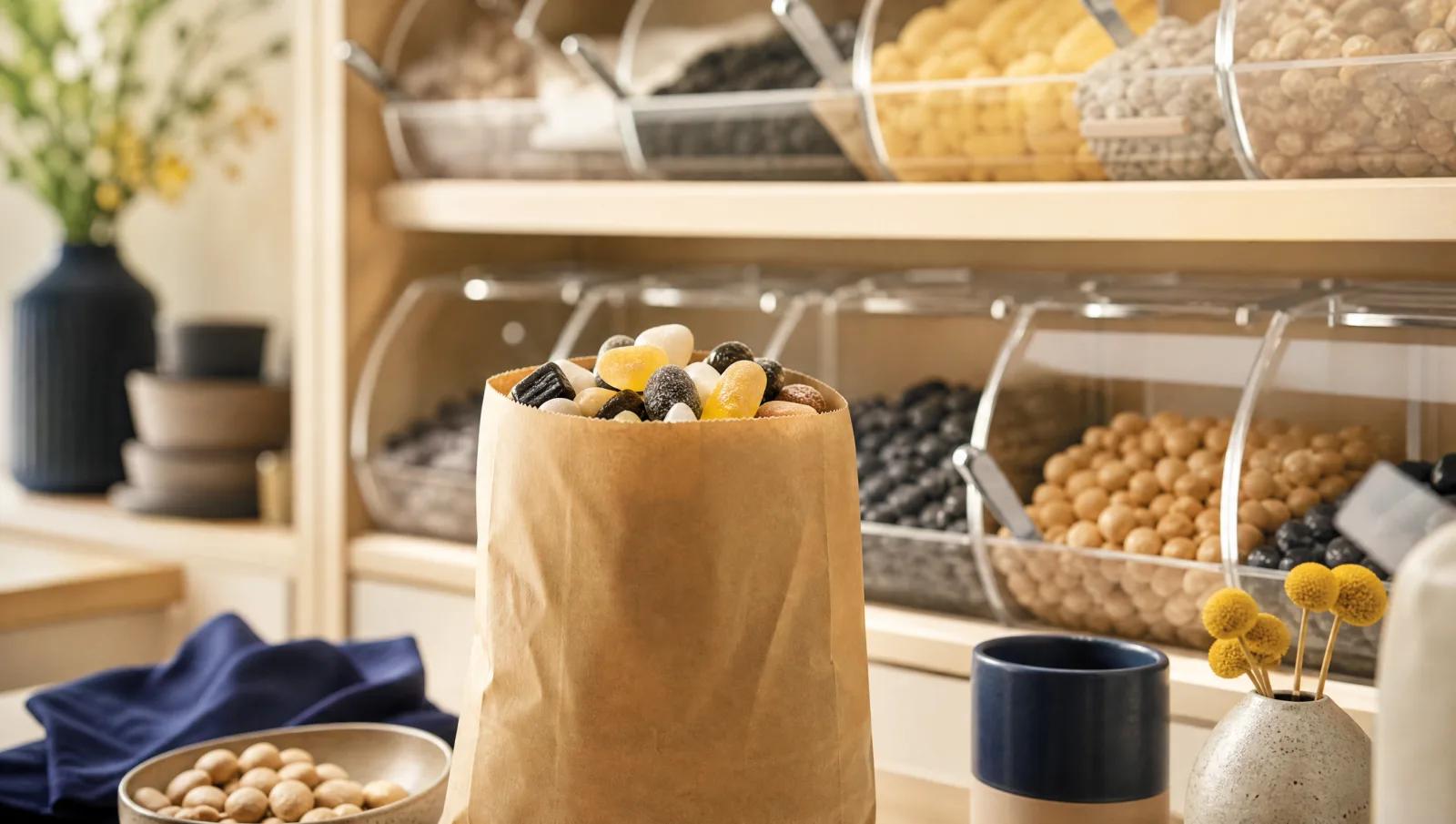
In Stockholm, the candy is not in a specialty destination. It is in the pick-and-mix walls of ordinary supermarkets, kiosks, and cinemas, sold loose by weight. Look for the lösgodis wall, go on a Saturday to see the ritual at full volume, and prioritize the categories you cannot get at home: skum, sour skulls, nappar, and salty licorice.
We ran candy shops in Sweden before starting TheSweetsTruck, and the advice we give visitors is always the same: stop hunting for the one famous store. Stockholm's candy culture is horizontal, not vertical. It is spread across hundreds of unremarkable walls in places you would walk past. Learning to read one of those walls will do more for you than any list of addresses.
We are deliberately not naming shops here. Retail turns over, addresses change, and a guide that sends you to a closed door is worse than no guide. What does not change is the format, the vocabulary, and the categories. Here they are.
Find the wall, not the store
The Swedish word is lösgodis, meaning loose candy. It refers to open bins or dispensers of unpackaged candy that you scoop yourself and pay for by weight. You will find lösgodis walls in:
- Large supermarkets, usually near the entrance or the checkout run
- Convenience stores and kiosks, in a scaled-down version
- Cinemas, often with a smaller but well-chosen selection
- Dedicated candy shops, which have the widest walls and the highest turnover
The related word is smågodis, literally small candy, which you will see on signage above the bins. Our explainers on the pick-and-mix wall and the lösgodis bag go deeper on both.
How buying it works
The mechanics are simple once someone tells you.
Price is by weight, not by piece. Signage shows a price per hekto, written as "hg" and meaning 100 grams, or sometimes per kilo. Every bin on the wall is usually the same price, which is the point: you are paying for the bag, not for making good choices.
Take a bag and a scoop. Paper bags and either tongs or a scoop sit at the end of the wall. You fill your own. Nobody is going to help you and nobody is watching.
Weigh at the register. In most stores the cashier weighs the bag. Some larger stores have a self-service scale that prints a barcode label.
Take small amounts of many things. This is the mistake visitors make. A wall of eighty bins is an invitation to sample, not to load up on one favorite. Five pieces of fifteen different things beats a bag of one.
Do not stack sour and licorice against everything else. Sour sugar and salty licorice transfer flavor inside the bag. Experienced Swedes keep them separated or buy them in a second bag.
Saturday is the day
If you can time one candy stop, make it a Saturday afternoon. Lördagsgodis, literally Saturday candy, is a genuine national habit: candy is treated as a weekend thing rather than an everyday thing, and Saturday is when families do the wall together. The stores are busiest, the bins are fullest, and you get to see the ritual rather than just the product. We wrote about the origins of the habit in why Swedes eat candy on Saturdays.
The categories actually worth your bag space
Skip anything that looks like candy you can buy at home. Spend your weight on these.
Skum, or foam candy. This is the most distinctly Swedish texture on the wall: light, aerated, and closer to a soft meringue than an American marshmallow. It comes as mushrooms, strawberries, bananas, and ice cream cones. In our range, Franssons Foam Strawberries from Franssons, a craft producer in the candy-making town of Gränna, are the classic. They contain gelatin, so they are not vegan.
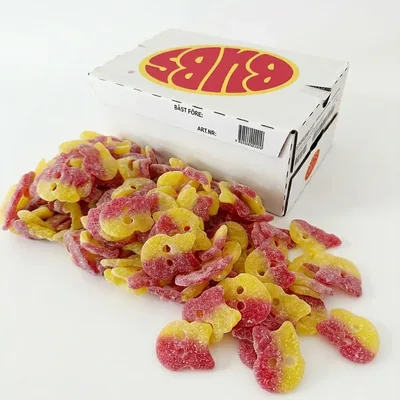
Sour skulls. A molded two-texture piece with a softer base and a chewier face, tumbled in sour sugar. BUBS is the name Swedes associate with the shape, and BUBS Lemon/Raspberry Skulls are gelatin-free and vegan.
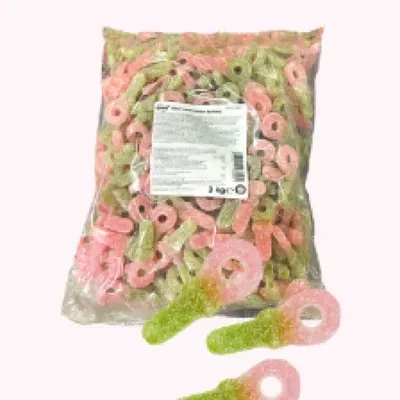
Nappar, or pacifiers. Pacifier-shaped pieces that are a permanent fixture on every wall. Sura Melonnappar Sour Melon Pacifiers are the melon version. They are gelatin-free and contain wheat, so not gluten-free.
Salty licorice. This is the one that divides visitors. Salmiak is licorice flavored with ammonium chloride, giving a sharp, saline, almost mineral hit that has no American equivalent. Try it once from a bin before you commit to a bag. We do not currently carry salmiak or salty licorice, but our explainer on what salmiak is will prepare you.
Raspberry shapes. Raspberry is a bigger flavor in Sweden than in the US, and it shows up in dozens of formats. Hallonshots Grahns Raspberry Sour Shots from Hallonshots are the shot-glass shaped version, and they contain gelatin. Grahns Rasberry Twins from Grahns, one of Sweden's older confectionery houses, are gelatin-free.
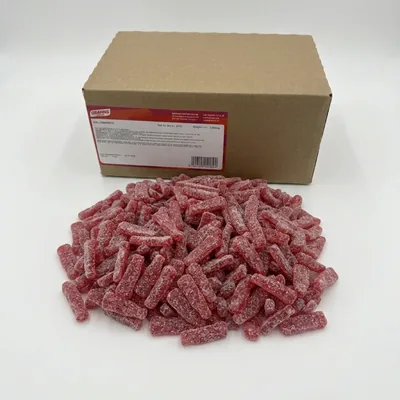
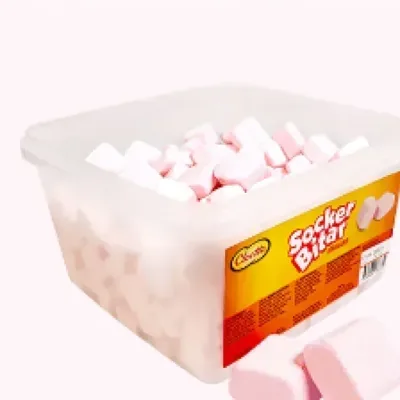
Sockerbitar, or sugar cubes. Soft, sugared cube-shaped pieces. Strawberry Sugar Cubes / Sockerbitar Jordgubb are the strawberry version and they contain gelatin.
The Stockholm wall, in case packs

A few words that help
You do not need Swedish to buy candy, but four words make the wall legible: godis (candy), surt (sour), skum (foam), and lakrits (licorice). Add saltlakrits for salty licorice and you can decode most of the signage. Our Swedish candy words glossary has the rest.
Getting it home, and what to do when you run out
Loose candy travels badly. It is heavy, it is priced by weight, and a paper bag does not survive a suitcase. The realistic move is to buy a modest bag for the trip and accept that the volume purchase happens after you land.
That is the gap we fill. We import direct from Swedish and European makers and ship from our Santa Fe Springs, California warehouse to the US and Canada, DDP, with US labels and duties already paid. If you run a shop, a cafe, or a cinema and you want to build a wall like the ones you saw in Stockholm, you can order by the case, mix and match brands, with no order minimum, at public Tier 1 list pricing. Our best Swedish candy roundup is a reasonable starting shortlist.
Building a wall of your own? Browse the full catalog, start a bulk order, or apply for a wholesale account. Accounts approve automatically, and if you want help choosing an opening assortment, get in touch.
Frequently asked questions
Where is the best Swedish candy in Stockholm?+
There is no single destination. The best approach is to find a lösgodis wall, which exists in most large supermarkets, kiosks, cinemas, and dedicated candy shops, and buy loose candy by weight. Dedicated candy shops have the widest walls, but supermarket walls have the highest turnover and freshest stock.
What is lösgodis?+
Lösgodis means loose candy: unpackaged candy sold from open bins that you scoop into a paper bag yourself and pay for by weight. It is the dominant way candy is sold in Sweden, and it is the reason Swedish candy assortments are so much wider than packaged-bag markets.
What is lördagsgodis?+
Lördagsgodis means Saturday candy. It is the Swedish habit of treating candy as a weekend event rather than an everyday snack, and Saturday afternoon is when pick-and-mix walls are busiest.
How much does pick-and-mix candy cost in Stockholm?+
It is priced by weight, usually shown per hekto (100 grams) or per kilo, with the same price across every bin on the wall. Prices vary by store and change over time, so read the signage rather than budgeting from a number you found online.
What Swedish candy should a first-time visitor try?+
Prioritize what you cannot get at home: skum (foam) pieces, sour skulls, nappar (pacifiers), raspberry shapes, and one small piece of salty licorice to see whether you like it. Take small amounts of many things rather than a lot of one.
Can I buy Swedish pick-and-mix candy in the US?+
Yes, through specialty importers. We import direct and ship bulk cases from California to the US and Canada, which is how most American shops build a Swedish pick-and-mix wall of their own.
Keep reading

Gustav Lindqvist · Candy Master
Gustav grew up in Sweden on a strict Saturday-candy schedule, mixing his lördagsgodis bag at the lösgodis wall before he could spell salmiak. He has spent years tasting his way across Scandinavian candy, and now curates the range at TheSweetsTruck, from BUBS sour skulls to the saltiest licorice most people cannot finish.
Last updated 8/1/2026