Candy Bouquets: How They're Built and What to Use
A real build guide for candy bouquets: the wrapped candies that hold shape, a step by step assembly, pieces per bouquet size, and the mistakes that ruin them.
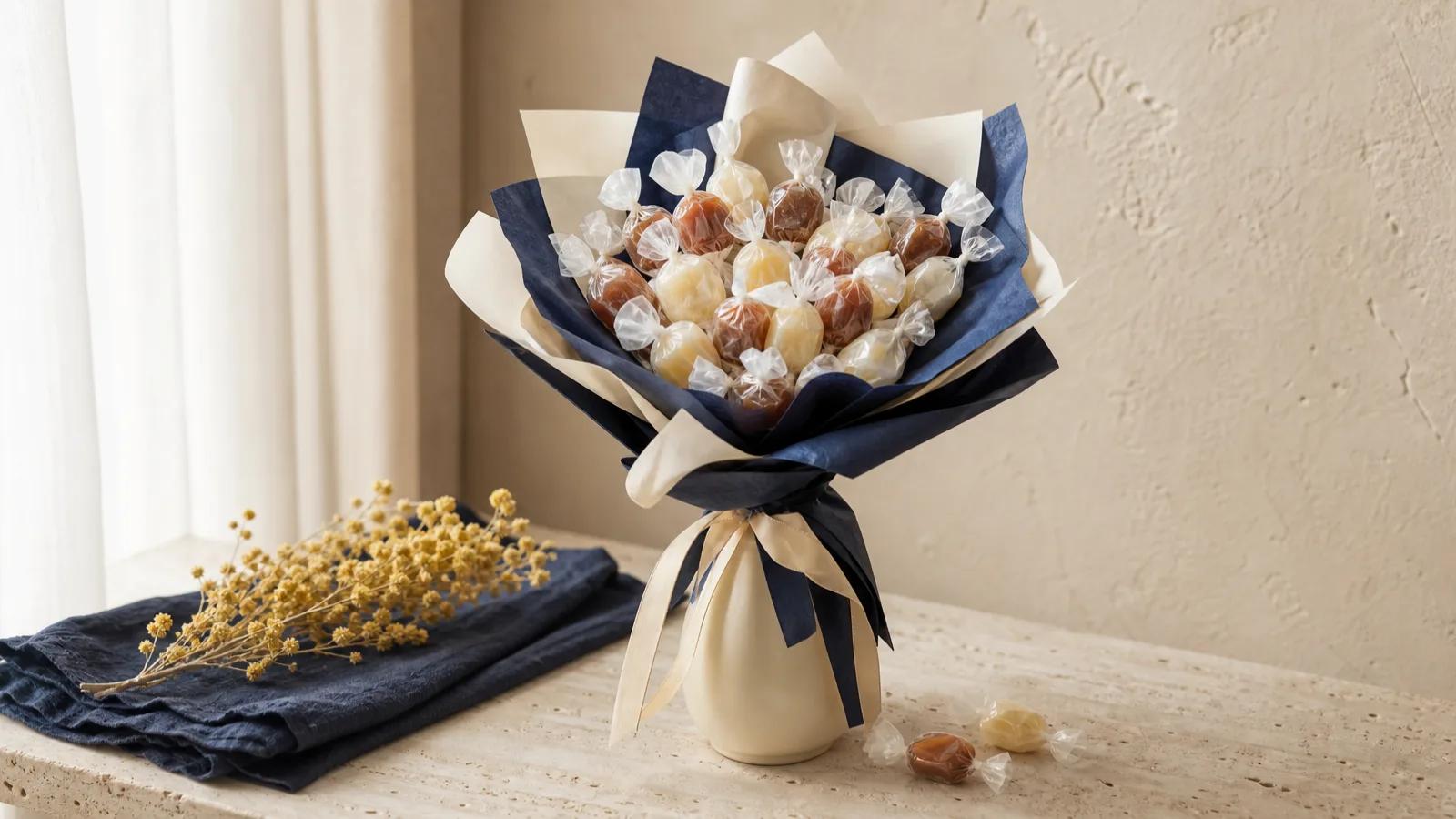
A candy bouquet is candy arranged like flowers: pieces mounted on sticks and set in a cup or vase. Wrapped candy and sealed 90 g bags do most of the work, because they mount as they are. Loose candy, foam and rolls fill out the shape, and foam is the lightest way to add volume.
What is a candy bouquet?
A candy bouquet is candy mounted on sticks so the bunch reads as flowers. Start from what mounts cleanly: the sealed BUBS Sour Skull bags attach to a stick as they are, because the wrapper takes the glue. The container, a mug, a tin or a small vase, becomes part of the gift.
Two styles cover almost everything sold. The cup style keeps the bunch short and dense, standing in a container you can hand over whole. The vase style uses longer stems and spreads wider, sized for a table.
A bouquet is one format among several. If you would rather build a box, our Swedish candy gift box ideas cover that version, and the flower candy post explains why candy shapes read as flowers at all.
What candy works best in a candy bouquet?
Start with sealed bags. They mount without repacking, they carry their own label, and the stick never touches the candy itself.
- BUBS Sour Skull bags (16 per case): sour, firm-chew skull gummies in sealed 90 g (3.2 oz) bags. The case is 3.2 lb (1.44 kg) at $24.90, about $7.84 per lb and about $1.56 a bag, computed from the published case price. Tagged gelatin-free, halal and vegan. This is the recognizable star piece.
- BUBS Raspberry/Cool Hallonskalle (12 per case): sweet raspberry foam, not sour, in sealed 90 g bags. The case is 2.4 lb (1.08 kg) at $28.00, about $11.76 per lb, and about $2.33 a bag. Tagged gelatin-free, halal and vegan.
- Vidal Strawberry Rolls: sweet, soft, chewy rolls, loose in a 6.6 lb (2.99 kg) case at $46.00, about $6.97 per lb. The ingredient list we hold names wheat flour, and the case carries no dietary tags in our data. A low row of rolls gives a bouquet its width.
- Sura Cola Pacifiers: sour cola in a flat, wide pacifier shape that shows well at the front. Loose in a 6.61 lb (3 kg) case at $49.90, about $7.55 per lb. Tagged halal and vegan.
- Vidal Foam Shells: light foam, sweet rather than sour, loose in a 4.4 lb (2 kg) case at $34.90, about $7.92 per lb. The ingredient list we hold includes gelatine, and the case carries no dietary tags in our data. Foam is the top layer.
Wrapped and mountable cases we stock

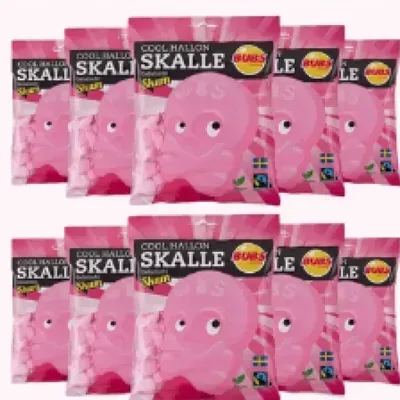
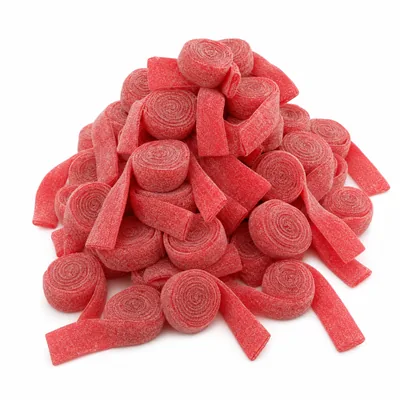
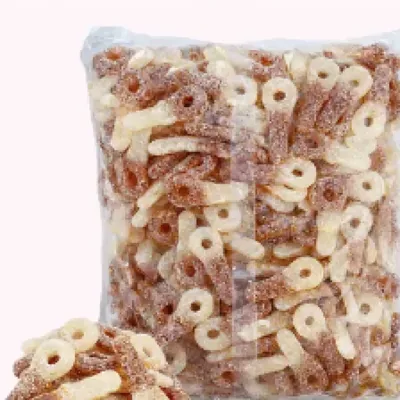
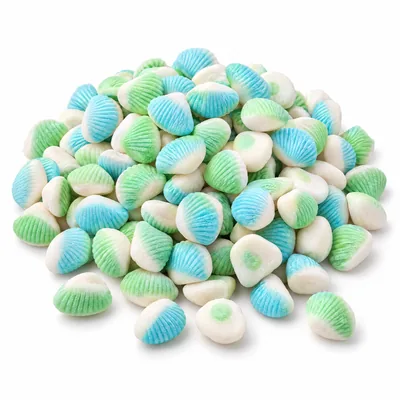
Four formats carry the whole craft, and they behave differently on a stick:
- Wrapped pieces and sealed bags: mount as they are. The wrapper takes the adhesive, which is exactly what you want.
- Loose candy bagged into cones: costs less per pound, but each piece needs a small cellophane bag, twisted under the candy and taped at the twist.
- Foam: the lightest option per volume, roughly a third of a gummy's weight at the same size, so it adds height without strain.
- Soft fudge and bonbons: too soft to spear. Keep them boxed beside the bouquet rather than on a stick.
How do you build a candy bouquet step by step?
- Choose the container first. A mug, a tin or a small vase sets the scale of the whole bouquet. Line it with tissue or paper so the mechanics stay hidden.
- Give the sticks something to stand in. A fitted foam disc or a scrunched paper base holds the stems upright. For a light bunch, tissue alone will do.
- Set the palette. Two or three colours plus one neutral. A bouquet reads as flowers when the colour is restrained, and as a candy aisle when it is not.
- Cut the stems to a mix of lengths. About 8, 10 and 12 inches (20, 25 and 30 cm). Long stems go to the back, short ones to the front, which is what makes the bunch look full.
- Attach wrapped candy to its stick. A dab of craft glue or a wrap of tape on the wrapper only. Keep adhesive off the candy itself, always.
- Bag the loose candy into small cones. Twist the cellophane under the candy and tape that twist to the stick, so the candy sits clear of the fixing.
- Build from the outside in. Tall pieces at the back, light foam on top, heavier pieces low and forward. Check the silhouette from a few steps away, not from above.
- Finish and label. Tuck tissue into the gaps, tie a ribbon at the base, and add a card naming the flavours. Keep sour pieces in their wraps, because a loose sour coating dusts foam.
How many pieces does each bouquet size need?
As example arithmetic, plan in mounts, where one mount is one candy on one stick:
- Small (a cup): 12 to 15 mounts.
- Medium (a mug to a small vase): 25 to 30 mounts.
- Large (a vase): 45 to 55 mounts.
Counted at about 5 g per loose piece, 15 mounts weigh about 2.6 oz (75 g), 30 mounts about 5.3 oz (150 g), and 50 mounts about 8.8 oz (250 g). Sealed bags change the math: count each 90 g bag as one mount, and a medium bouquet built mostly from bags takes 8 to 10 of them, roughly 1.6 to 2 lb (720 to 900 g) of candy. Build by look, then weigh the finished bunch if it has to ship.
Two case facts help the planning. A 16 bag sour case covers a medium, mostly bagged bouquet at the stated 8 to 10 bags, with plenty left for cup-size builds. A 6.6 lb rolls case fills the width of a large bouquet several times over, so one case covers a whole event's worth of builds.
What are the common candy bouquet mistakes?
- Adhesive where it should not be: glue on the wrapper, never on the candy. If a piece looks doubtful, rebuild it rather than serving it.
- A top-heavy bunch: heavy pieces placed high make the bouquet lean and the sticks bend. Keep the weight low and the foam up top.
- Dry, dusty foam: foam loses its spring as it dries out. Build from fresh cases and keep spare pieces sealed until build day, because tired foam shows in photos even when it still tastes fine.
- Sour loose against foam: the coating rubs off and dusts everything pale. Keep sour pieces in their wraps or their own cones.
- Heat before handoff: a bouquet left in a warm car fuses soft pieces together. Do not refrigerate it either, because cold candy collects condensation in a warm room.
- Too few pieces: a sparse bouquet reads as sticks with candy on them. Use the size table above, then add a filler layer of foam to finish the shape.
How do you store and carry a completed bouquet?
Build on the day of the event where you can. Store the finished bouquet cool and dry, out of direct sun, and away from radiators and window sills.
Carry it upright by the base, not by the stems, and keep it out of a hot car trunk. If the bouquet is a gift that has to wait a day, unopened cases hold their quality for months, so build the night before rather than a week ahead, and keep the finished piece in the coolest room in the house.
Where do shops buy candy for bouquets in bulk?
Bouquets are a DIY format, and shops that sell them buy the same cases that fill candy tables. If you build tables beside bouquets, the candy buffet ideas guide covers themes and vessels, and the candy charcuterie board shows the same stock laid out flat.
For shops and event sellers: open a wholesale account at the application page, and plan a full event build on the bulk order page. Order by the case, mix and match, no US order minimum. Ordering takes a free wholesale account, and applications approve automatically.
The work side matters as much as the candy. Sanded sour pieces and foam behave differently in a hot display window, so build in the morning, keep sours in wraps, and rotate the stock that sits out. A case that lives in a cool, dry stockroom will outlast a display piece by a wide margin.
Bouquet building is a small craft with a low entry cost. Browse the bags and loose cases in the store, and when you want the wider event picture, our wedding and event candy bar guide covers how the same candy is portioned and displayed.
Frequently asked questions
What is a candy bouquet?+
A candy bouquet is candy mounted on sticks and arranged in a container so the bunch reads like flowers. Most builds use wrapped or sealed candy for the visible blooms, with foam and bagged loose pieces filling out the shape. The container, such as a mug, tin or vase, is part of the gift and also holds the stems.
What candy do you use for a candy bouquet?+
Anything that mounts cleanly: sealed 90 g bags, wrapped candy, and foam shapes. From our range, the BUBS Sour Skull and Raspberry Hallonskalle bags are the easiest blooms, and they are tagged gelatin-free, halal and vegan. Loose rolls, pacifiers and foam shells work when bagged into small cellophane cones first. Soft fudge stays in a box.
How many pieces are in a candy bouquet?+
Plan in mounts: about 12 to 15 for a cup, 25 to 30 for a mug or small vase, and 45 to 55 for a large vase. Counted at about 5 g a piece, that is roughly 75 g of candy in a small bouquet and 250 g in a large one. Bags count as one mount each, whatever their weight.
How do you keep a candy bouquet fresh?+
Build as close to the event as you can, keep it cool and dry, and out of direct sun. Do not refrigerate it, because cold candy collects condensation when it comes back to a warm room. Keep sour pieces in their wraps so their coating does not dust the foam, and store any unused pieces sealed in their original cases.
Can you use loose candy in a candy bouquet?+
Yes, and it is how most budget builds are done. Bag each loose piece or small cluster in a cellophane cone, twist the wrap under the candy, and tape the twist to the stick so the candy sits above the fixing. Rolls, pacifiers and foam shells all work this way, and the cone keeps hands off the candy.
How far ahead should you build a candy bouquet?+
For a gift or an event, build the day before at the earliest and the morning of where possible. The candy itself is shelf-stable, so the cases can arrive weeks ahead; it is the mounted, open bouquet that fades, because foam dries and sour coatings go tacky. Keep a finished bouquet sealed in cellophane until handoff.
Keep reading

Gustav Lindqvist · Candy Master
Gustav grew up in Sweden on a strict Saturday-candy schedule, mixing his lördagsgodis bag at the lösgodis wall before he could spell salmiak. He has spent years tasting his way across Scandinavian candy, and now curates the range at TheSweetsTruck, from BUBS sour skulls to the saltiest licorice most people cannot finish.
Last updated 10/23/2026