Candy Shrinkage and Waste: How to Measure and Control It
Where bulk and pick-and-mix candy actually disappears to, how to measure shrinkage by weight, working targets, and the controls that reduce it.
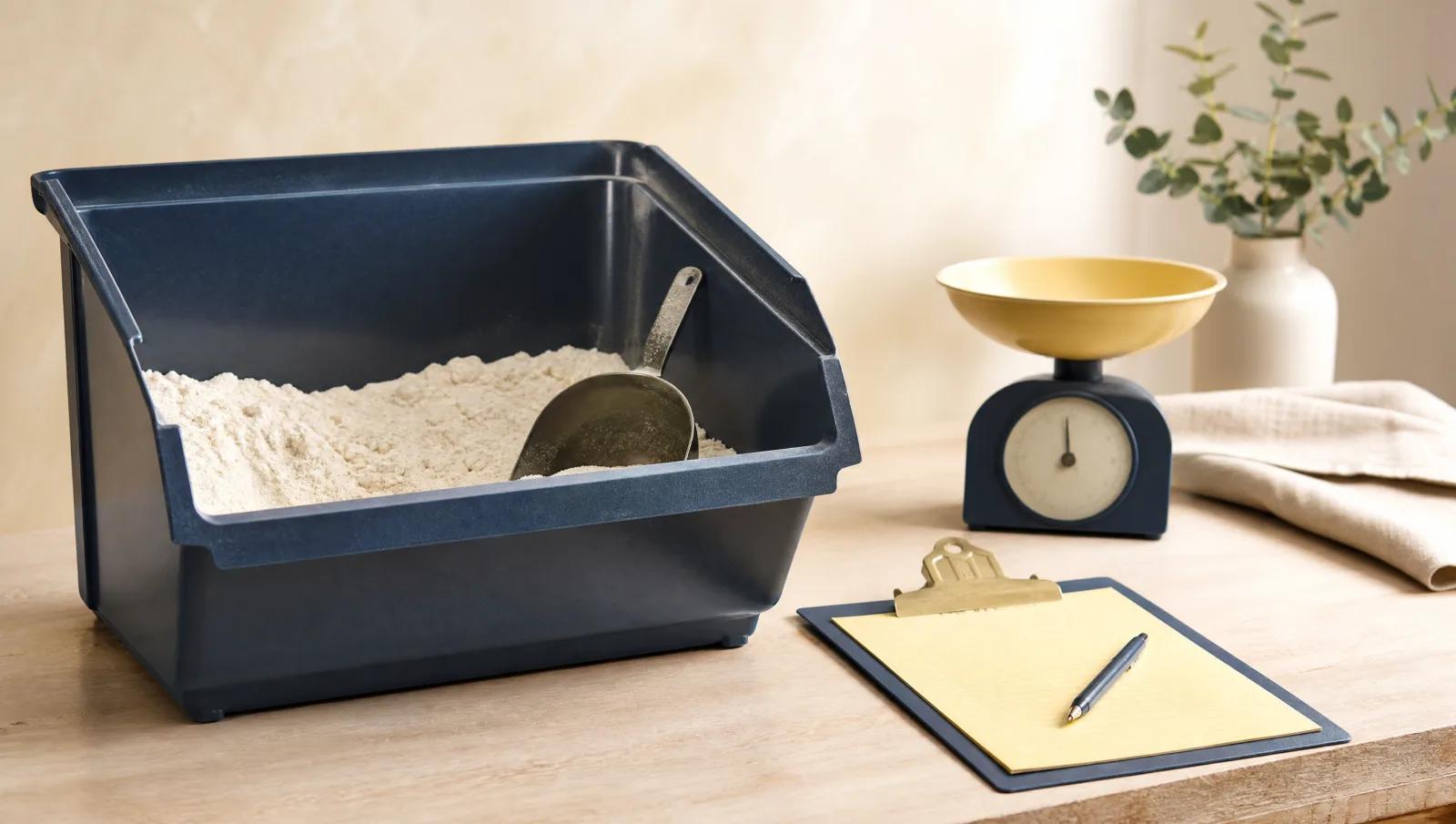
Bulk candy shrinkage comes from six places: sampling, spillage and over-scooping, humidity damage, stale stock, theft, and weighing errors. Measure it by weight, not by dollars: candy received minus candy sold minus candy on hand, divided by candy received. Fix the bin routine before you buy a camera. Every candy wall loses product. The question is not whether yours does but whether you know the number. Most retailers we talk to do not, and the ones who do are almost always running a tighter operation than the ones who do not.
Where it actually goes
In rough order of how much damage each one does on a typical wall.
Sampling. Staff eating the stock, and customers helping themselves at the bin. Both are real, both are usually informal, and neither shows up anywhere in your system. On a wall with open scoop bins this is frequently the single biggest line, and it is invisible precisely because nobody thinks of it as loss.
Spillage and over-scooping. Pieces that miss the bag, pieces that miss the bin on refill, and the dust and fragments that accumulate at the bottom of every bin. Foam candy is the worst offender here because it crushes, and crushed foam is unsellable weight that still counts as inventory on paper.
Humidity. Sugar candy is hygroscopic. It pulls moisture out of the air, and in a humid room the sour coating on a sour disc goes tacky, pieces fuse to each other, and the bin ends up as one block. Licorice does the opposite and hardens. Either way you throw it out.
Stale and expired stock. Usually created by a slow-moving bin that was filled to the top, or by half a case left open in the stockroom after a refill. Both are self-inflicted and both are fixable. Format-by-format shelf life is in Swedish candy shelf life.
Theft. Both customer and internal. It is real, it is smaller than most owners assume relative to the other five, and it is the one people spend money on first.
Weighing errors. Scales that drift, tare weights set for the wrong bag, staff who round in the customer's favour, and the classic case of a heavier bag being charged at the light bag's tare. This one is quiet and it compounds every single transaction.
How to measure it
Do it by weight. Dollars hide too much, because a dollar figure mixes shrinkage with margin and pricing changes.
> Shrinkage % = (weight received - weight sold - weight on hand) / weight received
Run it per bin, monthly, and you will find out very quickly which bins are the problem. Run it store-wide and you will get a number that is technically correct and operationally useless.
To make that possible you need three things you may not have today.
Weight received. You already have this. It is on the case. Every product page lists net case weight, and the reference table is in candy case weights.
Weight sold. Your POS knows this if you ring pick and mix by weight. If you sell by the bag at a flat price, you will need to log an assumed average bag weight and check it periodically by weighing twenty real bags.
Weight on hand. Weigh the bin. Tare the empty bin once, write the tare on the underside, and then a monthly count is one lift and one reading rather than a guess.
The whole exercise takes about twenty minutes a month for a twelve-bin wall once the tares are written down.
Working targets
We are not going to quote you an industry statistic, because the published retail figures cover everything from electronics to grocery and none of them are measured the way you would measure a candy bin. What follows are our own working targets, offered as rules of thumb rather than as survey data.
Shrinkage by weight: What we would read into it
Under 2%: Tight operation. Leave it alone.
2 to 4%: Normal for a busy open-scoop wall. Worth a routine check, not an investigation.
4 to 6%: Something specific is wrong. Usually one bin, one shift, or a humidity problem.
Over 6%: Investigate properly. At this level it is costing more than most people's marketing budget.
New walls run high in the first two or three months, because staff are learning portioning and you are learning which bins actually move. Do not panic at a bad first month. Do panic at a bad sixth month.
Whatever your number is, translate it into money once. On a wall doing meaningful volume, four points of shrinkage against your cost of goods is a real number, and seeing it in dollars is what gets a bin routine taken seriously. The margin arithmetic sits in candy profit margins.
Controls that actually work
Ordered by return on effort, which is not the order most people try them in.
Fill bins to the volume you will sell in two to three weeks, not to the top. This is the highest-leverage change on the list and it costs nothing. A half-full bin of a slow mover looks less abundant, and it also does not go stale. If a bin cannot turn a case in a month, it should not have a bin.
Never leave a part-case open. Either it goes in the bin or it goes into a sealed container with the date on it. Half a case sitting open in a warm stockroom is the most reliable way to create waste we know of.
Write a sampling policy and say it out loud. Not "no eating", which nobody obeys. Something like: staff take one piece from a designated open bag, not from the bins, and customers are offered a sample by a member of staff rather than helping themselves. A policy that people follow beats a policy that sounds strict.
Fix the humidity before you fix anything else. Lidded gravity bins instead of open scoop bins, air conditioning that actually runs, and no bin sitting in direct sun through a shopfront window. If you are in a humid market, this is not optional. It is the difference between a wall that works and a wall that gets thrown away every August.
FIFO on refills, properly. New product goes underneath, not on top. If a bin has old product at the bottom that never surfaces, it will be there in six months, and it will be unsellable.
Tare discipline. One bag size, one tare, checked weekly against a calibration weight. If you run two bag sizes, two clearly labelled tares. This is boring and it pays.
Layout and sightlines. Bins visible from the register, high-value formats not at the far end of an aisle, and lids on everything at eye level or below where children reach. Layout is covered in more depth in how to run pick and mix and candy merchandising.
Buy formats that survive a bin. Firm gum formats hold their shape under repeated scooping. Foam crushes and dusts. That does not mean skip foam, it means expect a higher loss rate on foam bins and do not stack anything on foam cases in the stockroom.
Formats that hold up well in a bin


Shrinkage before it reaches your bin
Two things happen upstream that also cost you weight.
Heat in transit. Candy that rides in a hot truck arrives deformed, and deformed candy is a markdown even when it is perfectly edible. We ship from Santa Fe Springs, California by UPS Ground and UPS Express, and in high summer it is worth taking the faster service on heat-sensitive formats rather than saving a few dollars on transit. Orders of $2,000 or more can move by pallet, agreed by email, which also reduces handling.
Receiving without checking. Weigh or at least inspect a sample of every delivery before it goes on a shelf. If a case arrives damaged, tell us. We would much rather replace a case than have you absorb it quietly and write it off as shrinkage, because a case written off as shrinkage teaches you nothing about your own operation.
Frequently asked questions
What is a normal shrinkage rate for a candy store?+
There is no reliable published figure specific to bulk candy. As a working target we would call under 2% by weight tight, 2 to 4% normal for an open-scoop wall, and anything over 6% worth a proper investigation. Measure your own baseline before comparing yourself to anyone.
How do I measure pick-and-mix shrinkage?+
By weight. Take the weight received, subtract the weight sold and the weight currently on hand, and divide by the weight received. Do it per bin rather than store-wide, monthly, and tare your empty bins once so counting is fast.
What causes the most candy waste?+
On most walls it is sampling and over-filled slow-moving bins, not theft. Humidity is a close third in warm and humid markets, and it can destroy an entire bin in a week rather than nibbling at it.
How do I stop candy going sticky in the bin?+
Control humidity first. Use lidded gravity bins rather than open scoop bins, keep the room air conditioned, keep bins out of direct sun, and do not overfill a bin that turns slowly. Sour-coated formats go tacky fastest because the acid coating attracts moisture.
Should I install cameras to reduce candy shrinkage?+
Usually not first. Theft is real but it is generally smaller than sampling, spillage and stale stock combined, and those three are fixed with a bin routine that costs nothing. Fix the routine, measure again, and then decide.
How much should I fill a bulk candy bin?+
Enough for two to three weeks of sell-through. A full bin on a slow mover looks abundant and generates waste. If a bin cannot clear a case in a month, replace the product rather than the bin.

Gustav Lindqvist · Candy Master
Gustav grew up in Sweden on a strict Saturday-candy schedule, mixing his lördagsgodis bag at the lösgodis wall before he could spell salmiak. He has spent years tasting his way across Scandinavian candy, and now curates the range at TheSweetsTruck, from BUBS sour skulls to the saltiest licorice most people cannot finish.
Last updated 8/23/2026