Dutch Candy: Drop, Skulls and Bonbons Explained
Dutch candy explained: drop licorice, the Matthijs skull gummies, Lonka soft bonbons and Frisia foam skulls, and how Dutch candy differs from Swedish.
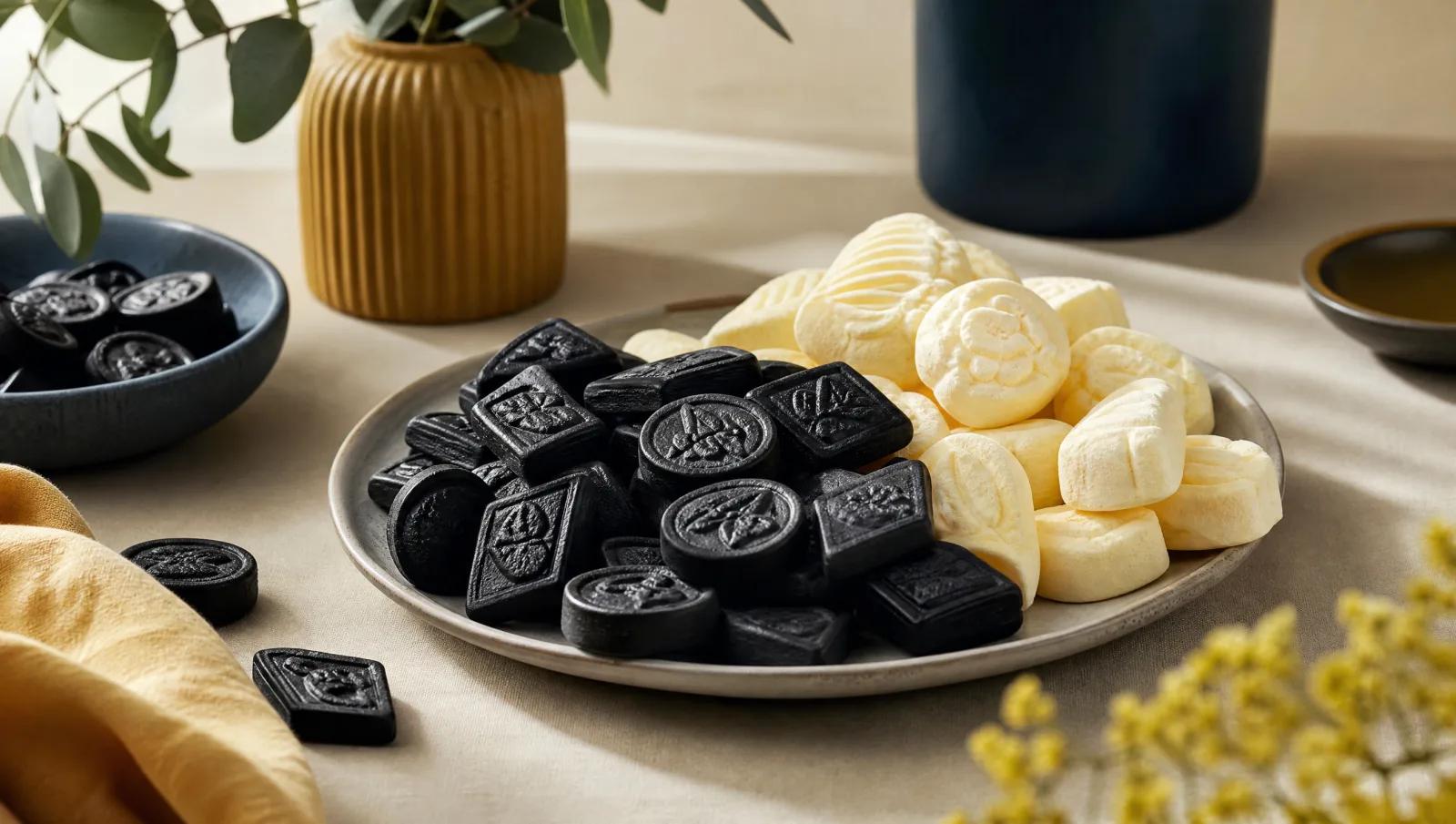
Dutch candy has two faces. At home it is drop, a licorice category sold in dozens of named varieties from sweet to double-salt. For export it is precision gummy and soft-chew work: Matthijs skull gummies, Lonka bonbons and caramels, and Frisia foam skulls. We import the second face, not the first. The Netherlands is the quiet workhorse of European confectionery. Three of the makers we buy from are Dutch, and Dutch pieces have sat on Swedish candy walls for as long as those walls have existed. Here is what the tradition is, what we carry from it, and how it differs from Swedish candy.
Drop: the part of Dutch candy you cannot fake
You cannot write about Dutch candy without drop, so here it is plainly, along with an admission.
Drop is Dutch licorice, and it is a genuine national category rather than a single product. A Dutch supermarket will carry it in a dozen named styles, and the names describe real differences: zoete drop (sweet), zoute drop (salty), dubbelzout (double salt), muntdrop (mint), honingdrop (honey), laurierdrop (bay laurel), and salmiak varieties built on ammonium chloride. Shapes are equally codified: coins, diamonds, cats, cars, farm animals, filled pieces.
The salty end is where Dutch and Nordic licorice meet, because both traditions use salmiak. The Nordic version tends to lead with licorice root and salt, the Dutch version has more sweet and aromatic styles alongside the salty ones. We compared them properly in Swedish vs Dutch licorice.
Here is the admission. We do not import drop, and nothing in our catalog is salmiak or salty licorice. If a customer walks into your shop asking for dubbelzout, we cannot supply it and we would rather tell you now than sell you a fruit gummy under a Dutch label. What we import from the Netherlands is the other half of the country's output, and it is the half that actually sells on a US candy wall.
Why Dutch makers supply Swedish candy walls
This confuses people, so it is worth stating directly: a lot of what a Swedish shopper thinks of as Swedish candy is made in the Netherlands.
That is not a trick. European confectionery has always been cross-border. Dutch factories developed real specialization in gummy and soft-chew production, and Swedish retailers bought from them because the pieces were good and the formats fit the loose-weight wall. Over decades those pieces became part of the Swedish candy vocabulary. Skull gummies are the clearest example: the silhouette is now shorthand for Nordic candy worldwide, and the maker most associated with it is Dutch.
So "is this really Swedish?" is the wrong question. The right one is whether the piece belongs on a Swedish pick-and-mix wall, and these do. We unpacked that in authentic Swedish candy.
Matthijs: the skull specialist
Matthijs is a Dutch family confectioner founded in 1920, and it works almost entirely in one silhouette. Where other makers treat the skull as one item in a broad range, Matthijs treats it as the format and varies flavor and finish around it.
We stock seven Matthijs cases, all in the same 4.41 lb (2 kg) size, which makes assortment planning simple because every bin holds the same amount and reorders on the same rhythm. Every one of the seven is flagged gluten-free, halal, vegan and vegetarian.
[Matthijs Swedish Skulls](/products/matthijs-swedish-skulls-4-41lb-swedish-candy) and [Matthijs Danish Skulls](/products/matthijs-danish-skulls-4-41lb-swedish-candy), the country-named pair built on a flag theme
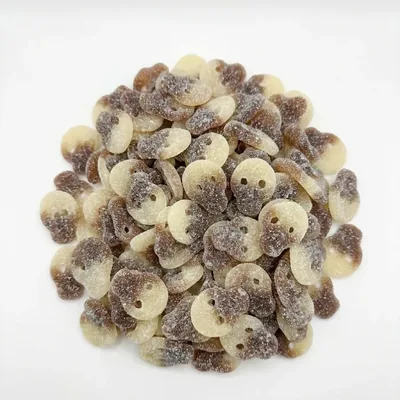
[Matthijs Cola Skulls](/products/matthijs-cola-skulls-4-41lb-swedish-candy), the easiest sell to an American shopper meeting European candy for the first time
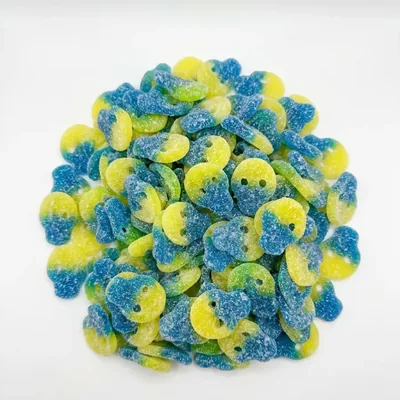
[Matthijs Fizzy Skulls](/products/matthijs-fizzy-skulls-4-41lb-swedish-candy), the skull with a sour fizzy sugar finish
[Matthijs Melon Skulls](/products/swedish-candy-veggie-melon-skulls-2kg-4-41-lb-swedish-candy), in a flavor that is ordinary in Europe and rare on US walls
[Matthijs Pinky Skulls](/products/matthijs-pinky-skulls-4-41lb-swedish-candy), the pink skull
[Matthijs Veggie Sour Cola Bottles](/products/matthijs-veggie-sour-cola-bottles-4-41lb-swedish-candy), the one non-skull, in the classic cola bottle shape
That dietary combination is commercially useful in a way that is easy to underrate. A single Matthijs bin answers the gluten question, the gelatin question, the vegan question and the halal question at once, which means your counter staff never have to say "let me go check". Full range detail is in the Matthijs candy guide.
Lonka: the adult end of the shelf
Lonka is the Dutch maker for the customer who is not shopping the sour bins. Its soft bites are bonbons in the European sense: a tender, melt-in-the-mouth chew that softens as it warms, rather than a hard shell or a bouncy gummy.
We carry two, both in a 7.15 lb case: Lonka Caramel Soft Bites Bon Bon and Lonka Soft Bites Strawberry Bon Bon.
These sell to a different shopper and often at a different time of day. Bonbons pair with coffee, they gift well in a small box, and they give a cafe a candy offer that does not require a scoop wall. If your customer base skews older than the skull crowd, this is where to start. See Lonka bonbons and caramels and our bon bon explainer.
Frisia: the skull, but airy
Frisia makes the foam version of the skull. Same recognizable silhouette, but built in skum, the light aerated texture that eats closer to a soft meringue than a gummy. The name comes from the Frisian coastal region that runs along the Netherlands and northern Germany.
We carry two 4.4 lb cases, Frisia Cola Foam Skulls and Frisia Bubbelgum Foam Skulls. Both carry "Vegan" in the product naming from the maker. We do not hold a separate dietary flag on either case, so confirm against the ingredient panel on the case you receive, and ask us and we will request current specifications before you commit shelf space.
Foam is light, which is a real merchandising advantage on a weighed wall: a scoop fills a bag fast and the shopper sees volume for their money. More on the texture in Swedish foam candy.
Dutch vs Swedish candy, side by side
: Dutch candy: Swedish candy
National category: Drop (licorice), many named styles: Lösgodis, loose candy bought by weight
Defining texture: Firm gummy and soft chew: Sour fruit chew and skum (foam)
Signature shapes: Coins, cats, cars, filled licorice, skulls for export: Fish, skulls, pacifiers, mushrooms, shots, rockets
Salty licorice: Central, from mild to double salt: Present, but one part of a wider range
Sour: Present, less dominant: A full category with a real intensity range
How it reaches a US shelf: Mostly through the Swedish and European wholesale channel: Directly, as the headline category
The short version: Dutch makers are specialists, Swedish makers are generalists. A Dutch factory goes deep on one format and does it extremely well. A Swedish wall wants thirty different shapes. Which is exactly why the two fit together so neatly in one bin set.
Frequently asked questions
What is Dutch candy known for?+
Drop, which is Dutch licorice sold in dozens of named varieties from sweet to double-salt, and precision gummy and soft-chew manufacturing for export. The export side includes the skull gummies, soft bonbons and foam skulls that appear on Swedish and European candy walls.
What is drop candy?+
Drop is the Dutch licorice category. It covers sweet, salty, mint, honey, bay laurel and salmiak styles in coin, diamond, animal and filled shapes. Salty drop is made with ammonium chloride (salmiak), the same ingredient behind Nordic salty licorice. We do not import drop.
Is Matthijs candy Dutch or Swedish?+
Matthijs is a Dutch family confectioner founded in 1920. Its skulls are named for the Swedish and Danish flags and are a fixture of Swedish pick-and-mix walls, which is why shoppers often assume they are Swedish. Dutch makers have supplied Swedish candy walls for decades.
How is Dutch candy different from Swedish candy?+
Dutch makers specialize, Swedish makers cover range. The Dutch national category is licorice (drop) with a strong salty tradition, while Sweden is built on loose-weight pick-and-mix with sour fruit chews and skum foam across dozens of shapes. Dutch gummies and bonbons are staples of Swedish walls.
Do you sell Dutch licorice or salmiak?+
No. Nothing in our catalog is salmiak or salty licorice, and we do not import drop. What we carry from the Netherlands is Matthijs skull gummies, Lonka soft bonbons and caramels, and Frisia foam skulls.
Which Dutch candy should a US shop stock first?+
Matthijs Cola Skulls, because cola needs no explanation to an American shopper and the case is flagged gluten-free, halal, vegan and vegetarian. Add Matthijs Swedish Skulls as the signature piece, then one Lonka bonbon case if your customers skew older than the sour crowd.

Gustav Lindqvist · Candy Master
Gustav grew up in Sweden on a strict Saturday-candy schedule, mixing his lördagsgodis bag at the lösgodis wall before he could spell salmiak. He has spent years tasting his way across Scandinavian candy, and now curates the range at TheSweetsTruck, from BUBS sour skulls to the saltiest licorice most people cannot finish.
Last updated 9/25/2026