Fizzy Candy: What Makes It Fizz, and the Cases Worth Stocking
Fizzy candy prickles because an acid and a carbonate react once they get wet. Here is how the fizz works, the five lines we stock, and how to keep coated candy crisp in storage.
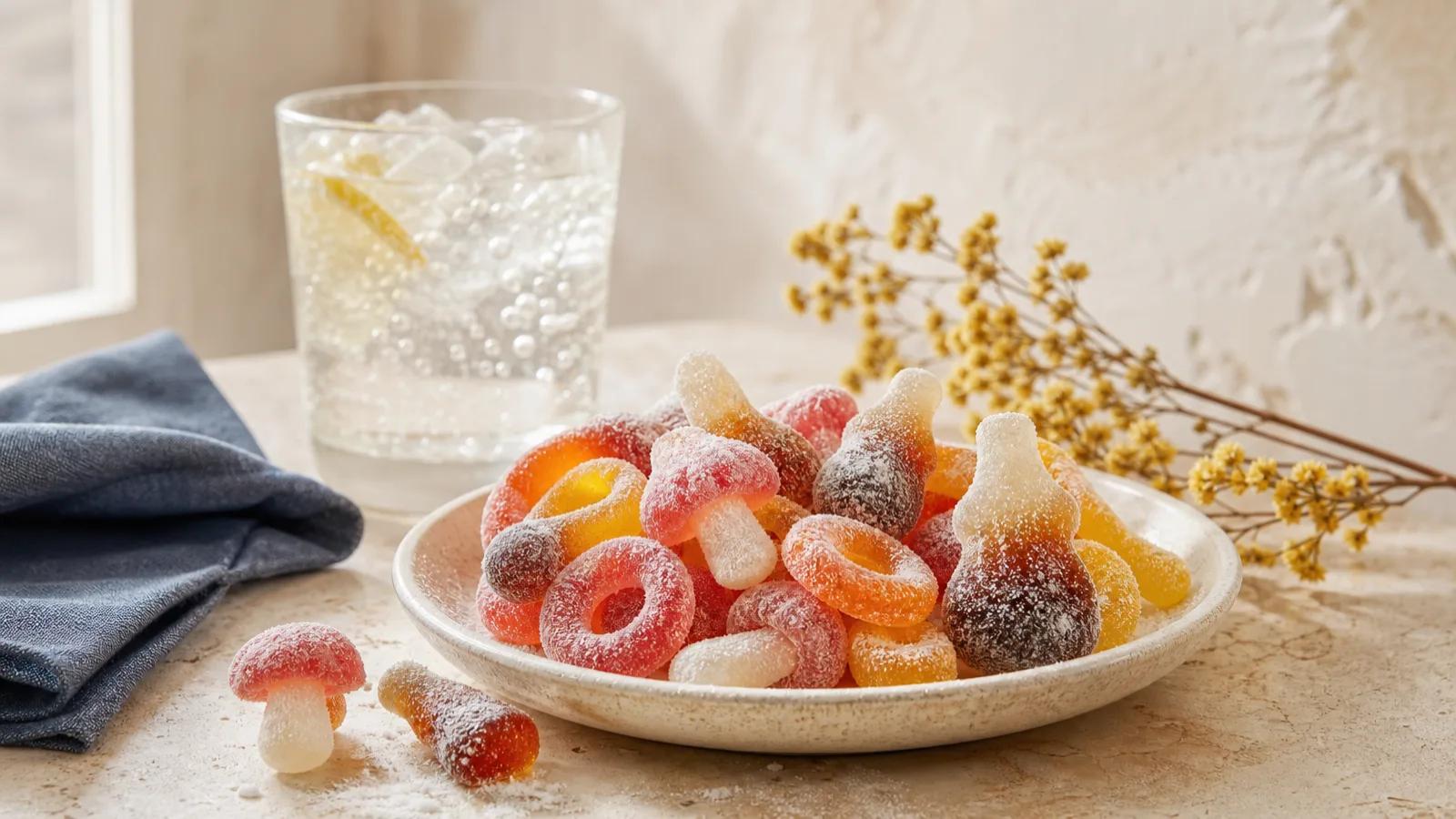
Fizzy candy fizzes because it holds an acid and a carbonate, kept dry and inert until the moment they meet moisture. Saliva starts the reaction, carbon dioxide bubbles form on the tongue, and you feel a prickle alongside the sourness. Storage is the catch: both halves of the pair pull moisture, so sealed and dry keeps the fizz alive.
We import European candy by the case into Santa Fe Springs, California, and the five fizzy lines below are what we actually stock. For the wider mechanics of acids and coatings, our how sour candy works piece is the companion read.
What actually makes fizzy candy fizz?
The fizz is a small chemistry trick, and it is the same one behind the sherbet powders sold in British sweet shops. An edible acid, usually citric, sits alongside a carbonate, usually sodium bicarbonate. While both stay dry, they ignore each other completely; add water and they react, releasing carbon dioxide as bubbles (RSC Education).
In candy, that pair lives in the coating. The moisture that starts the reaction is your saliva, so the bubbles appear exactly where you feel them, on the tongue, at the same moment the acid registers as sour. Swedish shelves call this style brus, which simply means fizzy, and it is a different sensation from plain sourness rather than just more of it.
There is a real difference between fizz and acid burn, too. A super sour piece overwhelms the sour receptors and fades; a fizzy piece keeps producing new bubbles for as long as there is carbonate left to react. That is why fizz feels playful where sour feels sharp, and why the two work best as separate bins rather than one pile.
How is fizzy different from plain sour and super sour?
Three tiers sit on the same shelf, and shoppers do not always know which one they are picking. Here is the difference in one pass.
- Plain sour: the acid arrives first and fades; the candy underneath is a straightforward fruit chew. Most of the sour range is this.
- Fizzy: the same acid plus a carbonate, so the sourness comes with a bubble prickle that keeps going. The feel is the point.
- Super sour: a higher acid load with less sugar buffering it, built for intensity rather than sparkle. We keep our own take on that tier in super sour candy.
For a candy store, the tiers are complementary. A shelf with only extreme sours loses the shoppers who want fun; a shelf with only fizz loses the ones chasing a challenge.
Which fizzy cases do we stock?
Five lines, spanning a bulk skull, a foam ring, a sugar-dusted skull, a small grab pack and a long strap. Prices below are Tier 1 and the per-pound figures are computed from the published case prices.
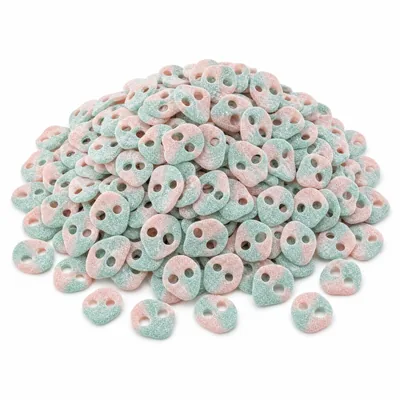
- Fizzy Bubble Skulls, 8.8 lb case: the bulk fizzy skull, built on glucose syrup and corn starch, with the ingredient list we hold adding wheat starch. No dietary tags are held for this SKU, so we publish no claim. Case weight 8.82 lb. Tier 1 price works out to $6.69 per lb, computed from the published case price. The Fizzy Bubble Skulls case is the workhorse here.
- Franssons Fizzy Rings, 3.3 lb case: a soft foam ring with malic acid and sodium citrate in the list; the foam structure makes the fizz feel light and quick. No dietary tags are held for this SKU. Case weight 3.30 lb. Tier 1 price works out to $8.45 per lb from the published case price.
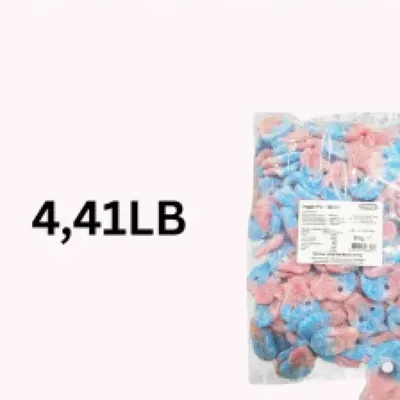
- Matthijs Fizzy Skulls, 4.41 lb bag: sugar-dusted skull gummies where the coating carries the snap. Flagged gluten-free, halal, vegan and vegetarian in our data. Bag weight 4.41 lb (2 kg). Tier 1 price works out to $8.16 per lb from the published bag price; the same page also offers a case of 6 (26.46 lb). The Matthijs Fizzy Skulls bag is the mixed-crowd pick.
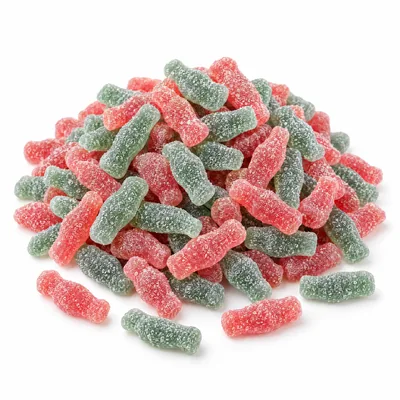
- Pandy Fizzy Bottles, 14 x 50 g packs: bottle-shaped gummies from a fizzy-style range, with beef and bovine gelatine named in the ingredient list we hold. Case weight 1.54 lb. Tier 1 price works out to $38.88 per lb from the published case price, about $4.29 a pack. No dietary tags are held for this SKU either.
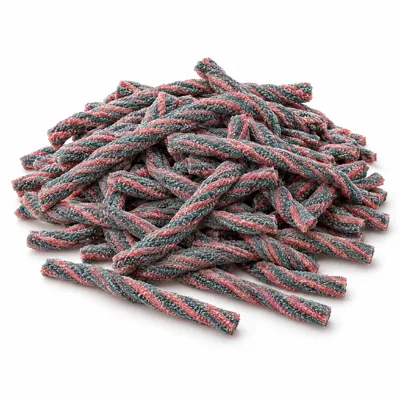
- Finnish Straps Fizzy Blue Twist, case of 60: a soft chewy strap, 19.7 inches long, with wheat flour and gelatine named in the ingredient list we hold. Case weight 8.82 lb. Tier 1 price works out to $8.49 per lb from the published case price.
The fizzy cases we stock

Where does fizzy sit next to hard sours and shots?
Fizz is one construction among several, and a sour section reads better when the constructions contrast instead of repeat.
- Fizzy pieces: coated with the acid and carbonate pair, so the sensation is active and short-lived per piece. Best as its own signed bin.
- Hard sours: boiled sugar glass with the acid worked into the body, which releases slowly over minutes rather than in one hit. We do not stock boiled sours; sour hard candy explains the format and why we skip it.
- Shots and pacifiers: dense, heavily coated pieces where the shape holds more acid per gram. The intensity lane of the wall, not the sparkle lane.
Put the fizzy bins beside the shots by all means, but sign them differently, because they promise genuinely different things.
Why does sugar-sanded candy lose its edge in storage?
If the fizz lives in a coating, then humidity is the enemy of the product. Both sugar and acid pull water out of the air, and the carbonate does the same, so a coated piece in damp air slowly loses the very things that make it fizzy.
Above roughly 55 to 60 percent relative humidity, a sanded coating starts absorbing water. First the piece loses its matte look and goes glassy, then it goes tacky, then pieces weld together in the bag. The candy is not spoiled, but the fizz has measurably weakened, because the reaction has partly happened on the surface instead of on your tongue. It is not reversible.
Practical rules follow from that. Keep cases sealed until you fill, keep lids down between scoops, fill bins shallower and refill more often, and run first in, first out. Do not refrigerate gummy or foam candy as a default; a fridge is humid, and the condensation cycle does more damage than a stable room. Our storage and shelf life guide has the longer version.
What should a shop know before stocking fizzy lines?
Fizzy candy is a small category with a clear role: it is the fun end of the sour wall, and it works when it is signed as such.
For shops: start with one bulk skull case for the main bin and one small-pack line for the register; both are ordered through a wholesale account, and approval is automatic. Order by the case, mix and match, with no US order minimum, which means a first fizzy test costs one case, not a pallet.
Two operational notes. First, sign the intensity: a small "fizzy" or "brus" card next to the bin tells shoppers what they are buying, and lets cautious buyers pick from the milder bins instead of avoiding the whole wall. Second, mind the dust: the coating rubs off in transit and handling, so keep fizzy lines off the shelf directly above foods or gummies, and rotate the bin often.
If you want the feel of fizz on your shelf, start with one bulk skull case and judge it on a bin, not a spreadsheet; the sour mechanics piece covers what happens in the mouth from there.
Frequently asked questions
What makes fizzy candy fizz?+
An acid and a carbonate reacting. Citric or malic acid sits in the coating alongside sodium bicarbonate, and while both are dry nothing happens. Saliva is the trigger: it dissolves the coating, the two ingredients meet, and carbon dioxide bubbles form on the tongue. That is the prickle you feel alongside the sourness.
Is fizzy candy the same as sherbet?+
The chemistry is the same, the format is not. Sherbet is a loose powder, often eaten with a dipping stick, and it fizzes the moment it touches your mouth. Fizzy candy is a coated piece of candy that carries the same acid and carbonate pair in its sanding. Same reaction, different eating experience.
What does brus mean?+
Brus is Swedish for fizz, and it is the label Swedish ranges use for this style. If you see brus on a bin card or a pack, expect the carbonate prickle rather than plain sourness. It is a useful word to borrow for your own signage, since it signals the sensation in fewer letters than any English alternative.
Why did my fizzy candy stop fizzing?+
Humidity got to the coating. Both the acid and the carbonate absorb moisture from the air, and once enough water has been taken up the pair reacts in the bag instead of in your mouth. The candy may still taste sour, but the fizz is spent. Sealed cases in a dry room are the whole defence.
How long does fizzy candy keep?+
The printed best-before date on the case is the only number that applies, because it is set per recipe and production run. What degrades sooner than that date is the coating, and only in poor conditions. Keep the room dry, keep bins covered, rotate the stock, and a fizzy line holds its character through its normal selling window.
Do fizzy sweets contain gelatine?+
It varies by line. Two of the five lines here name gelatine in the ingredient list we hold, and three do not, and our data carries dietary tags for only one of the five. We publish no claim for the rest either way, so check the ingredient panel on the pack you receive before you label a shelf.
Keep reading

Gustav Lindqvist · Candy Master
Gustav grew up in Sweden on a strict Saturday-candy schedule, mixing his lördagsgodis bag at the lösgodis wall before he could spell salmiak. He has spent years tasting his way across Scandinavian candy, and now curates the range at TheSweetsTruck, from BUBS sour skulls to the saltiest licorice most people cannot finish.
Last updated 10/28/2026