Sour Candy: The Complete Guide to Acids, Formats and Styles
What makes candy sour, what each food acid actually does, the four ways sour is applied to a sweet, and how Nordic sour candy differs from American sour.

Sour candy is candy carrying an edible acid, usually citric, malic, tartaric or lactic acid. The acid sits in the body of the sweet, in a sanded sugar and acid coating, or in a fine sprayed layer. Which acid, how much of it, and where it sits decide how sharp the candy tastes and how long the sourness lasts. We import Swedish and European candy into California and sour is the single biggest part of what moves through our warehouse, so this guide is written from the case rather than from a candy-history blog. If you want the Swedish-specific shapes and names, start with [Swedish sour candy types](/journal/swedish-sour-candy-types). This piece is the mechanics.
Why sour tastes sour
Sour is your tongue reacting to acid. The taste cells responsible respond to the hydrogen ions an acid releases once it dissolves in saliva, which is why the speed an acid dissolves at matters as much as how strong it is. A fast-dissolving acid reads as an instant slap. A slow-dissolving one reads as a long, rolling sourness that arrives after the first chew.
Two separate things drive how sour a piece actually is, and people mix them up constantly:
Acid strength, meaning how readily that acid gives up hydrogen ions.
Acid load, meaning how much acid is in or on the piece.
A mild acid at heavy coverage will out-sour a strong acid used sparingly. That is why "which acid does it use" only ever answers half the question.
The acids, and what each one does
Acid: Source: Sourness character: Where you find it
Citric: Citrus fruit, commercially made by fermentation: Fast, bright, clean, fades quickly: The default acid in sour candy, used both in the body and in sanding
Malic: Apples and other fruit: Sharper than citric and lingers noticeably longer: Green apple and berry lines, coatings meant to hold their bite
Tartaric: Grapes: Very sharp, arrives fast, drops off fast: Grape and berry flavours, fizzy blends
Fumaric: Manufactured: Strong per gram, dissolves slowly: Long-lasting sourness, coatings that must resist going tacky
Lactic: Fermentation: Mild, rounded, slightly creamy: Used to soften an otherwise harsh acid blend
Ascorbic: Vitamin C: Mild sour, also an antioxidant: Fruit lines with a gentle edge
Adipic: Manufactured: Mild, slow dissolving, low moisture pickup: Sour coatings and coating blends
Almost nothing uses a single acid. A blend is normal: citric or tartaric for the opening hit, malic or fumaric for the tail. The blend is where a confectioner's actual skill shows, because a badly balanced one tastes flat after two seconds or grimly bitter after ten.
The four ways sour gets onto a sweet
1. In the body. Acid is mixed into the gel, chew or foam before it sets. The result is even and steady rather than shocking. This is rarely how extreme sour candy is built, because acid in the body has to survive months of shelf life and tends to soften the set over time.
2. Sanded. Sugar crystals mixed with powdered acid, tumbled onto a slightly tacky piece. This is the classic sour look, visible grit on the outside, and it is what most people picture when they hear sour candy.
3. Sprayed or dusted. A fine acid layer with much less sugar in it. Per gram it hits harder than sanding, because there is less sugar buffering the acid, and it feels smoother rather than gritty.
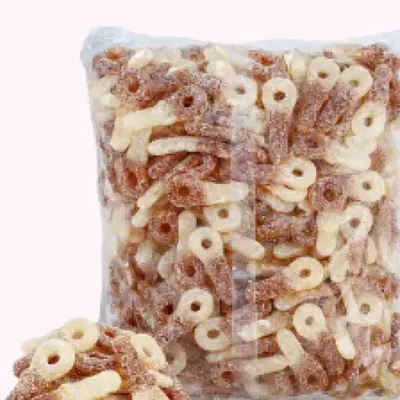
4. Fizzy. Acid plus a carbonate, usually sodium bicarbonate. The two react in saliva and release carbon dioxide, so you get a prickle on the tongue alongside the sourness. Swedish ranges label this style *brus*, and it is a genuinely different sensation rather than just more acid. Franssons fizzy rings and Matthijs fizzy skulls are both built this way.
The main sour formats
Sour gummies and wine gum styles. The volume format everywhere. Firm chew, sanded or sprayed coat.
Sour foam (skum). A whipped, aerated body that carries acid very differently, light and quick rather than concentrated. Covered in our Swedish foam candy guide.
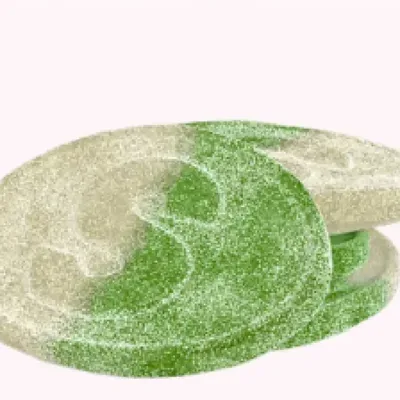
Pacifiers (nappar). A distinctly Swedish shape, flat and wide, which means a lot of surface area per gram and therefore a lot of coating. See sura nappar explained.
Shots. Small, dense, heavily coated pieces built for one sharp hit. Hallonshots is the reference product.
Rings and mushrooms. Fizzy formats, often two-textured.
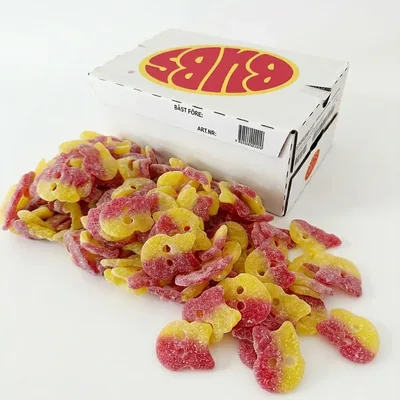
Skulls. Swedish candy's most recognisable modern shape, made by several producers in sour and non-sour versions.
Slices and fish. Softer, milder, usually the gateway product rather than the sour one.
Nordic sour versus American sour
This is the comparison people actually come looking for, and the honest version is that the differences are real but smaller than the marketing on either side suggests.
: Nordic sour: American sour
Typical base: Starch, pectin and foam bases are common, alongside gelatin: Gelatin dominant
Sour delivery: Acid in the body plus a sanded coat is the usual build: Heavy sour sanding is the headline
Flavour lead: Fruit flavour first, acid second: Acid first, fruit acting mostly as a colour cue
Format range: Pacifiers, shots, foam skulls, slices, rings, skulls: Bears, worms, belts, strips
How it is sold: Loose by weight, as *lösgodis* pick and mix: Pre-packed bags
The base material point is the one worth knowing. A large share of what we import is flagged gelatin-free, vegan or both, which is not a marketing position so much as a consequence of how these factories have worked for years. The Sura pacifier line and four S-Märke sour lines are listed vegan, and the whole Matthijs skull range is listed gluten-free, halal, vegan and vegetarian.
On taste, we would say Nordic sour tends to land as fruit that happens to be sharp, while American sour tends to land as sharpness that happens to be fruit flavoured. That is our opinion after moving a lot of both, not a fact.
One handling note if you sell it
Acid coatings are hygroscopic, meaning they pull moisture out of the air. Leave sanded sour candy open in a humid room and the grit dissolves into a glaze, the pieces stick together, and what you have on your hands is a slightly damp non-sour candy. Keep lids on bins, keep the room dry, and rotate the sour bins faster than you rotate the chocolate. Our notes on shelf life and running a pick and mix go further into this.
Sour cases we keep in stock

Frequently asked questions
What makes candy sour?+
An edible acid, most often citric, malic, tartaric or lactic acid. Your taste cells respond to the hydrogen ions the acid releases in saliva. How sour the candy actually feels depends on which acid is used, how much of it there is, and whether it sits in the body of the sweet or in a coating on the outside.
Which acid is the most sour in candy?+
There is no single winner, because strength and dose interact. Tartaric and malic acid taste sharper than citric at the same dose, and fumaric acid is strong per gram but dissolves slowly, so it feels long rather than loud. A heavily citric-coated candy easily out-sours a lightly malic one.
Is sour candy worse for your teeth than regular candy?+
Acidic foods lower the pH in your mouth, and dental research treats highly acidic candy as a factor in enamel erosion on top of the usual sugar concern. That is a general dental point rather than advice from us. Talk to a dentist about your own situation.
Why does sour candy go sticky in the bag?+
The acid and sugar coating absorbs moisture from the air. Once it has taken on enough water it dissolves into a syrup layer on the surface, which is why sanded sour candy clumps in an open bin or a resealed bag. Cool, dry, sealed storage slows it down considerably.
Is Swedish sour candy less sweet than American sour candy?+
Often, in our experience, though it varies by producer and there is no official measure of it. The bigger structural difference is the base: starch, pectin and foam bases are common in Swedish sour candy, which changes the chew and lets a lot of the range be gelatin-free.
What sour candy is easiest to sell to someone new to it?+
Something fruit-led with a moderate coating rather than a shot or a heavily sprayed piece. Sour pacifiers and sour skulls are usually the smoothest introduction, because the flavour arrives before the acid does. Our [best Swedish sour candy](/journal/best-swedish-sour-candy) rundown covers the specific picks.

Gustav Lindqvist · Candy Master
Gustav grew up in Sweden on a strict Saturday-candy schedule, mixing his lördagsgodis bag at the lösgodis wall before he could spell salmiak. He has spent years tasting his way across Scandinavian candy, and now curates the range at TheSweetsTruck, from BUBS sour skulls to the saltiest licorice most people cannot finish.
Last updated 9/25/2026