What Swedish Candy Costs in the US
Why imported Swedish candy costs more in the US: freight, duties, labeling, and small production runs, plus retail vs buying by the case.
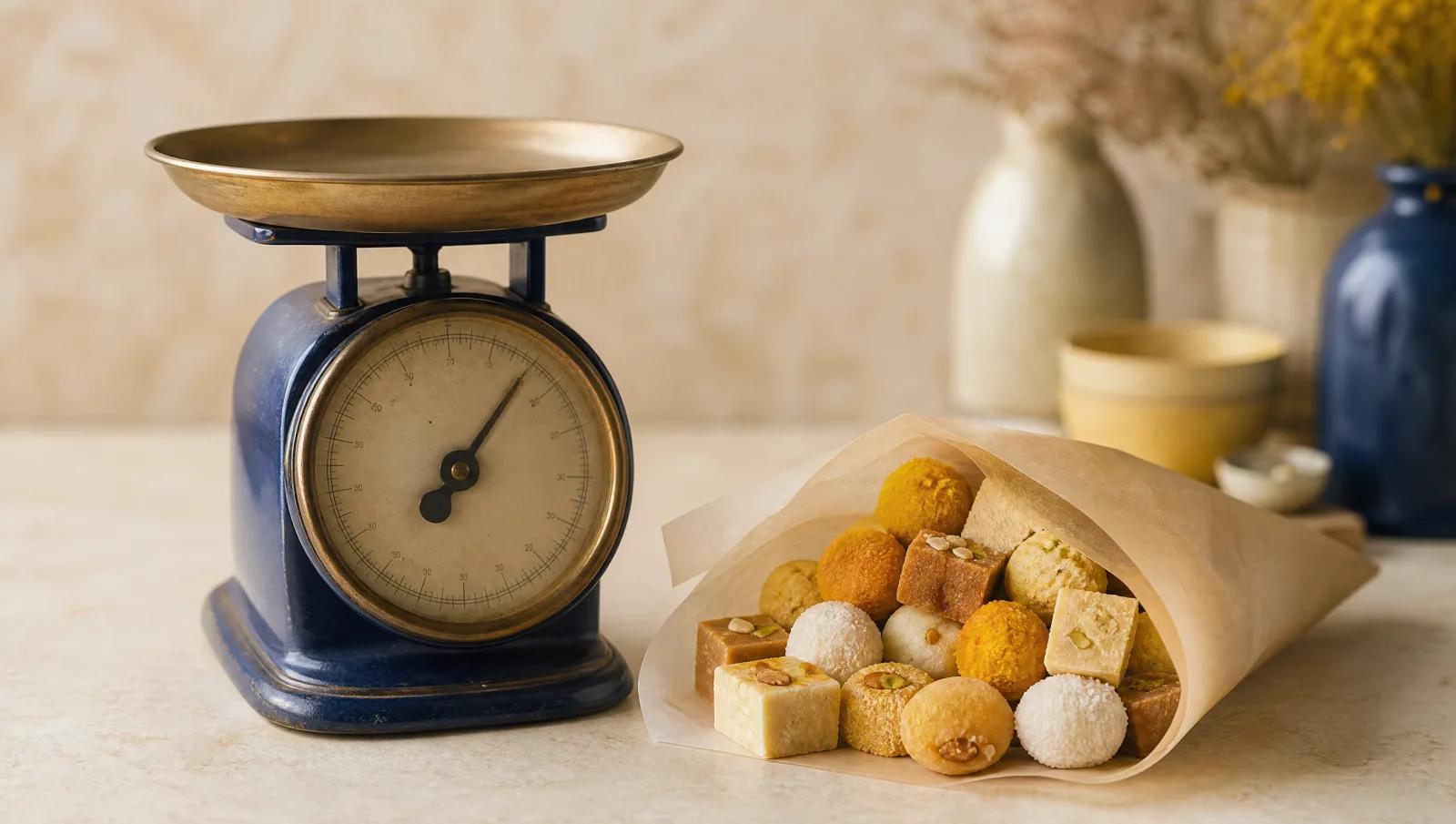
Swedish candy costs more in the US than domestic candy because it is a small-run import: ocean freight, duties, and US relabeling all land on top of the factory price. Buying by the case from an importer removes the middle layers, which is why the same candy costs far less per pound in bulk.
We import direct and hold stock in California, so we see every line of the landed cost on the way in. Rather than quote numbers that go stale, here is the honest structure of what you are paying for, what makes one case cost more per pound than another, and how to compare offers without getting fooled.
Why imported candy costs more than the domestic stuff
Five things sit between a Swedish factory and a US shelf, and each one adds cost.
Freight. Candy is heavy and it travels a long way. Sea freight from northern Europe, port fees, drayage to a warehouse, and then domestic shipping to the buyer are all real line items. Freight rates also move with the market, which is why import pricing is less stable than domestic pricing.
Duties and tariffs. Sugar confectionery entering the US carries duty, and the rate depends on the product's composition and classification. Someone always pays it. When we ship DDP, we have already paid the duties and there is nothing for the buyer to clear. We cover the mechanics in importing candy to the US.
US labeling and compliance. Imported candy has to carry FDA-compliant labeling: an English ingredient statement, allergen declarations, a US-format nutrition panel, and net weight in US units. Relabeling is real work per case, and it is one of the biggest hidden costs people miss when they compare a European price list to a US one.
Small production runs. Swedish and European makers produce mainly for a home market of around ten million people. There is no US-scale volume behind these lines, so there is no US-scale unit economics either. This is also why the candy tastes the way it does: shorter runs, traditional recipes, and formats built for a scoop wall rather than a checkout rack.
Handling and risk. Candy is temperature sensitive in summer, has a finite shelf life, and moves in whole cases. Whoever holds the inventory carries that risk, and it is priced in.
What actually drives the per-pound cost
Two cases can sit side by side and price out very differently per pound. The drivers:
Case weight. Bigger cases almost always land cheaper per pound, because freight, labeling, and handling are spread over more product. A compact case is easier to try, but you pay for the convenience per pound.
Density. Foam candy is light and takes up a lot of space for its weight, so its shipping cost per pound is higher than a dense sour gummy. That is why a small foam case and a large sour case can have very different per-pound math even at similar quality.
Format and process. Starch-molded gummies, whipped foam, and coated sours are different processes with different yields and different packaging. Coated and dusted sours also lose a little weight to coating.
Brand pull. A line with real recognition carries a higher price than a generic equivalent, in the same way it does in any category.
You can see the spread across our own range. A compact foam case, a mid-size skull case, and a large sour case are three different per-pound stories:
Three case sizes, three cost structures

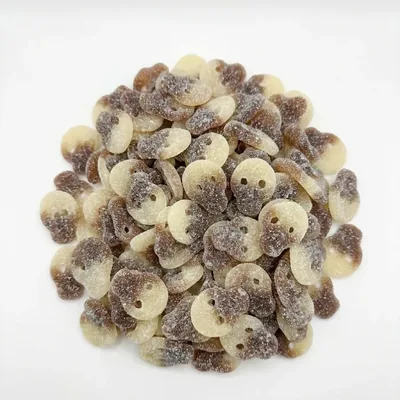
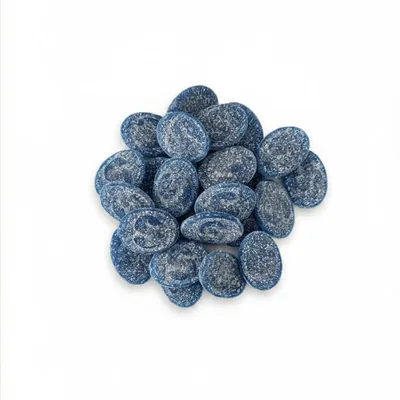

Bulgari Marshmallow Mushrooms is a 1.98 lb foam case and contains gelatin. Matthijs Cola Skulls is a 4.41 lb case, flagged gluten-free, halal, vegan and vegetarian. S-Märke Sour Blue Raspberry is an 8.81 lb case, flagged vegan and halal, and contains wheat and gluten. Franssons Fizzy Rings sits in the middle at 3.3 lb. Live pricing for each sits on the catalog.
Retail price vs buying by the case
The gap between what a bag costs at retail and what the same candy costs by the case is the single biggest lever on what you pay.
Retail bags carry the full chain: importer, distributor, retailer, plus the cost of small packaging and the shelf space it occupies. Convenient, but the most expensive way to buy per pound.
Marketplace resellers often add another layer on top of retail, because they are usually buying at retail themselves and shipping small parcels. A low sticker price with a high shipping charge is the usual shape.
Buying by the case from an importer removes the layers. You are paying the landed cost plus one margin, and the shipping is spread across a much larger box. Because we import direct rather than buying from a US distributor, our case prices come in under most distributors on the same product.
For anyone reselling, the case route is the only one where the math works. We break the resale side down in Swedish candy profit margins, and the difference between buying from a distributor and buying from an importer in candy distributor vs importer.
How our pricing is set up
We keep this deliberately simple.
- Public list pricing. Everyone sees Tier 1 list pricing on the catalog, including shoppers and shops that have never ordered from us. You can do your math before you talk to anybody.
- Tier 2 and Tier 3 pricing are available to approved volume and strategic buyers. Wholesale accounts approve automatically when you apply.
- Order by the case, mix and match, no order minimum. Build a first order across brands with Bulk Order.
- Import-direct and DDP. Duties and US labeling are already handled, so the price you see is the price landed.
- Shipping from California. UPS Ground or UPS Express at checkout, plus pallet freight on orders of $2,000 or more, arranged by email.
How to compare two candy prices honestly
Do these four things before you decide anything is expensive.
- Convert everything to price per pound. Case weights vary wildly, and per-piece or per-bag pricing hides the difference.
- Add shipping to both sides. A cheap bag with expensive parcel shipping usually loses to a case with freight spread over 10 pounds.
- Check whether duties and labeling are included. A quote from an overseas seller that looks cheap may leave you to clear customs and sort labeling yourself.
- Check what you actually get. Gelatin-free, wheat-free, and foam versus gummy are not interchangeable, and a cheaper case that does not fit your shelf or your diet is not cheaper.
For the full buyer's view, our wholesale Swedish candy guide puts pricing in context with case sizes, assortment, and reorder rhythm.
Want the real number for the case you are looking at? Check live list pricing on the catalog, start a bulk order, or get in touch with a wish list and we will price it out.
Frequently asked questions
Why is Swedish candy so expensive in the US?+
It is an import with a long supply chain: ocean freight, duties, US-compliant relabeling, and small European production runs all sit on top of the factory price. Buying by the case from an importer strips out the layers that add the most.
How much does Swedish candy cost per pound?+
It depends on the case. Live Tier 1 list pricing for every product we carry is public on our catalog, so you can check the current per-case price yourself rather than relying on a number in an article that ages badly.
Is it cheaper to buy Swedish candy in bulk?+
Yes, substantially. Case buying spreads freight, labeling, and handling over far more product, and it removes the retail and reseller margins that sit on a small bag.
Do I have to pay duties or customs?+
Not with us. We ship DDP, so duties are already paid and US labeling is already done, for both US and Canadian deliveries.
Is there a minimum order?+
No. Order by the case, mix and match across brands, with no order minimum. Pallet freight becomes an option on orders of $2,000 or more.
Do you offer better pricing for shops?+
Yes. Tier 1 list pricing is public for everyone, and approved volume and strategic buyers get Tier 2 and Tier 3 pricing. Accounts approve automatically when you apply.
Keep reading

Gustav Lindqvist · Candy Master
Gustav grew up in Sweden on a strict Saturday-candy schedule, mixing his lördagsgodis bag at the lösgodis wall before he could spell salmiak. He has spent years tasting his way across Scandinavian candy, and now curates the range at TheSweetsTruck, from BUBS sour skulls to the saltiest licorice most people cannot finish.
Last updated 7/30/2026