Vegan Candy: The Complete Guide to Gelatin-Free Sweets
What makes candy vegan, what quietly does not, a four-step label check, and the vegan-tagged Swedish cases we import, with tags straight from our own product data.
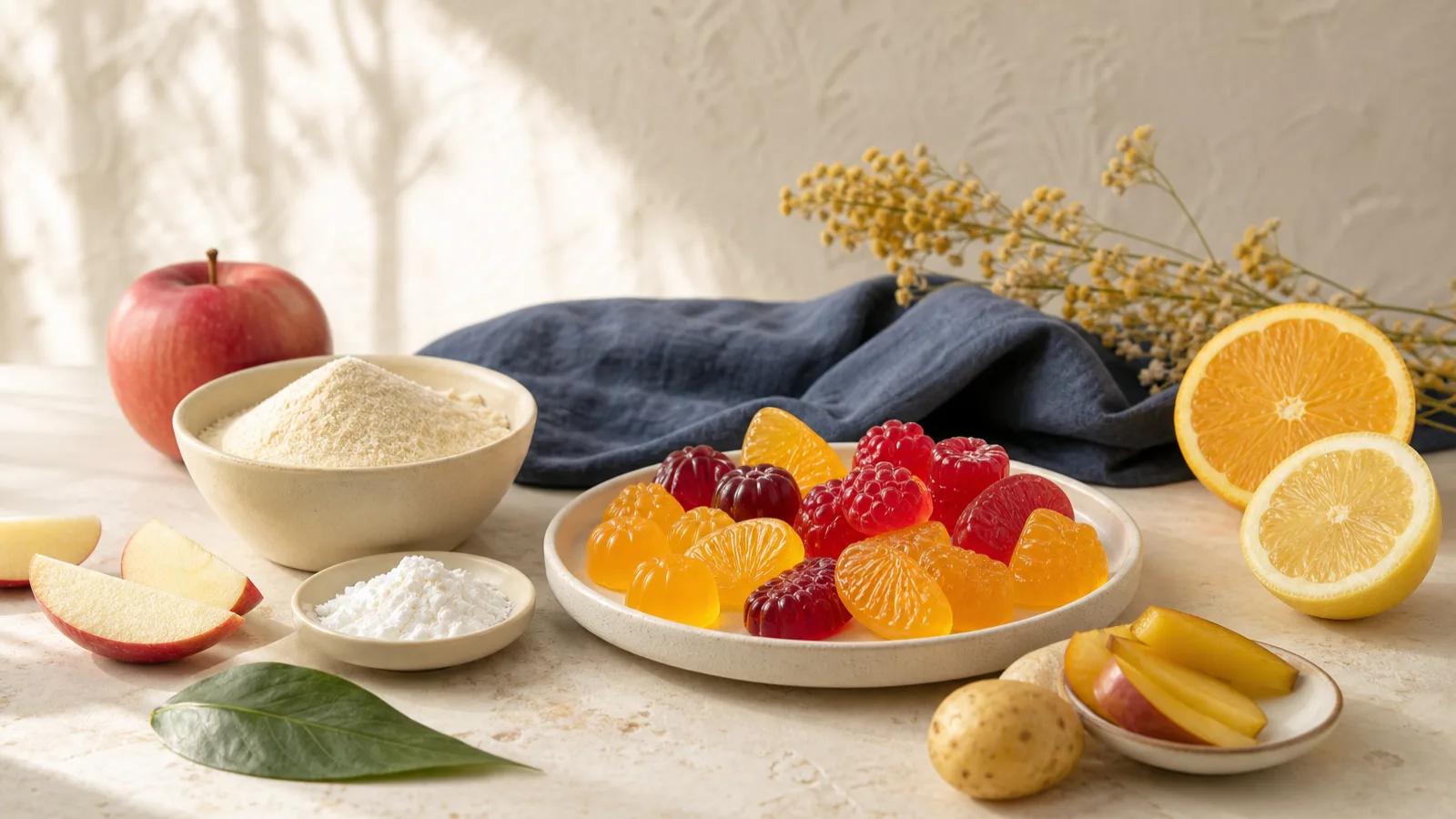
Vegan candy contains no animal-derived ingredients: no gelatin, no carmine (E120), no beeswax (E901) and no shellac (E904). Gelatin-free is not the same as vegan, because a gummy can still carry an insect-derived color or glaze. On a European pack, read the full ingredient list or look for a vegan claim on the pack.
This guide walks through the four ingredient families that decide the answer, a one-minute label check, and the cases we stock that carry a vegan tag in our own product data. If you want the gummy-specific version, start with our vegan gummies guide.
What makes candy vegan or not vegan?
Candy is vegan when nothing in it comes from an animal. In European candy, four ingredient families decide the answer:
- Gelatin: the protein that sets most classic gummies. EU food law defines gelatin as a soluble protein obtained by the partial hydrolysis of collagen from the bones, hides and skins, tendons and sinews of animals (Regulation (EC) No 853/2004, Annex I). Many European makers set their gummies with starch instead, which is why the same shape can go either way.
- Carmine (E120): a red color made from cochineal insects. US rules define carmine and cochineal extract as color additives obtained from cochineal (21 CFR 73.100), and the same rule requires food that contains either one to name it on the label.
- Beeswax (E901): a glazing agent that gives pieces their shine. The FDA describes it as a secretory product of honey bees (21 CFR 184.1973).
- Shellac (E904): the other common glaze, and also an insect product. EU specifications define it as purified and bleached lac, the resinous secretion of the insect Laccifer lacca (Regulation (EU) No 231/2012), and EFSA re-evaluated it as a food additive in 2024 (EFSA Journal).
The plant-derived counterpart is carnauba wax (E903), obtained from the leaves and buds of the Brazilian wax palm (21 CFR 184.1978). When a maker wants a shiny finish without beeswax or shellac, carnauba is what usually appears in the list.
How do you check a candy label for vegan ingredients?
You do not need to decode the whole list. You need four scans and one habit:
- Find the ingredient list. On a European pack it sits under the nutrition panel, often headed "Ingredients"; on a US pack scan the full list under the Nutrition Facts.
- Scan for gelatin, including the older spelling gelatine. If it is there, the candy is not vegan, full stop.
- Scan for carmine and cochineal extract, which European packs list as E120. Both name the insect color.
- Check the finish. Beeswax (E901) and shellac (E904) are animal-derived glazes; carnauba wax (E903) is plant-derived.
- Look for a vegan claim on the pack. That is the claim to trust, and it answers the question directly.
- Treat every listing, ours included, as a snapshot. Recipes change between production runs, so the pack in your hand outranks any website.
Is gelatin-free candy always vegan?
No, and it is an easy mix-up to make. Gelatin-free answers exactly one question: whether gelatin is present. A gelatin-free gummy can still be colored with carmine, or finished with beeswax or shellac, and all three come from insects. A vegan claim is the broader one, because it rules out the whole set. Our guide to whether Swedish candy has gelatin walks through how the two flags differ from line to line.
Is vegan candy gluten-free or halal?
They are three separate questions, and each one needs its own check.
- Vegan is not a wheat answer: a vegan-tagged line can still contain wheat. The S-Märke discs and the Sura pacifiers we list name wheat starch in their ingredient lists.
- Vegan is not halal: halal is a certification question with its own rules, and tags differ line by line and even within one brand.
- Vegan is not an allergen statement: it says nothing about milk traces, soy, nuts or anything else on the allergen line.
- The clean overlap exists: Matthijs is the one range we list with a gluten-free tag, and its Danish skulls also carry halal, vegan and vegetarian tags, so a single case can serve two dietary questions at once.
Which vegan-tagged lines do we stock?
Every claim below comes from the dietary tags on our own product listings, not from a guess based on ingredients. Two cases to anchor a set: the BUBS Cool Fruity Pear case for a softer, mild pear foam, and the S-Märke Watermelon discs for a sharper, sanded sour.
- BUBS Cool Fruity Pear, 5.73 lb (2.6 kg) case: a soft pear foam; a mild option; tagged gelatin-free, halal and vegan; $41.90, about $7.31 per lb computed from the published case price.
- Bubs Lemon/Raspberry Skulls, 7.05 lb (3.2 kg) case: jelly skulls with a gentle bite; sour, mid-strength; tagged gelatin-free and vegan; $51.90, about $7.36 per lb computed from the published case price.
- Matthijs Danish Skulls, 4.41 lb (2 kg) bag: sugar-dusted starch skulls; lightly sour; tagged gluten-free, halal, vegan and vegetarian; $36.00, about $8.16 per lb computed from the published case price.
- S-Märke Watermelon, 8.81 lb (3.996 kg) case: pressed discs with a heavy sanded coat; sharply sour; tagged vegan and halal, and the ingredient list names wheat starch; $59.00, about $6.70 per lb computed from the published case price.
- S-Märke Sour Apple, 8.81 lb (3.996 kg) case: the same disc format in apple; sharply sour; tagged vegan and halal, wheat starch in the list; $59.00, about $6.70 per lb computed from the published case price.
- Sura Melon Pacifiers, 6.61 lb (2.998 kg) case: pacifier shapes with a sanded sour coat; sharply sour; tagged vegan and halal, wheat starch in the list; $49.90, about $7.55 per lb computed from the published case price.
Vegan-tagged cases we stock

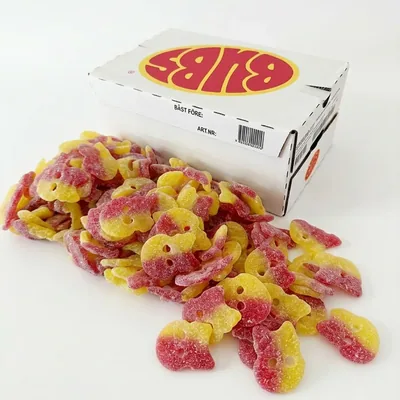
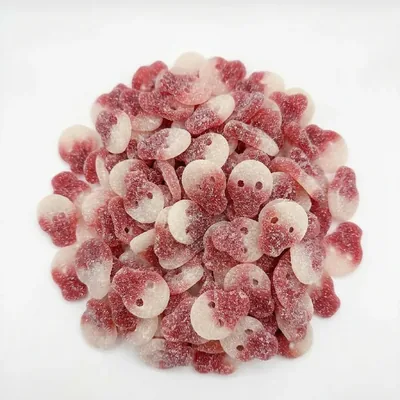
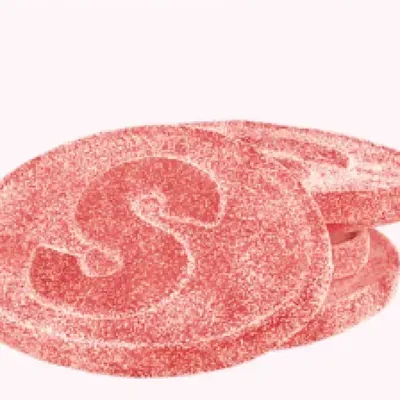
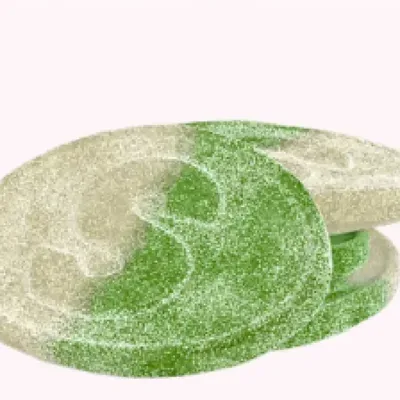

For the wider range beyond gummies, the vegan Swedish candy list covers the rest of the catalogue.
What do shops ask about vegan candy?
For shops: the questions are almost always about shelf flags and trust, not about which flavor to add next. Apply for a wholesale account when you are ready to order; applications approve automatically, you order by the case, mix and match, and there is no order minimum.
- Start from the tag, not the brand: a brand can hold both vegan and non-vegan lines, so flag product by product and leave untagged lines unflagged.
- Keep the vegan set physically separate: a dedicated section with its own shelf talker is easier to keep honest than a general wall with mixed flags.
- Say the wheat part out loud: the vegan S-Märke discs and Sura pacifiers contain wheat, so a shelf card that reads vegan must not drift into meaning wheat-free.
- Start narrow: six to eight clearly flagged lines read as a real section; you can add one flavor at a time because you mix and match by the case.
Our guide to building a vegan candy section covers layout and shelf flags in detail.
What are the most common vegan-label mistakes?
- Stopping at "gelatin-free": it clears one ingredient, not the glaze or the color.
- Trusting the product name: we list a case titled Vegan Strawberry Skulls that carries no vegan tag in our product data, so we publish no vegan claim for it and tell buyers to read the pack.
- Assuming a whole brand qualifies: check each line. Flags move line by line, and they can change between production runs.
- Reading a listing instead of the pack: any website, ours included, is a snapshot. The printed label is the authority.
Vegan shopping gets easier when the flag on the shelf is one you can trust, which is why we publish the dietary tags exactly as they stand in our data. If BUBS is the range you are weighing, our line-by-line answer on are BUBS candy vegan covers it, and the vegan-tagged range in our store carries the tags and Tier 1 pricing on every product page.
Frequently asked questions
Is all Swedish candy vegan?+
No. Swedish candy is a category, not a recipe, and it splits across both sides. Some lines are set with starch or pectin and carry vegan tags, while others use gelatin, beeswax or shellac and do not. The reliable move is to check the tag or the ingredient list on the exact product in front of you rather than assuming anything from the flag colors on the shelf.
Is gelatin-free candy vegan?+
Not necessarily. Gelatin-free means gelatin is absent, and nothing more. The same piece can still be colored with carmine or glazed with beeswax or shellac, all of which come from insects. If animal products of any kind are the issue, look for a vegan claim on the pack or read the full ingredient list instead of stopping at the first flag.
Is vegan candy gluten-free?+
Not automatically, because the two questions are separate. A vegan-tagged candy can still contain wheat, and the S-Märke and Sura lines we stock are exactly that case: vegan tags on lines that name wheat starch. If gluten matters to you, look for a gluten-free claim on the pack itself rather than inferring it from a vegan tag.
Is vegan candy halal?+
Not automatically. Halal is a certification question with its own rules, and a vegan tag does not carry it. Tags differ line by line and even within one brand, so some lines can carry both and others only one. If halal status matters, check the specific product page or the pack for a halal claim instead of assuming it follows from a vegan label.
What is carmine E120?+
Carmine is a red food color made from cochineal, a scale insect. US rules define carmine and cochineal extract as color additives obtained from cochineal and require food that contains either to name it on the label. On European packs you will often see it as E120. Because it comes from an insect, candy colored with carmine is not vegan even when no gelatin is present.
What is shellac E904?+
Shellac is a glazing agent used to give candy a glossy finish, and it is an insect product: EU specifications define it as purified and bleached lac, the resinous secretion of the lac insect. EFSA re-evaluated it as a food additive in 2024. If you are avoiding animal-derived ingredients, check for shellac, beeswax and carmine rather than looking only for gelatin.
Which vegan-tagged cases do you stock?+
The vegan tag spans four ranges in our data: BUBS, Matthijs, the S-Märke discs and the Sura pacifiers, and every range has tagged cases in stock. The cases we anchor here are BUBS Cool Fruity Pear, Bubs Lemon/Raspberry Skulls, Matthijs Danish Skulls, S-Märke Watermelon and Sour Apple, and the Sura Melon Pacifiers. Each product page shows its own tags and Tier 1 price, and the tags are the only basis for a vegan claim on any of them.
Keep reading

Gustav Lindqvist · Candy Master
Gustav grew up in Sweden on a strict Saturday-candy schedule, mixing his lördagsgodis bag at the lösgodis wall before he could spell salmiak. He has spent years tasting his way across Scandinavian candy, and now curates the range at TheSweetsTruck, from BUBS sour skulls to the saltiest licorice most people cannot finish.
Last updated 10/19/2026