How to Choose a Wholesale Candy Distributor
A retailer's checklist for vetting wholesale candy distributors: catalog fit, minimums, lead times, pricing tiers, terms, DDP imports and samples.
Vet wholesale candy distributors on seven things: catalog fit, order minimums, lead times, pricing tiers, payment terms, customs handling on imports, and sample policy. Ask for a current price list and a trial case before you commit shelf space. The right distributor matches the shelf you are building, not just the lowest quote.
We ran candy shops in Sweden before we started importing, so we have sat on the buying side of this table many times. This guide is the practical version: how to compare candy suppliers, what to ask on the first call, and which answers should make you walk away. If you want the supply-chain definitions first (who is a distributor, who is an importer, who is a broker), read candy distributor vs importer and then come back here to do the vetting.
Start with the shelf, not the supplier
Before you compare quotes, write down what the shelf has to do. A coffee shop counter needs a handful of impulse SKUs in small cases. A pick-and-mix wall needs eight to twenty-four bulk formats that hold their shape in a bin. A gift shop needs product that photographs well and reads as a souvenir.
That list decides which type of supplier you need. A broadline distributor is great at filling twenty categories at once and mediocre at giving you anything a shopper cannot buy down the street. A specialist gives you a reason to exist and a narrower catalog. Most healthy candy retailers end up using two suppliers, not one.
The four types of candy supplier, compared
| Supplier type | Catalog | Typical price | Uniqueness | Best for | |---|---|---|---|---| | Broadline (full-line) distributor | Very wide, many categories | Mid, several margins stacked | Low, everyone can buy it | Filling a lot of gaps on one invoice | | Club store or cash-and-carry | Narrow, mainstream brands | Low on the few items they carry | Very low | Emergency fill-in, seasonal spikes | | Specialty importer | Narrow and deep in one region | Low on its own lines, import-direct | High | Category you want to be known for | | Broker or marketplace | Whatever is listed that week | Variable, a fee sits somewhere | Variable | One-off sourcing, discontinued items |
Nobody is best at everything. A broadline distributor genuinely earns its markup when it consolidates twenty vendors into one delivery. An importer earns its place by removing a middle layer on the lines it actually lands itself. We are the second kind: we import Swedish and European candy direct and ship it from our own California warehouse. We are not a full-line American candy house, and if you need American chocolate bars and a soda program on the same invoice, a broadline distributor should be your primary and we should be your specialty line.
The vetting checklist
1. Catalog fit
Ask for the full current list, not the marketing page, and check how many SKUs you would actually buy. If a 4,000-item catalog contains eleven products that suit your shelf, you are paying for breadth you will never use, and your reorders will be too small to matter to that rep. Check depth too: a supplier with one sour SKU cannot build you a sour set, and a supplier with a dozen formats in one category can.
2. Minimums
Minimums are where a lot of first orders die. Ask three separate questions, because suppliers blur them: is there a dollar minimum on the order, is there a minimum quantity per item, and is there a minimum on reorders. A supplier who requires six cases of every item will bury a small shop in slow stock.
We do not run an order minimum at all. You order by the case, mix and match across brands, and there is no floor to clear. That matters most on a first order, when you are still guessing which flavors your customers will reach for.
3. Lead times and stock reliability
Ask two things: how quickly an in-stock order ships, and what happens when something is out. A supplier who quietly substitutes or short-ships without telling you will wreck a planogram.
Imported candy has a longer replenishment cycle than domestic candy, because the goods have to cross an ocean. The right question is not "do you ever go out of stock" but "how much stock do you hold locally." We hold inventory in Santa Fe Springs, California, so orders ship from US soil rather than from a container that has not landed yet.
4. Pricing and tiers
Good suppliers publish pricing. If you have to get on a call to learn what a case costs, that is a signal about how the rest of the relationship will go. Ask how tiers work and how you move between them: what volume moves you up, and whether the discount applies automatically. Our Tier 1 list price is public on the catalog for everyone, and Tier 2 and Tier 3 pricing is available to approved volume and strategic buyers.
5. Payment terms
New accounts almost always start on card or prepay, which is standard and not a red flag. What you want to know is the path to terms. Be wary of anyone promising open terms on day one to a brand new business. Ours are earned: with Earned Credit, an approved account's credit line equals its largest paid, delivered order (up to an account limit), spendable at checkout on NET-14 terms, with a card covering any difference. For the vocabulary (case pack, MOQ, landed cost, terms), see wholesale candy terms explained.
6. Customs, duties, and labeling on imports
This is the question most retailers forget, and it is the one that can turn a good price into a bad one. If a supplier sells imported candy, ask who is the importer of record, whether duties are already paid, and whether the product carries compliant US-facing labels.
The answer you want is delivered duty paid. We ship DDP with US labels and duties already handled, so there is nothing for you to clear at the border and nothing to relabel in the stockroom. Canadian retailers are covered the same way. If you are curious how the process works end to end, importing candy to the US walks through it.
7. Sample policy
Never commit shelf space to candy you have not tasted. Ask whether the supplier sells single cases, whether they will put together a small trial order, and whether they will tell you honestly which SKUs are slow.
A supplier who only sells pallets to a first-time buyer is optimizing for their warehouse, not your sell-through.
Questions worth asking on the first call
- What are your three fastest-moving SKUs for a shop like mine, and what are your three slowest?
- Do you sell to my direct competitors within a few blocks?
- What is the shipping method and cost to my zip code?
- Who do I contact when a case arrives damaged, and what does that process look like?
- Can I see the ingredient and allergen data for every item I stock?
That last one is not a formality. If you run a pick-and-mix, you will be asked daily whether something is vegan or contains gelatin, and you need a supplier who can answer precisely per SKU.
How we answer our own checklist
We import direct from Swedish and European makers and ship from Santa Fe Springs, California to retailers across the US and Canada. Wholesale accounts approve automatically when you apply. There is no order minimum, so a first order can be four cases or forty. Checkout offers UPS Ground and UPS Express, and we arrange pallet freight by email on orders of $2,000 or more.
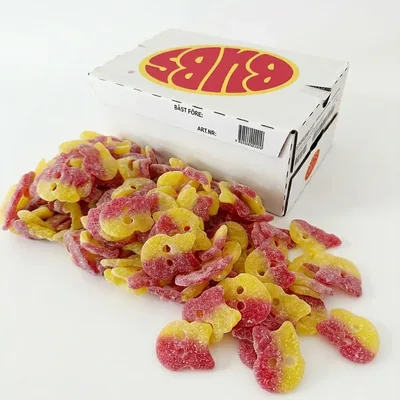
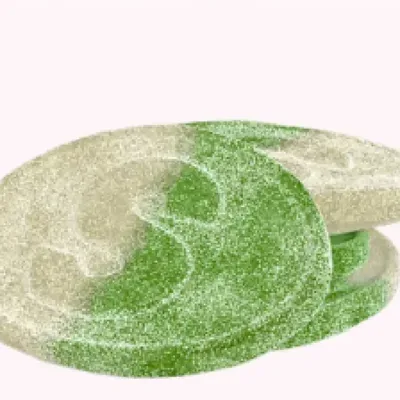
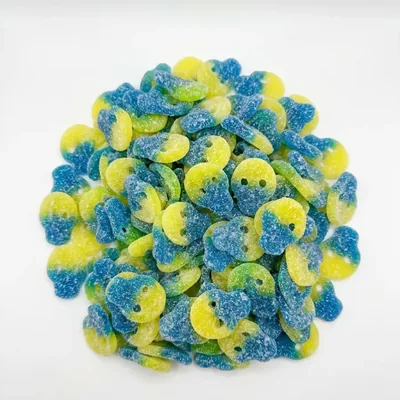
For a starter set, the fast movers are the sour skulls and the big sour discs. Bubs Lemon/Raspberry Skulls from BUBS are gelatin-free and vegan. S Marke Sour Apple from S-Marke is flagged vegan and halal and contains wheat/gluten. Matthijs Swedish Skulls from Matthijs are flagged gluten-free, halal, vegan and vegetarian. Franssons Fizzy Rings from Franssons add a fizzy texture to the set.
A four-case trial order

For the full commercial picture, including margin math and assortment planning, our pillar is wholesale Swedish candy: the complete buyer's guide, and how to stock Swedish candy covers the shelf plan itself.
Ready to compare us against your current supplier? Apply for a wholesale account, browse the catalog, or start a bulk order. Want a second opinion on your candy set? Get in touch.
Frequently asked questions
What should I look for in a wholesale candy distributor?+
Catalog fit with your actual shelf, clear minimums, honest lead times, published pricing with legible tiers, a realistic path to payment terms, DDP handling on anything imported, and a sample or single-case policy so you can test before you commit.
Do wholesale candy distributors require a minimum order?+
Many do, either as a dollar floor or as a minimum quantity per item. Always ask about both plus the reorder minimum. We do not have one: you order by the case, mix and match, with no order minimum.
Is it better to buy from a distributor or an importer?+
It depends on the category. A broadline distributor is efficient for filling many categories on one invoice. An importer removes a markup layer on the lines it lands itself, which is why our case prices come in under most US distributors on Swedish and European candy. Many shops use both.
How do I get wholesale pricing on candy?+
Apply for a wholesale account with the supplier. With us, Tier 1 list pricing is public to everyone, accounts approve automatically on apply, and Tier 2 and Tier 3 pricing is available to approved volume and strategic buyers.
Do I need a resale certificate to buy wholesale candy?+
Most wholesale suppliers will ask for resale or tax documentation as part of setting up a trade account, and requirements vary by state and province. Have your business registration and resale paperwork ready before you apply.
Keep reading

Gustav Lindqvist · Candy Master
Gustav grew up in Sweden on a strict Saturday-candy schedule, mixing his lördagsgodis bag at the lösgodis wall before he could spell salmiak. He has spent years tasting his way across Scandinavian candy, and now curates the range at TheSweetsTruck, from BUBS sour skulls to the saltiest licorice most people cannot finish.
Last updated 8/5/2026