Black Licorice Candy: What It Is, Why It Tastes That Way, and Why It Divides People
Black licorice candy is confectionery built on extract from the licorice root, Glycyrrhiza glabra, cooked with sugar, glucose syrup and a binder such as wheat flour, starch or gelatin. Nordi

Black licorice candy is confectionery built on extract from the licorice root, Glycyrrhiza glabra, cooked with sugar, glucose syrup and a binder such as wheat flour, starch or gelatin. Nordic black licorice runs drier, saltier and far more intense than American licorice ropes, which lean mostly on anise oil and molasses.
What black licorice actually is
Licorice is a legume. The plant stores a compound called glycyrrhizin in its woody roots, and glycyrrhizin is roughly thirty to fifty times sweeter than table sugar, with a slow, spreading, faintly bitter finish that plain sugar never delivers.
Making candy from it starts in the field, not the kitchen. Roots are harvested, chopped and boiled until the liquid reduces to a dark, tarry concentrate the trade calls block juice. That block is the flavour engine. A confectioner melts it into a syrup base, adds a binder (wheat flour in the Anglo and Australian tradition, starch or gelatin in most Nordic and Dutch factories), extrudes the mass into ropes, coins, diamonds or cats, dries it in warm air for hours or days, then polishes it with carnauba or beeswax for shine.
Two things follow. First, texture comes from the binder, not the licorice: wheat flour gives a soft bendy chew, starch gives a firmer snap, gelatin gives bounce. Second, most licorice extract made in the world never becomes candy at all. It goes into tobacco, pharmaceuticals, brewing and soft drinks, where its job is to round off bitterness rather than to be the star.
Licorice root or anise: the flavour swap most people never notice
Here is the part that surprises people. A large share of candy sold as licorice contains little or no licorice root. The aroma most Americans picture when they hear the word is anethole, the compound in anise seed, star anise and fennel. It is cheap, stable and enormously strong.
: Real licorice extract: Anise or star anise oil
Source: Boiled root of Glycyrrhiza glabra: Seed of anise or fruit of star anise
Taste: Earthy, sweet, slightly bitter, long finish: Sharp, perfumed, fast, then gone
Sweetness: Sweet on its own, from glycyrrhizin: Not sweet at all, purely aromatic
Usually found in: Nordic and Dutch licorice, pastilles, salmiak: American ropes, Italian anise candy
Label clue: "licorice extract", "liquorice": "natural flavour", "anise oil"
Plenty of recipes use both. A quick test at home: if a black candy smells like a shot of sambuca and leaves nothing behind, that is anise. If the flavour arrives slowly and sits at the back of your throat for a minute afterwards, that is glycyrrhizin doing the work.
Why Nordic black licorice is not American black licorice
The gap is not subtle, and it is the single biggest reason someone who "hates licorice" in Ohio can fall for it in Copenhagen.
Style: Built on: Texture: Sweetness: Salt or salmiak
American rope: Anise, molasses, wheat flour: Soft, bendy: High: None
British and Australian: Licorice extract, molasses, wheat flour: Thick, soft chew: Medium to high: None
Dutch drop: Licorice extract, sugar, starch or gelatin: Soft to leathery: Low to medium: Often, from light to double salt
Swedish and Danish lakrits: Licorice extract, sometimes chocolate or fruit layers: Firm, chewy, often coated: Medium: Sometimes
Finnish salmiakki: Licorice extract plus ammonium chloride: Hard or firm: Low: Heavy
American manufacturers treat licorice as a dessert flavour, so they sweeten it and soften it. Nordic and Dutch manufacturers treat it closer to a seasoning, something with salt, bitterness and length, which is why so much of it sells to adults rather than children. Our Nordic candy comparison goes deeper on regional habits, and Swedish vs Dutch licorice covers the two heavyweight traditions side by side.
Salty licorice: where the Nordic road forks
The salt in salty licorice is usually not table salt. It is ammonium chloride, known as salmiak. It reads as salty for a moment, then turns astringent and slightly numbing, a bit like seawater with a metallic edge. Finland and the Netherlands push it hardest, and Sweden, Denmark, Norway, Iceland and northern Germany all have their own versions.
Sweet black licorice and salty black licorice are effectively two different products that share a colour. If you are approaching this for the first time, start sweet, then step across. We wrote separate guides on salty black licorice and what salmiak actually is, plus a piece on whether salty licorice is really an acquired taste.
Why black licorice splits a room
Three things stack up. Exposure matters most: people raised on it read the bitterness as depth, while people meeting it at thirty read the same bitterness as medicine. Sensitivity to anethole varies between individuals, so the same candy genuinely smells stronger to some people than to others. And salmiak adds a drying, savoury sensation with no equivalent in American candy, so there is no reference point to file it under.
That is taste, not fact, and we treat it that way. In a retail pick and mix, black licorice rarely sells like sour gummies, but it does something better for a shop: it sells hard to a small group who buy it every single time.
One safety note worth knowing
Glycyrrhizin is not just a flavour. It can lower potassium levels in some people and raise blood pressure. The FDA has published a consumer note warning that adults over 40 who eat around two ounces of black licorice a day for a couple of weeks can end up with an irregular heart rhythm. That is a real effect at real quantities, and worth knowing if you snack on it daily or take heart or blood pressure medication. It does not apply to red licorice or anise-flavoured candy, because neither contains glycyrrhizin.
What is in our catalogue today
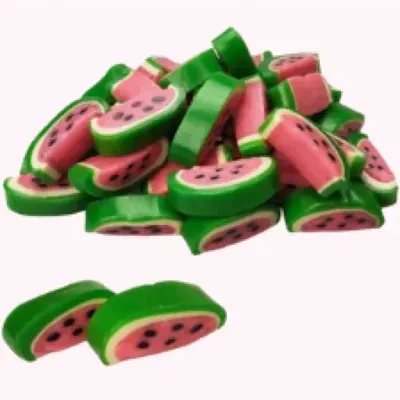
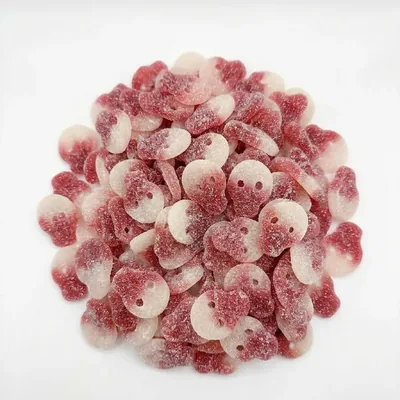
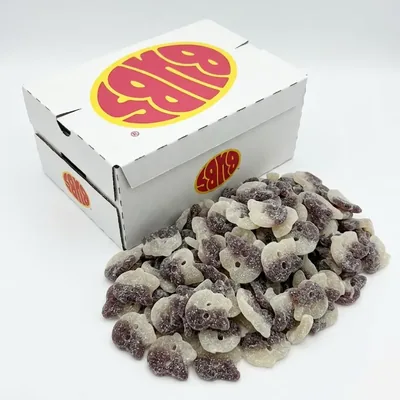
Straight answer, because you will find it out at checkout anyway: our current US catalogue is fruit and sour led, and we do not import black salty licorice into Santa Fe Springs today. What we do carry from the licorice family is the layered slice, a Nordic format that stacks a chewy base with a softer top layer, in fruit flavours rather than black. Below are those SKUs, plus the two skull lines licorice shoppers most often buy instead.

Frequently asked questions
What is black licorice made of?+
Licorice root extract, sugar or glucose syrup, and a binder that sets the texture. Wheat flour is standard in American, British and Australian licorice, while Nordic and Dutch makers usually use starch or gelatin. Molasses, caramel colour, anise oil and, in salty versions, ammonium chloride are common additions.
Does all black licorice contain real licorice root?+
No. Plenty of black candy is flavoured with anise oil alone, which smells similar but is a different plant and a different compound. Check the ingredient panel for licorice extract or liquorice. Nordic and Dutch licorice almost always contains the real thing, American ropes frequently do not.
Why does some black licorice taste salty?+
Because it contains ammonium chloride, called salmiak, rather than ordinary salt. It gives a sharp saline hit followed by a drying, slightly numbing finish. Finland and the Netherlands make the strongest versions, sometimes labelled double salt. Sweet black licorice contains none of it.
Is black licorice bad for you?+
In normal amounts, no. The compound glycyrrhizin can lower potassium and raise blood pressure at high, sustained intake, and the FDA advises caution for adults over 40 eating about two ounces a day for two weeks or more. If you take heart or blood pressure medication, treat it as a food worth mentioning to your doctor.
Is black licorice the same as anise candy?+
No. Anise candy is flavoured with anise or star anise oil and is not sweet on its own. Black licorice built on root extract carries its own sweetness and a much longer finish. The two smell alike, which is why the names get used interchangeably in the US.
Do you sell black licorice wholesale?+
Not right now. Our imported range is currently fruit, sour and foam candy from Swedish, Dutch and Spanish makers, and the licorice-format products we stock are the layered slices in fruit flavours. Wholesale pricing is public on every product page, and you order by the case with no order minimum.

Gustav Lindqvist · Candy Master
Gustav grew up in Sweden on a strict Saturday-candy schedule, mixing his lördagsgodis bag at the lösgodis wall before he could spell salmiak. He has spent years tasting his way across Scandinavian candy, and now curates the range at TheSweetsTruck, from BUBS sour skulls to the saltiest licorice most people cannot finish.
Last updated 8/23/2026