Candy Merchandising: Displays That Drive Impulse Sales
Candy merchandising for retailers: counter placement, eye-level facings, and cross-merch that turn Swedish candy into high-margin impulse sales.
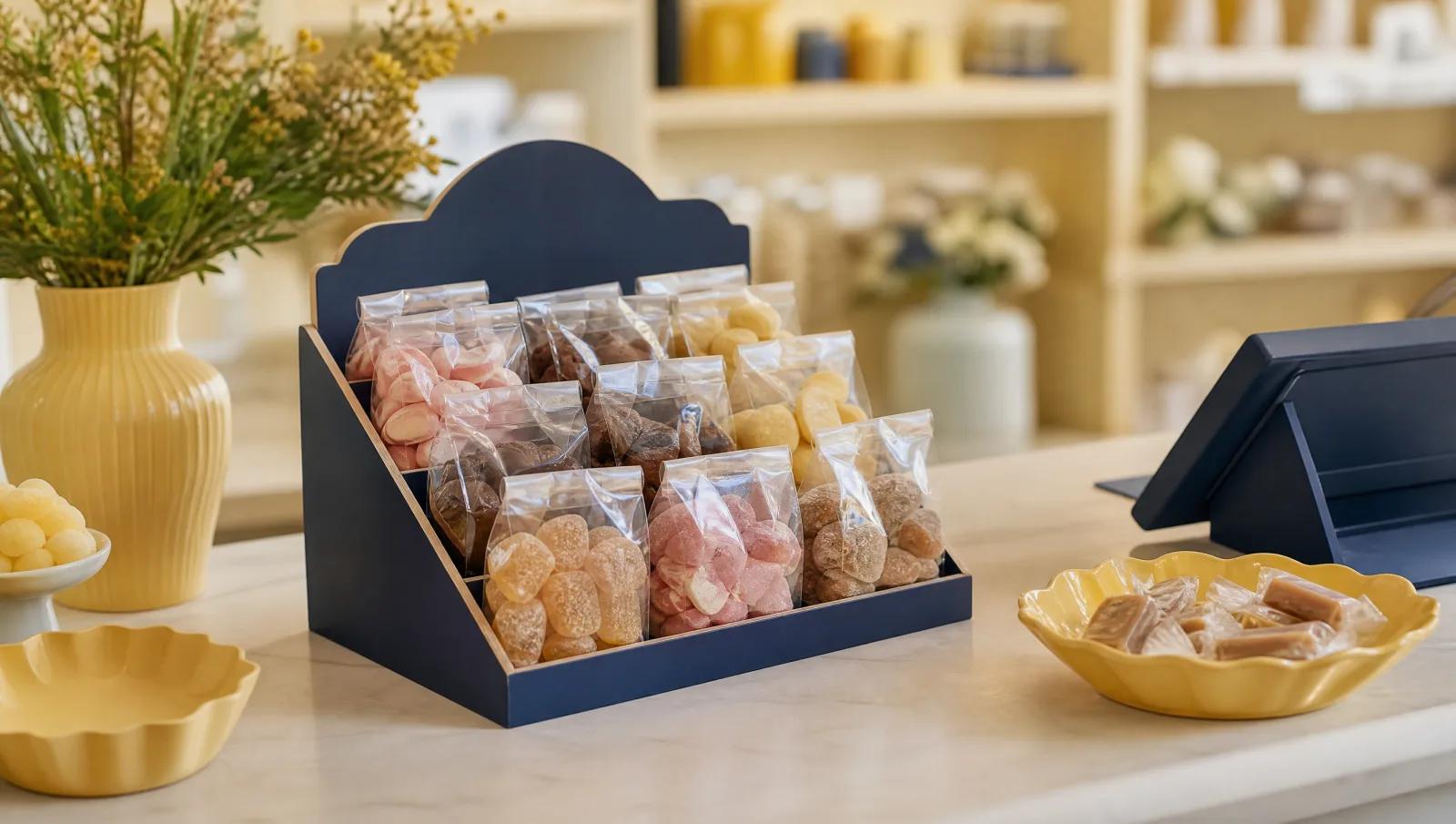
Good candy merchandising means putting a small, curated set of premium candy at the register, within arm's reach and at standing eye level. Lead with three to five hero bags, cross-merchandise beside coffee and gifts, add a clear price sign, and rotate the hero flavors so the display never looks stale. Placement, not selection, drives most impulse sales.
We import Swedish and European candy direct and ship it from our Santa Fe Springs, California warehouse to retailers across the US and Canada. Before we started importing, we ran candy shops in Sweden, so the advice below comes from watching real counters, not a planogram diagram. If you want the full wholesale picture first, start with our wholesale Swedish candy guide.
Impulse candy lives at the register
Candy is a decision a shopper makes in the last ten seconds of a visit, so the register zone is where it belongs. The single most reliable merchandising move is to move your best candy to the counter and put it where a standing adult looks without bending or reaching. Eye level for someone at the till is roughly chest-to-face height, and a basket or riser that lifts small bags into that band will outsell the same product sitting flat on the counter.
Keep the impulse set tight. A wall of thirty flavors reads as work, and a shopper mid-checkout will not do work. Three to five clearly faced hero bags convert far better than a crowded bin, because the choice is small enough to make on instinct. Single-serve bags are the ideal impulse unit here: one shopper, one bag, one clean decision, and no commitment to a whole tub.
Build a hero set, then face it clean
Start your counter with premium single bags that photograph well and read as a small gift. Our reliable movers in the 90g single-bag format are BUBS Goody Banana/Toffee, Bubs Strawberry Vanilla, and the foam-based BUBS Raspberry/Cool Hallonskalle skum, all from BUBS and all vegan and gelatin-free. For a shape that stands out in a jar, Matthijs Swedish Skulls from Matthijs is a gluten-free, vegan, halal skull-shaped candy that draws the eye.
Stock these at the counter
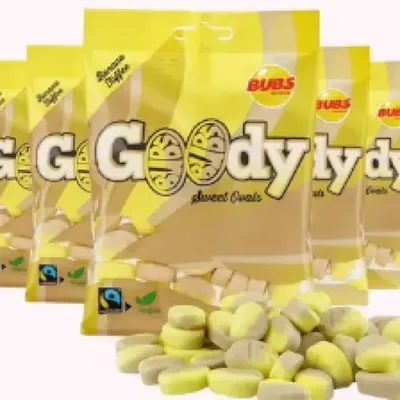
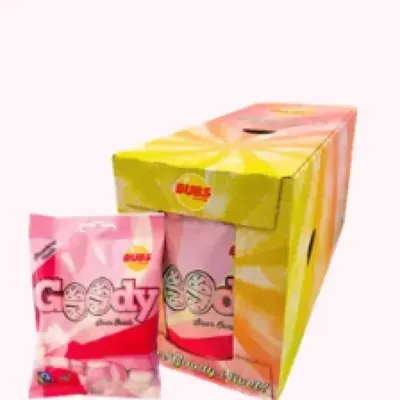
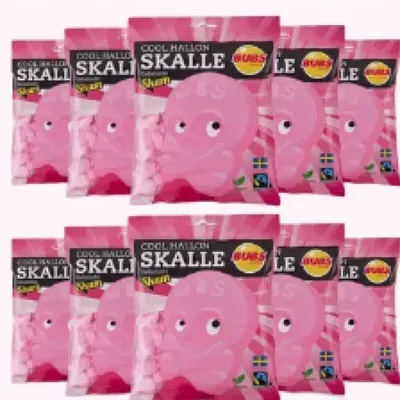
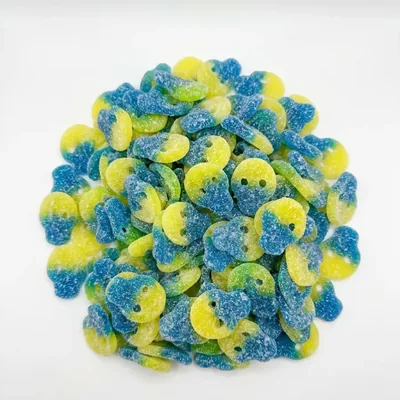
Once the set is chosen, facing does the quiet work. Keep every bag label forward, fill gaps as they sell so the display never looks picked over, and give each hero its own clear slot instead of mixing flavors in one heap. A tidy facing signals that the product is fresh and cared for, and that perception alone lifts the take rate at the register.
Cross-merchandise with coffee and gifts
Candy sells hardest next to a related purchase, because you are catching a shopper who is already in a treat mindset. If you run a café or sell coffee, park a small candy basket right beside the espresso prompt. A soft caramel like Lonka Caramel Soft Bites Bon Bon from Lonka pairs naturally with a dark roast and turns "just a coffee" into a two-item ticket. Our guide to the best Swedish candy for coffee shops and cafés goes deeper on that pairing.
Gift-forward shops have a second angle. Single bags read as a small, giftable extra, so a candy display beside greeting cards, gift wrap, or a checkout gift table catches the shopper adding one more thing. The classic non-sour BUBS Cola Skulls and the giftable BUBS 90g bags both work well in that gift-adjacent spot.
Signage that answers the one question
A shopper will not pick up a bag if the price is a mystery, so a small, legible price sign is the highest-return piece of signage you can add. Beyond price, one short line of story earns its space with an import like this. A card that says "Swedish candy, imported direct" or "vegan and gelatin-free" gives the shopper a reason to try something unfamiliar and justifies a premium impulse price. Keep it to a few words. Signage at the register is read in a glance, not studied.
If you sell pick and mix or plan to, signage matters even more, because the shopper is pricing by weight and needs the per-bag or per-pound number in plain view. Our walkthrough on how to run pick and mix covers the scoop-wall version of the same idea.
Rotate the hero flavors
A static display goes invisible to your regulars within a few weeks, so rotation keeps the counter feeling new. You do not need to change the whole set. Swap one or two hero flavors on a regular cadence and let the rest hold steady. A sour pick is the easiest rotating talking point, because sour is the flavor shoppers photograph and mention to a friend. Because we let you mix and match by the case, rotating a single flavor into your next order is cheap and low-risk.
Watch which heroes actually move and promote your fastest sellers into the best-faced slot, then demote the laggards to a lower shelf or drop them. That simple top-versus-tail discipline, run every reorder, is most of what keeps a small candy category healthy over a year. Our guide on how to stock Swedish candy lays out the facings-and-reorder rhythm in more detail.
Buying the display set from us
We import direct, so our case prices come in under most US distributors, and every order ships DDP with US labels and duties already paid. There is nothing for you to clear at customs and nothing to relabel. There is no order minimum, and you mix and match by the case, so you can build a tight, curated counter set without over-committing to any one flavor. Everyone buys at our public Tier 1 list pricing, and approved accounts unlock Tier 2 and Tier 3 pricing plus NET payment terms for selected partners, based on order history.
Ready to build a counter that sells?
Pick three to five hero bags, face them clean at the register, add a price sign, and let us ship the set to you DDP from California. Apply for a wholesale account, size a display set with our bulk order tool, or contact us and we will help you choose a counter assortment that fits your store.
Frequently asked questions
Where should candy go in a store for the most impulse sales?+
At the register, within arm's reach, lifted to standing eye level in a basket or on a riser. The checkout zone catches shoppers in the last seconds of a visit, when a small premium bag is an easy add-on decision.
How many candy SKUs should I put on the counter?+
Three to five faced heroes convert better than a crowded bin. A small, clear set is a choice a shopper can make on instinct, while a wall of flavors reads as work and gets skipped mid-checkout.
What is the best candy format for impulse buys?+
Single-serve bags. They are one clean decision for one shopper, they travel in a pocket, and they read as a small gift. Our BUBS 90g single bags are built for exactly this counter role.
How often should I rotate the candy display?+
Swap one or two hero flavors on a regular cadence while the rest hold steady. Because you mix and match by the case, rotating a single flavor into your next order is cheap and low-risk.
Does signage really affect candy sales?+
Yes. A clear price sign removes the one question that stops a shopper from picking up a bag, and a short line like "imported direct" or "vegan and gelatin-free" gives an unfamiliar import a reason to try.
Keep reading

Gustav Lindqvist · Candy Master
Gustav grew up in Sweden on a strict Saturday-candy schedule, mixing his lördagsgodis bag at the lösgodis wall before he could spell salmiak. He has spent years tasting his way across Scandinavian candy, and now curates the range at TheSweetsTruck, from BUBS sour skulls to the saltiest licorice most people cannot finish.
Last updated 8/2/2026