Christmas Candy for Retailers: The Q4 Buying and Display Calendar
A week-by-week Q4 candy calendar for shop buyers: when to order, how to plan the December display, what actually sells, and how to end the season with no markdown.

Order your main Christmas candy buy so it lands before Thanksgiving, flip the floor from Halloween on November 1, and hold cash back for one mid-December top-up. December volume is front-loaded into the first two weeks, and the transaction size peaks in the last five days. Buy unbranded bulk so nothing marks down. This is the buying side of Christmas. If you want the consumer story about what Swedes actually eat over the holidays, that is [Swedish candy at Christmas](/journal/swedish-candy-christmas). This one is for whoever writes the purchase order.
The Q4 calendar, week by week
The mistake most first-year candy shops make is treating Q4 as one long peak. It is not. It is four distinct trading periods with different customers, different basket sizes and different buying decisions behind them.
Period: What is happening on the floor: What you should be doing
Late Sept to mid Oct: Halloween owns the front of the shop: Main Christmas order placed and landing
Nov 1 to Thanksgiving: Slow build, early gift shoppers, corporate enquiries: Floor flipped, gift block built, corporate quotes out
Dec 1 to Dec 14: Peak volume, most transactions of the year: Selling, refilling daily, one top-up order
Dec 15 to Dec 24: Fewer customers, much larger baskets: Nothing but selling and refilling
Dec 26 onward: Collapse: Anything Christmas-branded is now a markdown
Two things fall out of that table.
Volume and value peak at different times. The first two weeks of December give you the transaction count. The last week gives you the basket size, because that is when the panicked gift buyer arrives and buys a large bag without checking the price. Staffing and refill discipline matter more in the first half, and having anything at all left on the shelf matters more in the second.
The floor flip is a fixed date, not a mood. November 1. Halloween candy that is still on display on November 3 is telling your customer you are behind. If you are running both peaks, bulk candy for Halloween and Christmas covers how the two sets relate.
When to order
Work backwards from the shelf, not forwards from the invoice.
Main buy: lands before Thanksgiving. Not "ordered before Thanksgiving", landed. The shelf has to be full and merchandised when the first real gift traffic walks in, and that traffic arrives earlier every year. For most shops that means placing the main order in the second half of October.
Top-up buy: placed around December 5 to 8. This is the order that saves the season. By early December you know which bins are moving and which are not, and you have a week of real data instead of a forecast. We ship from Santa Fe Springs, California, by UPS Ground or UPS Express, roughly two business days across the US, which means a Monday order is usually on your shelf by Wednesday or Thursday. Canada ships DDP with duties paid at checkout, typically three to five days, so Canadian buyers should pull that top-up date a few days earlier.
Nothing after about December 18. Not because we stop shipping, but because candy landing on December 22 has two selling days and then eleven months of storage.
Pallet orders need more runway. Orders of $2,000 or more can move by pallet, arranged by email, and a pallet is not a same-week decision. Raise it with us in October, not in December.
Because there is no order minimum, you can genuinely split the buy this way. Order by the case, mix and match across brands, and buy the last twenty percent of your season late rather than guessing it in October. That single habit does more for Q4 cash flow than any discount.
Display planning
Christmas is the one time of year when candy gets a dedicated block rather than a bin on a wall. Plan the block before the stock lands.
Give it the front. Nostalgia and gift buying are impulse behaviours, and impulse behaviours need to be seen from the door. The bulk wall can stay where it is. The Christmas block moves to the entrance.
Build it around three price points. A small unit (a jar, a scoop bag, a stocking filler), a mid unit (a filled bag or box), and a large unit (a basket or a hamper). The large unit is what the December 22 customer buys, and if you do not build one they will buy the mid unit and you will leave money on the table.
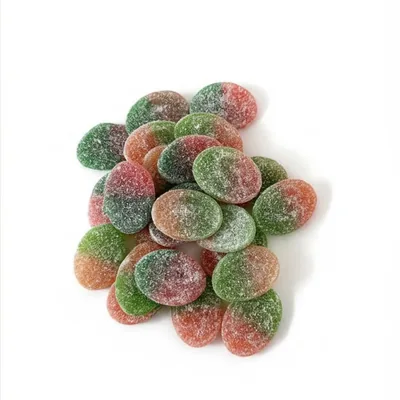
Keep the palette to red, white and green. This is the practical reason to buy loose candy by colour rather than by seasonal packaging. A red case, a green case and a white or pink case make a Christmas display without a single printed snowflake, and none of them expire as a concept on December 26. The wider merchandising logic is in candy merchandising.
Add one nostalgia table. Glass jars, wooden scoops, handwritten cards, pale colours. It converts browsers into buyers and it costs almost nothing. We go through the formats in old-fashioned Christmas candy.
Refill daily, not weekly. A half-empty bin in December reads as picked-over. Under-fill bins and top them up rather than letting them run down.
What actually sells in December
Four customer types show up, and they buy differently.
The gift buyer. Wants something that looks like a present without being wrapped. Buys the mid and large units. Cares about presentation and about the story on the card. This is where an import you can explain beats a national brand they can buy anywhere.
The party and table host. Buys colour and volume for a bowl. Buys sours and brights, not just red and green. This is your bulk wall doing Christmas work.
The corporate buyer. Appears in November, disappears by December 10, and buys in quantity with a lead time. Worth chasing in October because the order is large and predictable. Covered in corporate candy gifting.
The last-minute buyer. December 20 to 24. Buys whatever is left that looks generous. Does not comparison shop. Your job here is purely to have stock.
Notice that only one of the four needs anything Christmas-specific. That is the argument for stocking colour and format rather than seasonal SKUs.
Cases that do Christmas work
Tier 1 list prices below, current at the time of writing. The product page is always the authority.
Case: Case size: Tier 1 price: Role in the block: Dietary flags we publish
S-Märke Sour Strawberry: 8.81 lb: $59: The red anchor, large case for the peak: Halal, vegan
S-Märke Sour Apple: 8.81 lb: $59: The green anchor: Halal, vegan
Franssons Foam Strawberries: 2.65 lb: $17: Red and white, soft, fills a bag visually: None on file
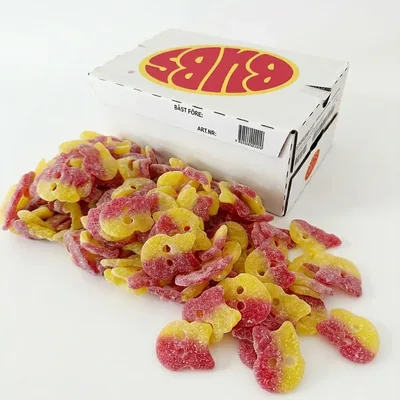
Bubs Lemon/Raspberry Skulls: 7 lb: $51.90: Volume driver for the party and teen sale: Gelatin-free, vegan
Lonka Caramel Soft Bites: 7.15 lb: $55: Caramel for the nostalgia table: None on file
Read the last column carefully. The S-Märke line is flagged halal and vegan, and it does contain wheat, so it is not a gluten-free item and must not be signed as one. The Franssons and Lonka cases carry no flags at all in our data, so we publish none. If you need a gluten-free bin in the block, use the Matthijs line, which is flagged gluten-free, halal, vegan and vegetarian.
A Christmas block in four cases


Ending the season with no markdown
The measure of a good Christmas is not December revenue, it is what you are holding on January 2.
Three rules do most of the work. Keep seasonal-branded product to a small, deliberate fraction of the buy, because that is the only part that genuinely dies. Buy loose candy by colour, so a red bin in December becomes a red bin in February. And keep your reorder trigger running through December instead of switching to eyeball judgement, so you notice a slow bin on December 5 rather than on December 27.
If a case does stall, the answer is a bag, not a discount. Scoop it into a mixed bag with two things that are moving and price the bag. Nobody feels marked down and your average basket goes up. The margin arithmetic behind that is in candy profit margins.
Shelf life gives you room to be patient. Most of what we carry holds well past the season if it is stored sealed, cool and dry, which is covered in Swedish candy shelf life.
Ordering
Order by the case, mix and match across brands, with no order minimum. Split the buy: a main order landing before Thanksgiving and a top-up in the first week of December.
We ship from Santa Fe Springs, California, by UPS Ground or UPS Express, about two business days across the US. Canada ships DDP with duties paid at checkout, typically three to five days. Orders of $2,000 or more can go by pallet, arranged by email. Tier 1 pricing is public, wholesale accounts approve automatically when you apply, and NET payment terms are offered to selected partners based on order history.
Frequently asked questions
When should retailers order Christmas candy?+
Place the main order in the second half of October so it lands before Thanksgiving, then place a top-up around December 5 to 8 based on a week of real sales data. Avoid ordering after roughly December 18, when arriving stock has almost no selling days left.
When does Christmas candy actually sell?+
Transaction volume peaks in the first two weeks of December. Basket size peaks between December 20 and 24, when last-minute gift buyers arrive and buy large without comparing prices. The two halves of the month need different staffing and different stock decisions.
How much Christmas-branded candy should I buy?+
As little as you can get away with. Seasonal packaging is the only part of the buy that is genuinely worthless on December 26. Unbranded bulk candy bought for its colour does Christmas work in December and ordinary work in January.
What colours should a Christmas candy display use?+
Red, white and green as the base, with one pale nostalgia table for contrast. You can build the whole block from loose candy chosen by colour, without any printed seasonal graphics.
Do you offer payment terms for a large Q4 order?+
NET payment terms are offered to selected partners based on order history. If Q4 is your first season with us, place a normal order first and talk to us about terms before the following year.
Is there a minimum order?+
No. Order by the case, mix and match, with no order minimum, which is what makes splitting Q4 into a main buy and a December top-up practical.

Gustav Lindqvist · Candy Master
Gustav grew up in Sweden on a strict Saturday-candy schedule, mixing his lördagsgodis bag at the lösgodis wall before he could spell salmiak. He has spent years tasting his way across Scandinavian candy, and now curates the range at TheSweetsTruck, from BUBS sour skulls to the saltiest licorice most people cannot finish.
Last updated 8/23/2026