Old-Fashioned Christmas Candy: The Formats, and Why They Still Sell
What old-fashioned Christmas candy actually means: ribbon candy, boiled sweets, pastilles and Swedish julgodis, plus how the nostalgia buy behaves on a shop floor.
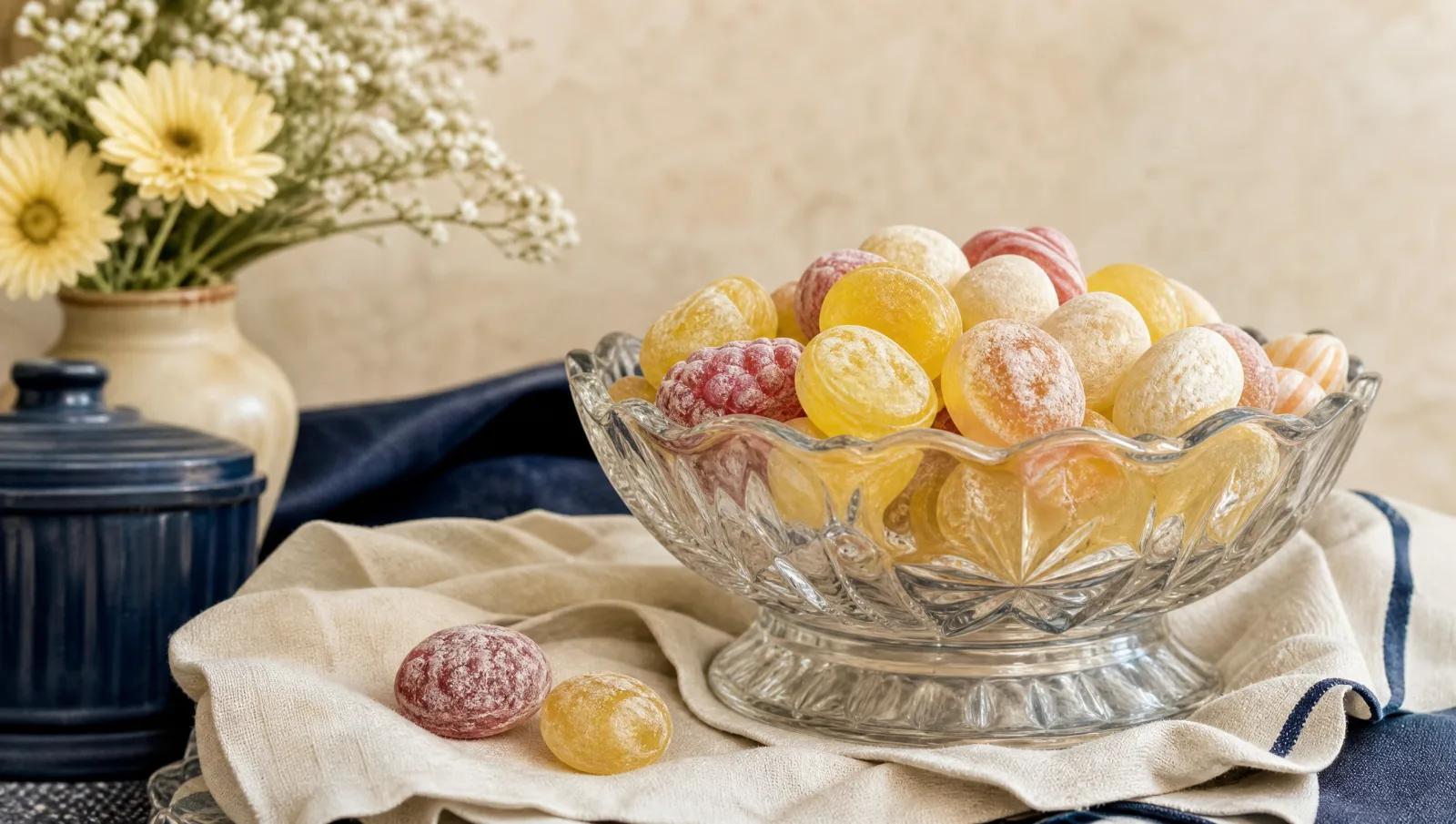
Old-fashioned Christmas candy means the pre-industrial formats: pulled and boiled sugar like ribbon candy and polkagris, hard sweets, pastilles, and the Swedish julgodis set of knäck, ischoklad and foam. What makes them old-fashioned is the process and the loose, by-weight sale, not the flavour. We import Swedish and European candy in bulk cases, and every October we get the same question from shop buyers: what do you have that looks old-fashioned? It is worth pulling apart, because "old-fashioned" is doing a lot of work in that sentence and it does not mean what most people assume.
What "old-fashioned" actually refers to
It is not a flavour category. There is no old-fashioned taste. What the shopper is reaching for is a set of processes and presentation cues that predate wrapped, extruded, moulded confectionery.
Four cues do most of the work:
Pulled and boiled sugar. A batch of sugar and glucose cooked to hard crack, worked by hand on a cooled table, aerated on a hook until it goes satin, striped, and cut. Ribbon candy, candy canes, polkagrisar and clear toys are all this process. It looks handmade because it largely is.
Sold loose, by weight. Scoops, jars, paper bags, a scale on the counter. The moment candy goes into a printed film bag it stops reading as old-fashioned, regardless of what is inside.
Recognisable by shape rather than by brand. A striped stick, a folded ribbon, a boiled fruit drop. No logo required. That is exactly why an unbranded bulk case can serve this shelf and a licensed seasonal bag cannot.
A tin, a jar, or a bowl. The container is part of the format. Old-fashioned candy in a shipper carton does not sell. The same candy in a glass jar with a scoop does.
The formats, one by one
Ribbon candy. Thin sheets of striped boiled sugar run through crimping rollers and folded into an accordion while still warm. A nineteenth-century Christmas fixture, hung on trees before it moved into bowls. Beautiful, extremely fragile, and almost never eaten. We go into how it is made and why it breaks in ribbon candy.
Hard-boiled sweets and drops. Fruit drops, sour balls, humbugs, mint rocks. Long shelf life, cheap per piece, and they hold a jar well because they do not slump.
Polkagrisar. Swedish peppermint sticks, white with red stripes, from Gränna. Amalia Eriksson was granted permission to make and sell them there in 1859 and the town still trades on it. Structurally the same pulled-sugar process as a candy cane, made in a straight stick.
Pastilles and lozenges. Compressed or gum-set discs, often menthol, eucalyptus or salmiak. The Swedish end of this tradition is covered in Lakerol. Pastilles read as old-fashioned because they come in a tin and because the flavours are medicinal rather than fruity.
Julgodis. The Swedish Christmas candy set is its own thing, and it is mostly homemade rather than bought: knäck (a chewy caramel toffee cooked in small tins), ischoklad (chocolate set with coconut fat in a paper cup), marzipan pigs, and foam santas. We cover the full tradition in Swedish candy at Christmas. Worth knowing if you are selling into a Scandinavian-American customer base, because they are not looking for ribbon candy, they are looking for knäck.
Foam and bon bons. Aerated foam candy (skum) and soft bon bons both predate modern gummy production and both still taste like a grandparent's candy dish. This is the part of the old-fashioned shelf we can actually supply in bulk, and it is the cheapest way in.
The nostalgia-buying pattern at retail
Nostalgia candy does not behave like the rest of your wall, and buying it as though it does is how shops end up marking it down in January.
It is bought once a year, on sight. Nobody plans a ribbon candy purchase. They see it, they remember it, they buy it. That makes it a display-driven impulse item, which means the placement matters more than the price and the front-of-store position matters more than the depth of the buy.
The buyer is usually not the eater. It is bought as a gift, a table item, a decoration, or an offering to a visiting parent. That pushes the decision toward how it looks in a bowl and away from how it tastes.
It is price-insensitive within a narrow band. A nostalgic shopper will pay a premium for a small jar and will not buy a large bag at a discount. Small units, high perceived margin, low volume.
It is completely dead on December 26. Harder dead than the rest of the Christmas set, because the association is with the season rather than with a flavour. This is the whole reason to buy unbranded loose candy for this shelf rather than seasonal packaging. A bulk case of foam or bon bons that did not sell in December is just candy in January. A printed Christmas bag is a markdown.
That last point is the buying rule, and it is the same rule that runs the rest of the Q4 set. We lay it out in Christmas candy for retailers and across the year in seasonal candy planning.
What we actually carry for this shelf
Being straight about it: we do not import ribbon candy, candy canes, knäck or polkagrisar. We import bulk cases of Swedish and European loose candy, and several of those cases do the old-fashioned job well because the formats themselves are old.
Tier 1 list prices below, current at the time of writing. The product page is always the authority.
Case: Case size: Tier 1 price: Why it reads old-fashioned: Dietary flags we publish
Lonka Caramel Soft Bites: 7.15 lb: $55: Soft caramel bon bon, the closest format to knäck we carry: None on file
Lonka Strawberry Bon Bon: 7.15 lb: $55: Pink and white soft bon bon, a classic candy-dish piece: None on file
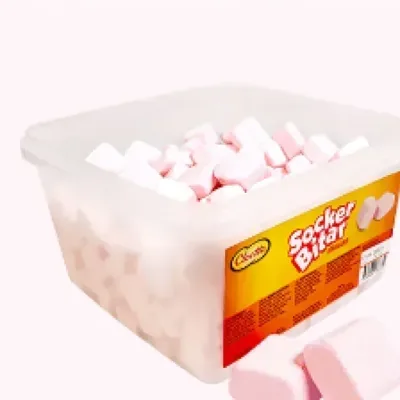
Strawberry Sugar Cubes (Sockerbitar): 1.81 lb: $10: Sugar-rolled cubes, small unit, jars beautifully: None on file
Pastel Fish: see product page: $45: Soft pastel palette, reads as a bowl item rather than a wall item: None on file
Franssons Foam Strawberries: 2.65 lb: $17: Aerated skum, a pre-gummy format, red and white: None on file
Read the last column literally. We publish dietary flags only where our supplier data carries them, and none of these five carry any. No vegan sign, no gelatin-free sign, nothing. If a customer needs the detail, ask us and we will send the documentation we hold. Where the data does carry flags, we say so, as with the Matthijs line which is gluten-free, halal, vegan and vegetarian.
An old-fashioned candy dish, in bulk

Merchandising it so it reads
The single highest-return move on this shelf is the container. Buy a handful of wide glass jars with lids, fill them from bulk cases, put them on a table near the entrance with a wooden scoop and a handwritten card, and price by the quarter pound. That is it. The candy inside can be entirely ordinary. The presentation is the product.
Second highest return: keep the palette narrow. Old-fashioned reads as red, white, pink, cream and pale green. A neon blue bin next to it kills the effect for the whole table. The general argument is in candy merchandising.
Third: put a card on it that says what it is and where it comes from. Nostalgia buyers read signs. They are already in a remembering mood.
Ordering
Order by the case, mix and match across brands, with no order minimum. For a first nostalgia table, one bon bon case, one foam case and one small sugar-cube case is enough to see whether your customers bite.
We ship from Santa Fe Springs, California, by UPS Ground or UPS Express. Canada ships DDP with duties paid at checkout, typically three to five days. Orders of $2,000 or more can go by pallet, arranged by email. Tier 1 pricing is public, wholesale accounts approve automatically when you apply, and with Earned Credit an approved account's credit line equals its largest paid, delivered order (up to an account limit), spendable at checkout on NET-14 terms, with a card covering any difference.
Frequently asked questions
What counts as old-fashioned Christmas candy?+
Pulled and boiled sugar formats (ribbon candy, candy canes, polkagrisar, clear toys), hard fruit drops, pastilles in tins, soft bon bons and caramels, and foam candy. The common thread is a pre-industrial process and a loose, by-weight sale rather than a printed bag.
Do you sell ribbon candy?+
No. We import bulk Swedish and European loose candy, and ribbon candy is not part of our range. We do carry formats that fill the same shelf: bon bons, foam candy and sugar-rolled cubes, all sold by the case.
What is Swedish old-fashioned Christmas candy called?+
Julgodis. It centres on knäck (a chewy toffee), ischoklad (chocolate set with coconut fat), marzipan pigs and foam santas, and much of it is still made at home rather than bought. See [Swedish candy at Christmas](/journal/swedish-candy-christmas).
Is old-fashioned candy worth stocking if it sells slowly?+
Yes, in small quantities, because it earns its space on display rather than on turns. Buy shallow, present it in jars, and use unbranded bulk candy so anything left over on December 26 is still sellable in January.
What is a polkagris?+
A Swedish peppermint stick, white with red stripes, from the town of Gränna. Amalia Eriksson was granted permission to make and sell them there in 1859, and the town is still known for them.
Is there a minimum order?+
No. Order by the case, mix and match, with no order minimum, which makes testing a nostalgia table cheap.

Gustav Lindqvist · Candy Master
Gustav grew up in Sweden on a strict Saturday-candy schedule, mixing his lördagsgodis bag at the lösgodis wall before he could spell salmiak. He has spent years tasting his way across Scandinavian candy, and now curates the range at TheSweetsTruck, from BUBS sour skulls to the saltiest licorice most people cannot finish.
Last updated 9/25/2026