Marshmallow Candy: How Aerated Sugar Actually Works
How marshmallow candy is made: aerated sugar, gelatin versus egg white, extruded versus deposited, and the Italian marshmallow we import from Bulgari.

Marshmallow candy is sugar syrup whipped full of air and held there by a foaming agent, usually gelatin or egg white albumen. Gelatin marshmallow is springy and keeps well. Egg white marshmallow is lighter and drier. Extruded pieces are cut from a continuous rope, deposited ones are piped into starch moulds. We import European candy into California, and marshmallow is the format buyers underestimate most. It is not filler. It is the hardest texture in the shop to make well and the fastest to sell when it is right.
Marshmallow is a foam, and foam is a manufacturing problem
Everything else on a candy shelf is a solid. Marshmallow is a gas trapped in a sugar matrix, which means the product is mostly air by volume and the manufacturer is selling structure rather than substance.
That structure is fragile. Whip too little and the piece is dense and rubbery. Whip too much and the bubbles coalesce, the foam collapses, and you get a flat, weeping piece that shrinks in the bag. The window is narrow, and it moves with humidity, temperature and the age of the syrup.
Because the piece is so light, a marshmallow case is enormous for its weight. A 2 lb case of foam takes far more bin space than a 2 lb case of gummies. That is good news at a pick-and-mix wall, where a scoop of foam looks generous, and bad news in a storeroom, where it eats shelf.
Gelatin or egg white
Two foaming agents dominate, and they produce genuinely different candy.
Gelatin is the modern default. It stabilises the foam as it cools, holds the bubbles firmly, and gives the springy, slightly chewy marshmallow most people picture. Gelatin marshmallow keeps its bounce for months and tolerates handling. It is an animal product.
Egg white albumen is the older method and still standard in parts of Europe. Albumen sets by protein denaturing rather than by cooling, so the result is lighter, drier and more brittle. It shatters slightly under the tooth instead of bouncing back. Many traditional foam sweets, including a lot of the Nordic ones, sit closer to this end of the spectrum.
Plenty of recipes use both, plus a starch or gum arabic component for extra stability. In practice you can taste which side a piece leans towards: bounce means gelatin, a light collapse means albumen.
Extruded or deposited
Method: How it is shaped: Typical look: What it does to texture
Extruded: Foam is pumped through a shaped die and cut to length: Uniform ropes, tubes, twists, cylinders: Denser, more uniform, springier
Deposited: Foam is piped into impressions in a starch tray and left to set: Detailed shapes: mushrooms, cones, animals, fruit: Lighter, softer, more fragile
Layered: Deposited in two or more passes, often two colours: Two-tone pieces, caps and stems: Contrasting densities in one bite
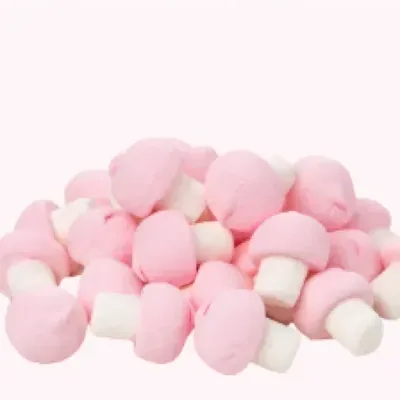
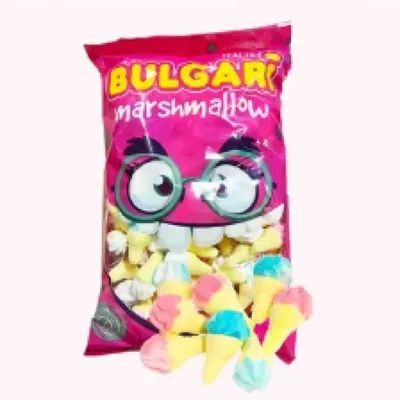
Deposited marshmallow is where the visual charm lives. A mushroom with a pink cap and a white stem, or an ice cream cone with a swirl on top, is a two-pass deposit into starch. It is slower, it needs a starch house, and it is why detailed foam pieces cost more per pound than a plain extruded rope.
Where Swedish skum sits
The Nordic word for this whole family is skum, and Swedes treat it as its own category rather than as a marshmallow sub-type. Skum is generally lighter and less sweet than an American marshmallow, and it is a pick-and-mix staple rather than a bag product or a campfire ingredient.
The reference piece is the foam strawberry, skumjordgubbar, which has its own guide in skumjordgubbar and foam strawberries. The wider category, including why skum eats differently from what Americans expect, is covered in Swedish foam candy and skum.
From Franssons, a foam specialist, we stock Franssons Foam Strawberries in a 2.65 lb case and Franssons Foam Mushrooms in a 2.2 lb case. The Franssons foam candy guide goes into the maker.
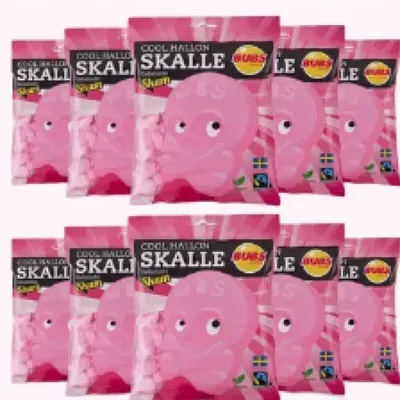
From BUBS, BUBS Raspberry Cool Hallonskalle skum comes in twelve 90g bags and is flagged gelatin-free, halal and vegan in our data, which makes it the skum piece to reach for when a customer needs those.
The Italian marshmallow we import
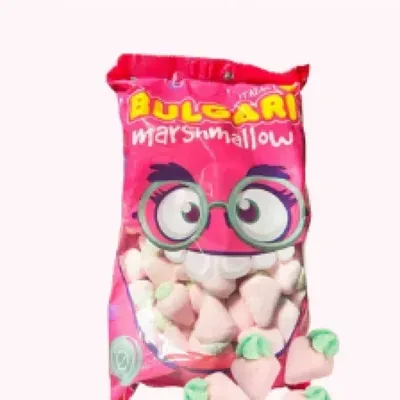
Our detailed marshmallow comes from Bulgari, an Italian maker. Italy has a long confectionery tradition in deposited foam, and it shows in the shapes: these are moulded pieces with two-tone detail rather than cut rope.
We carry three: Bulgari Marshmallow Mushrooms, Bulgari Marshmallow Ice Cream Cones and Bulgari Marshmallow Sour Strawberries, each in a 1.98 lb case. The sour strawberry is the interesting one commercially, because a sour coat on a soft foam base is a texture contrast that fruit gummies cannot copy.
For the maker itself and the rest of the Bulgari range, see Bulgari candy.
We publish dietary flags only where we hold the ingredient data. None of the Bulgari or Franssons cases above carry one in our system, so we make no vegan, vegetarian or gelatin claim about them. Where we do hold data it is on the product page.
Marshmallow and skum cases
Handling foam at retail
Foam is the most humidity-sensitive thing you will put in a bin. It absorbs water from the air, goes tacky, then compresses under its own weight and never recovers.
Keep it cool and dry, keep the bin away from doors and vents, refill from sealed cases rather than topping up, and do not run foam in the slot that gets afternoon sun. Rotate it faster than you rotate gummies. If a bin looks glossy rather than matte, it has already taken on moisture.
The upside is real. Foam is the lightest thing in the wall, so a full scoop costs you very little and looks like a lot. It is also the first candy most children reach for, which makes it a reliable anchor in a family-facing set. Our candy merchandising guide covers where to put it.
How to buy marshmallow candy wholesale
We import direct and ship from our Santa Fe Springs, California warehouse to retailers across the US and Canada. Domestic orders arrive in about 2 business days. Canada ships DDP, duties paid at checkout, in 3 to 5 days.
Order by the case, mix and match, with no order minimum, which suits foam well because the cases are small and light. Tier 1 list pricing is public on every product page, and approved accounts can be promoted to better volume tiers. Wholesale accounts approve automatically when you apply. NET payment terms are offered to selected partners, based on order history. Shipping is UPS Ground or UPS Express, with a pallet option on orders of $2,000 or more, agreed by email.
Frequently asked questions
What is marshmallow candy made of?+
Sugar and glucose syrup whipped with air and stabilised by a foaming agent, usually gelatin or egg white albumen. Flavour, colour and sometimes a starch or gum arabic component go in with it. The piece is mostly air by volume, which is why it weighs so little.
Is marshmallow candy the same as Swedish skum?+
They are related but not identical. Skum is the Nordic version: lighter, less sweet, sold loose from a pick-and-mix wall rather than bagged, and treated as its own candy category rather than as a marshmallow variant. An American marshmallow is denser and sweeter.
What is the difference between extruded and deposited marshmallow?+
Extruded foam is pumped through a die and cut, giving uniform ropes or cylinders and a denser, springier bite. Deposited foam is piped into starch moulds, which allows detailed shapes like mushrooms and cones and produces a lighter, more fragile piece.
Is marshmallow candy vegan?+
Only when the foaming agent is not gelatin and nothing else in the recipe is animal derived. Egg white versions are vegetarian but not vegan. We publish a dietary flag only where we hold the ingredient data, so check the individual product page rather than assuming.
Why does marshmallow candy go sticky?+
Sugar attracts moisture from the air, and foam has enormous surface area, so it absorbs faster than any other candy in the shop. Store it cool and dry, keep bins away from doors and heat, and refill from sealed cases instead of topping up open bins.
How long does marshmallow candy keep?+
Sealed and stored cool and dry, it keeps well within the date on the case. Open in a bin, it degrades faster than gummies because of moisture uptake, so rotate it first. Our [Swedish candy shelf life](/journal/swedish-candy-shelf-life) guide has the practical handling detail.

Gustav Lindqvist · Candy Master
Gustav grew up in Sweden on a strict Saturday-candy schedule, mixing his lördagsgodis bag at the lösgodis wall before he could spell salmiak. He has spent years tasting his way across Scandinavian candy, and now curates the range at TheSweetsTruck, from BUBS sour skulls to the saltiest licorice most people cannot finish.
Last updated 8/23/2026