Norwegian Candy: What to Know
Norwegian candy explained: godteri, smagodt pick-and-mix, lordagsgodt, and why Norway leans chocolate, plus the Swedish and European lines we import.

Norwegian candy is called godteri, bought loose from smagodt pick-and-mix walls and eaten on Saturday as lordagsgodt. Norway leans chocolate and milder licorice, where Sweden leans sour and foam. We import Swedish and European lines rather than Norwegian brands, so we point Norway fans to the closest formats we carry.
We ran candy shops in Sweden before we started importing to the US, which means we spent years selling to Norwegians who drove across the border specifically to buy candy. That is not a joke, it is a genuine national pastime. Here is what Norwegian candy culture actually looks like, how it differs from the Swedish version, and where our catalog fits. For the regional overview, see our Scandinavian candy guide and the Nordic candy comparison.
Godteri, smagodt, and lordagsgodt
Start with the vocabulary, because it tells you most of the story.
Godteri is the general Norwegian word for candy. Smagodt is the pick-and-mix wall: loose pieces in open bins, scooped into a bag and priced by weight. Lordagsgodt, sometimes lordagsgodteri, is Saturday candy, the same weekend ritual Swedes call lordagsgodis.
The Saturday habit is the piece Americans find most surprising. Across Sweden and Norway, candy is traditionally a scheduled weekend event rather than an everyday impulse. Kids get one bag, on one day, and they build it themselves at the wall. We wrote about the Swedish version in why Swedes eat candy on Saturdays, and the Norwegian version works the same way. It is a big reason Nordic pick-and-mix walls are so large: one bag per week means shoppers want variety in that bag, not a single flavor.
If you are a retailer thinking about how that translates to a US floor, the practical takeaway is that a Nordic-style wall needs real breadth before it reads as authentic to a shopper.
What Norway actually eats
Norway is the most chocolate-forward of the Nordic countries. Milk chocolate bars occupy the space that gummies occupy in Sweden, and chocolate-covered foam domes (a soft marshmallow-style center under a chocolate shell) are a Nordic staple that Norway is particularly fond of. Caramel and toffee also run deeper in the Norwegian aisle than in the Swedish one.
Licorice exists, and salty licorice exists, but Norway sits at the milder end of the Nordic salmiak scale. Denmark takes licorice more seriously as a craft, and Finland takes salmiak to its most extreme. If you want to understand that spectrum, our what is salmiak explainer is the place to start.
Sour candy is present but less dominant than in Sweden. A Norwegian smagodt wall will have plenty of sour pieces, but the identity of the wall is broader and more chocolate-and-caramel-leaning than a Swedish one.
The cross-border candy run
Here is a piece of Norwegian candy culture that almost never makes it into US articles. Norway taxed sugar and chocolate for decades before the levy was scrapped, and Norwegian retail prices have long run well above Swedish ones. The result is harryhandel, the tradition of driving over the border into Sweden to load up on groceries and candy at Swedish prices.
Border towns on the Swedish side built entire shopping centers around it, with pick-and-mix walls sized for people filling multiple bags at once. We sold into that reality. It is also a useful reminder for US buyers: much of what a Norwegian eats as everyday candy is, in practice, Swedish candy bought in Sweden.
What we import, and what we do not
We do not stock Norwegian brands. Our range is Swedish plus European producers we buy direct from: Dutch makers Matthijs and Frisia, Italian Bulgari, Spanish Vidal, and German chews from Haribo. We also do not carry chocolate, and nothing in our catalog is salmiak or salty licorice. We would rather say that up front than let you order expecting a Norwegian chocolate bar.
What we can do is cover the parts of a Norwegian candy bag that are not chocolate, and cover them well.
For the toffee and caramel thread, BUBS Goody Banana/Toffee pairs a banana piece with a toffee piece and is gelatin-free and vegan, and the Lonka Caramel Soft Bites Bon Bon is a soft caramel bite from Lonka.
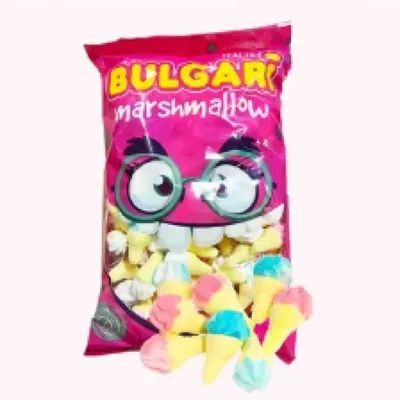
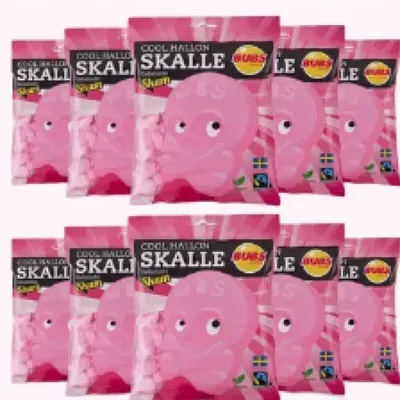
For the foam and marshmallow textures that sit under Nordic chocolate domes, we carry a deep skum range. Bulgari Marshmallow Ice Cream Cones and Bulgari Marshmallow Mushrooms both contain gelatin, so they are not vegan. Franssons Foam Strawberries from Franssons also contains gelatin. If you want the foam texture without gelatin, BUBS Raspberry/Cool Hallonskalle skum from BUBS is gelatin-free and vegan. Our Swedish foam candy explainer covers why skum is such a Nordic signature.
The non-chocolate side of a Nordic bag


Buying Norwegian candy in the US
Norwegian brands show up in Scandinavian specialty shops and a handful of online importers, usually chocolate, usually expensive, and usually in small pack sizes. If you want a specific Norwegian chocolate bar you remember from a trip, that is the lane to look in, and we will point you there rather than sell you a stand-in.
If what you actually loved was the smagodt wall, the variety, the texture range, the ritual of building your own bag, then Swedish candy is the closest and most available version of that in the US, and it is what we import by the case.
For retailers
A Nordic-themed shelf in a US store works best when it is anchored by the formats that sell: sour pieces, foam pieces, and distinctive shapes. Chocolate is a harder import category because of heat, seasonality, and shelf competition, which is one reason we do not run it. Our how to stock Swedish candy guide covers the assortment logic, and Scandinavian candy wholesale covers sourcing the region as a whole.
We import direct and ship from our Santa Fe Springs, California warehouse to the US and Canada. Pricing is DDP, so US labels and duties are already paid and nothing needs clearing on your end. Order by the case, mix and match, with no order minimum.
Want to build a Nordic candy shelf that actually sells? Browse the catalog or by brand, start a bulk order, or apply for a wholesale account. Not sure where to start? Get in touch.
Frequently asked questions
What is Norwegian candy called?+
Godteri is the general word for candy. Smagodt is the pick-and-mix wall of loose candy sold by weight, and lordagsgodt is Saturday candy, the weekend candy ritual.
What is Norway known for candy-wise?+
Chocolate above all, plus caramel and toffee, chocolate-covered foam domes, and a milder licorice tradition than Denmark or Finland. Sour candy exists but is less central than in Sweden.
Is Norwegian candy different from Swedish candy?+
Yes. Norway leans chocolate and caramel, Sweden leans sour gummies and foam (skum). Both share the pick-and-mix wall and the weekend candy tradition.
Do you sell Norwegian candy brands?+
No. We import Swedish lines plus European producers from the Netherlands, Italy, Spain, and Germany. We do not stock Norwegian brands, we do not carry chocolate, and nothing in our catalog is salmiak or salty licorice.
Why do Norwegians buy candy in Sweden?+
Norwegian retail prices have long run above Swedish ones, so cross-border shopping trips into Sweden, known as harryhandel, became a routine way to buy candy and groceries more cheaply.
What should I try if I liked a Norwegian pick-and-mix?+
The Swedish range covers most of it. Start with the foam pieces and the sour range, then add caramel and toffee bites for the sweeter end of the wall.
Keep reading

Gustav Lindqvist · Candy Master
Gustav grew up in Sweden on a strict Saturday-candy schedule, mixing his lördagsgodis bag at the lösgodis wall before he could spell salmiak. He has spent years tasting his way across Scandinavian candy, and now curates the range at TheSweetsTruck, from BUBS sour skulls to the saltiest licorice most people cannot finish.
Last updated 8/8/2026