Scandinavian Desserts and Baking: The Best of It
A guide to Scandinavian desserts and baking: cinnamon and cardamom buns, kladdkaka, semla, prinsesstarta, Danish and Norwegian classics, and where candy fits alongside.
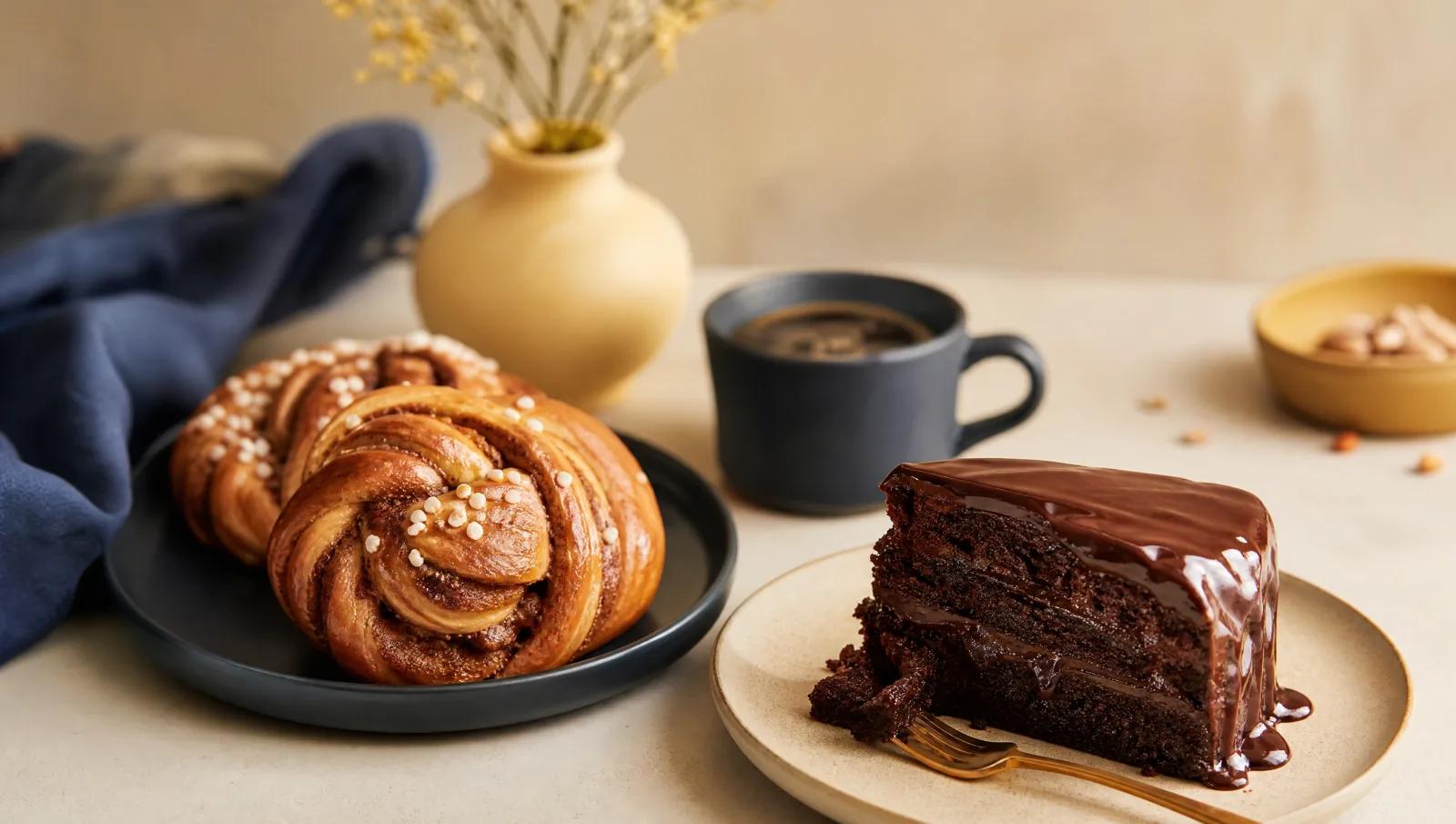
Scandinavian desserts are mostly baked goods eaten with coffee rather than plated courses after dinner. The core canon is cardamom and cinnamon buns, kladdkaka (a deliberately underbaked chocolate cake), semlor in late winter, Danish wienerbrød, and a set of seasonal cream and rice puddings. Candy sits alongside as a separate ritual, not as dessert. If you are looking for the best of Scandinavian food, this is where a lot of people would point. The savoury cooking is thrifty and preserving-led. The baking is where the region shows off.
Sweetness has its own time slot
Understand this and the rest of the list makes sense. In Sweden, Denmark and Norway, a weekday dinner usually ends without dessert. The sweet moment is fika, the coffee break, taken mid-morning or mid-afternoon, with other people, with something baked.
That single habit shapes the whole repertoire. Scandinavian sweets are built to sit on a plate next to coffee: portable, not too rich, sturdy enough to have been baked that morning or the day before. Very few of them need a fork, a sauce, or a warm kitchen. We go deeper on the ritual in fika and candy.
The buns
The bun is the centre of gravity. Enriched wheat dough, cardamom in the dough more often than not, pearl sugar on top.
Kanelbullar. The Swedish cinnamon bun, and the honest benchmark for the whole category. Smaller, drier and much less sweet than an American cinnamon roll, with no frosting, finished with pearl sugar and often a rolled knot rather than a spiral. Sweden gives it a day of its own on October 4.
Kardemummabullar. The same dough with a cardamom filling instead of cinnamon. Many Swedes, including us, would rank it above the cinnamon version. Cardamom is the defining spice of Nordic baking in a way cinnamon is not.
Kanelsnegl. The Danish "cinnamon snail", larger and richer, often with a remonce filling of butter and sugar and sometimes iced.
Skillingsboller. Bergen's cinnamon bun, plump and soft, a Norwegian bakery standard.
Wienerbrød. What the rest of the world calls Danish pastry, Denmark calls Viennese bread, after the Austrian bakers who worked in Copenhagen in the 1800s. Laminated dough, custard or remonce, a lot of butter. The American "danish" is a distant relative at best.
The cakes
Kladdkaka. Swedish sticky chocolate cake, and the easiest entry point on this list. Flour is minimal, the middle is deliberately underbaked, and it is served just warm with whipped cream and sometimes berries. Almost no equipment, one bowl, and it is nearly impossible to ruin, because ruining it produces a slightly gooier version of the same thing.
Prinsesstårta. Sponge, raspberry jam, vanilla pastry cream, a dome of whipped cream, sealed under pale green marzipan with a pink marzipan rose. Celebratory, iconic, and a genuine feat of assembly.
Drömmekage. Danish dream cake: a plain vanilla sponge under a caramelised brown sugar and coconut topping baked on at the end. The topping is the entire point.
Kvæfjordkake. Often named Norway's national cake, and also called verdens beste, "the world's best". Sponge and meringue baked together, split and filled with vanilla cream and almonds.
Toscakaka. Almond sponge with a caramel almond crust broiled onto the top. Common in Swedish cafes and easy to underestimate.
Æblekage. The Danish apple trifle: stewed apple layered with buttery toasted breadcrumbs and whipped cream, assembled cold rather than baked.
The seasonal ones
Dessert: Country: When
Semla: cardamom bun, almond paste, whipped cream: Sweden, with fastelavnsboller in Denmark: New year through Shrove Tuesday
Lussekatter: saffron buns, with pepparkakor: Sweden and Norway: Lucia on December 13, and all of December
Æbleskiver: spherical pancakes with jam and sugar: Denmark: Christmas markets and December
Risalamande: rice pudding, almonds, cherry sauce, one whole almond hidden for a prize: Denmark: Christmas Eve
Risgrynsgröt and riskrem: rice porridge, and rice cream with red berry sauce: Sweden and Norway: December
Multekrem: cloudberry folded into whipped cream: Norway: Christmas
Koldskål: cold buttermilk soup with small kammerjunker biscuits: Denmark: Summer
The semla deserves a note. It runs on a hard calendar: bakeries put them out in January, everyone eats an unreasonable number of them, and they disappear after Fettisdagen. Traditionally it was served in a bowl of warm milk, called hetvägg, which is worth trying once even if the modern hand-held version has won.
The cookie tin
Formal coffee once demanded sju sorters kakor, seven kinds of cookies, and the tin is still a real institution. The usual suspects: drömmar, hallongrottor (shortbread cups with a raspberry jam centre), chokladbollar rolled in coconut or pearl sugar, pepparkakor, Danish brunkager, and Norwegian krumkake and serinakaker.
Chocolate belongs in this section too rather than in dessert proper. Nordic milk chocolate is its own style, and we cover it in Swedish chocolate.
Where candy sits alongside
Candy is not dessert in Scandinavia. It is a parallel ritual with its own day, its own retail format, and its own flavour logic.
In Sweden that means lördagsgodis, Saturday sweets, bought loose by weight from a pick-and-mix wall. Because dozens of open bins compete side by side, the candy evolved to differentiate on shape and texture: skulls, pacifiers, foam pieces, fizzy discs, chews. It is also markedly more sour and less sweet than American candy, which makes it a better companion to coffee than most people expect.
The pieces that sit most naturally next to a fika plate are the soft, creamy, caramel and berry formats rather than the extreme sours: Lonka Caramel Soft Bites and Lonka Strawberry Bon Bons, the pillowy Franssons Foam Strawberries, and the Bubs Strawberry Vanilla 90 g bags, which are flagged gelatin-free and vegan and make a tidy single serving on a saucer. The bon bon format itself is explained in Lonka bon bons and caramels.
Candy that works next to coffee

For cafes, that pairing is a real merchandising idea rather than a cute one: a bowl of loose candy by the register converts at the moment someone is already paying for coffee. We wrote it up in the best Swedish candy for coffee shops and cafes.
Want the candy half?
We import Swedish and European candy direct into our warehouse in Santa Fe Springs, California and ship across the US and Canada. Browse the store, or read Scandinavian food for the savoury half of the picture. Cafes, bakeries and shops can apply for a wholesale account, or get in touch and we will suggest formats that sit well next to a coffee menu.
Frequently asked questions
What is the most famous Scandinavian dessert?+
The cinnamon bun, kanelbulle, by a wide margin. After that, the Swedish semla and kladdkaka, Danish wienerbrød, and the prinsesstårta are the ones most people recognise on sight.
What is kladdkaka?+
A Swedish chocolate cake baked deliberately underdone so the centre stays sticky. It uses very little flour, no leavening to speak of, and is served just warm with whipped cream. It is the most forgiving cake in the Nordic repertoire.
What is a semla?+
A cardamom-spiced wheat bun with the top cut off, hollowed and filled with almond paste and whipped cream, then capped and dusted with powdered sugar. Swedish bakeries sell them from January until Shrove Tuesday and then stop.
Are Scandinavian desserts very sweet?+
Generally less sweet than their American equivalents. Buns are drier and unfrosted, cakes carry cream and berries rather than heavy icing, and spice does more of the work than sugar. Cardamom, saffron, almond and berry are the dominant notes.
Is Scandinavian candy the same as Scandinavian dessert?+
No, and locals would not confuse them. Candy is a separate ritual, bought loose by weight, with its own weekly slot. It is sourer and chewier than dessert baking, and the overlap is mostly in the soft caramel and berry formats.
What do Scandinavians eat with coffee?+
A bun, a slice of cake, or a few small biscuits, depending on the occasion. On formal occasions the old benchmark was seven kinds of cookies. Loose candy often appears too, especially at the weekend.

Gustav Lindqvist · Candy Master
Gustav grew up in Sweden on a strict Saturday-candy schedule, mixing his lördagsgodis bag at the lösgodis wall before he could spell salmiak. He has spent years tasting his way across Scandinavian candy, and now curates the range at TheSweetsTruck, from BUBS sour skulls to the saltiest licorice most people cannot finish.
Last updated 8/23/2026