Sour Candy for Retailers: Bins, Acid Dust and Turn Rate
How sour candy behaves in a pick-and-mix or bulk bin: scoop behaviour, acid dust, humidity, adjacency rules, turn rate and which sour cases to start with.

Sour is usually the fastest turning block on a bulk wall and the messiest. Acid coatings shed dust, pull moisture out of the air and migrate into neighbouring bins, so keep the sour bins together, keep them away from foam, keep lids down, and start with four cases across four textures rather than six flavours of one shape. We import sour by the case and we ran candy shops in Sweden before that, which means we have scraped the acid sludge out of the bottom of a bin more times than we would like. This page is what we would tell a buyer setting up a sour section from scratch.
Why sour earns its bin space
Sour turns faster than almost anything else on a loose-candy wall, for reasons that are structural rather than fashionable.
It has a defined shopper. Teenagers and younger adults reach for sour first, and they come in groups, and groups buy more per visit than individuals. A wall with no sour block loses that traffic entirely to whoever down the street has one.
It is an impulse category with a built-in dare. Sour gets picked up, discussed and shared in a way that a plain fruit gummy does not. That drives the second and third scoop into the same bag.
And it repeats, as long as you do not buy the extreme end. A balanced sour is something people finish and come back for. An unbearable one is a photograph. We argue that case in full in sweet and sour candy.
The cost of all that is handling. Sour is the highest-maintenance block on the wall, and everything below is about managing that cost.
Scoop behaviour, shape by shape
Shape decides how a piece loads onto a scoop, whether it bridges in a gravity chute, and how much coating it sheds on the way into the bag.
Format: Scoops: Dust shed: Watch for
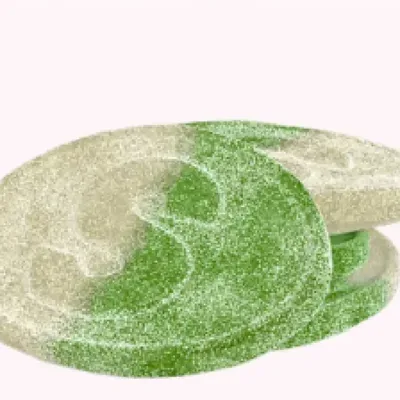
Sanded sour discs: Cleanly, they stack flat: High: The heaviest dust producer on the wall
Sour skulls: Cleanly, uniform pieces: Medium: Fine at any fill depth
Sour pacifiers: Well, the shape nests: Medium: The stem can catch on a scoop lip
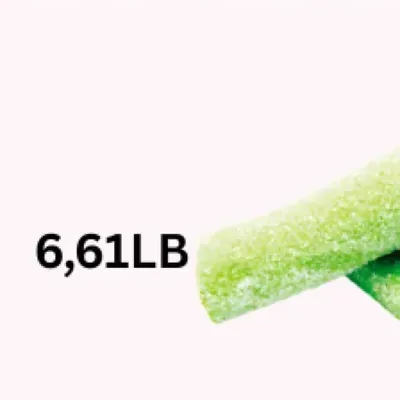
XL sour gummies: Slowly, few pieces per scoop: Low to medium: Large pieces make a bag look thin, price accordingly
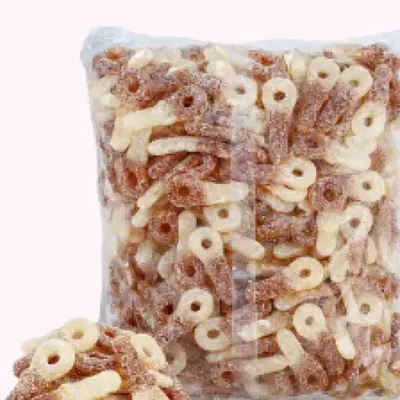
Fizzy rings: Poorly, rings interlock and bridge: Medium: Do not use a gravity bin, use an open tub
Raspberry sour shots: Cleanly, dense and heavy: Low: Heavy pieces build weight fast, warn staff
Sour foam: Very cleanly, almost weightless: Low: Fills a bag visually and weighs nothing
The rings are the one that surprises people. Anything with a hole in it will interlock, arch over the opening and stop flowing, so ring-shaped sours belong in an open tub with a scoop rather than in a gravity dispenser. The wider bin-mechanics discussion is in how to run pick and mix.
Acid dust and bin residue
Every sanded sour sheds coating. It comes off in transit, it comes off when you pour the case in, and it comes off every time the scoop moves. Within a couple of weeks there is a layer of loose acid and sugar powder at the bottom of the bin, and by the end of a month in a busy shop that layer has taken on moisture and turned into a damp, gritty sludge.
Three rules keep it manageable.
Never top up onto old dust. Empty the bin, tip the residue, wipe it dry, then refill. Topping up buries the oldest, dampest product under fresh stock and guarantees you will eventually serve it.
Give sour bins their own scoops. Acid dust transfers on a shared scoop, and a scoop that has been in the sour apple will put a sour edge on your foam mushrooms. It also transfers allergens, which matters more than the flavour does.
Bag from the top of the bin, not the bottom. Staff instinctively drive the scoop to the floor of the bin. That is where the sludge is. Train the shallow scoop.
The residue is also shrinkage. It is product you paid for and cannot sell, and on a high-dust item it is not trivial. Build it into your pricing rather than discovering it at stocktake. Both sides of that are covered in candy shrinkage and waste and how to price Swedish candy.
Humidity is the real enemy
Acid and sugar coatings are hygroscopic. Above roughly 55 to 60 percent relative humidity they start pulling water out of the air, and the sequence is always the same: the matte sparkle goes glassy, then the surface goes tacky, then the pieces weld to each other and the sour tastes weaker because the acid has dissolved and redistributed. None of it reverses.
What makes it worse in a real shop: bins near the door, bins near a kitchen or a coffee machine, air conditioning switched off overnight and at weekends, coastal locations in summer, and deep fills that sit for weeks.
What helps: shallower fills refilled more often, lids down between customers, back stock kept in the sealed case rather than in an open tub, bins sited away from doors and steam, and honest first in first out rotation. If you only change one thing, change the fill depth. A bin filled halfway and refilled twice as often is a completely different product by week three. More on ageing in Swedish candy shelf life.
Adjacency: do not put sour next to foam
Bin placement is not just aesthetics. Some neighbours actively damage each other.
Sour next to foam is the worst pairing on the wall. Skum is aerated and porous, which makes it a sponge for both airborne acid dust and moisture. Put a sanded sour bin beside foam strawberries and within a fortnight the foam is faintly sour, slightly damp and losing its bounce. Foam belongs at the opposite end of the wall from the sour block. Why foam behaves that way is in Swedish foam candy.
Keep sour away from chocolate and from anything with an open fat surface. Fat picks up flavour, and acid dust on chocolate is unpleasant.
Put sour next to sour. Grouping the sour bins concentrates the dust in one cleanable zone, makes the block legible to the shopper who came in for it specifically, and means one set of scoops and one wipe-down routine.
Break up the block with a pale bin at each end. A wall of nothing but neon sour reads as visual noise. A pastel or plain bin either side gives the block an edge and makes it look deliberate. That merchandising logic is in candy merchandising.
Turn rate and how deep to buy
Sour turns fast, which tempts buyers into depth. Resist it slightly, because coated product ages worse than uncoated product. A plain gummy that sits an extra month is still a plain gummy. A sanded sour that sits an extra month in a humid stockroom is a dull, tacky version of what you bought.
A sensible starting rule is four to six weeks of cover on sour, against eight to twelve on plain gummies and chews, and keep back stock sealed in the original case rather than decanted. If a line is genuinely flying, reorder more often rather than deeper. There is no order minimum here, so frequent small orders cost you nothing but a few minutes.
Which cases to start with
Four cases across four textures beats six flavours of one shape every time. Tier 1 list prices below, current at the time of writing, and the product page is always the authority.
Case: Case size: Tier 1 price: Approx per lb: Dietary flags we publish
S Marke Sour Apple: 8.81 lb: $59: about $6.70: Halal, vegan. Contains wheat
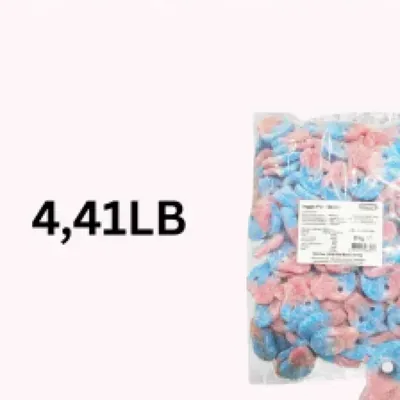
Matthijs Fizzy Skulls: 4.41 lb: $28: about $6.35: Gluten-free, halal, vegan, vegetarian
Sura Colanappar sour pacifiers: 6.61 lb: $43: about $6.51: Halal, vegan. Contains wheat
Vidal XL Sour Watermelon: 6.61 lb: $36: about $5.45: None on file, so we publish none
Hallonshots raspberry sour shots: 7.72 lb: $44: about $5.70: None on file
Franssons Fizzy Rings: 3.3 lb: $28: about $8.48: None on file
If you are buying four, take the S-Märke disc, the Matthijs fizzy skull, the Sura pacifier and the Vidal XL. That gives you a sharp sanded disc, a fizzing novelty piece, the gateway sour that everyone buys, and a large-format piece that reads as premium.
Read the flags column carefully, because it is the part most walls get wrong. Matthijs is flagged gluten-free, halal, vegan and vegetarian. The S-Märke and Sura lines are flagged halal and vegan but do contain wheat, so no gluten-free sign goes anywhere near those bins. Where our data lists no flags at all, we publish nothing, and neither should you. If a customer needs certainty, ask us and we will send the documentation we hold.
A four-case sour section that works
Ordering
Order by the case, mix and match across brands, with no order minimum. On a category as high-maintenance as sour, that matters: test a shape in your own bins for a month before you commit to depth on it.
We ship from Santa Fe Springs, California, by UPS Ground or UPS Express, about two business days across the US. Canada ships DDP with duties paid at checkout, typically three to five days. Orders of $2,000 or more can go by pallet, arranged by email. Tier 1 pricing is public, wholesale accounts approve automatically when you apply, and NET payment terms are offered to selected partners based on order history.
Frequently asked questions
How fast does sour candy sell in a bulk bin?+
Faster than most categories. Sour has a defined shopper who arrives in groups and buys on impulse, so a sour block typically turns ahead of plain fruit gummies. Plan four to six weeks of cover rather than buying deep, because coated product ages worse than uncoated.
How do I stop acid dust building up in the bin?+
Empty and wipe the bin before every refill instead of topping up, give the sour bins their own scoops, and train staff to scoop from the top rather than the bottom. The residue is unsellable product, so treat it as shrinkage and price for it.
Why does my sour candy go sticky and lose its coating?+
Humidity. Acid and sugar coatings pull water from the air above roughly 55 to 60 percent relative humidity, then go tacky and weld together. Fill bins shallower, refill more often, keep lids down, keep back stock in the sealed case, and site bins away from doors and steam.
What should not go next to sour candy on the wall?+
Foam. Skum is porous and absorbs both the airborne acid dust and the moisture the sour bin attracts, and it goes faintly sour and damp within a couple of weeks. Keep chocolate away too. Group sour with sour and break the block with a pale bin at each end.
How many sour SKUs do I need to start?+
Four, across four textures: a sanded sour disc, a fizzing piece, a sour pacifier and an XL sour gummy. That covers the different things shoppers actually reach for. Six flavours of the same shape will underperform four different constructions every time.
Is there a minimum order on sour cases?+
No. There is no order minimum at all. You buy by the case and mix and match across brands, which makes testing a new sour shape in your own bins cheap.

Gustav Lindqvist · Candy Master
Gustav grew up in Sweden on a strict Saturday-candy schedule, mixing his lördagsgodis bag at the lösgodis wall before he could spell salmiak. He has spent years tasting his way across Scandinavian candy, and now curates the range at TheSweetsTruck, from BUBS sour skulls to the saltiest licorice most people cannot finish.
Last updated 8/23/2026