Sour Gummy Candy: Sanded, Sprayed, and Why Texture Changes Everything
How sour gummies are actually built: gelatin, pectin and starch bases, sanded versus sprayed acid coatings, why acid softens a gummy, and the bulk sour gummy formats we import.

A sour gummy is a gelled candy carrying an edible acid, either mixed into the gel, sanded on as a sugar and acid coating, or sprayed on as a finer, sharper layer. The gelling agent (gelatin, pectin or starch) sets the chew, and the coating method sets how sour it feels and how long that sourness holds. Sour gummies are the volume format of the whole sour category, and most of what we ship out of California falls into it. Here is how they are actually built, and what the differences mean when you are eating them or selling them.
What a gummy is before the acid arrives
Three gelling agents dominate, and they produce genuinely different candies.
Gelling agent: Source: Chew: Notes
Gelatin: Animal collagen: Elastic, springy, the classic bouncy chew: Not vegan or vegetarian, melts at body temperature so it releases flavour as it warms
Pectin: Fruit, usually citrus peel or apple pomace: Shorter, cleaner bite that breaks rather than stretches: Plant based, sets firmer, releases flavour faster
Starch: Corn, potato, tapioca: Soft, slightly gluey, long chew: Plant based, cheapest to run, used in wine gum and fruit gum styles
This matters for sour specifically, because acid affects each one differently. Pectin needs an acidic environment to set at all, so a sour pectin gummy is working with its own chemistry. Gelatin does not need acid, and over a long shelf life acid can gradually break gelatin down, which is one reason acid is often kept on the outside of a gelatin gummy rather than mixed through the body.
A large share of the Swedish and European sour gummies we import use plant-based bases, which is why so many are listed vegan without making a fuss about it. Our Swedish gummy candy guide covers the wider category.
Sanded versus sprayed acid
This is the distinction that actually changes the eating experience, and almost nobody explains it.
Sanded. The piece is tumbled in a mixture of sugar crystals and powdered acid. Most of what you see on the outside is sugar, with acid distributed through it. You get visible grit, a sweet opening, and sourness that builds as the sugar dissolves.
Sprayed or dusted. A much finer layer with far less sugar in it, sometimes almost pure acid with an anti-caking agent. Less material on the piece, more acid per gram of coating, and no sugar buffering the hit. It looks matte rather than sparkly and it tastes sharper immediately.
In the body. Acid mixed into the gel before setting. Even and steady, never shocking, and it survives handling because there is nothing on the surface to rub off. Most quality sour gummies do this as well as coating, so the sourness does not vanish after the first two seconds.
: Sanded: Sprayed: In the body
Look: Sparkly, visible crystals: Matte, dusty: Invisible
First impression: Sweet, then sour: Sour immediately: Fruit first
Sourness duration: Medium, fades as sugar dissolves: Short and sharp unless a slow acid is blended in: Lasts the whole chew
Moisture resistance: Poor, goes tacky in humid air: Poorer, less sugar to hold structure: Excellent
Rubs off in a bin: Yes: Yes, and it dusts everything nearby: No
If you run a pick and mix wall, that last row is not trivial. Heavily coated sour lines shed acid dust into the bin below them and into the scoop. Position them at the bottom of a run, not the top. More on layout in how to run a pick and mix.
Why sour gummies go soft and sticky
Two separate things happen, and they look the same from the outside.
The coating absorbs water. Acid and fine sugar are hygroscopic. Left open in a humid room, the coating pulls moisture out of the air, dissolves into a syrup film, and the pieces glue themselves together. The candy is fine, the sourness has just moved from a crisp grit into a sticky glaze.
The gel takes on moisture too. Over long periods, a gummy body equilibrates with the air around it. Too humid and it softens and slumps. Too dry and it hardens and shrinks. Sealed cases in a cool, stable room are the whole answer, and we go into it properly in Swedish candy shelf life.
Neither is a defect, and neither is fixed by refrigeration. A fridge is humid, and a cold gummy that then warms up in a warm room condenses moisture on its own surface, which is the fastest way to ruin a sour coating.
The sour gummy formats we carry
Bulk sour gummies. The S-Märke sour range is our workhorse, in 8.81 lb cases: sour apple, sour blue raspberry, sour strawberry and sour blackcurrant, all listed vegan. This is the format that fills a bin and keeps filling it.
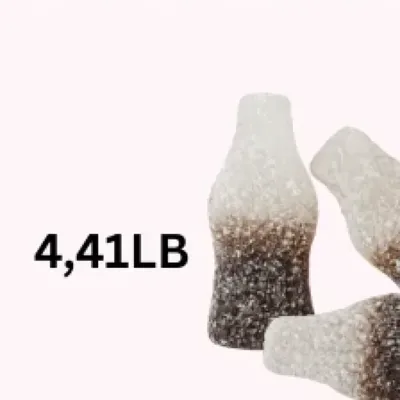
Cola bottles and skulls. The Matthijs veggie sour cola bottles and the Matthijs fizzy skulls are both listed gluten-free, halal, vegan and vegetarian, which makes the Matthijs range the easiest thing to put in front of a mixed crowd. Background in the Matthijs guide.
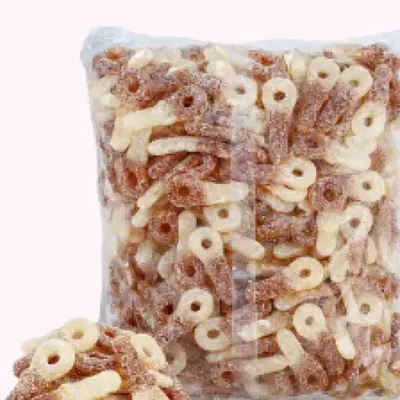
Sour pacifiers. Sura cola and Sura melon, both listed halal and vegan. The flat wide shape carries more coating per gram than a standard gummy, so it eats sharper.
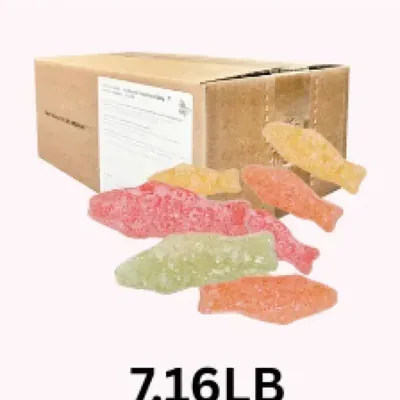
Sour fish and XL pieces. Sour Swedish fish, sour watermelon bombs and the Vidal XL sour watermelon sit at the milder, more visual end. Big pieces dilute their own coating, so they look sourer than they eat.
Frequently asked questions
What makes a gummy sour?+
An edible acid, most often citric, malic or tartaric. It can be mixed into the gel before setting, tumbled on as a sugar and acid sanding, or sprayed on as a fine concentrated layer. Coated gummies taste sharper up front. Gummies with acid in the body stay sour through the whole chew.
What is the difference between sanded and sprayed sour gummies?+
Sanding is mostly sugar with acid mixed through it, so it looks sparkly and opens sweet before the sourness builds. Spraying uses far less sugar, so the same weight of coating hits harder and faster. Sanded coatings also survive handling slightly better, because there is more material holding them together.
Are sour gummies vegan?+
Some are, depending on the gelling agent. Gelatin-based gummies are not vegan. Pectin and starch-based ones generally are. In our range, the S-Märke sour lines and the Sura pacifiers are listed vegan, and the Matthijs range is listed vegan, vegetarian, halal and gluten-free. Where we hold no data, we publish no claim.
Why do my sour gummies stick together?+
The acid and sugar coating has absorbed moisture from the air and dissolved into a syrup film. It is the most common thing that happens to sour gummies, and it is a storage problem rather than a quality one. Cool, dry and sealed slows it right down. Refrigeration makes it worse, not better.
Do sour gummies get less sour over time?+
The coating does. The sanded acid layer is the sharpest part of the piece, and once it takes on moisture the grit dissolves into the surface and the initial hit softens. Acid in the body of the gummy holds its sourness far longer, which is why the better lines use both.
What is the best sour gummy to buy in bulk?+
For a bin that has to sell steadily, a mid-intensity fruit sour in a standard shape, because it appeals broadly and scoops cleanly. Save the sharper shot and pacifier formats for a second bin. Our [bulk sour candy guide](/journal/bulk-sour-candy-wholesale) covers case sizes and what turns over.

Gustav Lindqvist · Candy Master
Gustav grew up in Sweden on a strict Saturday-candy schedule, mixing his lördagsgodis bag at the lösgodis wall before he could spell salmiak. He has spent years tasting his way across Scandinavian candy, and now curates the range at TheSweetsTruck, from BUBS sour skulls to the saltiest licorice most people cannot finish.
Last updated 8/23/2026