Blue Raspberry Candy: The Flavor, the Colour, the Cases
Blue raspberry is a candy invention with a real history: a red-dye problem solved with bright blue. Here is where the flavour came from, what our two blue cases list, and why the pack is the authority.
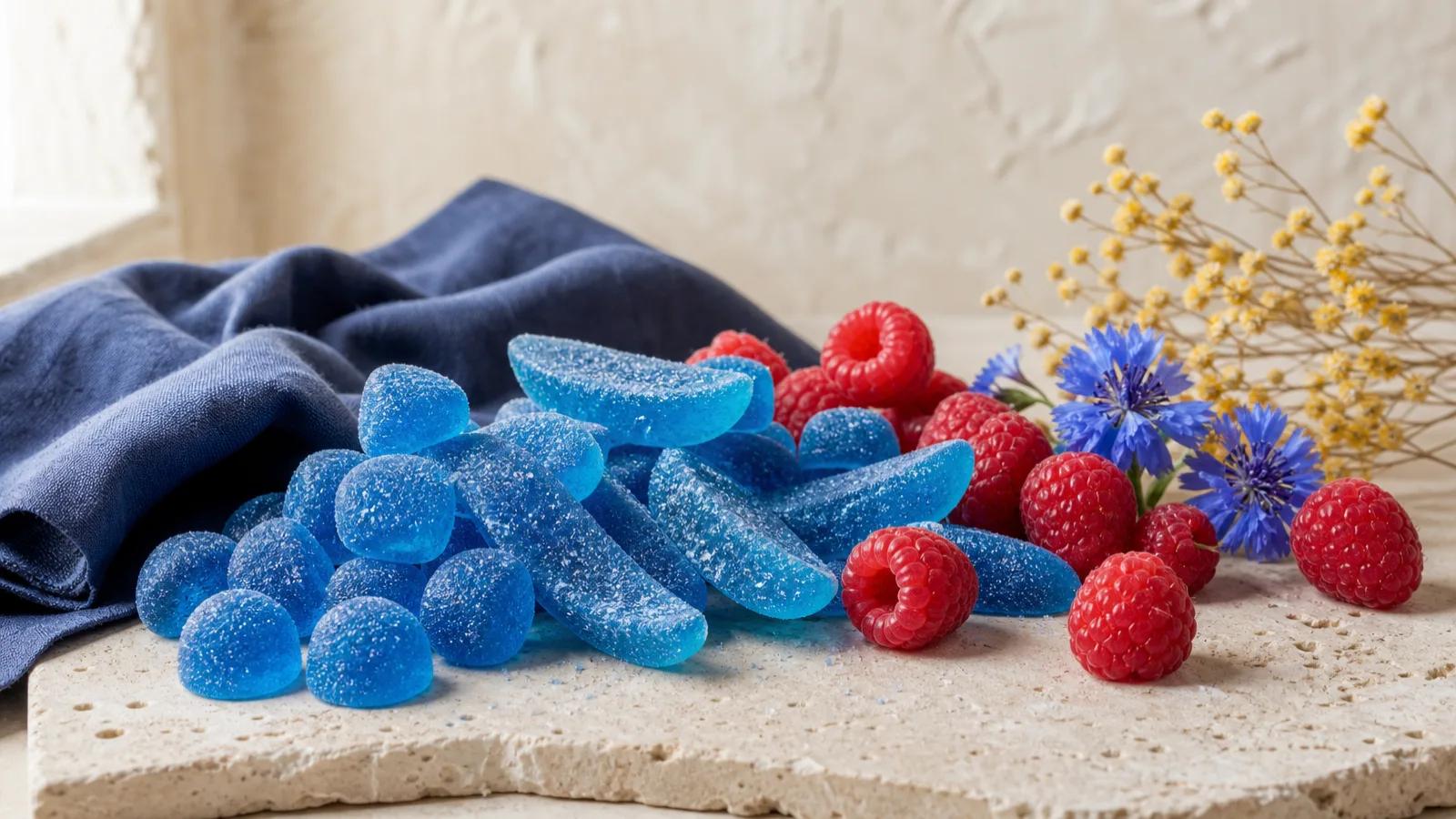
Blue raspberry is not a fruit. It is a berry flavour paired with a blue colour, invented in the 1950s when concern about the red dye used in raspberry flavour pushed makers toward bright blue. Everything else about it lives on the label, so shops should read the ingredient list, not the photo, before promising anything about colour.
We import European candy by the case into Santa Fe Springs, California, and the two blue lines below are the ones we stock. Our Blue Swedish Fish piece tells the wider story of how blue works in Swedish candy if you want the cultural side first.
Is blue raspberry a real fruit?
Almost. The name borrows from the whitebark raspberry, Rubus leucodermis, a plant that grows through western North America and ripens a fruit so dark it can pass for blue. The flavour in the candy is not an extract of that fruit; it is a formulated berry blend that leans on the same ester family as raspberry, pushed sweeter and rounder for candy.
The borrowing was practical. The botanical name gave the new flavour just enough cover to stick as "blue raspberry" rather than "blue flavour number four" (TASTE).
For a shop, the takeaway is simple: customers who ask for blue raspberry are asking for a candy convention, not a fruit. Where that convention sits among the other flavour families we stock is the subject of Swedish candy flavors explained.
Why is blue raspberry candy blue?
The colour is a separate decision from the flavour, and it was made in the 1950s. When public concern hit a red dye widely used in raspberry-flavoured foods, makers looked for a shade that read as far from red as possible. Bright blue was the answer, and the move worked (TASTE).
In US terms that shade is FD&C Blue No. 1, commonly written as Blue 1; on European labels it appears as E133, Brilliant Blue FCF. It is one of the certified colours the FDA lists for food use, and the same table maps it to its E-number (FDA color additive summary).
Two things follow for buyers. First, "blue raspberry" never tells you which colourant a product uses; the label does. Second, a blue candy is not automatically a heavy-dye candy, because plant-sourced blues and greens now exist. The only honest source is the ingredient text on the pack you are holding, which is exactly the rule we follow below.
What do the two cases we stock actually list?
Two blue lines, sold by the case, and their labels tell different colour stories. The running rule on both: recipes change between production runs, so the printed pack is the authority, and our listing is the reference.
- S-Märke Sour Blue Raspberry, 8.81 lb case: a Swedish sour gummy built for the blue raspberry palate. The ingredient list we hold names brilliant blue FCF (E133) as the colour. The SKU is flagged halal and vegan in our data. Case weight 8.81 lb. Tier 1 price works out to $6.70 per lb, computed from the published case price. The S-Märke case anchors this flavour for us.
- Candy People Sour Blueberry Raspberry Skull, 8.82 lb case: a sour berry skull in the modern pick-and-mix style. The ingredient text we hold lists colours from sweet potato and carrot concentrate and curcumin, and no synthetic dye name appears on it. The title says Vegan, but our data carries no vegan tag for the SKU, so we publish no diet claim. Case weight 8.82 lb. Tier 1 price works out to $7.48 per lb from the published case price, and the blueberry raspberry skull case sits beside it on the wall.
The two blue cases we stock
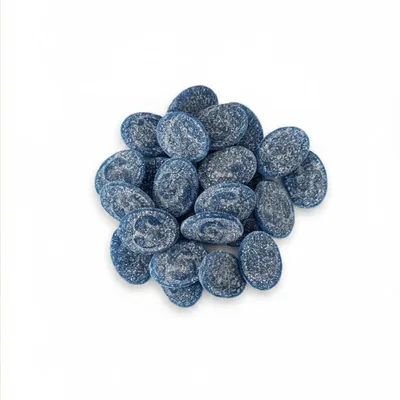
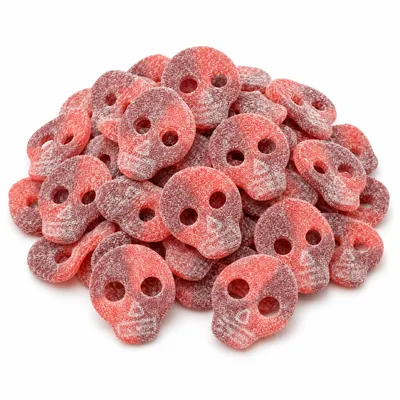
Both lines also name wheat starch in the ingredient text we hold, so neither suits a wheat-free shelf, and neither is a product to describe from memory at the counter.
How do the two blue lines compare?
Set them side by side the way a buyer would.
- Colour, per the labels: one names a certified dye, E133; the other lists plant-sourced colours and no dye name. Same shelf, two different label stories.
- Dietary data: one carries halal and vegan tags in our data; the other carries none, and we publish no claim for it.
- Price and case: $6.70 per lb against $7.48 per lb, in cases of 8.81 lb and 8.82 lb respectively.
- Wheat content: both ingredient texts name wheat starch, so both belong away from a wheat-free section.
Neither is the "right" blue. One is a sour line from a classic Swedish maker, the other a modern skull for a pick and mix wall; a shop with room for two blue facings has a sharper lane and a softer, fruitier lane on the same wall.
How do you check the colour on a pack before you buy?
Work from the pack, every time, and write the tag from the panel rather than the marketing copy.
- Read the ingredient list on the case or pack. For a European-made product it is usually on a sticker or the inner liner; photograph it once and keep the photo with the SKU.
- Look for US dye names and E-numbers. On US-facing labels, certified colours can appear as Blue 1, Red 40 and so on; European text tends to use names or E-numbers, with Blue 1 written as E133 or Brilliant Blue FCF.
- Match the claim to the shelf. If you run a dye-free section, tag from what the list names and keep named dyes out; if you do not, describe the colour as what it is rather than avoiding the subject.
- Date the note and recheck at reorder. Recipes change between production runs, so an old photo is not evidence about new stock.
- Default to the pack. When our listing and a freshly printed label disagree, the pack wins, and you are welcome to email us to reconcile the record.
The long version of that routine, including the dye names in use and how they map across markets, lives in Dye-Free Candy.
What do people get wrong about blue raspberry?
Five mix-ups worth dropping on either side of the counter.
- Blue raspberry against blueberry: the blue in US candy usually signals a raspberry-family blend or bubblegum, not blueberry. The name is a botanical loan, not a fruit source.
- Photo against panel: screens, lighting and filters all lie about colour; the ingredient list is the only colour source that counts.
- Title against tag: a page or pack can carry a word like Vegan in its name while the supplier data carries no such tag. Publish from the tag, or publish nothing.
- US convention against Swedish shelves: Swedish pick and mix does not colour-code flavour; colour is a loose cue, and blue usually signals a sour line.
- One blue against two: a sour line and a skull line pull different shoppers, and stocking both beats doubling up on either.
What should a buyer weigh before ordering a blue line?
Blue is the strongest visual break you can put in a run of reds and pinks, so one blue facing does real merchandising work. It also skews younger, which is worth knowing if your traffic is adults buying gifts. The two cases here are the practical decision.
For shops: both lines order through a wholesale account, and approval is automatic. Order by the case, mix and match, with no order minimum, so a blue test can be a single case alongside your usual order, and Tier 1 pricing is public on every product page.
One sizing note: these are 8.8 lb class cases rather than small bags, so a blue line is a bin decision more than a register decision. Start with one, judge it on the wall for a month, then decide whether the second blue earns its facing.
Blue belongs on a candy wall that wants one loud shelf, not a whole aisle: see both lines in the store, and read Dye-Free Candy before you promise anything about colour.
Frequently asked questions
Is blue raspberry a real fruit?+
No. There is a real plant, the whitebark raspberry, whose dark fruit gave the flavour its name, but the candy flavour is a formulated blend rather than an extract of any blue fruit. It tastes like a sweeter, rounder raspberry, because that is essentially what it is, dressed in blue.
What flavour is blue raspberry, actually?+
A berry blend built around the same aroma family as raspberry, pushed sweeter and more floral for candy. It is not blueberry, despite the colour, and it is not a mystery flavour either; if you know what raspberry candy tastes like, blue raspberry is that flavour with the volume up and the colour changed.
What makes blue raspberry candy blue?+
A colourant, listed on the label. In the classic US version it is Blue No. 1, the certified dye also known as E133 or Brilliant Blue FCF. Some products, including one of our two lines, use plant-sourced colours instead. The ingredient list, not the colour of the candy in a photo, is the source to trust.
Is E133 the same as Blue 1?+
Yes. E133 is the European number for Brilliant Blue FCF, and Blue 1 is the US label name for the same certified colour; the FDA's colour additive table maps one to the other. On a European ingredient list you will usually see the E-number or the chemical name, and on a US-facing label, the shorter US form.
Do your blue lines contain wheat?+
Both ingredient texts we hold name wheat starch, so neither line suits a wheat-free section. That is an ingredient fact, not a dietary tag; our data carries no gluten-free claim for either SKU, and the printed pack is what you check before labelling a shelf.
Why does one blue carry vegan tags and the other not?+
Because the tags come from the supplier data we hold, and only one of the two SKUs carries them. Where the data holds a tag, we publish it; where it does not, we publish nothing, whatever the product's title suggests. That is the same rule we apply across the whole range.
Keep reading

Gustav Lindqvist · Candy Master
Gustav grew up in Sweden on a strict Saturday-candy schedule, mixing his lördagsgodis bag at the lösgodis wall before he could spell salmiak. He has spent years tasting his way across Scandinavian candy, and now curates the range at TheSweetsTruck, from BUBS sour skulls to the saltiest licorice most people cannot finish.
Last updated 10/29/2026