Dye-Free Candy: What European Labels List Instead of Red 40
Dye-free candy lists no synthetic dyes like Red 40. How US dye names map to E-numbers, what FDA has changed through September 2026, and what the ingredient text we hold for our in-stock products actually says.
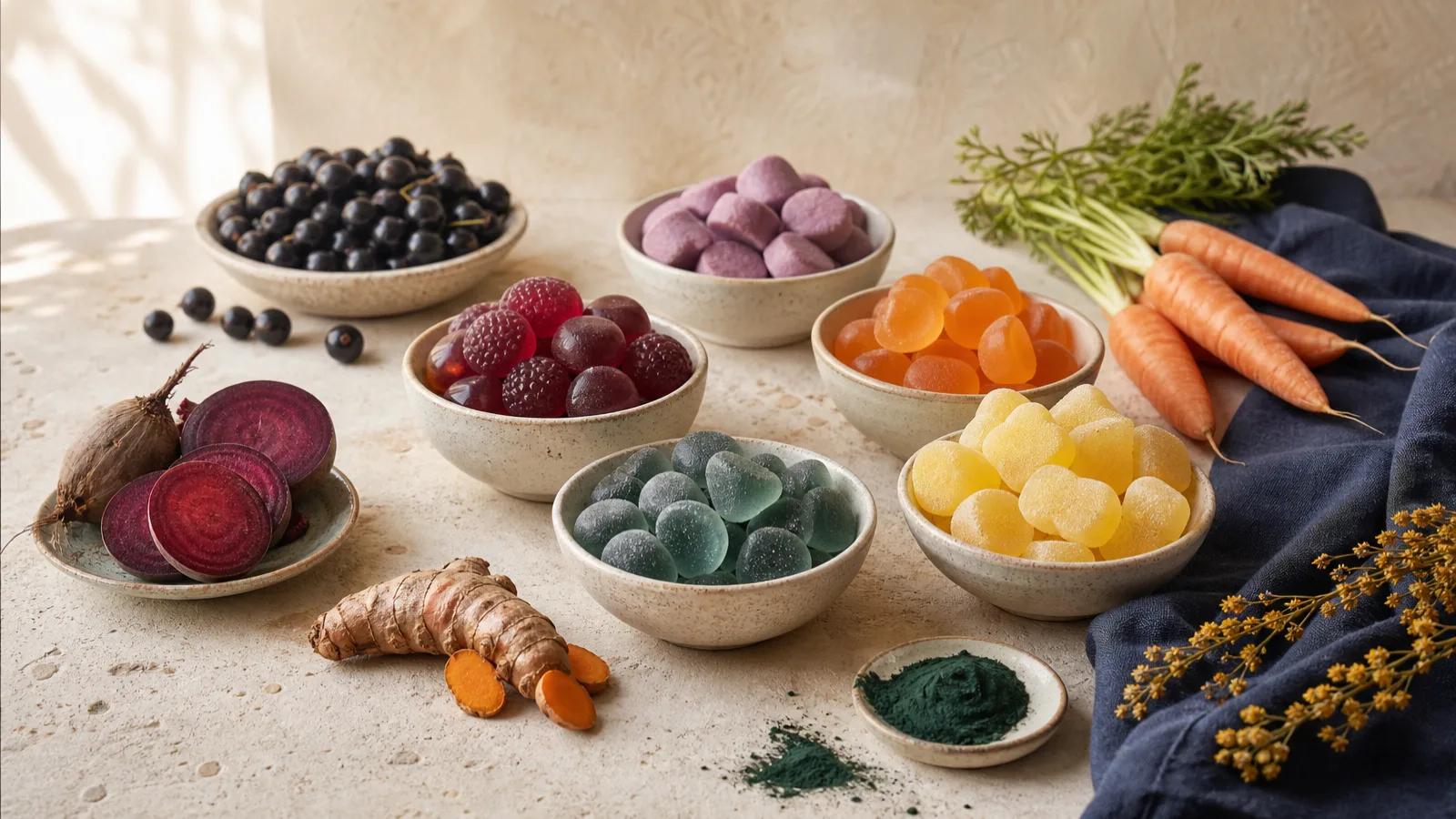
Dye-free candy is candy whose ingredient list names no synthetic dyes, such as Red 40, Yellow 5 or Blue 1. Any color comes from natural sources like black carrot, spirulina or carmine, or there is no added color at all. Check the ingredient list for the US name (Red 40) or the European E-number (E129).
We import Swedish and European candy by the case and hold ingredient text for most of what we stock, so this guide pairs a label decoder with what those lists say. It is listing data, not a lab test, and it is current as of September 13, 2026.
How do you find Red 40 on a candy label?
US labels name certified dyes. Federal rules let the "FD&C" prefix and the "No." drop off, so FD&C Red No. 40 can appear as "Red 40", and a lake must say so, as in "Blue 1 Lake" (21 CFR 101.22(k)). The European ingredient lists we hold use E-numbers or names instead. FDA's color additive summary table gives the E-number for each US dye that has one, and the EU's list of authorized food colors gives the names:
- Red 40 = E129: Allura Red AC.
- Red 3 = E127: Erythrosine, which the EU allows only in certain cherry products.
- Yellow 5 = E102: Tartrazine.
- Yellow 6 = E110: Sunset Yellow FCF.
- Blue 1 = E133: Brilliant Blue FCF.
- Blue 2 = E132: Indigotine, also named indigo carmine.
- Green 3: Fast Green FCF, which is not on the EU list.
One trap: "artificial color" or "color added" on a US label does not by itself mean a synthetic dye. The same rule lets colors that are exempt from certification, such as vegetable juice, be declared that way. A named dye such as Red 40 is what confirms a certified one.
Which natural colors appear on European ingredient lists?
Natural-source colors named in the ingredient text we hold include:
- Plant concentrates: black carrot, spirulina, radish, sweet potato and carrot, usually named without an E-number.
- E100 (curcumin): the E-number FDA's table pairs with turmeric.
- E120 (carmine or cochineal): made from cochineal, which EU rules define as the dried bodies of the female insect Dactylopius coccus (Regulation (EU) No 231/2012). It is not vegan, and US ingredient lists must name it as "carmine" or "cochineal extract" (21 CFR 73.100).
- E150a to E150d: caramel colors.
- E160a (carotenes) and E160c (paprika extract).
What is changing with US food dyes?
As of September 2026:
- Red 3: FDA revoked its authorization in food on January 15, 2025, and food makers have until January 15, 2027 to reformulate. FDA acted under the Delaney Clause, which bars color additives found to cause cancer in humans or animals, and says there is no evidence Red 3 causes cancer in humans (FDA).
- The other six: on April 22, 2025, HHS and FDA announced plans to work with industry to remove Green 3, Red 40, Yellow 5, Yellow 6, Blue 1 and Blue 2 by the end of 2026 (FDA). FDA's tracker, updated September 10, 2026, now gives the end of 2027 and records voluntary company commitments.
- Orange B and Citrus Red 2: on July 22, 2026, FDA issued a final order revoking Orange B, listed for the casings or surfaces of frankfurters and sausages (FDA), and proposed revoking Citrus Red 2, listed for coloring the skins of mature oranges (FDA).
- New colors from natural sources: FDA listed galdieria extract blue, gardenia blue and calcium phosphate in 2025 (FDA table). It approved beetroot red in February 2026 and delayed that order's effective date in March 2026 (FDA).
- "No artificial colors": since February 5, 2026, FDA has said it intends to exercise enforcement discretion for the claim on foods without petroleum-based colors, even if they contain colors from natural sources. Before, the claim generally meant no added color at all (FDA).
What does the EU warning label say?
Under Regulation (EC) No 1333/2008 (Article 24 and Annex V), food containing any of six colors must state that it "may have an adverse effect on activity and attention in children". The six are sunset yellow (E110), quinoline yellow (E104), carmoisine (E122), Allura red (E129), tartrazine (E102) and ponceau 4R (E124).
The six stay on the EU's list of authorized colors; the rule adds a label statement. E133 (Blue 1) is not among them. Three of the six, E104, E122 and E124, are not among the colors FDA's table lists for food. For more on how the two systems differ, see European vs American candy.
What do the ingredient lists for our products show?
On September 13, 2026, we went through every product marked in stock in our catalog, 52 in all, and read the ingredient text we hold for each:
- 47 have ingredient text on file. The other 5 do not, so we make no color statement about them.
- None of the 47 names Red 40, Red 3, Yellow 5 or Yellow 6, by US name or E-number, or any of the six EU warning colors.
- 12 name E133, the E-number for Blue 1, or its name, Brilliant Blue FCF. Matthijs Swedish Skulls, S-Märke Sour Strawberry and S-Märke Sour Blue Raspberry are among them. One more names E131 (Patent Blue V).
- 31 name only colors from natural sources, such as black carrot, spirulina, curcumin, paprika extract, caramel or carmine.
- 3 name no color, though Strawberry Dream lists black carrot juice concentrate, which other lists we hold name as a color.
Carmine appears on 18 of the 47, and none of the products we tag vegan lists it. This is listing data, not a lab test. Recipes change between production runs, so the printed pack is always the authority.
No Red 40 on these lists
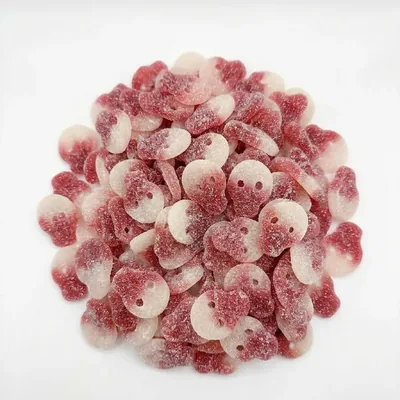
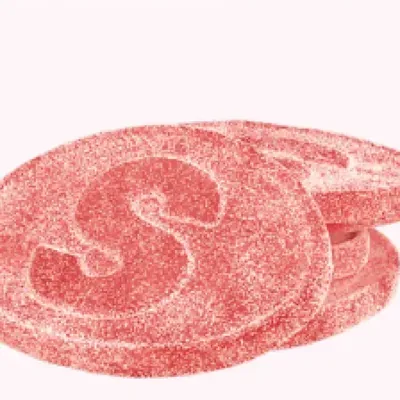
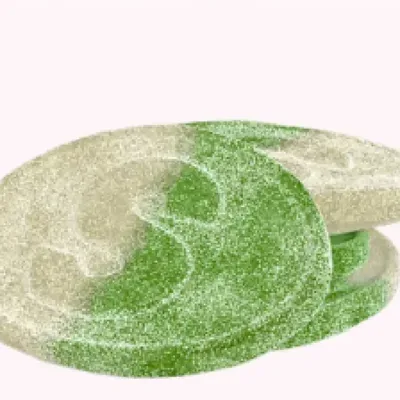
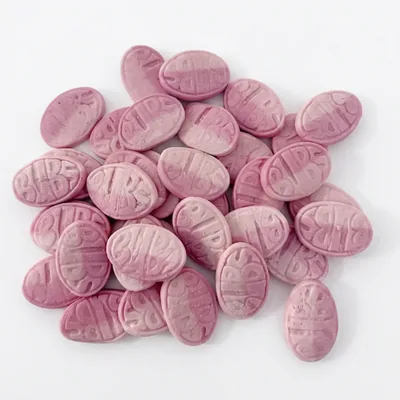


From that grid, the list we hold for Matthijs Danish Skulls names black carrot. S-Märke Watermelon lists sweet potato and carrot concentrate, S-Märke Sour Apple lists spirulina, apple concentrate and curcumin, and BUBS Wild Strawberry Pomegranate lists black carrot concentrate. Bubs Cola Skulls list E150a, plain caramel, and Franssons Foam Strawberries list gelatin and a single color. That color is E120, cochineal or carmine.
How should a shop build a dye-free shelf?
- Work from the pack in your stockroom. Photograph each case's ingredient panel and tag from that, not from memory.
- Sort by what the list names. A US dye name, or a synthetic dye's E-number such as E102, E104, E110, E122, E124, E127, E129, E131, E132 or E133, keeps a product off the dye-free shelf.
- Tag facts, not virtues. "Colored with black carrot and spirulina" is checkable. "Natural" on its own is vague, and anything implying a benefit is a claim you would have to defend.
- Flag carmine for vegan shoppers, and take vegan tags only from your supplier's dietary data.
- Recheck at every reorder, because a new production run can carry a new recipe.
The same habits apply to allergens; see Swedish candy allergens. FDA labeling for imported candy covers what a US label carries. And removing a dye does not change the fact that sugar is still sugar.
Browse the full range in the store. If you run a shop and want to build a dye-free set, apply for a wholesale account. Approval is automatic, Tier 1 case prices are public, and you order by the case, mix and match, with no order minimum.
Frequently asked questions
Is there candy without Red 40?+
Yes, plenty. Red 40 can appear as "Red 40" on US labels and as E129 or Allura Red AC on European ones. As of September 13, 2026, none of the 47 ingredient lists we hold for our in-stock products names it. Recipes change between production runs, so check the printed pack before you buy or tag a shelf.
What is Red 40 called in Europe?+
Red 40 is E129, also called Allura Red AC. It is authorized in the EU, but food containing it must carry a statement that it may have an adverse effect on activity and attention in children. On the European ingredient lists we hold, colors appear as E-numbers or as names.
Does dye-free candy have no color at all?+
Not necessarily. As of September 13, 2026, most in-stock products in our listing data that name no synthetic dye still name a color, from sources such as black carrot, spirulina, curcumin, caramel or carmine. On a US label, colors exempt from certification may be declared as "color added" or "artificial color", so only a named dye like Red 40 or Blue 1 confirms a certified one.
Is carmine vegan?+
No. Carmine, also listed as cochineal extract or E120, is made from cochineal, which EU rules define as the dried bodies of a female insect. It is a natural color rather than a synthetic dye, so it can appear in candy that avoids Red 40. US ingredient lists must name it, so vegan shoppers can find it.
Is the FDA phasing out Red 40?+
FDA is working with manufacturers, retailers and trade associations to remove Red 40 and five other certified colors. Its tracker, updated September 10, 2026, gives the end of 2027 and records voluntary company commitments. Red 3 is different: FDA revoked it for food in January 2025, with a January 15, 2027 compliance date.
Is Blue 1 the same as E133?+
Yes. FD&C Blue No. 1 can appear as Blue 1 on US labels and as E133 or Brilliant Blue FCF on European ones. It is not one of the six EU warning colors, so it carries no warning there. As of September 13, 2026, 12 of the 47 ingredient lists we hold for in-stock products name it.
Keep reading

Gustav Lindqvist · Candy Master
Gustav grew up in Sweden on a strict Saturday-candy schedule, mixing his lördagsgodis bag at the lösgodis wall before he could spell salmiak. He has spent years tasting his way across Scandinavian candy, and now curates the range at TheSweetsTruck, from BUBS sour skulls to the saltiest licorice most people cannot finish.
Last updated 9/16/2026