Swedish Candy Allergens: A Retailer's Guide
Which Swedish candy lines contain wheat and gluten, how to label them at the shelf, and how to train staff on allergen questions in a pick-and-mix store.
The allergen flag that comes up most across the Swedish candy we import is wheat and gluten, which appears on the S-Marke range, the Vidal lines, the Sura pacifiers and several licorice slice lines. The Matthijs range is not on that list, because it is flagged gluten-free. Every case ships with US labels, so mirror the printed pack on your shelf tag and never infer a claim we have not published.
We import Swedish and European candy direct into our Santa Fe Springs, California warehouse and ship it to retailers across the US and Canada. Allergen handling is the part of this category that gets stores into trouble fastest, usually not through bad faith but through a shelf tag written from memory. This guide covers what we publish, what we do not, and how to run the shelf so the label always matches the pack.
How allergen information reaches your shelf
Everything we send arrives DDP, with US labels and duties already paid, so there is nothing for you to clear and nothing missing from the packaging when the pallet lands. The allergen declaration lives on the pack, in the format US buyers expect.
Alongside that, we publish a short set of dietary flags per product: whether a line is gelatin-free, whether it carries a vegan label, and whether it contains wheat and gluten. Those flags are a buying aid, not a full allergen matrix. They tell you what the manufacturer has declared to us on those specific points, and nothing more. Where a line carries no published flag, that is not a negative claim, and your shelf tag should reflect only what the printed pack in your stockroom says.
The wheat and gluten lines
This is the flag that appears most often in our range, and it catches people out because it lands on candy nobody expects, including sour gummies and licorice-style slices. The following lines are flagged as containing wheat and gluten.
From S-Marke, every line: S Marke Sour Strawberry, S Marke Sour Apple, S Marke Sour Blue Raspberry, S Marke Watermelon and S Mark Sour Blackckurrant.
From Vidal: Vidal Passion fruit slices, Vidal XL Sour Cola, Vidal XL Sour Mango Passion Fruit and Vidal XL Strawberry Cream.
Plus these bulk lines: Sura Colanappar Sour Cola Pacifiers, Sura Melonnappar Sour Melon Pacifiers, Rainbow Rolls, Blue Raspberry Licorice Slices, Watermelon Licorice Slices and XL Raspberry Rockets.
One brand that shoppers expect on this list does not belong on it. The Matthijs skull range is flagged gluten-free, along with halal, vegan and vegetarian. The starch in those pieces is declared as modified starch from gluten-free wheat, corn and potato, so the word wheat appears on the panel while the product itself is flagged gluten-free. That single word is the reason this line gets mislabeled more than any other in our range, so brief your staff on it.
Lines flagged wheat and gluten
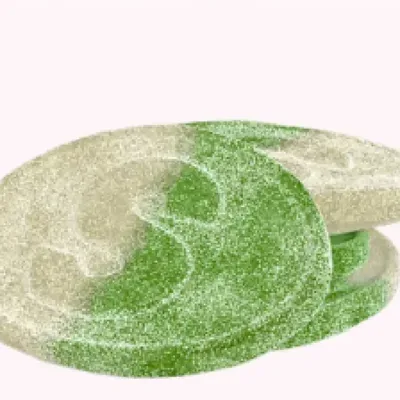
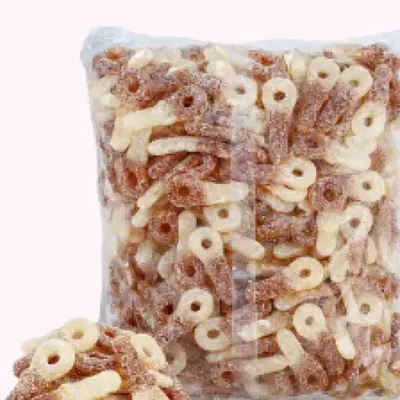
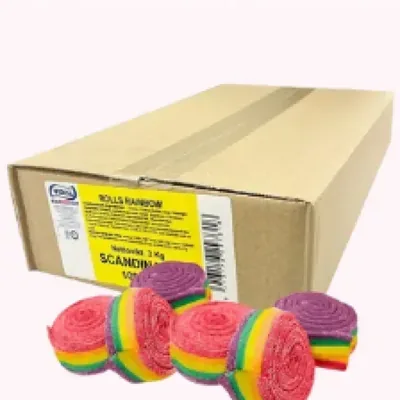
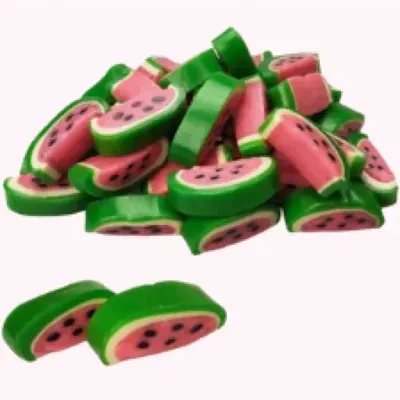
Note what this list does not do. It does not turn every other line into a gluten-free product. If a customer needs gluten avoidance, work from our gluten-free Swedish candy guide and from the pack itself, and treat the absence of a flag as an unknown rather than an answer.
Gelatin is a dietary flag, not an allergen, and staff should know the difference
Gelatin comes up constantly at the counter, and it is worth separating in your staff briefing. Gelatin is not one of the major allergens declared on a US label, but it is a hard dietary line for vegan, vegetarian, kosher-observant and halal-observant shoppers, and it will be asked about more often than any nut question.
Across our range, some lines are labeled gelatin-free and some contain gelatin, and both live on the same wall. The BUBS range is flagged gelatin-free, the Matthijs lines and the vegan S-Marke lines are flagged vegan, while the Bulgari marshmallow range, the Franssons foam lines and the Vidal XL lines contain gelatin. The full split is in our gelatin breakdown, which is worth printing for the back room.
The lines where we hold no ingredient list
For three items we hold no published ingredient data, so we make no dietary claim at all: Bubs Sour Skull 90g, Lonka Caramel Soft bites Bon Bon and Vidal XL Sour Watermelon.
Matthijs Pinky Skulls carries the same gluten-free, halal, vegan and vegetarian flags as the rest of the Matthijs range, though we hold no ingredient list for it.
If you stock any of these, take your shelf information straight from the printed pack, or ask us and we will request the manufacturer specification sheet for your production run.
Shelf labelling that holds up
A few habits keep this clean in practice.
Write the tag from the case in front of you, not from a product page or from memory. Recipes and suppliers change between production runs, and the pack is the current truth.
Keep dietary flags separate and specific. A tag that says gelatin-free means gelatin-free. It does not mean gluten-free, vegan, kosher or halal, and combining them into one vague wellness sticker is how a store loses a customer's trust permanently.
Where a bulk bin is involved, keep the original case or a photographed copy of its ingredient panel accessible at the counter so any staff member can answer a question in seconds without guessing.
Review tags at reorder. Treat a new case as a new label check, not a repeat of the last one.
Pick-and-mix and cross contact
Open bins are the highest-risk format in the store, and no shelf tag makes an open wall safe for a severe allergy. Scoops get swapped, kids reach in, and dust from a coated sour travels. If you run a mix wall, use dedicated scoops per bin, post a clear notice that bulk bins are a shared-utensil environment, and be honest with any customer who asks. For a customer with a serious allergy, point them to a sealed retail bag rather than the bin.
The rest of the mechanics, from bin layout to hygiene routines, are covered in our guide to running a pick-and-mix.
Train the answer, not the improvisation
The failure mode is a staff member wanting to be helpful. Give your team one rule: if a customer asks about an ingredient, read the pack with them rather than answering from memory. If the pack does not answer it, offer to check with the supplier instead of guessing. Nobody has ever lost a sale by saying they will confirm. Plenty of stores have lost a customer by saying yes too quickly.
Two minutes on the difference between gelatin-free, vegan and gluten-free will save you more trouble than any other training you do in this category.
Buying with the paperwork in hand
We import direct, so case prices come in under most US distributors, and every order ships DDP with US labels and duties already paid. You order by the case, mix and match, with no order minimum, so you can build a set around the flags that matter to your customers rather than taking a fixed assortment. Wholesale accounts approve automatically when you apply, and everyone buys at public Tier 1 list pricing, with Tier 2 and Tier 3 for approved volume and strategic buyers. Our wholesale Swedish candy guide and our guide to stocking Swedish candy cover the full buying and merchandising picture.
Want the allergen picture before you order?
Browse the range in our store, plan an assortment with the bulk order tool, or contact us for manufacturer spec sheets on any line you are evaluating. We import direct, ship DDP from California, and would always rather send you documentation than a guess.
Frequently asked questions
Which Swedish candy contains wheat and gluten?+
In our range, all five S-Marke lines, the Vidal lines, the Sura cola and melon pacifiers, Rainbow Rolls, the blue raspberry and watermelon licorice slices and XL Raspberry Rockets are flagged as containing wheat and gluten. The Matthijs range is flagged gluten-free, so it is not part of this group even though its ingredient panel mentions gluten-free wheat starch.
If a line has no allergen flag, is it allergen-free?+
No. Our flags cover gelatin, vegan status and wheat and gluten, which is a buying aid rather than a full allergen matrix. Where no flag is published, treat it as unknown and read the printed pack.
Do the cases arrive with US allergen labelling?+
Yes. Everything ships DDP with US labels and duties already paid, so the allergen declaration is on the packaging when the pallet arrives and there is nothing for you to clear or relabel.
Can I sell pick-and-mix to a customer with a serious allergy?+
Open bins are a shared-utensil environment and cannot be presented as allergen-controlled. Use dedicated scoops, post a clear notice, and steer customers with a severe allergy to a sealed retail bag.
What if a customer asks about a line you publish no data on?+
Read the printed pack with them. If it does not answer the question, tell us the line and the production run, and we will request the manufacturer specification sheet from the maker directly.
Keep reading

Gustav Lindqvist · Candy Master
Gustav grew up in Sweden on a strict Saturday-candy schedule, mixing his lördagsgodis bag at the lösgodis wall before he could spell salmiak. He has spent years tasting his way across Scandinavian candy, and now curates the range at TheSweetsTruck, from BUBS sour skulls to the saltiest licorice most people cannot finish.
Last updated 8/9/2026