Danish Candy: A Guide for US Buyers
What Danish candy really is: licorice, wine gums, and bland selv pick-and-mix, how it differs from Swedish candy, and the closest lines we import.
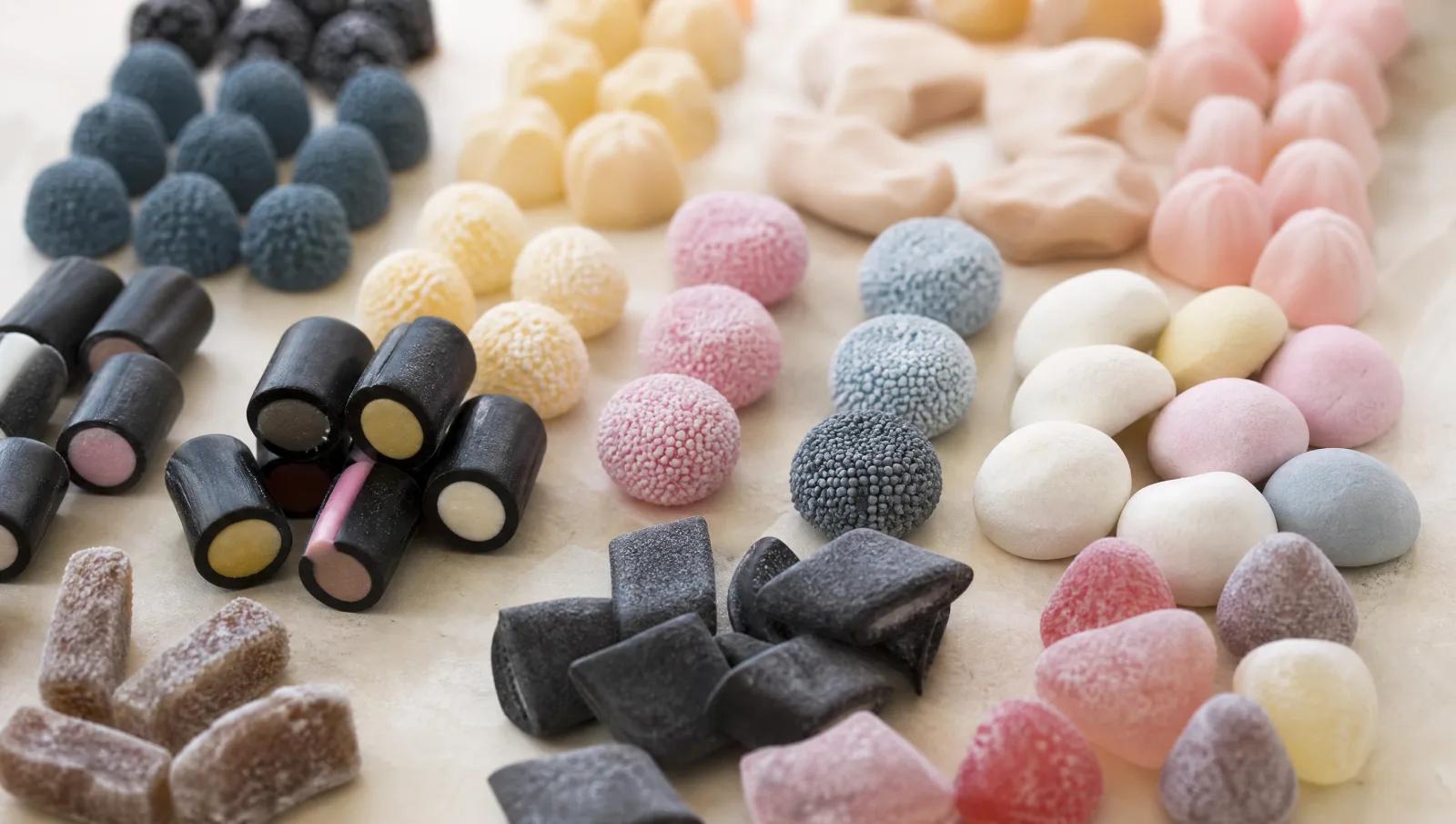
Danish candy is licorice country. Denmark built its sweet aisle on lakrids, salty licorice, and wine gums, sold from bland selv pick-and-mix walls. Swedish candy leans sour and foam instead. We import Swedish and European lines, not Danish brands, so we point Danish licorice fans toward the closest formats we actually carry.
We ran candy shops in Sweden before we started importing to the US, and Denmark was always the neighbor with the strongest opinions about licorice. American buyers ask us about Danish candy constantly, usually after a trip to Copenhagen or a taste of something a Danish friend brought over. This guide explains what Danish candy actually is, how it differs from the Swedish side, and where our catalog lines up with it. For the wider regional picture, start with our Scandinavian candy guide and the Nordic candy comparison.
Denmark is licorice country
If you only remember one thing about Danish candy, make it licorice. In Danish it is lakrids, and it runs through the whole culture rather than sitting in one corner of the aisle. Sweet soft licorice, hard licorice pastilles, licorice with sea salt, licorice folded into chocolate, licorice used in cooking and baking. Denmark has spent the last two decades pushing licorice upmarket, and a Danish shopper will happily debate texture, root quality, and salt level the way a coffee drinker debates roast.
The intense end of that spectrum is salty licorice, which Danes call saltlakrids. The salt in question is not table salt. It is ammonium chloride, known as salmiak, and it produces a sharp, tongue-numbing, almost savory hit that has nothing to do with sweetness. If you have never had it, our explainer on what salmiak is is the fastest way in. Denmark is not the most extreme country on salmiak, that title belongs to Finland, but it is arguably the country that treats licorice most seriously as a craft.
The second Danish signature is the wine gum. Firm, glossy, chewy, fruit-flavored, and completely unrelated to actual wine. Danish wine gums are denser and less springy than the soft gummies Americans expect, and they are a fixture of any Danish candy bag.
Bland selv: the Danish pick-and-mix
Danish candy is bought loose. The phrase is bland selv slik, which translates roughly to "mix it yourself candy," and it works the way a Swedish pick-and-mix wall does: bins of loose pieces, a scoop, a bag, priced by weight. Supermarkets, kiosks, and cinemas all run one.
The ritual attached to it is Friday rather than Saturday. Danish families traditionally buy candy for Friday night, while Swedes buy on Saturday. If you want the Swedish version of that habit, we wrote about why Swedes eat candy on Saturdays and how the lösgodis pick-and-mix bag works. The mechanics are nearly identical, and for a US retailer the important part is that both cultures assume you can build your own mix rather than buy a sealed bag.
Where Danish and Swedish candy part ways
The two countries share the pick-and-mix format and a licorice tradition, then diverge on almost everything else. Denmark's center of gravity is licorice and wine gums. Sweden's is sour gummies and skum, the airy foam candy that gives Swedish bags their distinctive soft, marshmallow-adjacent pieces. A Danish bag skews darker and saltier. A Swedish bag skews sourer, fruitier, and more varied in texture.
We go deeper on this in Danish vs Swedish candy, but the short version for a US shopper is this: if you love salty licorice, Denmark is your country. If you love sour, fruity, foam-textured pieces in a hundred shapes, Sweden is.
What we import, and what we do not
Here is the honest part. We do not stock Danish brands. Our range is Swedish plus a set of European producers we buy direct from: Dutch makers Matthijs and Frisia, Italian Bulgari, Spanish Vidal, and German chews from Haribo. Nothing in our catalog is salmiak or salty licorice either. We would rather tell you that plainly than sell you a substitute under a Danish label.
What we can do is point you at the closest formats on our shelf.
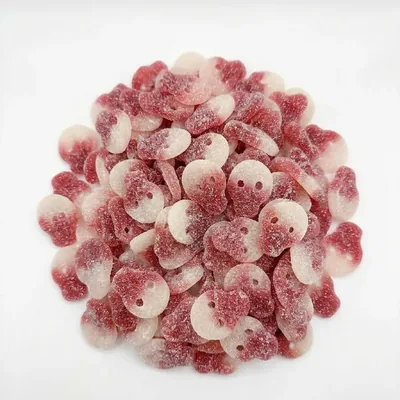
The one genuine Danish tie-in we carry is Matthijs Danish Skulls, a red and white flag-colored skull made in the Netherlands as part of the same skull family as Matthijs Swedish Skulls. It is a nod to Denmark rather than a Danish product, and like the rest of the Matthijs range it is flagged gluten-free, halal, vegan and vegetarian.
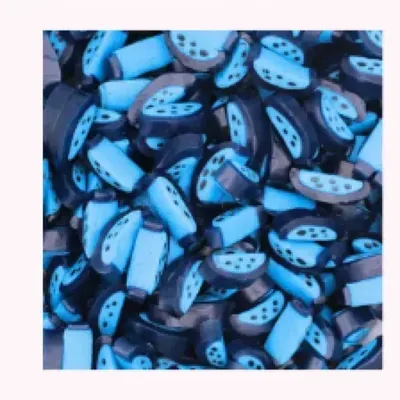
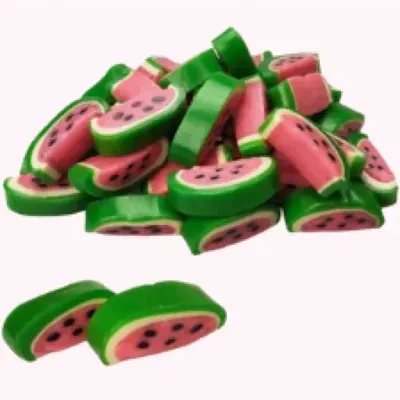
For the licorice format without the salt, we carry fruit-flavored licorice slices: Blue Raspberry Licorice Slices and Watermelon Licorice Slices. Both contain wheat and gluten. They give you the layered, sliced licorice look and the firm bite, with a fruit flavor rather than a salmiak one.
For the dense, chewy, wine-gum-adjacent mouthfeel, the closest thing we stock is the Lonka bon bon range, including Lonka Soft Bites Strawberry Bon Bon.
Closest to a Danish bag
Buying Danish-style candy in the US
Danish brands do reach the US through specialty importers and Scandinavian delis, usually in small quantities and at high prices, because licorice is a slow mover in most American stores. If you are hunting a specific Danish licorice you tasted abroad, a Nordic specialty shop is your best bet, and we will happily tell you that rather than pretend we have it.
What we can serve well is the rest of the Nordic candy experience: the pick-and-mix wall, the sour range, the foam pieces, and the shapes. That is the part most American shoppers fall for anyway, and it is the part that actually sells through in a US store.
For retailers building a Nordic set
If you are stocking a shelf rather than a candy drawer, the practical advice is to anchor the set with Swedish lines and treat Danish licorice as a small specialty addition sourced separately. Salty licorice has a narrow US audience. Sour and foam candy has a wide one. Our wholesale Swedish candy guide covers how to build that assortment, and Scandinavian candy wholesale covers the regional sourcing question in detail.
We import direct and ship from our Santa Fe Springs, California warehouse to the US and Canada. Pricing is DDP, so US labels and duties are already paid and there is nothing for you to clear. You order by the case, mix and match, with no order minimum.
Building a Nordic candy shelf? Browse the catalog or by brand, start a bulk order, or apply for a wholesale account. Wondering what to stock instead of Danish licorice? Get in touch and we will tell you honestly.
Frequently asked questions
What is Danish candy known for?+
Licorice above all. Denmark is known for sweet and salty licorice (lakrids and saltlakrids), wine gums, and a strong bland selv pick-and-mix culture where candy is bought loose by weight.
What does bland selv mean?+
It is Danish for "mix it yourself." A bland selv slik wall is a pick-and-mix station of loose candy bins sold by weight, the Danish equivalent of the Swedish lösgodis wall.
Is Danish candy the same as Swedish candy?+
No. They share the pick-and-mix format and a licorice tradition, but Denmark leans licorice and wine gums while Sweden leans sour gummies and foam (skum) candy.
Do you sell Danish candy brands?+
No. We import Swedish lines plus European producers from the Netherlands, Italy, Spain, and Germany. We do not stock Danish brands, and nothing in our catalog is salmiak or salty licorice.
What is the closest thing you carry to Danish candy?+
Matthijs Danish Skulls (a Dutch-made flag-colored skull), our fruit-flavored licorice slices for the licorice format, and the Lonka bon bon range for a dense, chewy bite.
Is salty licorice worth trying?+
It is worth trying once, and it splits people sharply. Start with a small piece of a mild salted licorice rather than a hot salmiak, and read our salmiak explainer first so you know what to expect.
Keep reading

Gustav Lindqvist · Candy Master
Gustav grew up in Sweden on a strict Saturday-candy schedule, mixing his lördagsgodis bag at the lösgodis wall before he could spell salmiak. He has spent years tasting his way across Scandinavian candy, and now curates the range at TheSweetsTruck, from BUBS sour skulls to the saltiest licorice most people cannot finish.
Last updated 8/8/2026