Gas Station Candy: A C-Store Buyer's Guide
C-store candy is a top ten in-store category, and single-serve imports fit it. Here is what moves at the register, how the per-case math works, and the grab-and-go cases we stock.
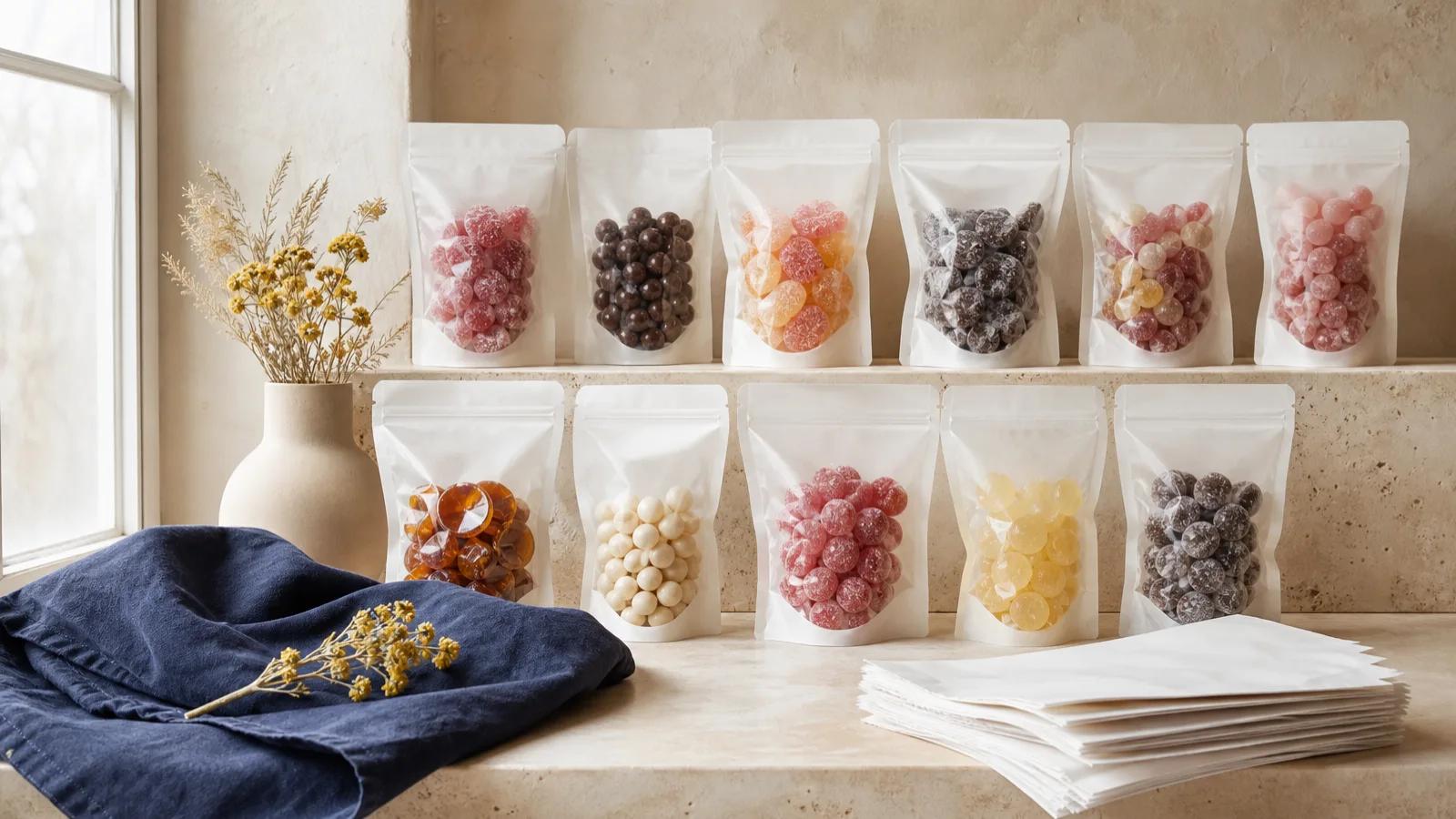
Gas station candy moves as singles, not shelves: shoppers buy one bag in the last ten seconds of a visit, so the register set does the work. Single-serve 90 g bags and 50 g packs suit that trip, and a tight set of three to five facings outsells a crowded display.
We import Swedish and European candy by the case and ship from our Santa Fe Springs, California warehouse, so the formats below are the ones we actually handle. If you want the full wholesale picture first, start with our wholesale Swedish candy guide.
What actually moves at a gas station or c-store?
Candy is a top 10 in-store category for convenience stores, and one the trade press describes as carrying strong margins. In the NACS State of the Industry Report of 2024 data, candy ran $8,816 in sales per store per month at margins of 50.58 percent, contributing 3.6 percent of in-store sales (NACS). The category is impulse driven; NACS Magazine calls it key to incremental sales that build baskets (NACS Magazine).
What sits inside that number is mostly familiar: NACS Magazine reports chocolate as the biggest candy subcategory in c-stores at 34.5 percent of category sales, while the trade chatter around growth centers on gummies, sour and textural pieces that skew younger (NACS Magazine). That younger half of the shelf is where an imported single-serve line earns its slot.
So the practical answer to what moves is less about a flavor list and more about a format: one shopper, one hand, one bag, priced small enough to say yes to at the till.
Why do single-serve bags win this channel?
The trip explains the format. A fuel stop is a five-minute stop, and nobody browses a candy wall on the way back to a car. What they will do is add one bag while the card terminal thinks about it. That favors formats you can scoop up in a second:
- Single-serve bag: one clean decision for one person, easy to pocket, easy to price under the pain point.
- Small pack: the same decision at a smaller bite, which suits the 50 g end of the shelf.
- Bulk bins: a lovely format for candy stores, a poor one for a forecourt, because they ask a rushed shopper to do work.
There is a second reason singles suit c-stores. Imported candy reads as a small treat with a story, and a single bag carrying that story at four to six dollars fits the same impulse budget as a premium drink. We look at why import pricing works in what retailers actually make on Swedish candy; the short version is that a case cost in the low single dollars per unit leaves room at a convenience price point.
Which 90 g bag lines fit a c-store register?
The 90 g bag is our workhorse single-serve format, and two cases do most of the work on a counter. Both are built for one-hand grabs, both come twelve to sixteen bags to the case, and both carry dietary flags we can state precisely.
- BUBS Sour Skull, 16 x 90 g bags: a sour gummy skull with a firm chew. Tagged gelatin-free, halal and vegan. Case weight 3.17 lb. Tier 1 price works out to $7.84 per lb, computed from the published case price, or about $1.56 a bag.
- BUBS Raspberry/Cool Hallonskalle skum, 12 x 90 g bags: a foam (skum) raspberry skull, soft and quick to eat, which suits a shopper walking out the door. Tagged gelatin-free, halal and vegan. Case weight 2.38 lb. Tier 1 price works out to $11.76 per lb from the published case price, or about $2.33 a bag.
90 g bags for the register

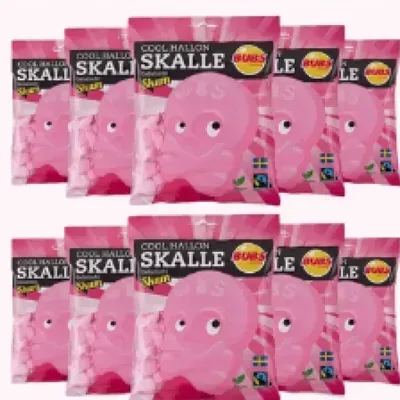
One sour and one softer piece covers most shoppers: the sour skull for the teenager, the foam raspberry for everyone else. Rotating a third flavor into the set later is cheap, which we get to below.
Which small packs suit grab-and-go?
The Pandy 50 g packs are the other half of the set: smaller format, bigger flavor, and a finish that suits a hand already holding a drink. The two cases we stock run fourteen packs each, so the set stays tidy and the facings stay honest.
- Pandy Watermelon, 14 x 50 g packs: a chewy watermelon gummy built on polydextrose with beef gelatine in the ingredient list we hold and malic acid for the tang. Case weight 2.20 lb. Tier 1 price works out to $27.22 per lb from the published case price, about $4.29 a pack. No dietary tags are held for this SKU, so we publish no claim.
- Pandy Fizzy Bottles, 14 x 50 g packs: bottle-shaped gummies from a fizzy-style range, with beef and bovine gelatine named in the ingredient list we hold. Case weight 1.54 lb. Tier 1 price works out to $38.88 per lb from the published case price, about $4.29 a pack. No dietary tags are held for this SKU either.
50 g grab-and-go packs
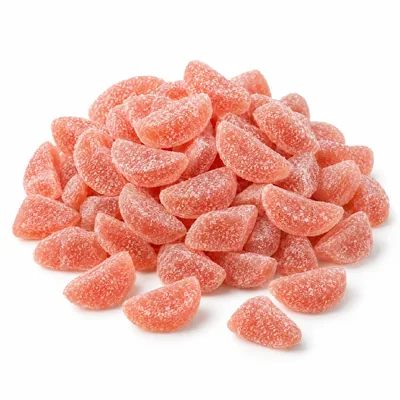
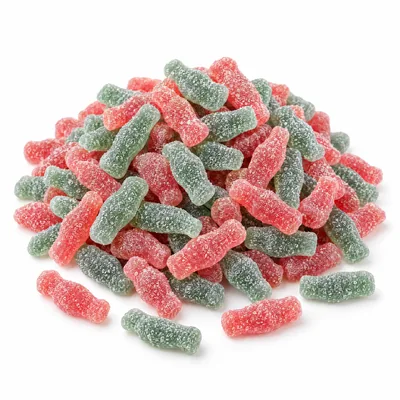
The math on these is different from the 90 g bags: cost per unit is higher, so treat them as a premium facing rather than the volume grab. One pack of each next to the two bag lines is enough to test.
What is the margin on a case?
Here is the example arithmetic, using the published Tier 1 case price and an illustrative shelf price. Nothing below is a price recommendation; it is the method, so you can rerun it on any SKU.
- Case to unit. A 16-count case at $24.90 lands at $24.90 ÷ 16 = $1.56 a bag.
- Pick a shelf price. Convenience pricing on a premium single usually sits in the four-to-six range. Say $4.99.
- Take the gross margin. (Price minus cost) ÷ price: ($4.99 − $1.56) ÷ $4.99 = about 69 percent. At $5.99 the same bag runs about 74 percent. Gross margin is the share of the shelf price you keep after cost of goods, the same math we walk through in the margins post.
- Scale it to the case. 16 bags at $4.99 is $79.84 of sales against $24.90 of cost, so the case carries roughly $54.94 in gross profit.
That is one case on one counter. It is also why the format questions matter more than the flavor list: at imported-candy unit costs, the register single is where a c-store candy set actually earns.
Ordering is straightforward when you want to test it: by the case, mix and match, with no US order minimum. Ordering takes a free wholesale account, and applications approve automatically. Card at checkout, or Earned Credit: an approved account's credit line equals its largest paid, delivered order (up to an account limit), spendable at checkout on NET-14 terms, with a card covering any difference.
For shops: when you are ready to size a first counter set, apply for a wholesale account; if you are planning a larger drop for several sites, the bulk order tool is the place to start. Case counts, weights and photos for the wider range sit in the Sweden catalog.
Should a c-store rotate flavors or fix the line-up?
Treat the set as two parts. The fixed part earns its place and never moves; the rotating part keeps regulars looking. This is the same top-versus-tail discipline we recommend for any small candy set in candy category management, applied to a counter instead of a wall.
- Fixed lines: cola and one sour skull, plus one foam piece. These read across ages, need no explanation, and can hold the same facing all year.
- Rotating lines: one or two slots, swapped a few times a year. A different sour is the easiest swap because sour is the flavor shoppers photograph and talk about.
- The switching cost: one case per swap, because you mix and match by the case, so rotation never floods you with stock.
If you start wider than three to five facings, the display reads as work and gets skipped; the eight-to-twelve SKU range makes sense once you know which two or three facings actually sell for you.
Where should the candy sit in a small store?
Placement does more than selection at a fuel stop, and the rules from our candy merchandising guide translate directly to a c-store counter.
- The register zone is the whole game. Candy is a ten-second decision, so it belongs where the transaction happens, within arm's reach of a standing adult.
- Eye level means chest to face height. A small riser or basket that lifts bags into that band outsells the same product flat on the counter.
- Sign the price. The one question that stops a pickup is an unknown price; a small legible card removes it.
- Cross-merchandise with coffee. A candy basket beside the coffee station catches the shopper already in a treat mindset, which is the highest-intent moment in the store.
- Face it clean. Keep labels forward and fill gaps as they sell; a picked-over display reads as old, and old is the one thing a candy facing cannot be.
What do buyers ask before a first candy case?
These are the questions that come up most often when a gas station or convenience store first orders imported candy.
- How many SKUs do I need? Three to five facings at the register to start. Add width later, from evidence.
- Which flavors first? One sour, one foam or soft piece, one cola-adjacent. That covers most of what any shopper will reach for.
- Do I need a big commitment? No. Order by the case, mix and match, with no US order minimum, so a first order can be two cases and a genuine test.
- How often do I reorder? On a fixed cadence, weekly or every two weeks, so the review happens before a stockout does.
- How do I store it? Sealed and cool until you face it. The best-before date printed on the case is the number that matters; sugar candy is stable, but heat and humidity dull foam and sugar coatings.
- What about freight? Orders ship from Santa Fe Springs by UPS Ground or UPS Express in the US; Canada is container freight only, from $4,000 USD, with freight and duties quoted by email.
Ready to build a counter set that sells itself? Apply for a wholesale account and approve automatically, or size the drop with the bulk order tool when you know your case counts.
Frequently asked questions
What candy sells best at gas stations?+
There is no single flavor answer, because the format does the selling. Single-serve bags and small packs win the trip, and the trade data shows the category splits heavily toward chocolate with growth in gummies and sour pieces. For an imported line, one sour, one soft piece and one cola-adjacent flavor is a sensible register set.
How much does it cost to add imported candy to my store?+
A 16 x 90 g case of sour skulls is $24.90 at Tier 1, which lands at about $1.56 a bag. Shelf pricing in the four-to-six range yields gross margins around 69 to 74 percent in the worked example on this page. Case prices are public on every product page, and there is no US order minimum.
How much space do I need for a candy set?+
Less than most buyers expect. A riser or basket at the register, sized to three to five faced bags, catches the impulse decision without taking shelf space from other categories. The display band that matters is standing chest-to-face height, not the countertop itself.
Do I need a wholesale account to order?+
Yes, and it is free. Every case price is public on the product page, but ordering runs through a wholesale account, and applications approve automatically at the application page. From there you order by the case, mix and match, with no US order minimum, and reorder whenever the cadence comes around.
How long does imported candy last on a c-store shelf?+
Sugar candy holds well when it is kept cool, dry and sealed; what dulls it is heat and humidity, which soften foam pieces and dissolve sugar coatings. The printed best-before date on the case is the number that applies to your stock, and rotating first in, first out keeps the register display honest.
Can I mix flavors in one order?+
Yes, that is the normal way to build a counter set. Because cases mix and match with no US order minimum, you can take one case of a sour line, one foam line and one small-pack line to test, then deepen whichever two earned their facing. Rotation later costs you one case per swap.
Keep reading

Gustav Lindqvist · Candy Master
Gustav grew up in Sweden on a strict Saturday-candy schedule, mixing his lördagsgodis bag at the lösgodis wall before he could spell salmiak. He has spent years tasting his way across Scandinavian candy, and now curates the range at TheSweetsTruck, from BUBS sour skulls to the saltiest licorice most people cannot finish.
Last updated 10/26/2026