Gummy Candy: The Complete Guide to Europe's Best
How gummy candy works: gelatin versus pectin versus starch, what each base does to the chew, the European gummy houses we import, and the cases to start with.
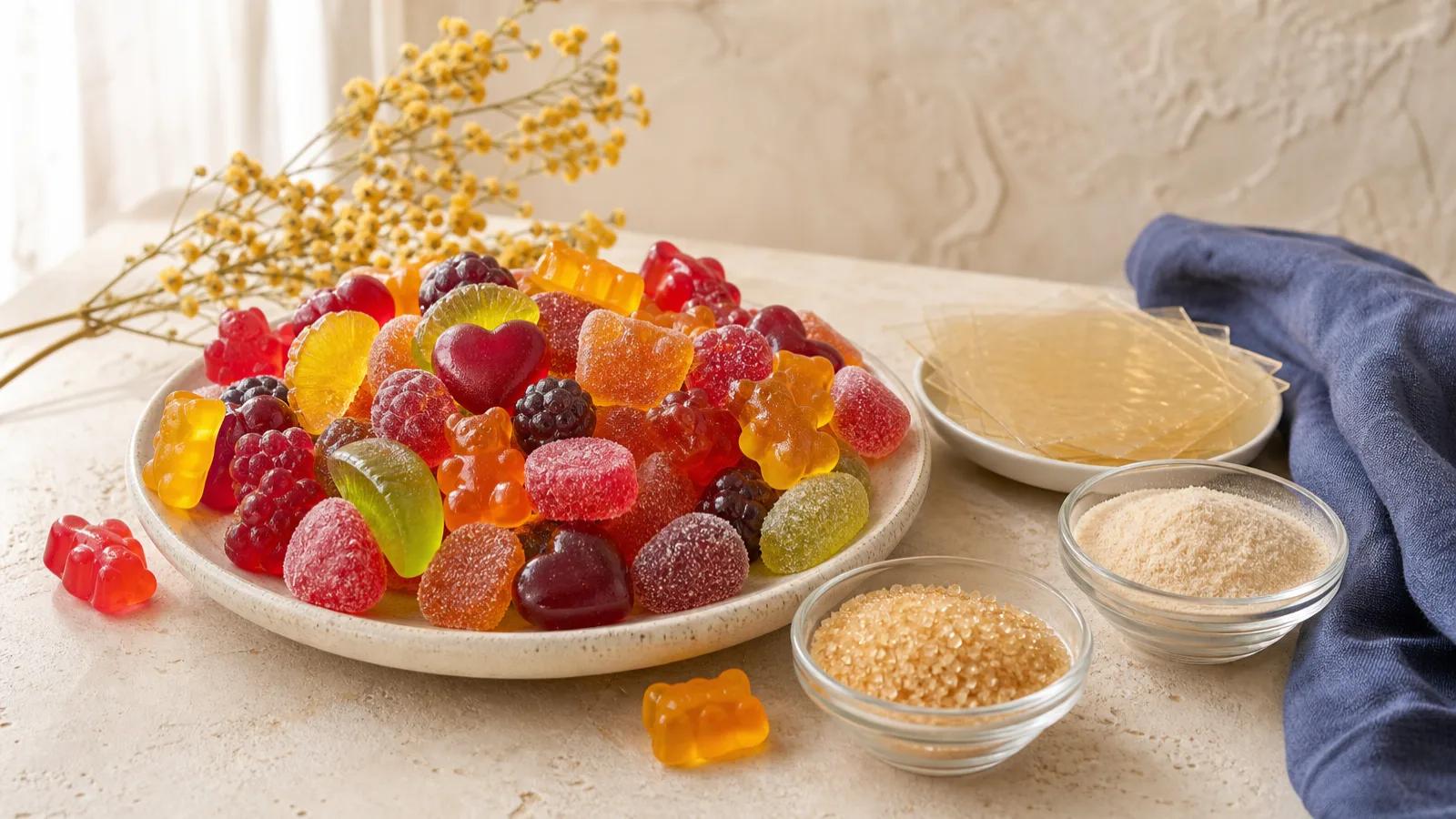
Gummy candy is chewy candy set with a gelling agent, and that agent decides everything: gelatin gives a springy bounce, pectin a shorter cleaner bite, and starch a soft, slower chew. European gummies tend to be firmer and fruit-led, and most of the range travels well as pick-and-mix.
This page is the category explainer: the three bases, how each one chews, and the European houses we import. The Swedish-specific version, with the formats and the flags laid out case by case, is in our Swedish gummies guide.
What is gummy candy made of?
Gummy candy is a cooked sugar syrup set with a gelling agent into a piece that holds its shape but yields slowly to the tooth. The syrup supplies the sweetness and the body; the gelling agent supplies the structure. Three agents dominate across Europe, gelatin, pectin and starch, with gum arabic appearing in some chews and wine gums.
The kneaded taffy family is chewy without being gummy, and it belongs to its own category. Gummies are defined by the set: a liquid that becomes a soft solid, and stays that way through a long shelf life.
How does the gelling agent shape the chew?
- Gelatin: an animal protein produced from collagen, as the Gelatine Manufacturers of Europe describes it, which melts at body heat. That is why a gelatin gummy goes soft as you chew and releases flavor with it.
- Pectin: a plant polysaccharide extracted from citrus peel, apple pomace or beet pulp (21 CFR 184.1588). It gives a shorter, cleaner bite that breaks rather than stretches, and it needs an acidic, sugary environment to set, which is why pectin and sour fruit flavors pair so naturally. Our sour gummy guide goes through that acid pairing in detail.
- Starch: usually modified food starch from corn, potato or tapioca (21 CFR 172.892). Starch sets soft and slightly gluey, with a longer chew, and it is the base of the wine gum and fruit gum styles.
Two more variables decide what you taste. First, where the acid sits: mixed into the body, sanded on as sugar and acid, or sprayed on as a finer layer. Second, how long the piece dries: European makers typically dry longer, which pulls water out and firms the chew.
What is the difference between gelatin, pectin and starch gummies?
The short version, base by base:
- Gelatin gummies: bouncy and slow, and they melt at body heat. Gelatin is animal-derived, so a gelatin gummy is not vegan. The Bulgari Fruits case we stock lists gelatine as one of its gelling agents.
- Pectin gummies: shorter and cleaner, releasing flavor faster. Pectin is plant-derived, which is one reason so many European fruit gums carry vegan flags.
- Starch gummies: soft, long-chewing and very common in European pick-and-mix. Our BUBS cases and the Matthijs skulls are starch-based, and the ingredient lists we hold show why: maize starch in one, a modified corn, potato and wheat starch blend in the other.
- Gum arabic: a fourth base that shows up alongside starch in chews, dense and slow to dissolve, including in the Candy People bites we stock.
One trap worth flagging: a starch base is not automatically gluten-free. Matthijs labels its starch blend gluten-free, a claim with a defined standard under the FDA's gluten-free rule. The vegan S-Märke discs and the Sura pacifiers list wheat even though they carry vegan flags.
Color deserves the same caution. Some of the ingredient lists we hold name carmine, listed as E120, a color additive derived from an insect that the FDA documents in its guide to color additives. Others name E133, a synthetic blue. Recipes change, so the printed pack is the authority.
Which European houses make gummy candy?
Four houses cover most of what we import.
- BUBS: founded in Huskvarna, Sweden, in 1992 by the Lindström family (BUBS), and owned by Orkla Snacks since 2023, when Orkla completed its purchase of the company (Orkla's release). Its moulds are pressed into cornstarch beds, and its in-stock range is gelatin-free and vegan across the flags we hold. See the BUBS range.
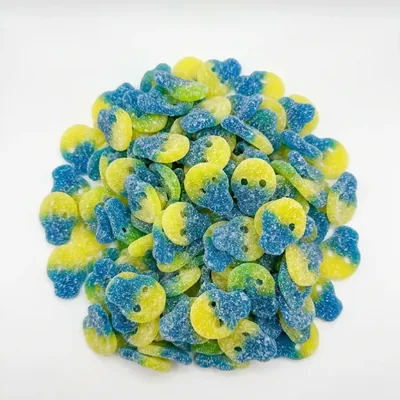
- Matthijs: a Dutch family maker in Hoogerheide, in candy for over a century (Matthijs). Sugar-dusted skulls are its signature, and most of its lines carry gluten-free, halal, vegan and vegetarian flags on our records. See the Matthijs range.
- Vidal: born in 1963 in Molina de Segura, Spain (Vidal's history), and best known for oversized XL formats.
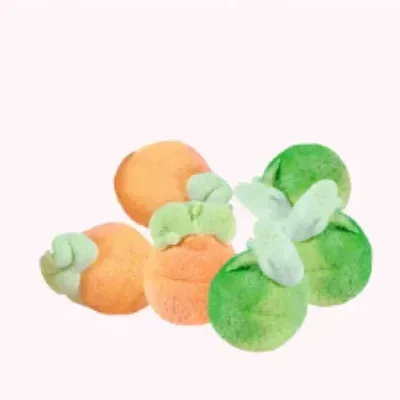
- Bulgari: an Italian marshmallow house founded in 1880 in Pavone del Mella; its own history dates the 3D marshmallow line it is known for to the late 1990s (Bulgari Agostino). Its cases list gelatin.
The gummy cases we stock
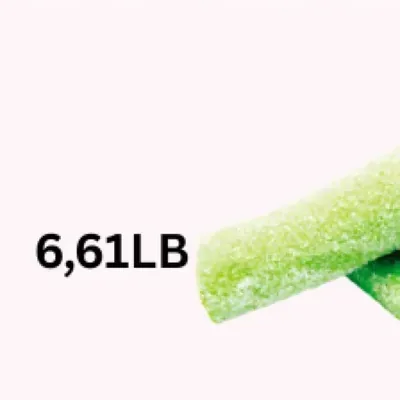
- BUBS Cola Skulls (6.61 lb / 3 kg, $50.90, $7.70 per lb, computed from the published case price): a sour cola skull on a maize starch base, gelatin-free and vegan, with malic acid as the acid. The only colouring the ingredient list names is E150a.
- Matthijs Swedish Skulls (4.41 lb / 2 kg, $36.00 for the single bag, $8.16 per lb, computed from the published case price): a sugar-dusted skull on a modified starch blend, carrying gluten-free, halal, vegan and vegetarian flags. The listing calls it a sour gummy. The same page also offers it as a case of six (26.46 lb). The ingredient list we hold names E133 among the colours.
- Bulgari Fruits (2.2 lb / 1 kg, $19.90, $9.03 per lb, computed from the published case price): bite-size fruit gummies on a gelatin and pectin base, with no sour claim on the listing. Tags as listed: none. The ingredient list names E120 and E133 among the colours.
- BUBS Wild Strawberry Pomegranate (6.17 lb / 2.8 kg, $51.00, $8.26 per lb, computed from the published case price): a starch-based oval, gelatin-free, halal and vegan; the colours it lists come from black carrot concentrate. The listing makes no sour claim.
- Vidal XL Sour Watermelon (6.61 lb / 2,998 g, $36.00, $5.45 per lb, computed from the published case price): the big sour watermelon piece in the XL format. Our listing holds no ingredient list for it, so we publish no base, colour or dietary claim. Tags as listed: none.
- Candy People Sour Watermelon Bites (4.4 lb / 1,996 g, $34.90, $7.93 per lb, computed from the published case price): chewy sour bites built on wheat flour, starches and gum arabic; the listing describes them as soft, chewy and sour. Tags as listed: none. The colours listed include E120 and E133.
Three houses, two bases

Are European gummies different from the American kind?
Mostly in three places, and it is worth being precise, because the difference is real but easy to oversell.
- The chew: European gummies are usually firmer and drier, a habit from the wine gum tradition, so the piece resists for longer before it gives. That firmness is also why they hold shape in a warm bin.
- The sourness: European sour lines tend to carry acid through the body as well as on the surface, so the sourness does not vanish after the first two seconds. The American style leans harder on a sugar-heavy sanding.
- The base: a large share of what we import lists starch, pectin or gum arabic instead of gelatin, a European habit more than a marketing angle.
None of that makes either side better. It is a difference of construction, and a shopper who grew up on one will notice the other immediately.
Do all gummies have gelatin?
No, and you cannot tell by looking. Across the range we import, every in-stock BUBS line carries a gelatin-free flag. Most Matthijs lines carry vegan flags, and so do the vegan S-Märke discs and the Sura pacifiers. Foam and marshmallow styles such as the Bulgari marshmallow range and the Franssons foam cases list gelatin. The shape tells you nothing and the label tells you everything. The full line-by-line answer is in our gelatin guide.
Two of the flags get confused, so keep them separate. Gelatin-free means one specific animal ingredient is absent. Vegan is broader, covering gelatin, carmine and the other animal-derived helpers, so a vegan item is always gelatin-free but a gelatin-free item is not automatically vegan. And neither flag says anything about gluten, which lives on a different part of the label.
How do shops buy gummy candy?
Start with the base question rather than the flavor list. A working set is one starch line, one gelatin line and one line that carries vegan flags, which covers most customer questions before they are asked.
- For shops: apply for a wholesale account to see the full case list with Tier 1 pricing, and mix across bases in a single order.
Ordering runs by the case, mix and match, with no US order minimum, and applications approve automatically. US orders ship from Santa Fe Springs, California within 2 business days; Canadian orders ship DDP, with duties and taxes paid at checkout, in 3 to 5 business days.
Three cases to start with
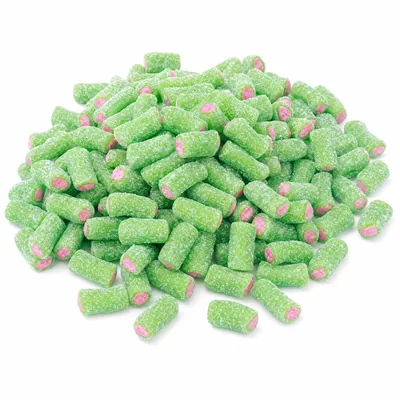
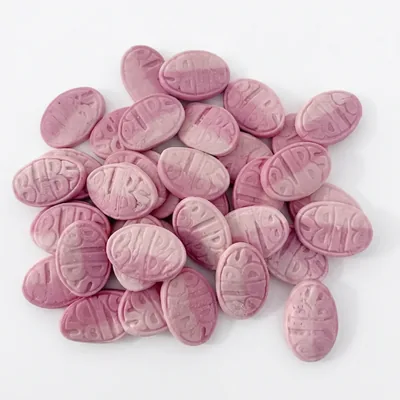
Ready to compare the bases in the case? The store lists every gummy case with its public Tier 1 price, and our Swedish gummy candy guide is the next step if you want the Swedish shelf specifically.
Frequently asked questions
What is gummy candy made of?+
Gummy candy is a cooked sugar syrup set with a gelling agent. In Europe that agent is usually gelatin, pectin or starch, and the choice decides the chew: springy for gelatin, shorter and cleaner for pectin, softer and longer for starch. Flavor, acid and color are added on top of that base.
What is the difference between gelatin and pectin gummies?+
Gelatin gummies bounce and melt at body heat, which releases flavor as you chew. Pectin gummies give a shorter, cleaner bite and release flavor faster, and pectin needs an acidic, sugary environment to set. Both are common in Europe. Which one you prefer is a matter of taste, and the label tells you which is in the pack.
Why are European gummies firmer?+
The firmer chew comes from the wine gum tradition: dense, glossy, slow-eating pieces built to be chewed rather than dissolved. European makers also tend to dry the pieces longer, which pulls water out and firms the texture. That is why a Swedish gummy holds its shape in a warm shop better than a soft American gummy.
Are gummies vegan?+
Some are, and the flags tell you which. Gelatin is animal-derived, so a vegan gummy cannot contain it. On the cases we import, the in-stock BUBS lines, most Matthijs lines, the vegan S-Märke discs and the Sura pacifiers carry vegan flags on our records. A line with no flag gets no claim from us either way, so check the pack or ask us for the manufacturer spec sheet.
Is gummy candy gluten-free?+
Only where the label says so. Most of the Matthijs range carries a gluten-free flag, and its starch blend is labelled gluten-free on the pack. Other European gummies, including the vegan S-Märke discs and the Sura pacifiers, list wheat, so a vegan flag there does not mean wheat-free. The pack is the authority for the rest.
What does starch do in a gummy?+
Starch sets a softer, longer chew, and it is one of the most common bases in European candy, which is why wine gums and many Nordic pieces use it. In production the starch is also the mould: shapes are pressed into cornstarch beds, the candy mix is poured in, and the flour is dried and reused for the next batch.
How should gummies be stored?+
Cool, dry and sealed, away from sun and vents. Humidity is the main enemy: sealed cases in a stable room keep gummies firmer, while an open bin in a damp room softens them and eventually fuses the pieces together. Refrigeration is not the fix, because a cold gummy condenses moisture as it warms back up.
Keep reading

Gustav Lindqvist · Candy Master
Gustav grew up in Sweden on a strict Saturday-candy schedule, mixing his lördagsgodis bag at the lösgodis wall before he could spell salmiak. He has spent years tasting his way across Scandinavian candy, and now curates the range at TheSweetsTruck, from BUBS sour skulls to the saltiest licorice most people cannot finish.
Last updated 10/21/2026