Licorice Hard Candy and Pastilles: The Firm End of the Category
Licorice hard candy is boiled sugar with licorice extract. How it differs from a Nordic pastille and from soft licorice, plus why most of it tastes of anise.
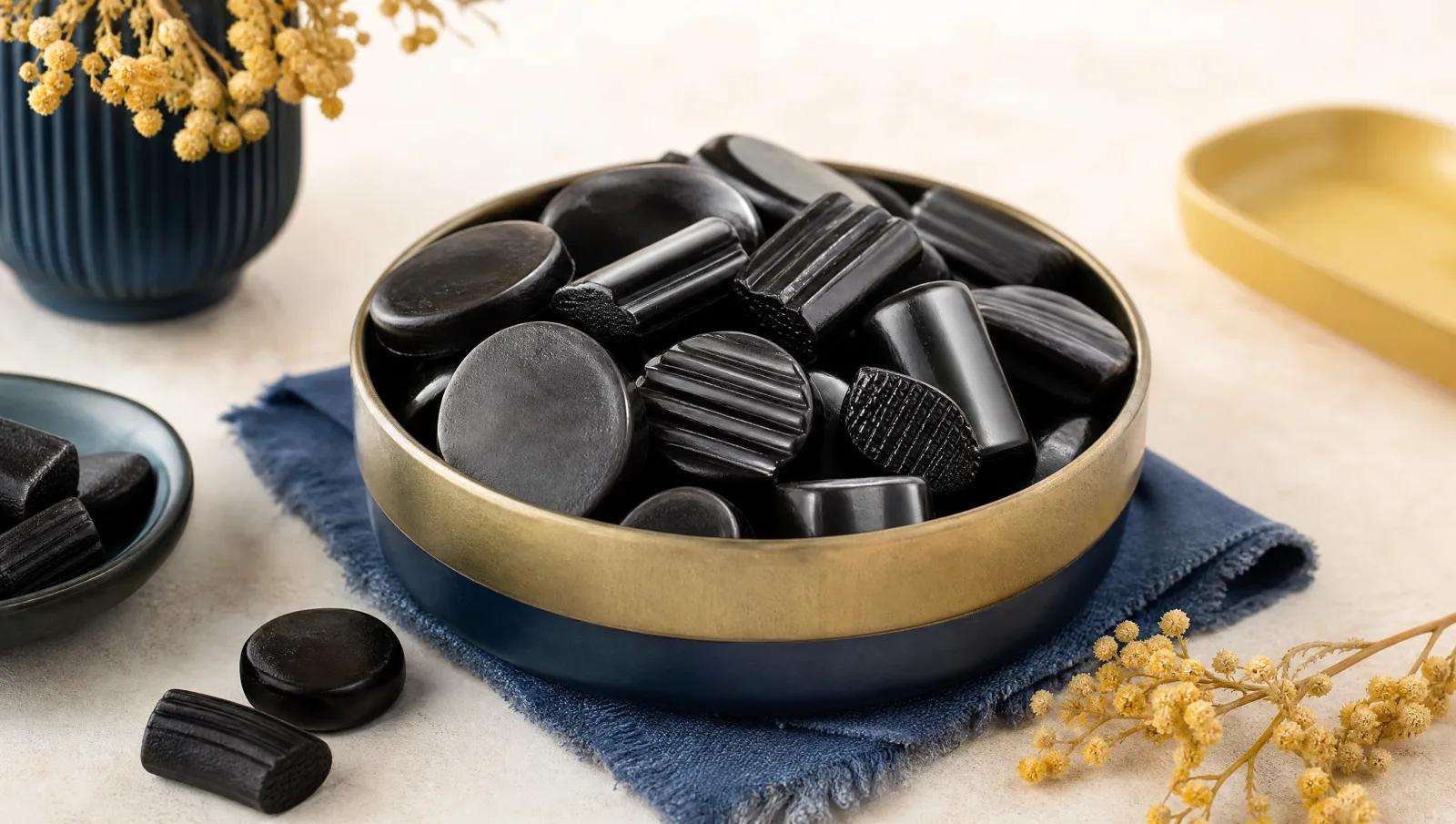
Licorice hard candy is sugar and glucose syrup boiled to the hard crack stage, with licorice extract and anise oil added off the heat. It dissolves rather than chews. A Nordic pastille is a different product: gum-set or compressed, softer than a boiled drop, and descended from throat lozenges rather than candy. The word licorice covers at least four unrelated textures, and hard candy is the one people are least clear on. This is how the firm end of the category is actually built.
How a boiled licorice drop is made
A hard candy is a sugar glass. Sugar and glucose syrup are cooked to somewhere around 300 degrees Fahrenheit, driving the water content down to roughly one or two percent. At that moisture level the sugar cannot recrystallize, so it sets clear and brittle instead of grainy.
Flavor and color go in after the boil, once the batch has cooled slightly, because licorice extract and anise oil would cook off at full temperature. The mass is then either rolled into a rope and cut, or deposited into molds.
Three things follow from that construction:
It dissolves, it does not chew. There is no starch, no gelatin and no fat in the piece. It is sugar, flavor and almost no water.
It is thirsty. Hard candy pulls moisture out of the air, which is why unwrapped boilings go sticky in an open bin faster than any other format. Wrapped, or a sealed jar, or nothing.
The flavor releases slowly and steadily, which is exactly why the format survived as a throat sweet.
Pastilles are not hard candy
This is where the confusion sits, especially with Nordic products.
A pastille is set with gum arabic, or pressed from powdered sugar with a binder, rather than boiled to a glass. It is firm but yielding, closer to a very dense gum than to a boiled drop, and it is made in a completely different way. Gum pastilles are deposited into starch molds and then dried for days, sometimes more than a week, until they reach the right firmness.
Sweden's pastille tradition runs through Läkerol, made in Gävle and on the market since the early twentieth century, originally sold as a throat pastille rather than as candy. That heritage is why the whole category is small, flat, tinned, and flavored with things like licorice, salmiak, menthol and elderflower rather than with fruit. We go into the brand story in our Läkerol piece.
Salmiak pastilles are the extreme version. Ammonium chloride is the active flavor, the piece is meant to be held rather than crunched, and the salt builds over a minute or two. If you crunch it you get the whole dose at once, which is a genuine mistake and not a fun one. How to eat salty licorice is the practical guide.
The four licorice textures, compared
Format: How it is set: Bite: Flavor release
Boiled hard drop: Sugar boiled to a glass: Brittle, dissolves: Slow and even
Gum pastille: Gum arabic, starch-molded, dried for days: Firm, yielding, dense: Slow, builds
Compressed pastille: Powdered sugar pressed with a binder: Crumbles, then dissolves: Fast onset
Soft licorice: Extruded starch or flour paste, cured: Chewy, resistant: Immediate
Soft licorice is the one most people picture, and it is covered in salty black licorice and in our Swedish vs Dutch licorice comparison. It has almost nothing in common with a boiled drop beyond the flavoring.
Most licorice candy tastes of anise, not licorice
Worth knowing if you are buying for a shelf. Licorice root extract is expensive, dark, and much sweeter than sugar by weight, and it brings a heavy, earthy base note. Anise oil, from aniseed or star anise, delivers the bright, recognizable top note that most people actually identify as the taste of licorice.
Plenty of licorice hard candy is flavored predominantly or entirely with anise oil, with licorice extract present for color and body or not present at all. That is not a scandal, it is standard practice, and it explains why two black candies can taste so different. If a customer says they hate licorice, ask whether they hate anise. Usually they do, and no amount of sweet licorice will fix it.
What we import, and what we do not
Straight answer: we do not currently carry licorice hard candy, pastilles, or salmiak in any form. Our range is Swedish and European gummy, foam, chew and sour lines, bought direct from producers in Sweden, the Netherlands, Italy, Spain and Germany. Hard candy and pastilles are a different supply chain and we are not in it.
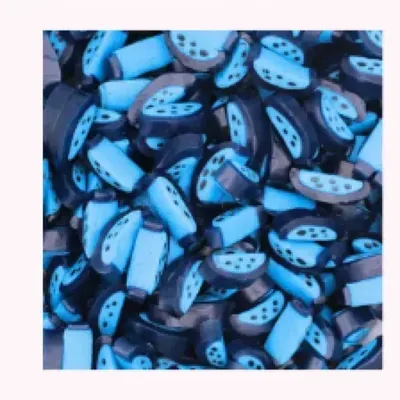
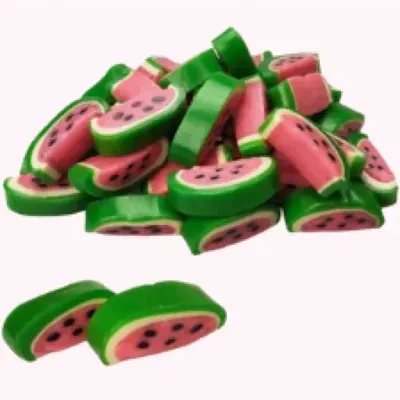
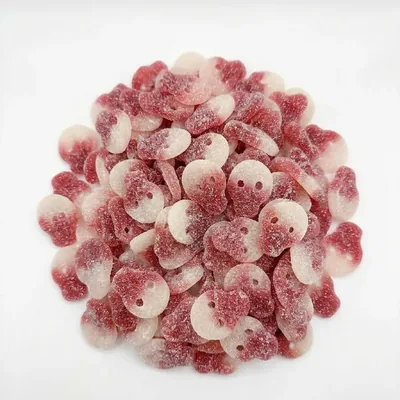
If what you want is a long-lasting, firm-bite piece for a bulk wall, the closest thing on our list is the sliced licorice-style format and the denser sour pieces. The fruit licorice slices hold their shape and take real chewing. Our supplier data carries no dietary flag on those two items, so we publish none.
The firmest-bite cases on our list

For retailers
Two practical notes if you already stock hard licorice from another supplier.
Do not put unwrapped boilings in an open bin. They absorb humidity, weld into a block, and you will throw the bin away. Wrapped pieces or sealed jars only. Everything else on a pick-and-mix wall tolerates open air better, which we cover in how to run pick and mix.
Merchandise pastilles as an impulse item at the register, not on the wall. Tinned pastilles are a small-basket add-on with a good margin and a long shelf life. They do not compete with the bulk bins and they do not want to be scooped.
Frequently asked questions
What is licorice hard candy made of?+
Sugar and glucose syrup boiled until almost all the water is gone, with licorice extract and usually anise oil added afterward. There is no gelatin, starch or fat in the piece, which is why it dissolves in the mouth instead of chewing.
What is the difference between licorice hard candy and a licorice pastille?+
A hard candy is boiled sugar set as a glass. A pastille is gum arabic set in a starch mold and dried for days, or powdered sugar pressed with a binder. Pastilles are firmer and denser than they look, and they are designed to be held in the mouth rather than crunched.
Is Läkerol a hard candy?+
It is a pastille rather than a boiled drop. It began life as a throat pastille in Sweden in the early twentieth century, which is why the range leans toward licorice, salmiak and menthol rather than fruit.
Why does licorice candy taste like anise?+
Because a lot of it is flavored with anise oil rather than licorice root extract. Anise carries the bright note people recognize as licorice. Licorice extract brings the darker, earthier base. Many products use one, the other, or both in very different proportions.
Does licorice hard candy melt or go sticky?+
It goes sticky rather than melting. Boiled sugar draws moisture from the air, so unwrapped pieces tack up and clump in humidity. Keep it wrapped, cool and dry, and never leave it open in a bulk bin.
Do you sell licorice hard candy wholesale?+
No. We do not currently import hard licorice or pastilles, and we would rather say so than pretend to a range we do not have. Our list is Swedish and European gummy, foam, chew and sour.

Gustav Lindqvist · Candy Master
Gustav grew up in Sweden on a strict Saturday-candy schedule, mixing his lördagsgodis bag at the lösgodis wall before he could spell salmiak. He has spent years tasting his way across Scandinavian candy, and now curates the range at TheSweetsTruck, from BUBS sour skulls to the saltiest licorice most people cannot finish.
Last updated 8/23/2026