Salmiakki: Finland's Salty Licorice, Explained
Finland's salty licorice, explained: what ammonium chloride is, why salmiakki tastes sharp and savory, and the sensible way to work up to the strong stuff.
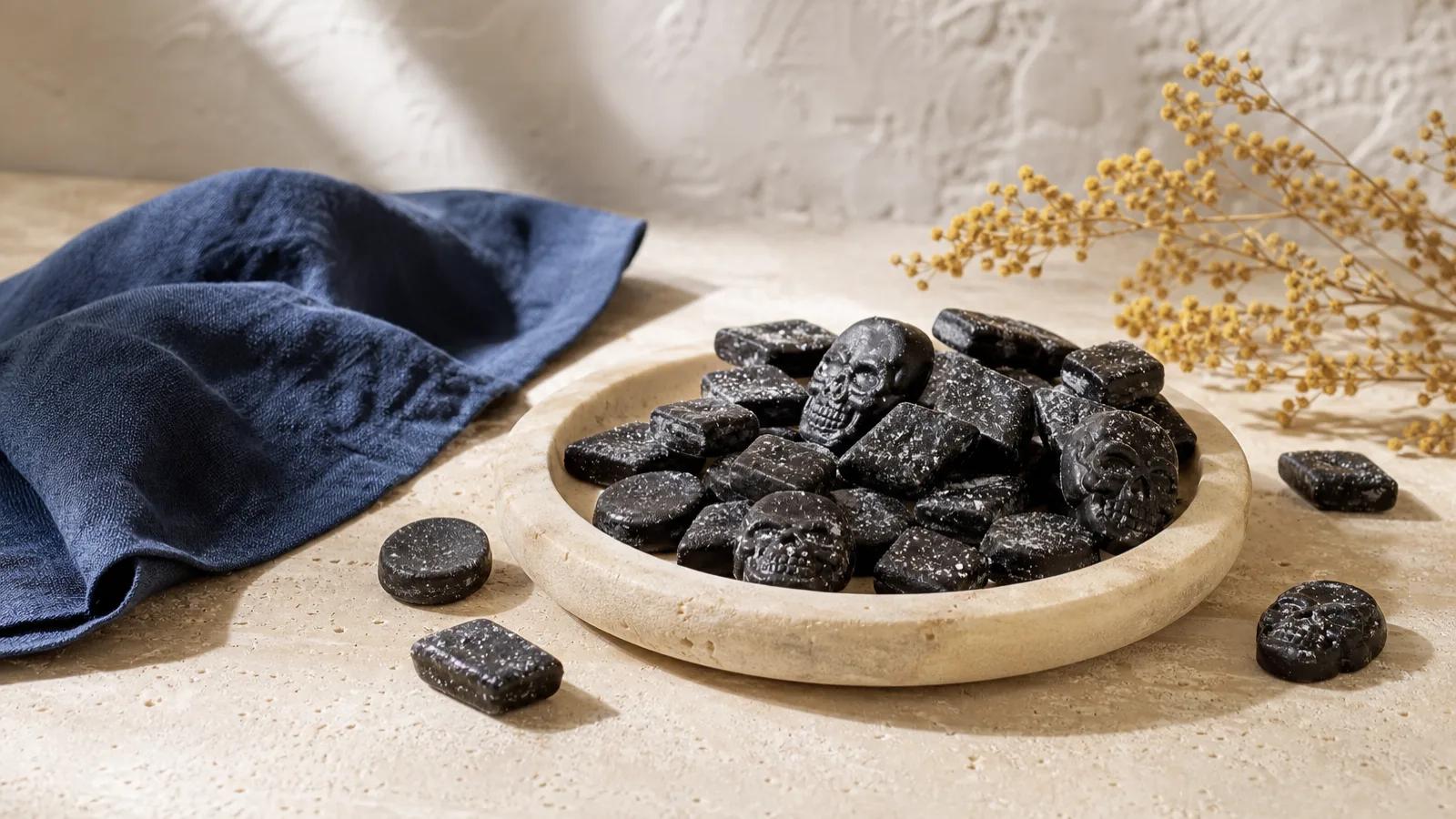
Salmiakki is Finland's salty licorice, made by flavoring black licorice with ammonium chloride, the compound behind the sharp, savory kick known as salmiak salt. It is not table salt. The flavor runs from mild to intense, it is a Nordic staple rather than a niche, and salty licorice anchors the strong end of the Swedish pick-and-mix wall.
This guide covers what salmiakki is, how the Finnish and Swedish versions differ, and a ladder for working your way up to the strong end without regretting it. If you want the flavor pulled apart in one page, our explainer on what salmiak is is the place to start.
What is salmiakki, exactly?
Salmiakki is the Finnish name for salty licorice: black licorice spiced with ammonium chloride, the compound that gives the candy its sharp, savory, unmistakable kick. Northern Europe calls that compound salmiak salt, and it is a different chemical from the sodium chloride on your fries. That difference is the whole story of the flavor.
Ammonium chloride (NH4Cl) is affirmed for use in food under US rules (21 CFR 184.1138), and in the Nordic countries it is the salt that seasons an entire candy category. Finland is the variety's home base: thisisFINLAND, published by Finland's Ministry for Foreign Affairs, describes salmiakki as the Finnish speciality, with a Helsinki kiosk dedicated to it, and notes that the other Nordic countries and the Netherlands are known to relish it too (ThisisFINLAND).
What does salmiakki taste like?
Sharp, salty, savory and a little cooling or numbing, with the dark herbal base of licorice underneath. Salt arrives before sweetness, which is exactly why the flavor divides first-timers: it is bold and unfamiliar rather than subtle. Taste is subjective, so treat the descriptions below as the common map, not the rule.
- First impression: salt and a savory edge, closer to a salted herbal tea than to candy.
- The middle: the licorice base comes through, dark and herbal.
- The finish: many people notice a cooling, gently numbing sensation that lingers.
- Versus sweet licorice: sweet licorice leans on anise and sugar; salmiakki leans on salt, and the contrast is bigger than the overlap.
For where this falls on the acquired-taste spectrum, our piece on whether salty licorice is an acquired taste lays it out honestly.
Is salmiakki the same as licorice?
No, although they travel together. Licorice is the candy base and flavor family; salmiak is the salt that seasons it; salmiakki is what Finland calls the result. The distinction matters when you taste, because a salmiak candy can read as intensely savory while a sweet licorice piece from the same shop reads like anise candy. Treat them as two ends of one shelf, not two names for one thing.
There is a practical reason the two get blurred: ammonium chloride has no sweetness of its own. It only salts what is underneath it, so a recipe that leans hard on salmiak can taste almost savory from the first second, while the sugar base does all the sweet work in the background. That is also why two candies that look identical on a pick-and-mix wall can sit at completely different points on the scale.
What is the difference between Finnish salmiakki and Swedish salmiak?
The same flavor family, two accents. Finland treats salmiakki as a national speciality and, by reputation, has the stronger versions; Sweden folds salmiak and saltlakrits into everyday pick-and-mix culture, including the dare-level pieces at the salty extreme.
- Finland: salmiakki is the everyday word, sold in drops, lozenges and powders, and the especially strong Finnish versions regularly surprise visitors (ThisisFINLAND).
- Sweden: salty licorice shares the wall with the sweet stuff, and the strongest pieces are famous as a test for newcomers.
- Wider Nordic region and the Netherlands: the taste is at home across the other Nordic countries too, per ThisisFINLAND's guide to the Finnish speciality.
The strongest versions are the ones Finland is known for: the same ThisisFINLAND feature notes that visitors from other parts of the world may experience something close to culture shock when they taste the especially strong Finnish style. That is a reputation worth taking at face value when you order, and a reason the ladder below starts further down than most first-timers expect.
Our salty licorice and salmiak explainer goes deeper on how the two traditions slot together.
How strong does salmiakki get?
There is a whole scale, and it is not marketing language. Mild versions let the sweet licorice base lead with a savory shadow behind it; standard pastilles push the salt forward; double salt versions, meaning a heavier ammonium chloride load, push it further still. At the extreme end sit powders and the famously intense pieces that Finns and Swedes use to test newcomers, like Djungelvrål and Turkish Pepper.
Formats matter as much as strength. Drops and lozenges dissolve slowly and meter the salt out; powders hit all at once and are often stirred into coffee or baking rather than eaten from the bag; chocolate-covered salmiak is the diplomatic bridge between the two worlds.
Is salmiakki only a candy, or does it show up elsewhere?
Candy is still the center of gravity, and the classic formats are the traditional ones: drops and lozenges that dissolve slowly, plus powders that are measured rather than bitten. But the flavor has moved well past the candy aisle in Finland. Makers blend salmiak into chocolate and ice cream, it turns up in unexpected places like barbecue sauce, and the powder gets stirred into espresso, yoghurt and pastries, according to ThisisFINLAND's look at the Finnish speciality.
For a newcomer, that wider range is useful. A chocolate-covered salmiak or a salmiak-flavored dessert is a gentler introduction than a naked double salt pastille, because the surrounding sweetness gives your palate something to hold on to while the salt does its work. The powder, at the far end of the format spectrum, is the most concentrated expression of the flavor: a small amount goes into a drink or a batter, and the effect carries much further than the pinch suggests.
How do you start eating salmiakki?
Start at the mild end and take it slowly. The ladder, from gentle to genuinely serious:
- Mild: chocolate-covered salmiak, or a lightly salted licorice where the sweet base still leads.
- Medium: classic salmiak pastilles and drops, where salt and sweet meet halfway.
- Strong: double salt versions and powders for people who already know what they are signing up for.
Then follow the approach:
- Take one small piece, and let it dissolve instead of chewing it.
- Expect salt on the first bite, not sweetness. The sweet side shows up late.
- If the salt overwhelms you, pair the piece with coffee or let a little chocolate reset your palate.
- Move up a rung only once the current one starts tasting good rather than shocking.
Our step-by-step guide to how to eat salty licorice for the first time walks through the same method with more detail on what to expect at each stage.
What does the word salmiakki mean, and how do you say it?
The word is Finnish and it means salty licorice. Pronunciation is friendlier than the spelling suggests: say it roughly as SAL-mee-ak-kee, stress the first syllable, and hold the middle k a beat longer than English would (the Finnish pronunciation is written /ˈsɑlmiɑkːi/). The name itself traces back to Latin sal ammoniacum, the old term for the salt that gives the candy its name (Wiktionary).
If the flavor has you curious rather than scared, two guides make the natural next step: Finnish candy and the salmiak capital for the home turf of the strong stuff, and the Nordic candy guide for how the neighbors compare.
Frequently asked questions
What is salmiakki made of?+
At its core, a licorice candy base sweetened and shaped, plus ammonium chloride, the salmiak salt that carries the flavor. That salt is a different compound from everyday sodium chloride, which is why salmiakki tastes savory and sharp rather than merely salty. Recipes vary: some versions lean on the sweet base, others push the ammonium chloride forward, and some are sold as powders rather than pieces.
Is salmiakki the same as black licorice?+
Not quite. Black licorice is the candy base, flavored with licorice root or anise and usually sweet. Salmiakki is that world salted with ammonium chloride, which changes the flavor completely from sweet and herbal to sharp and savory. You can enjoy one and dislike the other, which is common: plenty of people who find sweet black licorice pleasant run into a wall at their first salmiak piece.
Why does salmiakki taste salty?+
Because the seasoning really is a salt, just not the one your kitchen uses. Ammonium chloride reads as salty and faintly savory on the tongue, and it arrives before the sugar does, so the first impression is closer to a savory snack than to candy. The effect is also why the flavor fades slowly and leaves that characteristic cooling sensation behind.
What is double salt licorice?+
It is the common phrase for salmiak candy made with a heavier dose of ammonium chloride, so the savory, salty side is pushed forward and the sweet base pulls back. On the strength ladder it sits above the standard recipes and below the powders and the dare-level pieces. It is a description of intensity rather than a formal grade, so treat it as a signpost, not a definition.
Is salmiakki an acquired taste?+
Yes, for most people who did not grow up with it, and that is not a problem to fix, just a fact to plan around. The flavor is strong and unusual on the first attempt, and it rewards patience: start mild, take small pieces, and give it a few tries. Plenty of newcomers move from wincing to genuinely enjoying it once the salt stops being a surprise.
Is salmiakki Finnish or Swedish?+
It is Finnish in name and association: salmiakki is the Finnish speciality, and thisisFINLAND says it holds a special place in Finnish hearts, with a kiosk in Helsinki devoted entirely to it. Sweden and the rest of the Nordic countries have their own salty licorice traditions, and the Netherlands is another stronghold. So it is Finnish first, Nordic in practice, and enjoyed across that whole stretch of Europe.
How do you pronounce salmiakki?+
Roughly SAL-mee-ak-kee, with the stress on the first syllable and a lengthened k in the middle. Finnish is regular about its letter sounds, so once you know the pieces, the word behaves: say each part as written and put the weight at the front. Hearing it said once will stick, and it is worth getting right before you ask for it at a candy counter.
Keep reading

Gustav Lindqvist · Candy Master
Gustav grew up in Sweden on a strict Saturday-candy schedule, mixing his lördagsgodis bag at the lösgodis wall before he could spell salmiak. He has spent years tasting his way across Scandinavian candy, and now curates the range at TheSweetsTruck, from BUBS sour skulls to the saltiest licorice most people cannot finish.
Last updated 10/22/2026