Swedish Candy Consumption: The Numbers
Sweden ranks among the world's biggest candy consumers. What is genuinely documented about Saturday candy and pick-and-mix, without unverified numbers.

Sweden is consistently described as one of the world's highest per-capita candy consumers, and the reasons are cultural rather than mysterious: a weekly Saturday candy tradition and a retail format built around pick-and-mix by weight. We do not publish a per-capita figure, because the numbers in circulation vary widely by source and method.
Most answers to this question online are a single unattributed number copied from one article to the next. We import Swedish candy for a living, and we would rather be useful than impressive. Here is what is actually well documented, what is not, and how to tell the difference before you cite anything.
What is well documented
Three things about Swedish candy consumption are widely and consistently reported, and none of them require a specific number to be true.
Sweden ranks near the top of international candy consumption comparisons. Whichever ranking you look at, Sweden sits in the leading group of European and global per-capita confectionery consumers. The exact position moves with the year, the source, and what gets counted, but the general finding is stable.
The consumption is concentrated in a weekly ritual. Swedish candy buying is not spread evenly across the week. It clusters on Saturdays, because of lördagsgodis, the Saturday candy tradition, which is a well-attested pattern in Swedish retail and in Swedish life generally.
Pick-and-mix by weight is the dominant format. In Sweden, candy is mostly bought loose from a wall of bins and priced by the kilo, not picked off a rack in a sealed bag. This shapes everything: what gets made, what shapes exist, and how much people buy at once.
Those three statements are the load-bearing facts. Everything else you read about Swedish candy consumption is either a specific figure, which deserves scrutiny, or an interpretation of these three.
Why we do not publish a per-capita figure
You have probably seen a "kilograms of candy per Swede per year" number somewhere. We are not going to add another one, for four reasons.
Definitions differ. Some sources count confectionery, which includes chocolate. Some count sugar confectionery only. Some fold in ice cream or baked goods. A number that includes chocolate is not comparable to one that does not, and headlines rarely say which was used.
Sales are not consumption. Most available data measures retail sales value or volume in a market, then divides by population. That is a proxy, not a measurement of what people eat. Tourism, cross-border shopping, gifting, and waste all sit inside that gap.
The base year matters and is usually missing. Consumption patterns shifted noticeably in the last decade across most Western markets. A figure from a decade ago repeated today as a present-tense fact is not a fact.
Attribution chains break. Follow most viral candy statistics back and you land on a secondary article citing another secondary article. If we cannot see the primary source and its methodology, we will not restate it as ours.
If you need a hard figure, go to a primary source: a national statistics agency, an industry association that publishes its methodology, or a market research firm whose definitions you can read. Then quote the definition alongside the number.
Lördagsgodis: the rhythm behind the demand
The Saturday candy tradition is the single most important thing to understand about Swedish candy consumption, and it explains the volume without needing any statistics at all.
The custom is commonly traced to mid-twentieth-century Swedish dental health campaigns encouraging families to limit sweets to one day a week. What began as restraint turned into ritual. Children get candy on Saturday, families make an outing of it, and the wall of bins becomes a weekly destination rather than an impulse purchase.
The consequences are practical:
- Buying is planned, not impulsive. People arrive intending to buy candy, which means larger baskets than a checkout grab.
- Variety beats brand loyalty. When you fill a bag yourself, you take a spread of different pieces instead of one product. Assortment breadth drives the sale.
- It is generational. Adults who grew up with lördagsgodis keep buying it, which is why the tradition compounds rather than fading.
We cover the origins and the modern practice in why Swedes eat candy on Saturdays, and the wider background in the history of Swedish candy.
Pick-and-mix is the format, not just a fixture
In a country of roughly ten million people, the scoop wall is the default candy retail experience rather than a novelty. Swedish supermarkets, kiosks, and candy shops all run one. The Swedish words tell you how normal it is: lösgodis for the loose candy you scoop, smågodis for the small pieces that fill the wall.
That format is why Swedish candy looks the way it does. Pieces are made to be recognizable in a bin and interesting in a mixed bag: skulls, foam mushrooms, sour pacifiers, fish, rings, and discs. Texture variety exists because a mixed bag beats a uniform one. Our guides to the pick-and-mix wall and building a lösgodis bag cover how it works in practice.
This is the piece most international coverage misses. Swedes do not eat a lot of candy because of some national sweet tooth gene. They eat a lot of it because the format and the weekly ritual point the same direction.
The textures a Swedish wall is built on
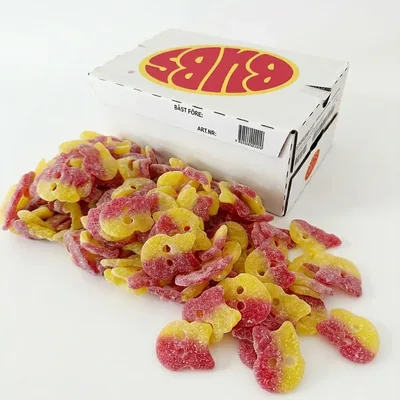
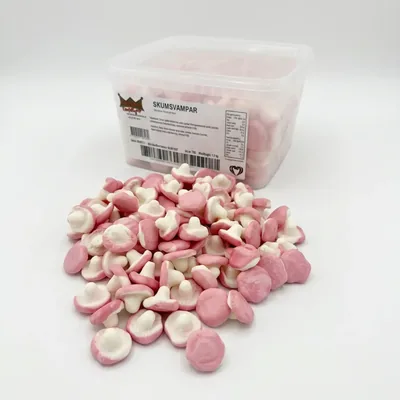
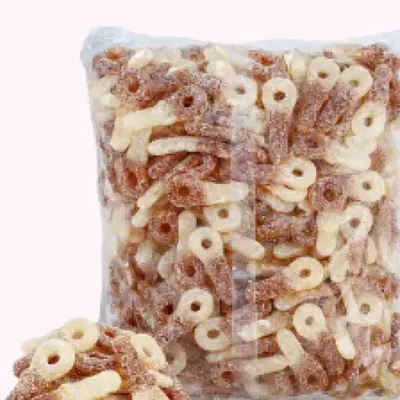
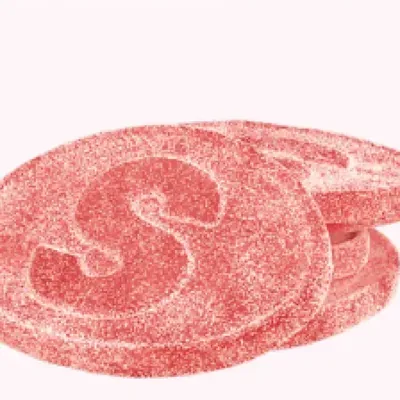
That mix is a fair snapshot of a real wall: Bubs Lemon/Raspberry Skulls from BUBS (gelatin-free and vegan), Franssons Foam Mushrooms from Franssons (contains gelatin), Sura Colanappar sour cola pacifiers (vegan and halal, contains wheat and gluten), and S Marke Watermelon from S-Märke (vegan and halal, contains wheat and gluten).
What this means if you sell candy in the US or Canada
You cannot import a national tradition, but you can import the mechanics that make it work.
Sell by weight. Letting people fill their own bag raises basket size, makes variety the product, and is the format this candy was designed for. Our guide on running a profitable pick-and-mix covers the operational side.
Build for texture, not just flavor. A wall that is all gummies underperforms one with foam, chew, gummy, and heavily sour pieces, because mixed bags are the point.
Measure your own numbers. Instead of borrowing national statistics, track what you can verify: sales per bin per week, pounds sold per foot of wall, and which flavors get scooped out first. That data is yours, and it beats any imported figure for buying decisions.
How to read a candy statistic before you cite it
The checklist we apply to any figure before it goes near our own writing:
- Who published it, and do they publish their method?
- What is being counted? Confectionery including chocolate, or sugar candy alone?
- Is it sales or consumption? Sales divided by population is not the same thing as intake.
- What year is the underlying data, not the article?
- Can you reach the primary source in one click? If not, treat it as a rumour with a decimal point.
If a number survives all five, it is worth citing, with its definition attached. If it does not, say what is true qualitatively instead. That is what we have done on this page.
Want the format, not just the facts? Browse the catalog to see what a real Swedish wall is built from, or get in touch if you are planning a pick-and-mix section for your own shop.
Frequently asked questions
Do Swedes really eat the most candy in the world?+
Sweden is consistently ranked among the highest per-capita candy consumers globally, and near the top in Europe. Whether it is first in any given year depends on the source and on whether chocolate is counted, so we describe it as "among the highest" rather than claiming a specific rank.
How much candy does the average Swede eat per year?+
Published estimates vary substantially depending on definitions and methodology, so we do not quote a single figure. If you need one for research, take it from a national statistics agency or an industry body that publishes its method, and cite that definition alongside the number.
Why do Swedes eat so much candy?+
Two structural reasons. Lördagsgodis, the Saturday candy tradition, turns candy into a planned weekly purchase, and pick-and-mix by weight makes variety the product, so people buy a full bag rather than a single item.
What is lördagsgodis?+
It means "Saturday candy". The custom is commonly traced to mid-twentieth-century dental health campaigns encouraging families to concentrate sweets into one day a week, and it became a weekly family ritual that persists across generations.
Is Swedish candy healthier than American candy?+
It is still candy. What differs is composition and format: many European lines are gelatin-free, artificial coloring rules differ, and the pick-and-mix format tends toward smaller mixed portions. Our guide on what Swedish candy is covers the real differences without the health halo.
Where can I get reliable data on Swedish candy consumption?+
Start with national statistics agencies and confectionery industry associations that publish methodology, rather than secondary articles. Read the definition before the number, because the definition is usually where the disagreement lives.
Keep reading

Gustav Lindqvist · Candy Master
Gustav grew up in Sweden on a strict Saturday-candy schedule, mixing his lördagsgodis bag at the lösgodis wall before he could spell salmiak. He has spent years tasting his way across Scandinavian candy, and now curates the range at TheSweetsTruck, from BUBS sour skulls to the saltiest licorice most people cannot finish.
Last updated 7/29/2026