Swedish Christmas Traditions: Glogg, Julmust and Julgodis
Swedish Christmas is a countdown: Advent candles, Lucia on 13 December, the julbord on 24 December, and julmust on the table. Here is how the season runs, with the candy that fits each part.
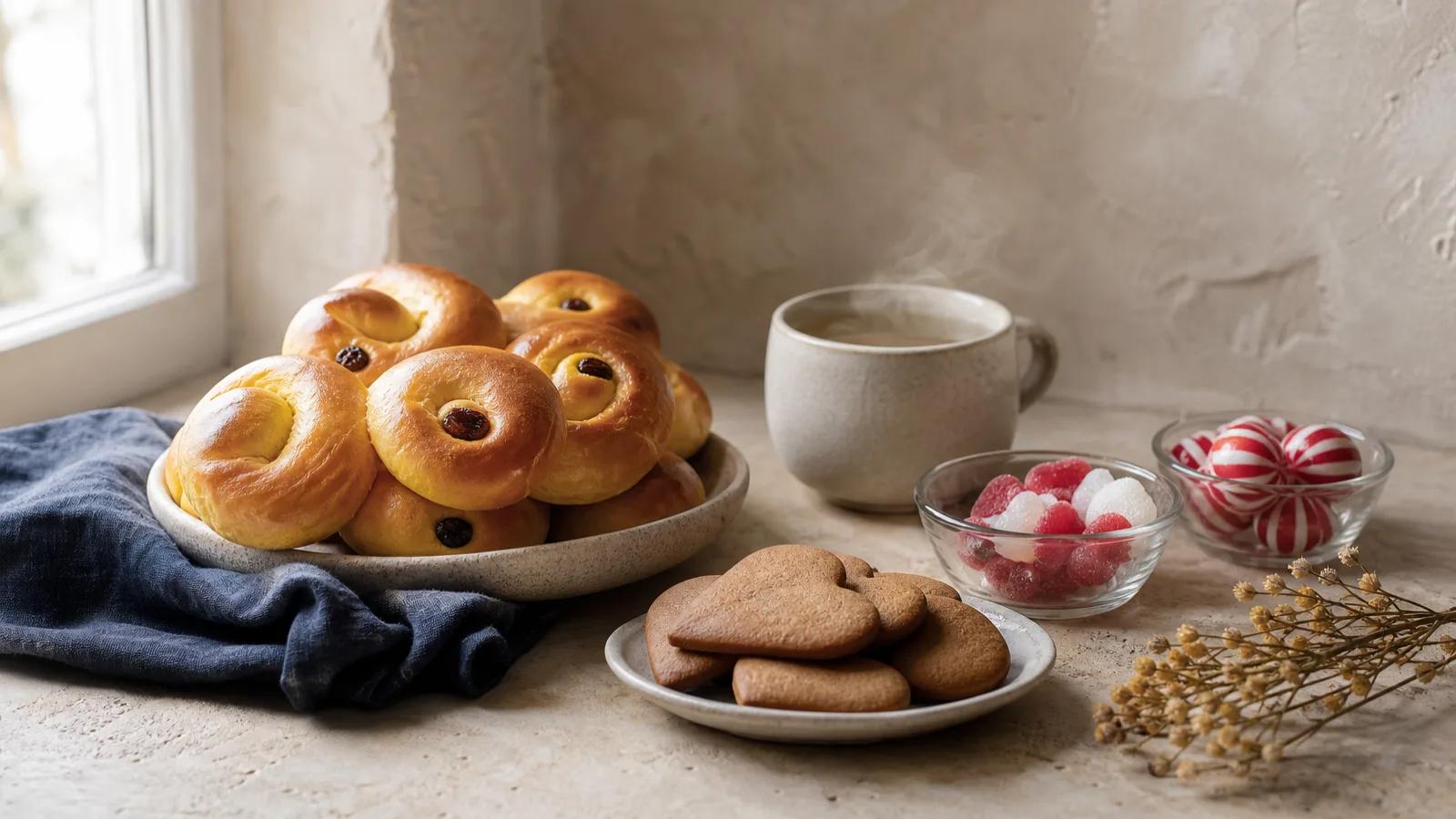
Swedish Christmas is a countdown rather than a single day. Advent Sundays bring glögg and pepparkakor, Lucia arrives on 13 December with lussekatter, the julbord is eaten on 24 December, and julmust is the season's soft drink. Candy runs through the whole month as julgodis.
This page is the culture side of that December: the calendar, Saint Lucia, the julkalender, the julbord, glögg, julmust and the sweets that thread through them. We import Swedish and European candy by the case into Santa Fe Springs, California, so where the traditions have a candy match, we point to the case; the full buying side is in our European Christmas candy guide.
When does Swedish Christmas start?
Swedish Christmas starts around four weeks before the holiday, when the first Sunday of Advent kicks off the countdown (sweden.se). The dates that structure the month:
- First Sunday of Advent: the first candle of the Advent candlestick is lit, a custom that goes back to the 1890s, and the remaining candles follow on the next three Sundays. Advent Sundays bring glögg and pepparkakor for many households.
- 13 December: Lucia, the feast of light in the darkest week of the year.
- 1 to 24 December: the television calendar, a Christmas series for families with 24 episodes that runs from 1 to 24 December.
- 24 December: julafton, when Swedish Christmas peaks. The julbord is served, the gifts are handed out, and at three o'clock some 3 million Swedes watch the Disney special Kalle Anka, a public service tradition since the 1960s (sweden.se).
Why the 24th rather than the 25th? Historically Sweden counted sunset as the end of one day and the beginning of the next, so Christmas Day began on the evening of 24 December, and the country kept the evening as its celebration. The tree usually comes in a few days before, a custom imported from Germany in the 1880s, and the holiday leave often stretches a week into January: after Christmas Eve the visiting season starts, Christmas Day with one set of relatives, Boxing Day with another, and for some a week of skiing after that (sweden.se).
What happens on Saint Lucia's Day?
The candlelit Lucia procession on 13 December is a signature Swedish custom, and sweden.se calls it one of the country's more exotic-looking ones (sweden.se). Across Sweden, schools and preschools, churches, workplaces and town squares hold their own versions. A Lucia in a white gown wears light in her hair, her handmaidens carry candles, the star boys carry stars on sticks and tall paper cones, and the Christmas elves bring up the rear with small lanterns.
The food of the day is lussekatter, saffron buns shaped like curled-up cats with raisin eyes, and they are eaten with glögg or coffee (sweden.se). The tradition itself is a blend: it traces both to the martyr St Lucia of Syracuse, who died in 304, and to an older Swedish legend (sweden.se). The first recorded white-clad Lucia in Sweden appeared in a country house in 1764; Stockholm proclaimed its first Lucia in 1927, and the custom of Lucia serving coffee and buns dates back to the 1880s (sweden.se).
What is a julkalender?
The word julkalender covers two December fixtures. One is the calendar itself: 24 doors, one per day. The other is the television show, a Christmas series with 24 episodes that runs from 1 to 24 December (sweden.se). The two run side by side through the month, which is why the single word does two jobs in Swedish households. If you are building the candy version at home, our how-to guide walks through filling 24 pockets from a pick-and-mix bag: Swedish candy advent calendar.
What is a julbord?
Julbord is the Swedish Christmas smorgasbord, and the classics are well documented (sweden.se). The spread shifts by region and family, but the shared pieces are:
- The ham: Christmas ham, first boiled, then glazed with a mixture of egg, breadcrumbs and mustard.
- The small dishes: prinskorv (the small Swedish pork sausage), gubbröra (a creamy egg and sprat spread), herring salad, pickled herring and home-made liver pâté.
- The warm dishes: Jansson's temptation and lutfisk, the soaked dried fish.
- The bread: vörtbröd, a wort-flavoured rye bread.
Candy is not a julbord dish. On a Swedish table the sweets arrive after the food, and that is where julgodis enters.
What is glögg, and how is it served?
Glögg is a spiced, sugared and simmered (mulled) red wine, and people drink it almost exclusively during the Swedish Christmas season, usually with raisins and blanched almonds added (sweden.se). The practical parts:
- The base: red wine warmed with cinnamon, cardamom, cloves and orange zest, then strained into cups.
- The garnish: raisins and blanched almonds, added to the cup.
- The alcohol-free version: a red cordial stands in for the wine and brandy, which keeps the tradition open to everyone at the table.
- The vessel: traditionally a small mug with a handle.
The pairing to remember is glögg and pepparkakor, the gingerbread biscuits cut into little men, women, pigs and hearts (sweden.se). Advent Sundays are the natural home for that pairing.
What is julmust?
Julmust is the soft drink side of the season, and its recipe has a specific home. It comes from AB Roberts in Örebro, the family firm that Robert Roberts and his son Harry founded in 1910. The company's own history names julmust one of its two biggest successes, alongside Champis, the 1920s luxury drink, and records that it came to hold essentially 100 percent of the market for julmust (roberts.se). If it shows up on a Swedish table in December, it is doing exactly what it was built to do.
Where does candy fit into a Swedish Christmas?
The candy side of the Swedish Christmas has its own name, julgodis, and its own mix. The homemade classics are knäck, a chewy toffee cooked in small tins, and ischoklad, chocolate set with coconut fat. The bought side is the same loose pick-and-mix the country eats all year, plus gift boxes and 90 g bags. Our Swedish candy for Christmas guide covers the full spread, and the Swedish candy calendar shows how the rest of the year's sweets line up.
The cases that do the December job for us:
- Cloetta Sugar Cubes: soft sugar-rolled cubes, the piece Swedish pick-and-mix calls sockerbitar. Not sour. Tags as listed: none; the ingredient list we hold names gelatine. Case weight 1.81 lb. $10.44 per lb.
- BUBS Sour Skull 16x90g: sour gummies in gift-ready 3.2 oz (90 g) bags, 16 to the case. Tags as listed: gelatin-free, halal and vegan. Case weight 3.17 lb. $7.84 per lb.
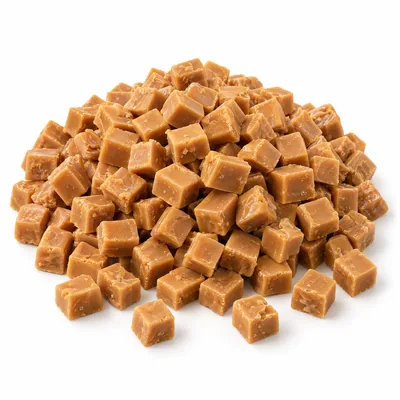
- Lonka Fudge Caramel Salt: soft fudge squares with sea salt in the recipe. Not sour. Tags as listed: none; the ingredient list we hold names milk. Case weight 7.17 lb. $7.98 per lb.
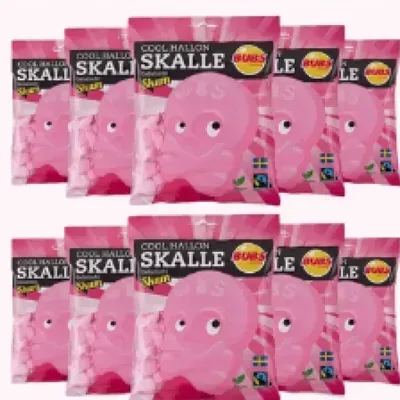
- BUBS Raspberry/Cool Hallonskalle skum 90gx12: raspberry foam skulls in 12 gift-ready 3.2 oz (90 g) bags. Not sour. Tags as listed: gelatin-free, halal and vegan. Case weight 2.38 lb. $11.76 per lb.
Prices per lb are computed from the published case price; the product page is always the authority. The smallest two cases are the natural gift-table picks: the Cloetta Sugar Cubes and the BUBS Raspberry/Cool Hallonskalle skum. Ordering is by the case, cases mix and match, and there is no order minimum; a wholesale account is free to open and applications approve automatically.
Gift-ready cases for a Swedish Christmas


Swedish Christmas is mostly about light, food and company, and the candy is the small sweet thread running alongside. If you want the cases for your own table, the store ships the whole range by the case. For the everyday version of this culture, fika and candy is the next read.
Frequently asked questions
What is Saint Lucia's Day in Sweden?+
It is 13 December, and it is celebrated with candlelit processions in schools, churches, workplaces and town squares. A Lucia in a white gown wears a crown of lights, handmaidens and star boys follow, and the day's food is lussekatter, saffron buns shaped like curled-up cats with raisin eyes. The white-clad Lucia was first recorded in Sweden in 1764.
What is a julkalender?+
The word covers two things. It is the calendar with 24 doors that counts down December, and it is the television series with 24 episodes that runs from 1 to 24 December and is a shared fixture for Swedish families. Candy calendars are the homemade version: 24 pockets, filled from a pick-and-mix bag.
What do Swedes eat on Christmas Eve?+
The julbord, the Swedish Christmas smorgasbord. The shared classics are Christmas ham glazed with egg, breadcrumbs and mustard, prinskorv, gubbröra, herring in several forms, liver pâté, Jansson's temptation, lutfisk and vörtbröd, a wort-flavoured rye. The meal is usually served on 24 December, when Swedish Christmas peaks.
What is glögg made of?+
Glögg is red wine mulled with cinnamon, cardamom, cloves and orange zest, strained and served warm with raisins and blanched almonds in the cup. An alcohol-free version swaps a red cordial in for the wine and brandy, so children can join in. The traditional serving is a small mug with a handle, and the drink belongs to the Christmas season.
What is julmust?+
It is the season's soft drink, a Swedish must whose recipe comes from AB Roberts in Örebro, the family firm founded by Robert Roberts and his son Harry in 1910. The company's history counts julmust among its biggest successes and records that it came to hold essentially 100 percent of the Swedish julmust market.
Do Swedes watch Donald Duck at Christmas?+
Yes. At three o'clock on Christmas Eve, some 3 million Swedes watch Kalle Anka, the Disney special whose title translates as Donald Duck and friends wish you a Merry Christmas. It has been a public service tradition since the 1960s, and it runs as the country waits for the evening's julbord and gifts.
Keep reading

Gustav Lindqvist · Candy Master
Gustav grew up in Sweden on a strict Saturday-candy schedule, mixing his lördagsgodis bag at the lösgodis wall before he could spell salmiak. He has spent years tasting his way across Scandinavian candy, and now curates the range at TheSweetsTruck, from BUBS sour skulls to the saltiest licorice most people cannot finish.
Last updated 11/5/2026