How to Spot Authentic Swedish Candy
How to tell imported Swedish candy from US imitations: label language, maker names, formats like skum and nappar, and why Swedish Fish isn't Swedish.
Authentic Swedish candy is made by a Nordic or European confectioner for the Swedish market and imported, not made in the US to a Swedish theme. Check four things: the ingredient panel is in Swedish or a multi-Nordic format with metric weights, the maker is a real named confectioner, the formats include skum and nappar, and it is sold loose by weight.
We import direct from Swedish and European makers, and before that we ran candy shops in Sweden. That means we spend a lot of time on the unglamorous side of this: checking labels, verifying which factory a case came from, and clearing goods into the US. Here is how we tell the difference, in the order we check.
First, define what authentic means
"Authentic Swedish candy" does not mean "made inside Sweden's borders." It means the candy that Swedes actually eat, which is a slightly different and more useful test. A Swedish pick-and-mix wall has been supplied by European makers for decades, and no Swede thinks of those pieces as foreign. Meanwhile, an American factory can produce a fish-shaped red gummy, call it Swedish, and be nowhere near the culture.
So the real test is provenance plus format: was this made by a genuine confectioner for the European pick-and-mix market, and is it a format that actually appears on a Swedish wall?
Check 1: Read the label
This is the fastest and least forgeable signal. Imported candy carries the label it was produced with, alongside a US-required panel. Genuine imported packaging shows:
- An ingredient list in Swedish, or stacked across Swedish, Norwegian, Danish, and Finnish on one panel
- Metric weights leading, in grams or kilograms, with pounds added afterward
- Additives written as E-numbers (E120, E330, E440), which is the EU convention rather than the US one
- A best-before date phrased as "Bäst före", and a European manufacturer address
- Swedish ingredient words you will start recognizing: socker (sugar), glykossirap (glucose syrup), vetemjöl (wheat flour), syra (acid), färgämne (coloring), gelatin
What a US-made imitation looks like: an English-only panel, US customary weights leading, US additive naming, an American manufacturer address, and marketing language doing the Scandinavian work ("Nordic", "Scandi style", "inspired by") because the label itself cannot. The word "inspired" is the giveaway. Real imports do not need to claim inspiration.
Check 2: Look for a real maker name
Authentic product comes from confectioners with a history you can look up. The Swedish names that recur on real walls include BUBS, Franssons in the candy-making town of Gränna, Grahns, Candy People in Helsingborg, Mormor Lisas, Hallonshots, and S-Marke.
Then there is the European group that is equally authentic to the Swedish wall without being Swedish-made: Matthijs, the Dutch family confectioner founded in 1920 whose sugar-dusted skulls are named for the Swedish and Danish flags, plus Frisia and Lonka from the Netherlands, Vidal from Spain, and Bulgari, the Italian marshmallow specialist. The full lineup is in our Swedish candy brands guide.
If a product carries no maker name at all, only a retailer's own branding and a Swedish-sounding word, treat that as unverified rather than fake. It may be fine. You just cannot check it.
Check 3: Look for formats that do not exist in US candy
This check needs no packaging at all. Some formats are so specific to the Nordic wall that their presence is strong evidence and their absence is telling.
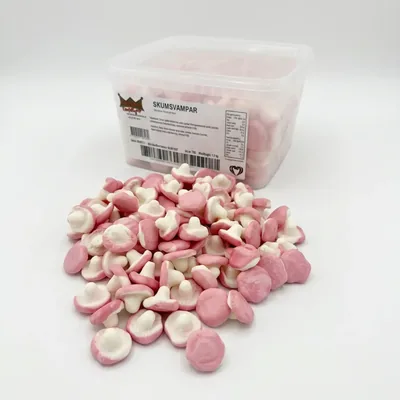
Skum, or foam. Light, aerated, closer to a soft meringue than an American marshmallow, molded into mushrooms, strawberries, and cones. Nothing in mainstream US candy has this texture. Franssons Foam Mushrooms and Bulgari Marshmallow Sour Strawberries both contain gelatin, so neither is vegan. Our foam candy explainer covers the texture in full.
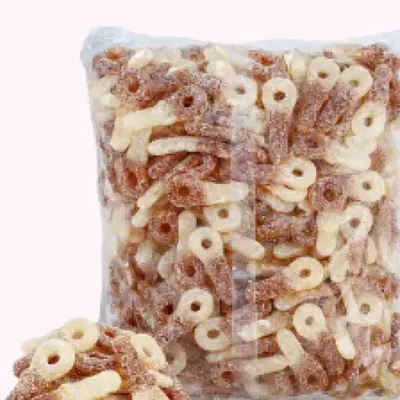
Nappar, or pacifiers. Pacifier-shaped pieces that appear on essentially every Swedish wall and essentially no American one. Sura Colanappar Sour Cola Pacifiers are gelatin-free and contain wheat, so they are not gluten-free.
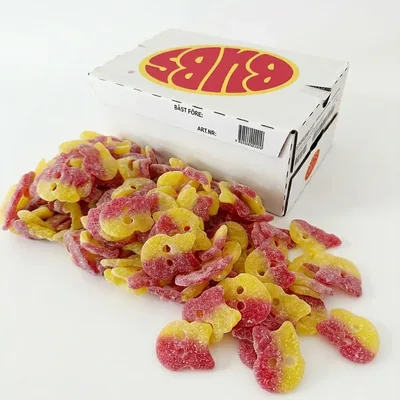
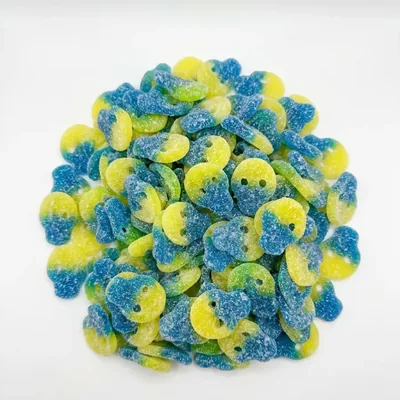
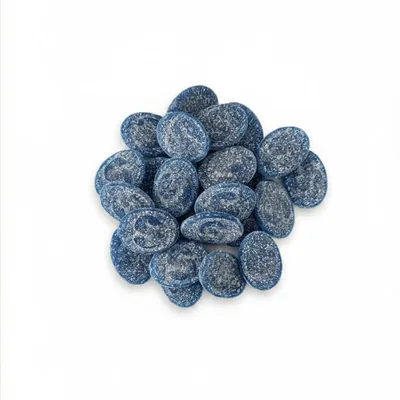
Embossed sour discs and two-texture skulls. Flat, firm, single-fruit chews stamped with a letter and rolled in sour sugar, and molded skulls with a softer base under a chewier face. S Marke Sour Blue Raspberry is gelatin-free and contains wheat. Matthijs Swedish Skulls are gelatin-free and flagged gluten-free, halal, vegan and vegetarian. BUBS Lemon/Raspberry Skulls are gelatin-free and vegan.
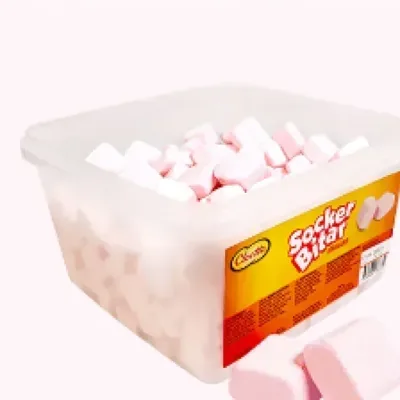
Sockerbitar, or sugar cubes. Soft, sugared cube pieces. Strawberry Sugar Cubes / Sockerbitar Jordgubb contain gelatin.
Salmiak, or salty licorice. Licorice flavored with ammonium chloride, producing a sharp saline note with no American equivalent. A Swedish wall without any salty licorice is not a Swedish wall. To be straightforward about our own range: we do not currently carry salmiak or salty licorice. For the background, see what is salmiak.
Formats that only come from a real Nordic wall
Check 4: How it is sold, and how it got here
Swedish candy is a lösgodis culture, meaning loose candy sold by weight from open bins. Wholesale product built for that market arrives in large bulk case packs sized in kilograms, stated as a metric weight with a pound conversion. If something is only ever available as a small retail bag with no bulk equivalent, it was probably designed for an export gift shelf rather than a Swedish candy wall.
The other half of this check is the import chain. If a supplier cannot tell you who made a product, what country it came from, or whether duties are settled, keep asking.
The Swedish Fish problem
The most common misconception deserves its own section. "Swedish Fish" is a North American brand. It is sold in American stores, marketed to American shoppers, and it is not what a Swede pictures when you say candy. Fish shapes do appear on Swedish walls, but they are one shape among dozens and carry no special status. We wrote the full version in are Swedish Fish actually Swedish. For the record, we do carry fish shapes: Sour Swedish Fish 7.16 LB and Pastel Fish, both gelatin-free. They are good bulk pieces. They are just not the centre of Swedish candy culture.
Quick red flags
- Marketing says "Swedish style", "Nordic inspired", or "Scandi", with no maker named
- English-only ingredient panel with a US manufacturer address
- The assortment is all fruit gummies, with no foam, no pacifiers, and no licorice
- Only available in small retail bags with no bulk case equivalent
- The seller cannot say what country the goods were produced in
For retailers
Authenticity is not a marketing exercise. It is what makes a Swedish section worth a trip. A wall with skum, nappar, sour discs, skulls, and licorice reads as real to a Swedish expat and as interesting to everyone else. A wall of generic fruit gummies with a flag on the sign does not.
We buy direct from the makers rather than through a US distributor, which is why our case prices come in under most distributors, and everything lands DDP with US labels applied and duties already paid. It ships from our Santa Fe Springs, California warehouse to the US and Canada by UPS Ground, UPS Express, or UPS Ground Saver, with pallet freight on orders of $2,000 or more, agreed by email. Order by the case, mix and match, no order minimum, at the public Tier 1 list price everyone sees. Wholesale accounts approve automatically, and NET payment terms are available to selected partners, based on order history. The full playbook is in our wholesale Swedish candy guide.
Want the imported range, verified and duty-paid? Browse the catalog or by brand, start a bulk order, or apply for a wholesale account. Questions about a specific maker or label? Get in touch.
Frequently asked questions
What counts as authentic Swedish candy?+
Candy made by a genuine Nordic or European confectioner for the Swedish market and imported, in formats that actually appear on a Swedish pick-and-mix wall. It does not have to be manufactured inside Sweden: Dutch, Spanish, Italian, and German makers have supplied Swedish walls for decades.
How can I tell if Swedish candy is imported or made in the US?+
Read the panel. Imported product carries a Swedish or multi-Nordic ingredient list, metric weights leading, E-number additive naming, a "Bäst före" date, and a European manufacturer address. US-made imitations have English-only panels, US customary weights, US additive names, and lean on words like "inspired" or "style."
Is Swedish Fish authentic Swedish candy?+
No. Swedish Fish is a North American brand sold in American stores. Fish shapes exist on Swedish pick-and-mix walls, but they are one format among dozens and carry no particular significance in Sweden.
Which Swedish candy brands are real?+
Swedish makers include BUBS, Franssons, Grahns, Candy People, Mormor Lisas, Hallonshots, and S-Marke. European makers that are genuine fixtures of the Swedish wall include Matthijs, Frisia, and Lonka from the Netherlands, Vidal from Spain, and Bulgari from Italy.
What Swedish candy formats do not exist in American candy?+
Skum (aerated foam pieces), nappar (pacifier shapes), embossed sour discs, two-texture sour skulls, sockerbitar (soft sugared cubes), and salmiak (salty licorice). We do not currently carry salmiak or salty licorice ourselves, and we would rather say so than imply otherwise.
Keep reading

Gustav Lindqvist · Candy Master
Gustav grew up in Sweden on a strict Saturday-candy schedule, mixing his lördagsgodis bag at the lösgodis wall before he could spell salmiak. He has spent years tasting his way across Scandinavian candy, and now curates the range at TheSweetsTruck, from BUBS sour skulls to the saltiest licorice most people cannot finish.
Last updated 7/31/2026