How Much Candy Per Guest? Candy Buffet Quantities, Solved
How much candy per guest for a candy buffet: grams and ounces per head, scaling tables by headcount, case maths, and the real cost of over-ordering.
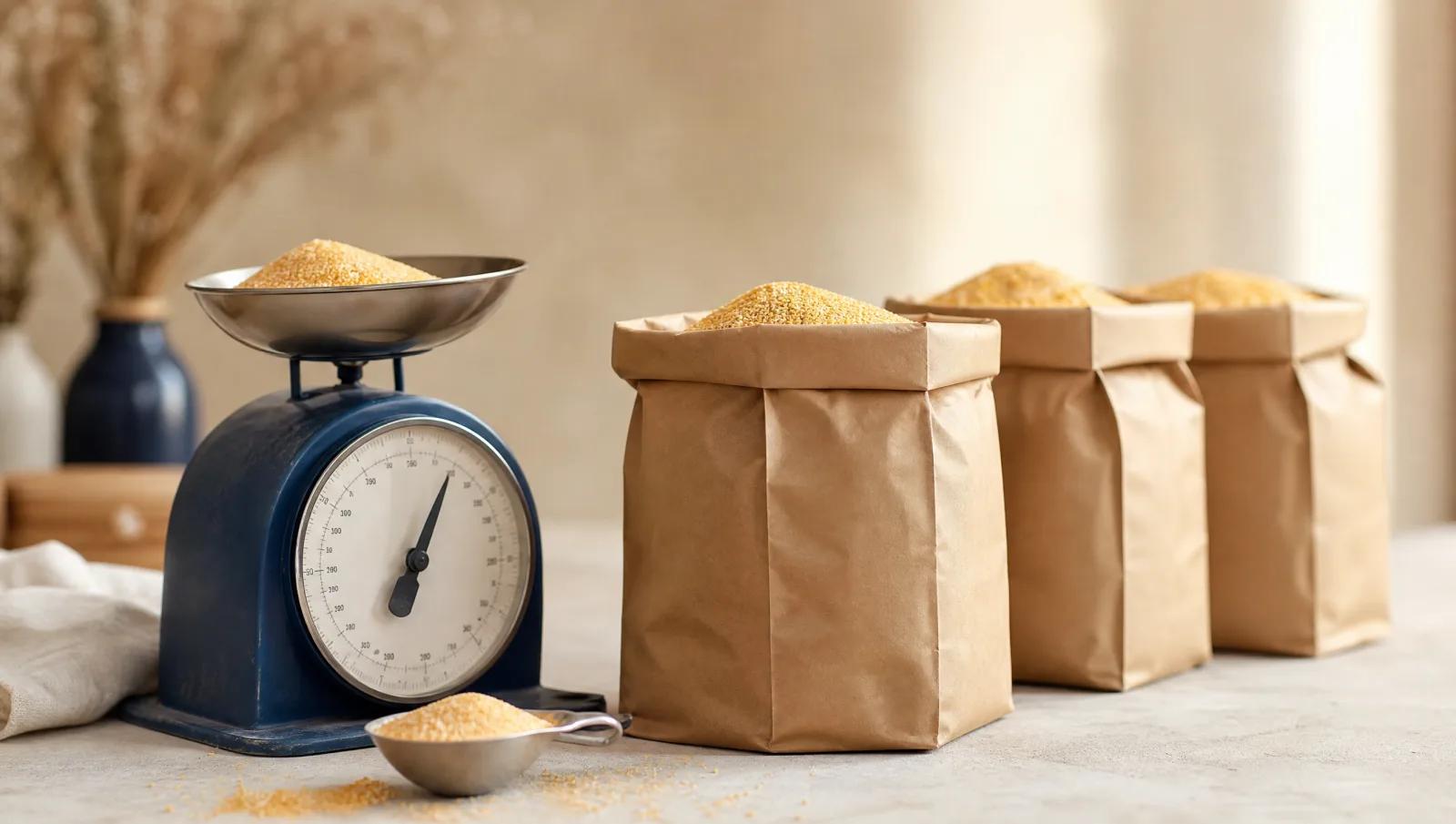
Plan about 3 to 3.5 oz (85 to 100 g) of candy per guest for a buffet where people graze, and 4 to 5 oz (115 to 150 g) per guest if everyone leaves with a favour bag. Then adjust: more for children and long events, less when a full dessert table is also running. We ship the bulk cases these tables get built from, so we see what planners order and what they come back and reorder in a panic. Here is the maths, with the adjustments that actually matter. If you are building the table itself rather than costing it, start with [wedding and event candy bars](/journal/wedding-event-candy-bars).
The baseline number
Use 100 g, or 3.5 oz, per guest as your working figure for a standard buffet. At an average piece weight of around 5 g, that is roughly twenty pieces a head, or about three and a half scoops from a 1 oz candy scoop. Say those numbers out loud and they sound right, which is the point of a baseline: it should survive a sanity check.
The favour-bag figure is different because the psychology is different. Once a guest is filling a bag to take home rather than grabbing a handful, consumption is set by the bag, not by appetite. A 4 to 6 oz favour bag will be filled, so budget 150 g (5.3 oz) per guest and size the bags deliberately. Hand out pound-capacity bags and you will buy a pound per guest, whether you planned to or not.
The three variables that actually move it
Start at 100 g and apply what fits. These stack, but cap the total adjustment at roughly plus 60 percent or the number stops being realistic.
Situation: Adjust by
Full dessert table alongside (cake, pastries, plated dessert): minus 30%
Short daytime or corporate window, under two hours: minus 20%
Candy is the only sweet on offer: baseline
Guests take home favour bags: plus 50%
Mostly children under 12: plus 25%
Event runs four hours or more: plus 20%
Late-night reception with an open bar: plus 15%
Two of those are the ones people get wrong. Planners consistently under-order for children, who take more and eat faster, and they consistently over-order for short corporate events where guests are holding a coffee and a business card and have no free hand.
Scaling by headcount
Both columns assume the adjustments above have already been applied, or that they cancel out.
Guests: Grazing (100 g/head): Favour bags (150 g/head)
50: 5.0 kg / 11 lb: 7.5 kg / 17 lb
75: 7.5 kg / 17 lb: 11.3 kg / 25 lb
100: 10 kg / 22 lb: 15 kg / 33 lb
150: 15 kg / 33 lb: 22.5 kg / 50 lb
200: 20 kg / 44 lb: 30 kg / 66 lb
250: 25 kg / 55 lb: 37.5 kg / 83 lb
300: 30 kg / 66 lb: 45 kg / 99 lb
Turning pounds into cases
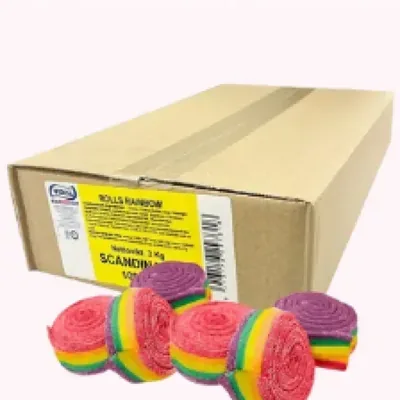
Bulk candy comes in cases, not in the exact weight your spreadsheet asked for. Ours run from about 2.2 lb up to 8.81 lb, with a lot of the range sitting between 4.4 and 6.6 lb, so a rough average of 5 lb per case is a fair planning assumption.
Guests: Grazing target: Favour-bag target: Cases to buy
50: 11 lb: 17 lb: 3 to 4
100: 22 lb: 33 lb: 5 to 7
150: 33 lb: 50 lb: 7 to 10
200: 44 lb: 66 lb: 9 to 13
300: 66 lb: 99 lb: 13 to 20
There is one place where the weight maths stops being the binding constraint. Below about 60 guests, variety is what sets your order, not weight. A table needs five or six different candies to look like a candy buffet at all, so a 40-guest event will buy more total weight than the per-head figure suggests. Buy the smaller case sizes there and accept the leftovers, or fill the extra vessels with a smaller footprint. The vessel and variety side is covered in the candy buffet guide.
Cases at four different sizes, so you can hit your number

How to split the weight across varieties
Not evenly. An even split wastes money on the varieties nobody reaches for and runs you out of the two everyone wants.
Pick two anchors, usually the brightest and the most familiar, and give them about 20 percent of your total weight each. Give the middle four to six varieties around 10 percent each. Leave a little slack for a restock of the anchors halfway through the event.
One adjustment for foam candy. Foam weighs roughly a third of a gummy at the same volume, so a jar of foam that looks the same size as its neighbour costs you a third of the weight. Foam is the cheapest way to fill a vessel and make a table look abundant. Buy it by the vessel it has to fill, not by the percentage of your weight budget.
Over-order or run out?
This is the real question, and it is not close.
At typical Tier 1 case pricing, bulk Swedish candy lands around $6 to $7 per pound. So a grazing guest costs you roughly $1.40 to $1.55 in candy, and a favour-bag guest roughly $2.10 to $2.30. One extra 6.6 lb case is somewhere near $42 and covers about thirty more grazing guests.
Now price the other failure. A candy buffet that empties an hour into a five-hour reception is the photograph nobody takes and the detail the client remembers. There is no recovery: you cannot restock mid-event, and a table of empty jars looks worse than no table at all.
So round up. Take your calculated weight, add 10 to 15 percent, then round up to the next full case on each variety. The insurance costs one case. The alternative costs the event.
Leftovers are not waste
The reason over-ordering is cheap here is that candy is shelf-stable. An unopened case keeps for a long time in a cool, dry place, so surplus rolls into the next event rather than into the bin. Open cases should be resealed properly, and anything with a sour coating should be sealed first and used first, because sour crystals take up moisture. Storage detail is in Swedish candy shelf life.
If you are a planner running events monthly, this changes the whole calculation. Buy to the top of your range, treat the surplus as stock, and you stop paying rush shipping on small top-up orders. The same logic applies to venues and cafes running candy year-round, which we cover in bulk Swedish candy for cafes and events.
A note on dietary flags
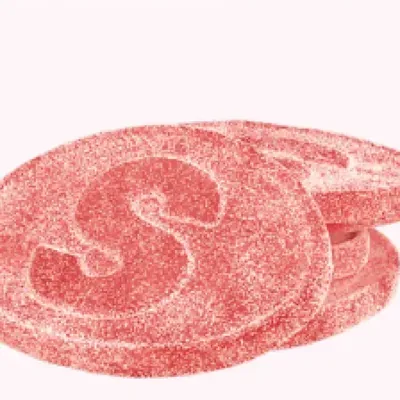
Whatever the quantity, get this part right. Copy dietary information from the supplier's product page rather than reading the ingredients yourself. In our own catalogue, the Matthijs skulls are flagged gluten-free, halal, vegan and vegetarian, while the S-Marke watermelon discs are flagged halal and vegan but do contain wheat, so they are not gluten-free. Those two look similar on a table and are not interchangeable for a coeliac guest. Where we hold no data, we publish no flag, and your label should do the same.
Ordering and lead time
Order by the case, mix and match across brands, with no order minimum, so you can buy an odd combination of case sizes to land on your number instead of over-buying one product.
We ship from Santa Fe Springs, California, by UPS Ground or UPS Express, about two business days across the US. Canada ships DDP with duties paid at checkout, usually three to five days. Orders of $2,000 or more can move by pallet, arranged by email. Place the order at least two weeks before the event so a delayed box is an inconvenience rather than a crisis.
Frequently asked questions
How much candy do I need per person for a candy buffet?+
About 3 to 3.5 oz (85 to 100 g) per guest if people are grazing, and 4 to 5 oz (115 to 150 g) per guest if they are filling favour bags to take home. Add 25 percent for a mostly-children event.
How much candy for 100 guests?+
Around 22 lb (10 kg) for a grazing buffet, or 33 lb (15 kg) if guests take home favour bags. That is roughly five to seven bulk cases, spread across eight to ten varieties.
How much candy for 50 guests?+
Around 11 lb (5 kg) grazing, or 17 lb (7.5 kg) with favour bags. At this size variety sets your order rather than weight, so expect to buy three or four cases to fill five or six vessels properly.
Is it better to over-order or under-order candy?+
Over-order, without hesitation. Extra candy costs a few dollars a pound and unopened cases keep for months. Running out mid-event cannot be fixed and is what the client will remember. Add 10 to 15 percent and round up to full cases.
How many pieces of candy is 100 g?+
Roughly twenty pieces at an average 5 g piece weight, though small pieces like pastel fish can run 150 to 200 per pound and large XL gummies as few as 40 to 55. Piece size changes the count far more than people expect.
How do I split the weight between different candies?+
Give your two anchor varieties about 20 percent of the total weight each and the rest around 10 percent each. Buy foam candy by the vessel it needs to fill rather than by weight, since it weighs about a third of a gummy at the same volume.

Gustav Lindqvist · Candy Master
Gustav grew up in Sweden on a strict Saturday-candy schedule, mixing his lördagsgodis bag at the lösgodis wall before he could spell salmiak. He has spent years tasting his way across Scandinavian candy, and now curates the range at TheSweetsTruck, from BUBS sour skulls to the saltiest licorice most people cannot finish.
Last updated 8/23/2026