How Swedish Fish Are Made
How Swedish Fish are made: cooking the syrup, starch molds, curing, coating and packing, plus how the US brand differs from real Swedish fish candy.
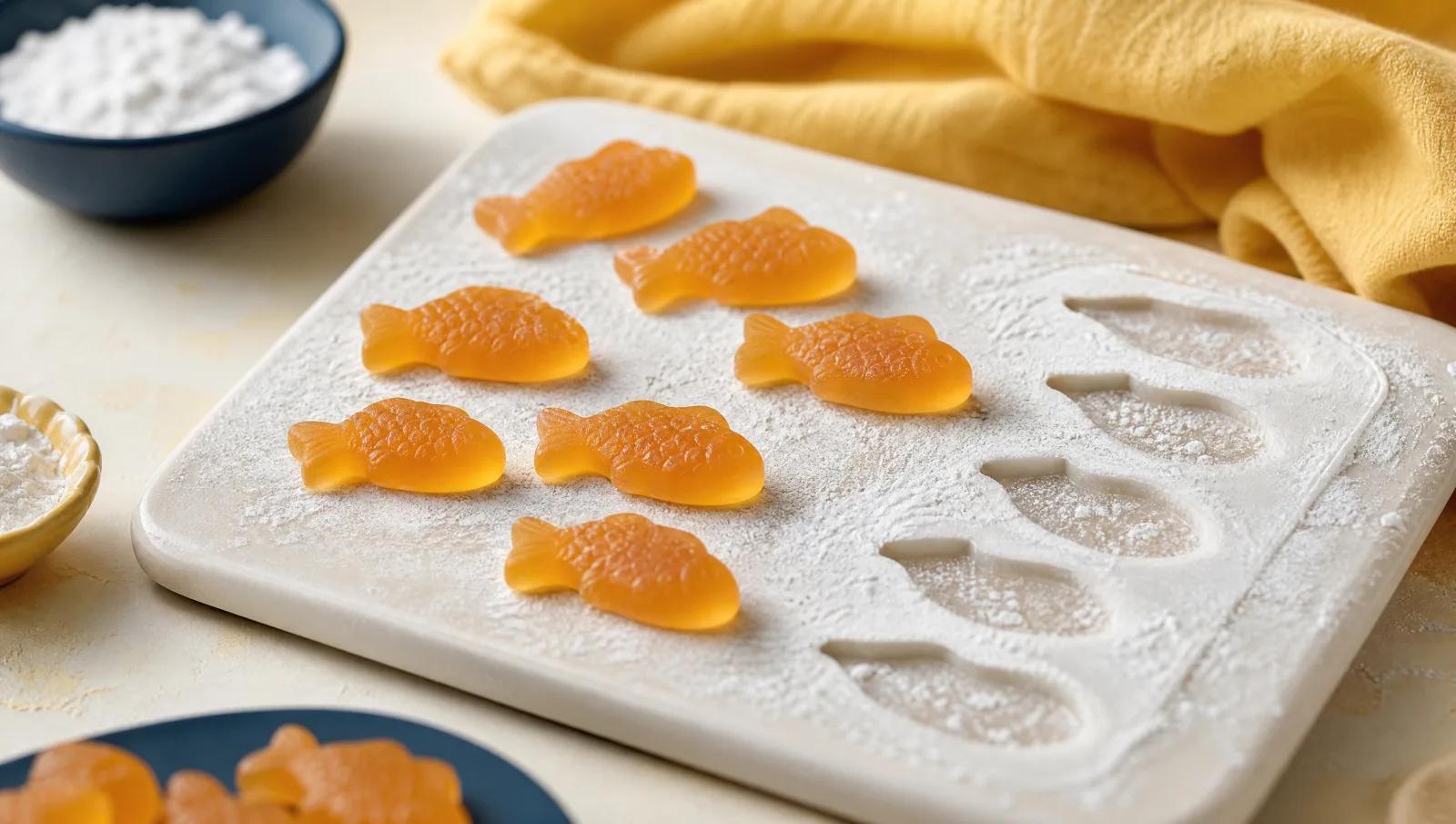
Swedish Fish are starch-molded gummies. A sugar and glucose syrup is cooked with a gelling agent, colored and flavored, then deposited into fish-shaped impressions pressed into trays of dry cornstarch. The pieces cure for a day or more, get de-starched, then oiled or sour-sanded and packed. The name is American, and the fish Swedes actually eat are different.
We import Swedish and European candy by the case and we ran candy shops in Sweden before that, so the question we get most often about fish-shaped candy is not what it tastes like. It is how a soft, chewy fish gets its shape at all. The answer is a piece of confectionery equipment called a starch mogul, and once you understand it, most of the pick-and-mix wall makes sense. Below is the process, step by step, followed by the part almost nobody explains: why the fish sold in American stores and the fish sold in Swedish candy shops are not the same thing.
What a fish-shaped gummy actually is
A gummy is a cooked sugar syrup set with a gelling agent, and changing the gelling agent changes the candy. Gelatin gives the long, elastic chew Americans associate with gummy bears. Pectin, from fruit, gives a shorter bite that breaks rather than stretches. Starch, usually modified corn or potato starch, gives the dense, slightly waxy chew you find in classic fish and wine gums. Many recipes blend two.
That choice controls texture, setting time, and whether the finished piece works for vegan or vegetarian shoppers. Our explainer on how Swedish candy is made covers the ingredient side. This piece is about the machinery.
Step 1: Cooking the syrup
The batch starts as sugar, glucose syrup, and water. Glucose syrup matters more than people expect. It interferes with sugar crystals forming, which is what keeps the finished candy chewy and clear instead of grainy. The mix is cooked to drive off water and hit a target solids level. Get it wrong and the candy is either soupy or hard.
The gelling agent goes in either during the cook or just after, depending on what it is. Gelatin is heat sensitive and is usually added late so it is not damaged. Starch is typically cooked into the batch. Acid, color, and flavor go in at the end, again because heat and acid both degrade them.
Step 2: Printing the molds in starch
Here is the part that surprises people. There is no metal fish mold. Instead, shallow wooden or plastic trays are filled with fine, very dry cornstarch and leveled off. A plate covered in fish-shaped plaster or plastic dies presses down into the starch and lifts away, leaving a tray of clean fish-shaped cavities. That tray of starch is the mold.
Starch works because it is cheap, it releases easily, and it is hygroscopic. It pulls moisture out of the candy while the pieces sit, which is exactly what you want. The same tray of starch gets reused thousands of times, screened, dried, and re-printed.
Step 3: Depositing
The hot syrup is metered through a row of nozzles and shot into each impression. Speed and temperature control everything here. Too hot and the syrup runs and the fish loses its edges. Too cool and it will not fill the tail and fins. A well-run line produces sharp detail, which is why a good fish has visible fins and a molded eye rather than a vague blob. Layered two-color pieces are made by depositing twice into the same cavity, waiting for the first shot to skin over. That is how foam-and-gum pieces get a soft base and a chewier face.
Step 4: Curing
The filled trays are stacked and moved into a warm, dry, temperature-controlled room for anywhere from several hours to a few days, depending on the recipe. The gelling agent sets and the surrounding starch draws moisture out of the pieces until they reach their target texture. This is the slow, unglamorous step that decides whether the candy ends up pleasantly chewy or unpleasantly tough.
Step 5: De-starching, coating, and packing
Cured trays are tipped out and the pieces are separated from the starch by screening and brushing, often with an air knife to blow off the last dust. The starch is recovered and reused.
Then the pieces get their finish, and this is where different products diverge:
- Oiling and polishing. A tiny amount of food-grade oil and wax is tumbled with the pieces. This is what gives classic fish their faint sheen, stops them sticking together in the bag, and slows moisture loss.
- Sour sanding. The pieces are tumbled with a mix of sugar and food acids, which is how a sour version gets its coating. Sour sanding has to happen while the surface is still slightly tacky or the sugar will not stick.
- Plain finish. Some pieces get nothing at all and go straight to packing.
Finally the candy is weighed and packed. For pick-and-mix and wholesale that means large bulk cases rather than retail bags, which is the format we ship.
The two fish we import, and the flags on them
We carry two fish-shaped SKUs. Sour Swedish Fish 7.16 LB is the sour-sanded version, a molded fish tumbled in sour sugar, and it is gelatin-free. Pastel Fish is the softer, un-soured version in muted colors, also gelatin-free. Both are bulk case packs built for a pick-and-mix wall rather than a single retail bag.
For other examples of the same starch-mogul process in different shapes, Sour Pineapple 6.6LB is gelatin-free, and Sura Colanappar Sour Cola Pacifiers are gelatin-free but contain wheat, so they are not gluten-free.
Starch-molded pieces from our range
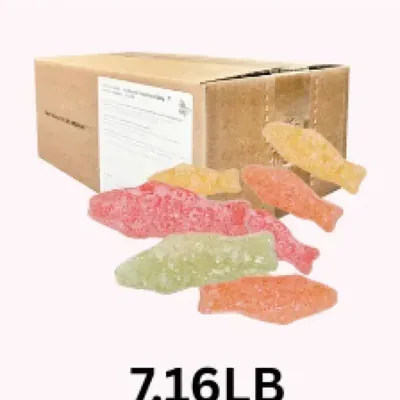
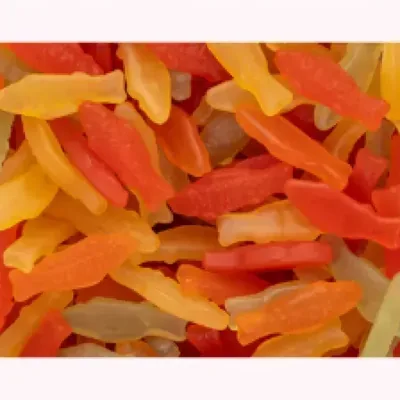
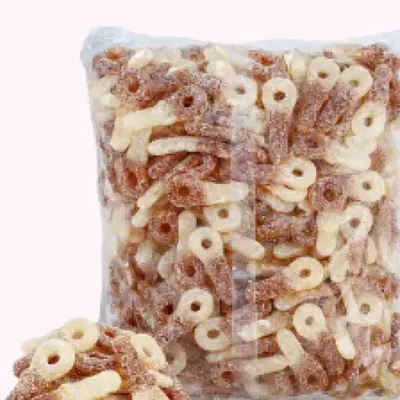
The part nobody explains: the brand is American
"Swedish Fish" as a supermarket brand is a North American product. It is sold in American stores, marketed to American shoppers, and it is not what a Swede pictures when you say candy. Walk into a Swedish candy shop and you will find fish shapes on the pick-and-mix wall, but they sit next to foam skulls, sour discs, pacifiers, and licorice, and nobody calls them Swedish Fish.
We cover the origin question in are Swedish Fish actually Swedish, and what Swedes reach for instead in real Swedish fish: what Swedes eat. For the wider category, our Swedish gummy candy guide maps the formats.
For retailers
All of the above is why bulk fish sells differently than bagged fish. Molded pieces with a clean finish look right in a bin, hold up under scooping, and let a shopper buy fifty grams instead of a whole bag. We import direct and ship from our Santa Fe Springs, California warehouse to the US and Canada with US labels and duties already paid. Order by the case, mix and match, no order minimum, at the same public Tier 1 list price everyone sees.
Want the real thing by the case? Browse the full catalog, start a bulk order, or apply for a wholesale account. Accounts approve automatically, and if you want a hand picking formats for your bins, get in touch.
Frequently asked questions
How are Swedish Fish made?+
They are starch-molded gummies. Sugar and glucose syrup are cooked with a gelling agent, then colored and flavored and deposited into fish-shaped cavities pressed into trays of dry cornstarch. The pieces cure in a warm dry room, get de-starched, then oiled or sour-sanded and packed.
What is a starch mogul?+
A starch mogul is the machine that prints mold cavities into trays of dry cornstarch, deposits hot syrup into them, and later separates the cured candy from the starch. It is the standard way soft molded candy is produced, and it is why gummies have no seam line.
Why is cornstarch used instead of a metal mold?+
Starch releases cleanly without a release agent, it can be re-printed into any shape thousands of times, and it actively draws moisture out of the candy while it cures. A metal mold would do none of those things.
Are fish-shaped gummies vegan?+
It depends entirely on the gelling agent. Both fish SKUs we carry, Sour Swedish Fish and Pastel Fish, are gelatin-free. Many other gummies on the market are set with gelatin, so always check the specific product rather than assuming.
Is Swedish Fish a Swedish candy?+
The brand sold in North American stores is an American-market product. Fish shapes do appear on Swedish pick-and-mix walls, but they are one shape among dozens and they are not called Swedish Fish in Sweden.
Keep reading

Gustav Lindqvist · Candy Master
Gustav grew up in Sweden on a strict Saturday-candy schedule, mixing his lördagsgodis bag at the lösgodis wall before he could spell salmiak. He has spent years tasting his way across Scandinavian candy, and now curates the range at TheSweetsTruck, from BUBS sour skulls to the saltiest licorice most people cannot finish.
Last updated 8/1/2026