Kosher Swedish Candy: What to Know
We do not claim kosher certification on any Swedish candy we import. Here is what a hechsher means, why gelatin is the main issue, and how to verify.

We do not claim kosher certification on any line we import, and you should not treat a gelatin-free label as one. Kosher status comes from a certifying agency, is granted per facility and per production run, and appears as a hechsher symbol on the pack. Check the pack, and ask us for the manufacturer spec sheet.
That is a less satisfying answer than a list of certified products would be, but it is the true one, and in this category the true answer is the useful one. We import Swedish and European candy direct into our Santa Fe Springs, California warehouse and ship it to buyers across the US and Canada. We know what our suppliers publish, we know what our packs say, and we will not stretch either into a certification we are not entitled to give.
What "kosher candy" actually means
A kosher claim is not a description of ingredients. It is a certification issued by a supervising agency that has inspected the ingredients, the facility, the equipment and the process, and it shows up on the packaging as a hechsher, the small symbol belonging to that agency. Different agencies have different standards, and many observant buyers follow specific ones.
Two details matter more than most people expect. First, certification attaches to a specific product made at a specific plant, not to a brand. A company can have one certified line and a dozen that are not. Second, certification is tied to production runs. A recipe change, an ingredient supplier change, or a run on shared equipment can change the status of the exact same product name from one batch to the next.
That is why the printed pack in your hand outranks anything a website says, including ours.
Why we do not publish a kosher claim
We are the importer, not the certifier. We buy from European manufacturers, we bring the goods in DDP with US labels and duties already paid, and we publish the dietary flags our suppliers publish: whether a line is gelatin-free, whether it is labeled vegan, and whether it contains wheat and gluten. None of those flags is a kosher certification, and we will not present them as one.
What we can do is get you closer to a decision. If you are evaluating a line for a store that serves a kosher-observant community, contact us and we will pull the manufacturer specification sheet for the line and the production run you are considering, so you can take real documentation to whoever advises you. That is the honest version of help here.
Gelatin is the first question, and often the deciding one
For most people asking about kosher candy, gelatin is where the conversation starts. Conventional gelatin is made from animal collagen, and its kosher status depends entirely on the source animal and how it was processed and slaughtered. Standard commodity gelatin used in European confectionery is not produced under kosher supervision, so a gelatin-containing gummy or foam candy is usually a non-starter without a hechsher backing it.
This is why gelatin-free lines are worth knowing, even though being gelatin-free is a prerequisite rather than a certification. A gelatin-free candy removes the single biggest obstacle. It does not answer the remaining questions, and it does not replace supervision.
The lines we import that are labeled gelatin-free
These are the lines whose published flag is gelatin-free. Read this as a starting shortlist for further checking, not as a kosher list.
BUBS is the broadest. BUBS Cola Skulls, Bubs Lemon/Raspberry Skulls, BUBS Banana, BUBS Cool Fruity Pear, Bubs Tutti Frutti and the rest of the BUBS range we carry are labeled gelatin-free and vegan.
S-Marke covers sours: S Marke Sour Strawberry, S Marke Sour Apple, S Marke Sour Blue Raspberry and S Marke Watermelon are gelatin-free, and all of them also contain wheat and gluten.
Matthijs skulls, including Matthijs Swedish Skulls and Matthijs Cola Skulls, are gelatin-free and also flagged gluten-free, vegan and vegetarian. Frisia gives you gelatin-free foam with Frisia Cola Foam Skulls Vegan and Frisia Bubbelgum Foam Skulls Vegan. Grahns Rasberry Twins from Grahns is gelatin-free, as are our Sour Swedish Fish and Pastel Fish.
Gelatin-free lines to shortlist
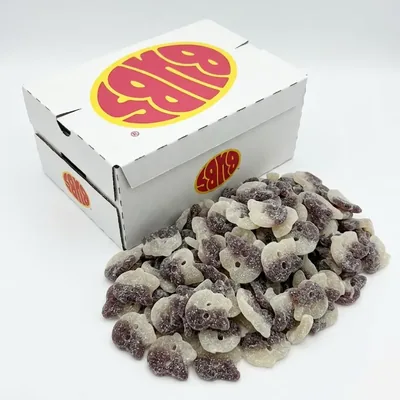
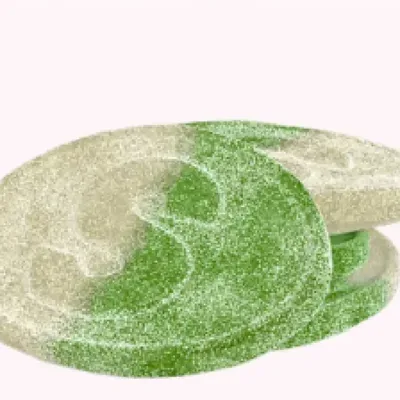
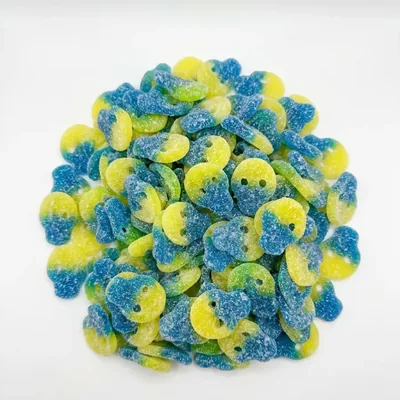
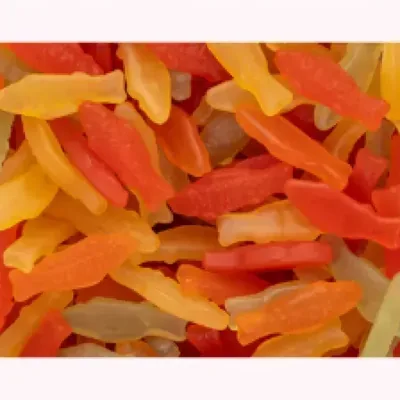
The full split, including every line that does contain gelatin, is laid out in our gelatin breakdown. Several of our lines contain gelatin, including the Bulgari marshmallow range, the Franssons foam range and the Vidal XL range, and a few items carry no published ingredient claim at all, in which case we say nothing and point you to the printed pack.
What a certifier looks at beyond gelatin
Even with gelatin ruled out, supervision covers more ground. Certifiers typically examine the source of any glycerin or emulsifiers, the carriers used in flavorings and colors, any glaze or coating on the surface of a piece, whether dairy ingredients are present (which affects pareve versus dairy status), and whether the line runs on equipment shared with non-kosher production. None of those are questions a shopper can answer from the front of a bag, and none of them are questions we can answer for you as the importer.
For retailers: label only what is certified
If you sell to a kosher-observant customer base, the shelf tag is a promise. Put a kosher tag only under a product whose own pack carries a hechsher from an agency your customers accept, and never infer the claim from a vegan or gelatin-free flag. A gelatin-free set is a genuinely useful thing to build, and you can flag it accurately as gelatin-free or vegan where the label supports it, which is honest, helpful, and keeps trust intact. Our vegan Swedish candy guide covers how to build that set cleanly.
Buying from us
We import direct, so case prices come in under most US distributors, and orders ship DDP from California with US labels and duties already paid. You order by the case, mix and match, with no order minimum, which makes it easy to trial a small gelatin-free assortment before you commit to a full set. Wholesale accounts approve automatically when you apply, and everyone buys at our public Tier 1 list pricing, with Tier 2 and Tier 3 available to approved volume and strategic buyers. Start with our wholesale Swedish candy guide if you are new to the category.
Need documentation before you stock a line?
Browse the range in our store, and contact us with the lines you are evaluating. We will send the manufacturer spec sheets so you can verify properly, and we will ship whatever you decide on from our California warehouse, DDP, by the case.
Frequently asked questions
Is Swedish candy kosher?+
Not by default, and we do not claim kosher certification on any line we import. Kosher status comes from a certifying agency and appears as a hechsher on the pack. Check the printed packaging, and treat any claim that is not on the pack as unverified.
Does gelatin-free mean kosher?+
No. Gelatin-free removes the most common obstacle, but certification also covers glycerin, flavor carriers, glazes, dairy status and shared equipment. Gelatin-free is a prerequisite worth knowing, not a substitute for supervision.
Which Swedish candy lines are gelatin-free?+
The BUBS range, the S-Marke sours, the Matthijs skulls, the Frisia foam skulls, Grahns Rasberry Twins, our Sour Swedish Fish and our Pastel Fish are all labeled gelatin-free. The flags do not move together, so read them line by line: the S-Marke sours also contain wheat and gluten, while the Matthijs skulls are flagged gluten-free.
Can you tell me if a specific line is certified?+
We can send you the manufacturer specification sheet for the line and production run you are considering, which is real documentation you can pass to your certifying authority. We will not tell you a product is kosher, because that determination is not ours to make.
Why does certification change between batches?+
Because it is granted per production run. A supplier change, a reformulation, or a run on shared equipment can alter the status of an identically named product, which is why the symbol on the pack in front of you is the only current answer.
Keep reading

Gustav Lindqvist · Candy Master
Gustav grew up in Sweden on a strict Saturday-candy schedule, mixing his lördagsgodis bag at the lösgodis wall before he could spell salmiak. He has spent years tasting his way across Scandinavian candy, and now curates the range at TheSweetsTruck, from BUBS sour skulls to the saltiest licorice most people cannot finish.
Last updated 8/9/2026