Sour Hard Candy: How Boiled Sours and Sour Pastilles Are Built
Sour hard candy holds acid differently to a gummy. How boiled sours and pressed pastilles are made, why the acid goes in last, and what we carry instead.
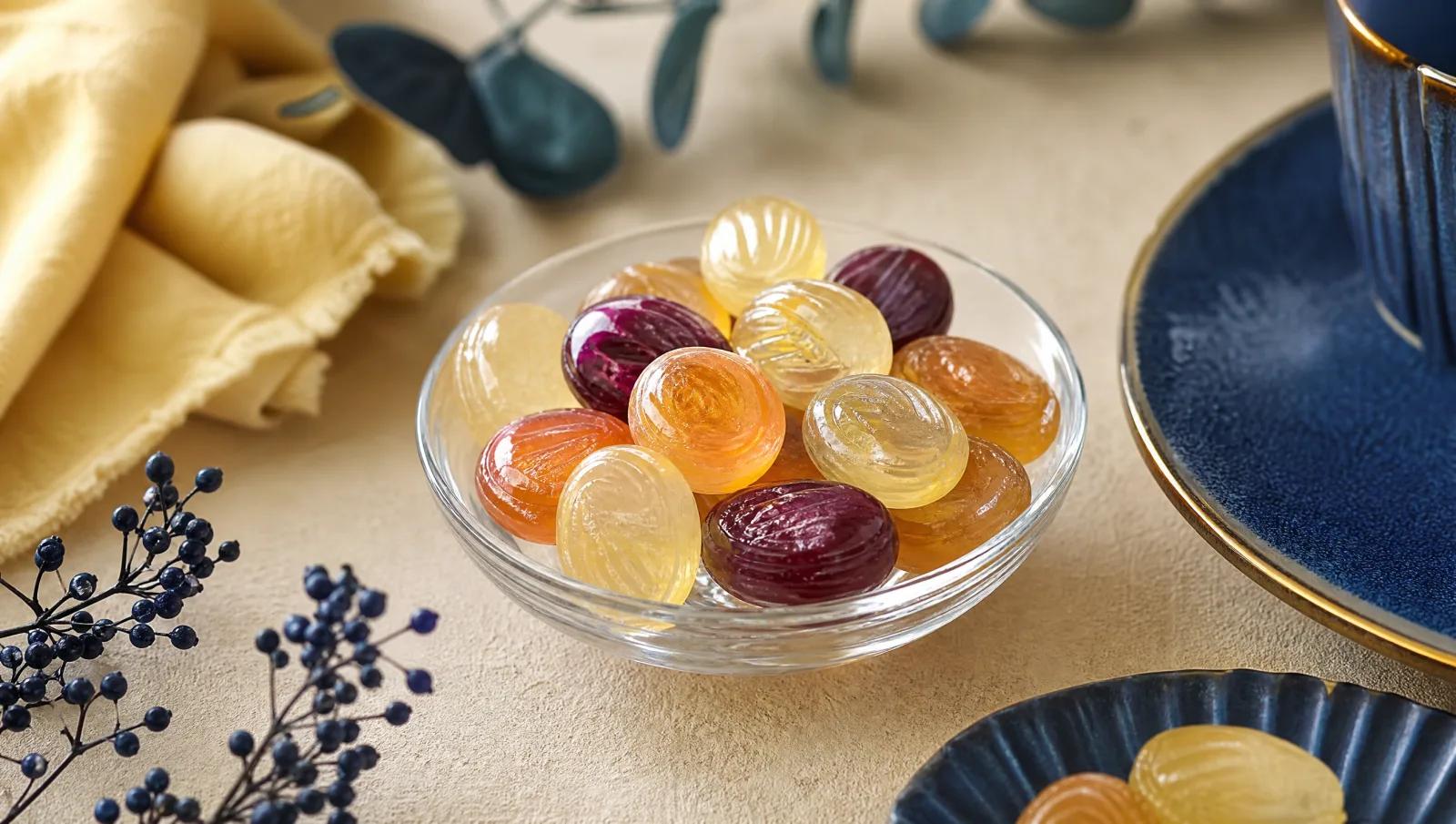
Sour hard candy is sugar and glucose syrup boiled to a low-moisture glass, with acid added late and at the lowest workable temperature. Because the glass holds almost no water, that acid stays inert until saliva dissolves the surface, so a hard sour releases slowly over minutes instead of hitting once and fading. This is the format question we get most often from buyers who grew up on sour drops and want to know why our catalogue is full of soft pieces instead. The honest answer is at the bottom of the page. The interesting answer is how the two constructions differ.
What a boiled sweet actually is
A hard candy is not crystallised sugar. It is a glass.
Sucrose and glucose syrup are cooked together until nearly all the water has boiled off, typically to somewhere in the region of 145 to 155 degrees Celsius, leaving around 1 to 3 percent residual moisture. Cooled quickly, that syrup does not have time to organise itself into crystals. It seizes into an amorphous solid, chemically a glass in the same sense that window glass is a glass.
The glucose syrup is doing structural work there, not just sweetening. Without it, the sucrose would find its way back into crystals and the sweet would go opaque, grainy and crumbly, a fault the trade calls graining. A confectioner will also sometimes add a little invert sugar for the same reason.
That glass structure is the whole reason sour hard candy behaves the way it does. There is almost no free water in it, and an acid with no water to dissolve into is an acid that is not doing anything yet.
Why the acid goes in last
Here is the constraint that shapes the entire process. Acid plus heat plus water inverts sucrose, meaning it splits into glucose and fructose. Invert sugar is far more hygroscopic than sucrose, so an over-inverted batch produces sweets that pull moisture out of the air, go tacky, slump on the shelf and stick together in the bag.
So a confectioner does not put the acid in the kettle. The batch is cooked first, pulled off, and the acid is worked in on the cooling table at a much lower temperature, often around 110 to 120 degrees, right before the mass is formed and cut. The less time acid spends hot and wet, the less inversion happens.
For very acidic products there is a second trick: encapsulated acid, where the acid particles are coated in a fat or a modified starch that only releases them in the mouth. That lets a manufacturer load far more acid into a boiled sweet than the sugar chemistry would otherwise tolerate.
Two ways to build a sour hard candy
Acid in the glass. The acid is distributed through the whole piece. It releases evenly as the sweet dissolves, so the sourness is steady from the first second to the last. This is the classic sour drop.
Acid on the outside. The piece is boiled plain and then finished with a sour sanding or a dust, sometimes with a light oil or steam step so the powder sticks. This gives a strong opening hit that drops away once the coating is gone, more like a gummy.
A sour centre. A filled boiled sweet with a powdered acid or an acid paste in the middle. The sequence is sweet, then a burst, then sweet again.
Most commercial sour drops use at least two of these together, for the same reason blends of citric, malic and fumaric acid beat any single acid. Layering the release is what makes the sourness last, which we take apart properly in how sour candy works.
Pastilles are a different animal
The word pastille covers two quite different things, and Swedish shops sell both.
Pressed pastilles are not boiled at all. A powder blend, usually dextrose or sorbitol with acid, flavour, colour and a lubricant, is compressed in a tablet press. They break with a chalky snap and dissolve fast, and because there is no cooking step there is no inversion problem, so they can carry a very high acid load. Most sour pastilles you would recognise are pressed.
Gum pastilles are the older style: a dense, slow-set piece built on gum arabic, cooked long and dried for days. They are chewy rather than hard, and the long drying makes them expensive to produce, which is why they have largely disappeared outside licorice. The licorice side of that tradition is in licorice hard candy.
Hard candy versus sour gummy, side by side
: Boiled sour hard candy: Sour gummy
Moisture in the piece: Roughly 1 to 3 percent: Roughly 12 to 20 percent
Structure: Amorphous sugar glass: A gelatin, pectin or starch gel network
Where the acid mostly sits: In the mass, often plus a coating: Almost entirely in the coating
How much acid it can carry: High. The glass does not object: Limited. Acid weakens the gel and slows the set
Release: Slow and even over two to five minutes: Front-loaded, five to twenty seconds
Failure in humidity: Surface goes tacky, pieces weld into a block: Coating dissolves, pieces go dull and stick
Behaviour in a bulk bin: Rattles and scoops well, welds if damp: Scoops cleanly, sheds acid dust
The line to notice is the acid ceiling. In a gummy, acid is not just a flavour, it is a process variable. Drop the pH too far in a gelatin or pectin system and the gel sets weakly or breaks down over the shelf life, so there is a hard limit on how much acid can go inside the piece. Everything past that limit has to go on the surface, where it dissolves in seconds. A boiled sweet has no gel to protect, so the acid can live in the mass and take its time. That, rather than any difference in the acids used, is why a hard sour feels sustained and a sour gummy feels like a spike.
What we carry, and what we do not
We should be straight about this. We do not currently import boiled sour hard candy or sour pastilles. Our catalogue is soft formats: sanded sour gummies, fizzy pieces, sour foam, pacifiers and XL gummies. If a hard sour drop is what you are after, source it elsewhere and keep our lines for the chewable part of the wall.
What we do carry that scratches a similar itch are the firmer sanded sours and the fizzy lines. A Matthijs fizzy skull gives you the effervescent prickle a sour drop often has. The S-Märke sanded discs are the firmest chew we stock and the most front-loaded on acid. Hallonshots raspberry sour shots are dense and slow to eat, so the sour lasts closer to a hard candy's timeline than a soft gummy's does. The full format map is in Swedish sour candy types, and the texture map across the whole catalogue is in Swedish candy textures.
The firmest and longest-lasting sours we stock
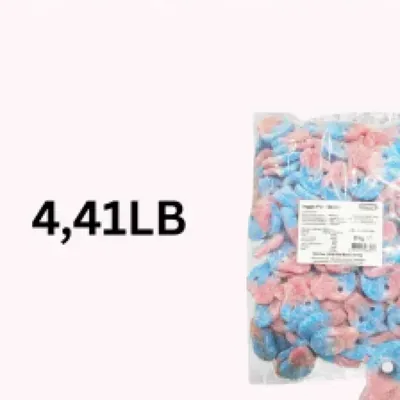
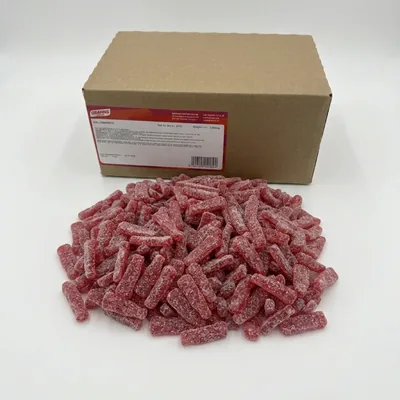
On labelling: the Matthijs case is flagged gluten-free, halal, vegan and vegetarian. The S-Märke blackcurrant case is flagged vegan and does contain wheat, so it is not a gluten-free item. The Hallonshots and Candy People cases carry no dietary flags in our supplier data, so we make no claim on either.
Frequently asked questions
What is sour hard candy made of?+
Sugar and glucose syrup boiled to roughly 145 to 155 degrees Celsius and cooled into a glass with 1 to 3 percent moisture, plus a food acid such as citric, malic or tartaric, added late on the cooling table rather than in the kettle. Colour and flavour go in at the same stage.
Why does hard sour candy stay sour longer than a sour gummy?+
Because the acid is inside the piece rather than painted on it. A gummy carries most of its acid in a surface coating that dissolves in seconds, while a boiled sweet releases acid steadily for as long as the glass takes to dissolve, which can be several minutes.
Why is acid added at the end of the cooking process?+
Acid plus heat plus water inverts sucrose into glucose and fructose. Invert sugar attracts moisture, so an over-inverted batch makes sticky sweets with a short shelf life. Adding acid on the cooling table at a lower temperature keeps inversion to a minimum.
What is the difference between a sour drop and a sour pastille?+
A drop is boiled sugar cooled into a glass. A pressed pastille is a compressed powder tablet, usually dextrose based, with no cooking step at all. Pastilles dissolve faster, break with a chalky snap, and can carry more acid because there is no inversion risk.
Does sour hard candy go bad in humidity?+
It does not spoil, but it degrades. The surface picks up moisture, goes tacky and then welds the pieces into a solid lump in the jar. Keep it sealed and dry. The same principle applies to sanded sours, covered in [Swedish candy shelf life](/journal/swedish-candy-shelf-life).
Do you sell sour hard candy wholesale?+
No. We do not import boiled sour drops or sour pastilles. Our sour range is soft: sanded gummies, fizzy pieces, pacifiers, foam and XL gummies. We would rather tell you that now than have you find out when the case arrives.

Gustav Lindqvist · Candy Master
Gustav grew up in Sweden on a strict Saturday-candy schedule, mixing his lördagsgodis bag at the lösgodis wall before he could spell salmiak. He has spent years tasting his way across Scandinavian candy, and now curates the range at TheSweetsTruck, from BUBS sour skulls to the saltiest licorice most people cannot finish.
Last updated 8/23/2026