Sour Swedish Fish: What Makes Them Sour, and What Sweden Actually Sells
Sour fish candy is the same gel with an acid and sugar coating instead of a polish. How the sour is made, how it differs from the classic, and the Swedish sour cases we import.

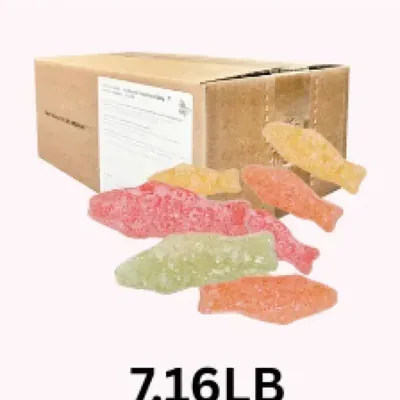
Sour fish-shaped candy is the same soft gel piece as the classic, finished with an acid and sugar coating instead of a glossy polish. The sour sits on the outside and fades as the coating dissolves. We import genuine Swedish sour fish by the case, not the trademarked American product.
First, the trademark bit, because it matters
"Swedish Fish" is a registered US trademark owned by Mondelez International. We do not sell that product and we are not affiliated with it. What we import is the Swedish fish-shaped candy that the American product was modelled on, made in Europe and sold to US and Canadian buyers in bulk cases.
If the naming history is what brought you here, why they are called Swedish Fish covers the whole story, and real Swedish fish, and what Swedes actually eat covers what sits in a Swedish pick-and-mix wall today.
Where the sour actually comes from
A fish gel starts the same way whether it ends up sour or not. Sugar and glucose syrup are cooked, a gelling system goes in (gelatin, pectin or starch, depending on the maker), then flavour and colour, then the hot slurry is deposited into starch moulds and left to cure for a day or more. That part is identical. How Swedish fish are made walks through the mogul line in detail.
The difference is the finishing step.
A classic fish gets polished. The cured pieces are tumbled with a little oil or wax, which is where the shine and the slightly slick surface come from. It also seals the piece, so the flavour releases slowly, mid-chew.
A sour fish gets sanded instead. The pieces are tumbled in a dry mix of fine sugar and food acid. Which acid the maker picks changes the whole experience:
Citric acid is sharp and fast. It spikes hard and disappears.
Malic acid is rounder and lasts longer. It is what most "long sour" lines lean on.
Tartaric acid sits in between, with a slightly winey edge.
Fumaric acid dissolves slowly, so it is often blended in when a maker wants the sour to hang around.
Most sour lines keep the acid on the outside for a practical reason: acid inside the gel gradually attacks the gelling system, softening the piece and shortening its usable life. The products that do acidify the gel as well are the ones that stay sour all the way through the chew.
Sour versus classic, side by side
: Classic fish: Sour fish
Finish: polished, slight sheen, smooth to the touch: sanded, matte, visible sugar crystals
Where the acid lives: little to none: on the surface, sometimes also in the gel
Flavour arc: builds mid-chew, steady: peaks in the first few seconds, then settles into the fruit
Texture: uniform, slightly slick: same gel underneath, grit on the outside
Humidity behaviour: can go tacky and clump in a warm room: coating holds up short term, but draws moisture and turns syrupy if the room is humid
Shelf role: the nostalgia buy, wide age range: the sour wall, skews younger, higher browse-to-buy
That last row is the one buyers usually care about. Sour and classic are not competitors on a wall, they pull different customers, and most shops that run both find they do not cannibalise each other.
The sour fish and sour gels we carry
Our sour fish comes in a 7.16 lb case, listed simply as Sour Swedish Fish. It is a Swedish sour fish-shaped gummy, sanded rather than polished, and it is a straight swap for shops that have been buying an American sour fish and want the European version instead.
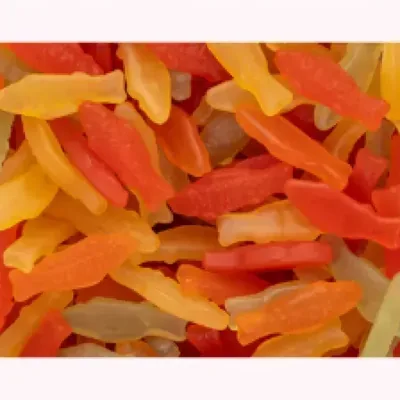
For the non-sour reference point, our Pastel Fish case is the classic pastellfiskar format: soft, polished, pale, subtle. Put a scoop of each side by side in a pick-and-mix and customers will sort themselves out quickly. There is more on that format in pastellfiskar and pastel fish.
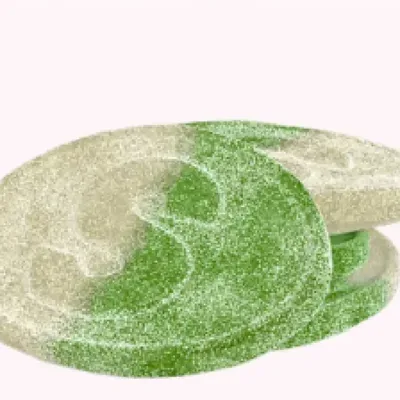
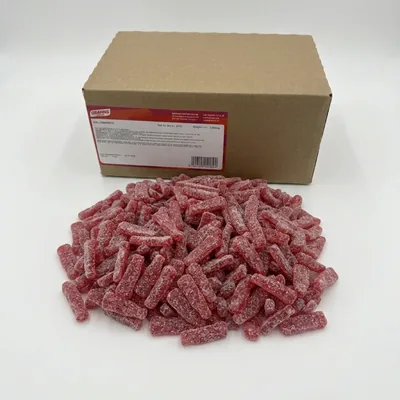
Beyond fish shapes, the Swedish sour category is deep. S-Märke runs sour apple, sour strawberry, sour blue raspberry and sour blackcurrant in 8.81 lb cases, and the apple, strawberry and blue raspberry lines are labelled halal and vegan. Hallonshots are raspberry sour shots in a 7.72 lb case, a Swedish classic that does not really have an American equivalent. Sura nappar, the sour pacifiers, are covered in sura nappar and sour pacifiers, and both the cola and melon versions are labelled halal and vegan.
If you want the wider map of the category before you commit shelf space, Swedish sour candy types lays it out.
Sour fish and the Swedish sour cases that sit next to it
Buying notes for wholesale
Everything above ships from our warehouse in Santa Fe Springs, California. Order by the case, mix and match freely, and there is no order minimum. Tier 1 wholesale pricing is public, so you can price out a sour section before you talk to anyone, and approved accounts can be promoted to better volume tiers as their order history builds.
Shipping is UPS Ground or UPS Express, typically 2 business days domestically. Canada ships DDP with duties settled at checkout, usually 3 to 5 days. Orders of $2,000 or more can go on a pallet, arranged by email.
One practical note on sour stock: sanded pieces are more sensitive to humidity than polished ones. Keep cases sealed until you fill the bin, keep the lid closed, and rotate the sour side of your wall a little faster than the classic side.
Frequently asked questions
Are sour Swedish fish the same candy as the regular ones?+
Underneath, usually yes. The gel base is the same recipe family. The difference is the finishing step: classic pieces are polished for shine, sour pieces are tumbled in a sugar and acid coating. Some sour lines also acidify the gel itself, which makes the sourness last longer instead of fading after the coating dissolves.
Do you sell the American sour Swedish Fish?+
No. "Swedish Fish" is a US trademark of Mondelez International, and we are not affiliated with it. We import the Swedish sour fish-shaped candy in bulk cases for US and Canadian buyers. If you have been buying the American version, our sour fish case is the closest genuine European equivalent.
Why do sour candies stop tasting sour in the bag?+
Because most of the acid is on the outside. Surface acid and sugar absorb moisture from the air, dissolve into a thin syrup, and the sharp first hit goes with it. Sealed packaging slows it down. Open bins in a humid room speed it up. Rotating sour stock faster than classic stock solves most of it.
Are sour Swedish fish vegan?+
It depends entirely on the SKU, so check the label. Our S-Märke sour apple, sour strawberry and sour blue raspberry cases are labelled halal and vegan, as are the sura nappar sour pacifiers. Other cases carry no dietary claim in our listings, so the case label is the only reliable source. [Are Swedish fish vegan](/journal/are-swedish-fish-vegan) goes through how to read the difference.
How sour is Swedish sour, compared to American sour candy?+
This one is genuinely a matter of taste. Swedish sours tend to lead with fruit and let the acid support it, rather than treating the acid as the whole point. If you want the extreme end, that exists too, in the super sour category. Most retail buyers find Swedish sours land somewhere in the middle for an American palate.
Should I stock sour fish or classic fish for pick and mix?+
Both, if you have the bin space. They serve different customers and the crossover is smaller than people expect. If you only have room for one, classic pastel fish is the safer opener because it appeals across every age group.

Gustav Lindqvist · Candy Master
Gustav grew up in Sweden on a strict Saturday-candy schedule, mixing his lördagsgodis bag at the lösgodis wall before he could spell salmiak. He has spent years tasting his way across Scandinavian candy, and now curates the range at TheSweetsTruck, from BUBS sour skulls to the saltiest licorice most people cannot finish.
Last updated 8/23/2026