Swedish Candy Calories: A Category by Category Reference
Typical calorie ranges per 100 g for Swedish foam, gummy, sour, chew and licorice-style candy, how to read a label, and where the exact figure comes from.
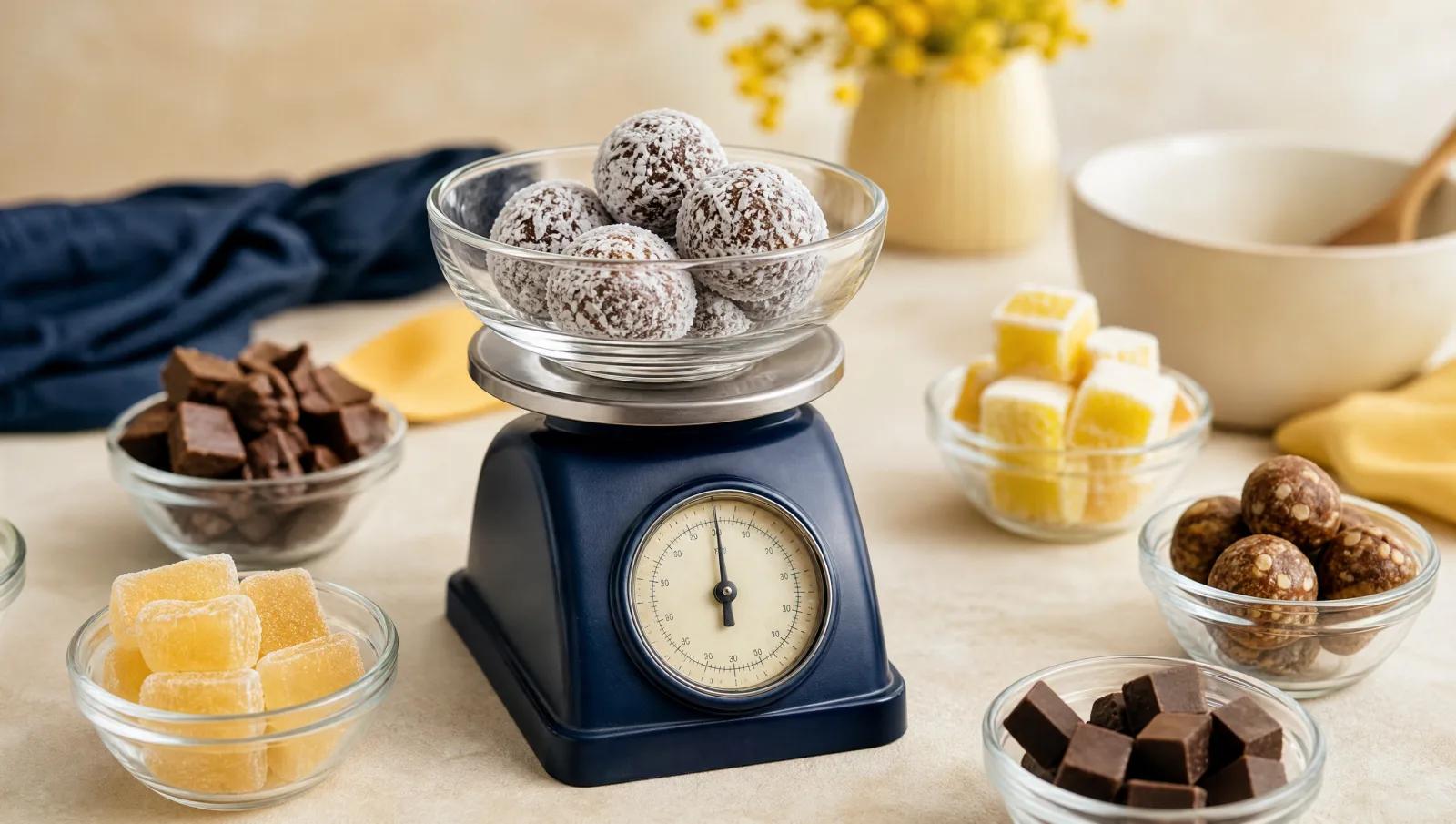
Most Swedish candy falls between roughly 320 and 400 calories per 100 g. Firm gummies and foam sit at the lower end, sour lines a little above them, and chews and toffees at the top because they contain fat. Milk chocolate, which we do not import, is far higher at roughly 530 to 560.
Where these numbers come from, and where they do not
This page gives typical ranges for confectionery categories, drawn from how these products are formulated and from the nutrition panels that European candy of each type normally carries. It is not laboratory analysis of our own SKUs, and we are not going to invent a per piece figure we have not measured.
The authoritative number for any case we ship is the nutrition panel on that case and on the retail pack. Recipes differ between manufacturers, and a coating or a shape change moves the figure. If you need an exact number for a menu board, a shelf tag, a spec sheet or anything with a compliance requirement attached, ask us for the manufacturer panel on that specific line and use that, not this table.
We do not give nutrition or dietary advice. This is a reference for reading labels and doing the arithmetic.
Typical calories by category
Category: Typical kcal per 100 g: Why it lands there: Lines we carry in this category
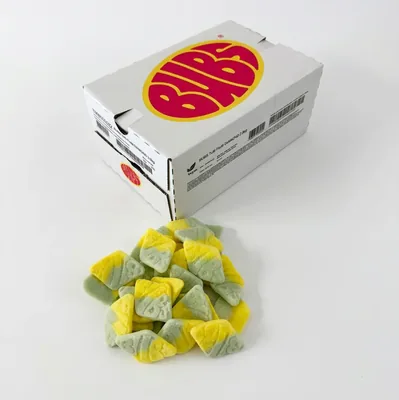
Foam (skum): 330 to 380: Sugar and syrup, whipped with air, generally no fat: Franssons foam strawberries, BUBS skum bags
Firm gummy: 320 to 350: Sugar, glucose syrup and a gelling agent, no fat: BUBS Tutti Frutti, Pastel Fish
Sour: 330 to 360: Same base as gummy or foam, plus an acid and sugar coating: Bubs Sour Skulls, S-Marke sour discs
Chew, toffee and bon bon: 380 to 430: Contains fat and milk solids, which carry more energy per gram: Lonka bon bons, Happy Chews
Licorice-style slices and rolls: 330 to 370: Sugar and syrup, with flour or starch taking up part of the weight: Watermelon licorice slices, Rainbow Rolls
Milk chocolate, for context only: 530 to 560: Cocoa butter and milk fat dominate the recipe: Not in our catalogue
The pattern is simple once you see it. Sugar carries about four calories per gram and fat carries about nine, so the only thing that meaningfully separates one candy category from another is how much fat is in it. That is why every sugar-based category clusters in the low to mid 300s and why chocolate sits in a different band entirely.
Per 100 g is the only figure that travels
European labels declare nutrition per 100 g, always. US Nutrition Facts panels declare per serving, with the serving size set by an FDA reference amount rather than by the manufacturer. Same candy, two numbers that look nothing alike, and this is the single biggest source of confusion when a European product lands on a US shelf. We cover the labelling side in FDA candy labeling and the import mechanics in importing candy to the US.
If you want to compare two products honestly, convert both to per 100 g first.
The arithmetic for the formats we actually sell
Format: How to work it out: Worked example at 340 kcal per 100 g
90 g impulse bag: Per 100 g figure times 0.9: About 306 kcal for the whole bag
100 g pick and mix bag: The per 100 g figure, unchanged: About 340 kcal
1 lb (454 g): Per 100 g figure times 4.54: About 1,540 kcal
A full case: Per 100 g figure times case weight in hundreds of grams: Use the case weight on the product page
We deliberately do not publish per piece calories. Piece weight varies within a batch, and it varies more between shapes than most people expect, so a per piece number invented at a desk is worse than no number.
If you genuinely need one for a display or a portion plan, do it yourself and it takes two minutes. Weigh ten pieces from the case, divide by ten to get an average piece weight in grams, then multiply by the per 100 g figure from the panel and divide by 100. That number is real for your case, which is more than any published estimate can claim.
Why foam feels lighter than it looks on paper
Per 100 g, foam candy is not far off a firm gummy. Per scoop it is a completely different proposition, because skum is aerated and takes up far more volume for the same weight. A scoop that fills a bag with foam weighs a fraction of the same scoop filled with gummy discs.
This matters commercially as well as nutritionally. Foam looks generous in a pick and mix bag and prices light by weight, which is one reason it earns its bin space. Swedish foam candy and skum covers the category properly, and swedish candy textures explains how the families differ.
One line from each of the main categories

If you need the exact panel
Retailers ask for this most often when they are printing shelf tags, filling in a menu labelling requirement, or building a product page of their own. Tell us the line and, where it matters, the production run, and we will request the manufacturer specification sheet directly from the maker. We would rather send documentation than a guess, which is the same policy we apply to allergens in swedish candy allergens.
Frequently asked questions
How many calories are in Swedish candy?+
Typically 320 to 400 calories per 100 g for sugar-based candy, which covers foam, gummy, sour and licorice-style lines. Chews and toffees run higher, around 380 to 430, because they contain fat. The exact figure for any given line is on its nutrition panel.
How many calories are in a sour skull?+
Sour gummy candy typically runs 330 to 360 calories per 100 g, so a 90 g bag lands around 300 to 325. We do not publish a per piece figure, because piece weight varies within a batch. Weigh ten pieces from your bag if you need an accurate per piece number.
How many calories are in a 90 g bag of Swedish candy?+
Around 290 to 340 for most sugar-based lines. Multiply the per 100 g figure on the panel by 0.9. A bag at 340 kcal per 100 g works out at roughly 306 calories for the whole thing.
Does Swedish candy have fewer calories than American candy?+
Not in any meaningful way. Compared per 100 g, sugar-based candy from either country lands in the same band, because the energy comes from the same sugar and syrup. The real differences are format, piece size and how candy is portioned. See [Swedish candy vs American candy](/journal/swedish-candy-vs-american-candy) and [is Swedish candy healthier](/journal/is-swedish-candy-healthier).
Does foam candy have fewer calories than gummy candy?+
Per 100 g they are close. Per scoop or per handful, foam is considerably lower, because aeration means the same volume weighs much less. That is a difference in density rather than in recipe.
Where do I get the exact nutrition figures for a case?+
Ask us. Send the line name and we will request the manufacturer specification sheet, which carries the full panel per 100 g. For anything with a compliance requirement attached, always work from that document rather than from a general reference like this one.

Gustav Lindqvist · Candy Master
Gustav grew up in Sweden on a strict Saturday-candy schedule, mixing his lördagsgodis bag at the lösgodis wall before he could spell salmiak. He has spent years tasting his way across Scandinavian candy, and now curates the range at TheSweetsTruck, from BUBS sour skulls to the saltiest licorice most people cannot finish.
Last updated 8/23/2026