Chewy Candy: What Actually Makes Candy Chew
What makes candy chewy: gelatin, starch and gum arabic compared, how Nordic chew differs from American taffy, and which chewy cases to stock.
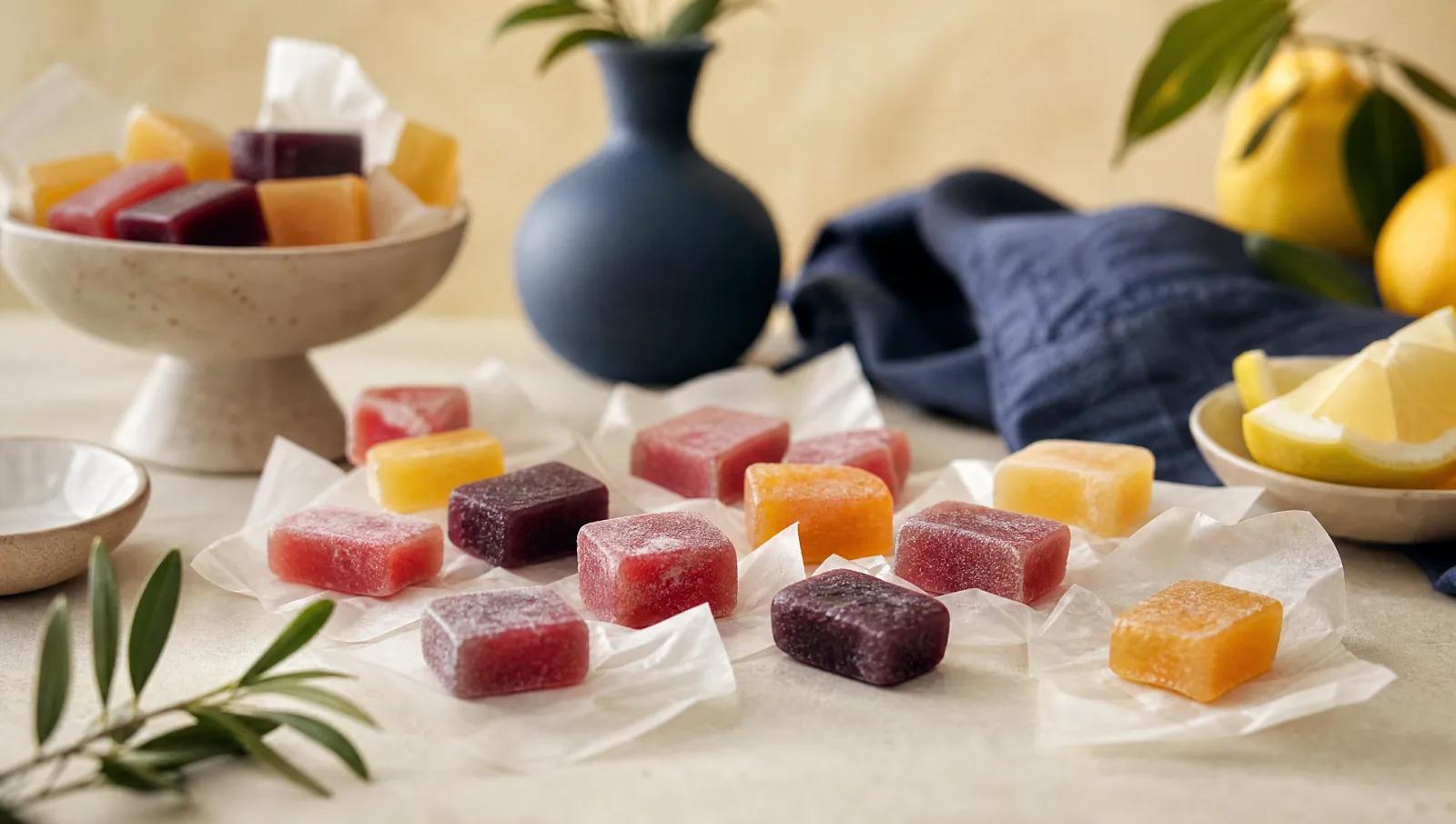
Chewy candy is candy built to resist your teeth. A cooked sugar syrup is set with a binder, and that binder decides everything: gelatin gives a springy bounce, starch gives a short clean bite, gum arabic gives a dense slow dissolve. Nordic chews run drier and less sticky than American taffy. We import Swedish and European candy into California, and chew is the texture buyers most often get wrong when they build a set. It is not one thing. Here is how the category actually splits.
Chewiness is a property of the binder, not the sugar
Nearly every candy on a shelf starts the same way: sugar and glucose syrup boiled to a target moisture. What happens after that boil is what separates a hard candy from a gummy from a chew.
A hard candy is simply syrup cooked so dry it sets as a glass. There is nothing to chew because there is no structure, only brittle sugar. A chewy candy is cooked less far, so water stays in the piece, and then something is added to give that wet sugar a skeleton. Bite down and you are not fighting the sugar. You are fighting the skeleton.
That skeleton is the binder, sometimes called the gelling or texturising agent. Change it and you change the entire eating experience while leaving the flavour untouched.
The three binders that matter
Binder: What it does to the bite: Melts in the mouth?: Typical use
Gelatin: Elastic, springy, bounces back before it gives: Yes, at body heat: Classic gummies and most bouncy chews
Starch: Short, clean, breaks rather than stretches: No, dissolves slowly: Jellies, wine gums, many Nordic pieces
Gum arabic: Dense, firm, very slow release: No, dissolves gradually: Traditional pastilles and old-style chews
Aerated fat and sugar mass: Soft, taffy-like, stretches under the tooth: Softens as it warms: Kneaded fruit chews and toffee-style bites
Gelatin is the only one that melts at body temperature, which is why gelatin candy feels like it disappears while starch candy feels like it has to be worked. Gum arabic is the oldest of the three and the most expensive, which is why it survives mainly in premium pastilles rather than in volume lines.
The fourth row is the one most people mean when they say "chewy" in the American sense. A kneaded chew is not really gelled at all. It is a supersaturated sugar mass with a small amount of fat and emulsifier worked into it, aerated slightly, then pulled and cut. That is the taffy family, and it stretches instead of snapping.
How Nordic chew differs
Two things separate a Nordic or European chew from an American one.
The first is moisture. Swedish and northern European chews are typically dried longer, sometimes for days in warm air, which pulls water out and firms the piece. The result is a chew that stays dense at room temperature instead of going soft and sticky. It is why a case that has sat in a warm shop still eats correctly.
The second is sugar load. American taffy and caramel chews lean on corn syrup and fat for their pull. European fruit chews lean harder on acid and fruit flavour, so the piece reads tart before it reads sweet. Neither is better. They are aimed at different palates, and a shopper who grew up on one will notice the other immediately.
If you want the wider map of how chew sits against foam, gum and slices, our Swedish candy textures guide lays out all five families side by side.
Why jaw-feel matters at retail
Chew length is a merchandising variable, not a footnote.
A piece that takes thirty seconds to eat behaves differently from one that takes five. Longer chew means fewer pieces consumed per sitting, which means a bag lasts longer and reads as better value. It also means the candy occupies the shopper, which is exactly why chews sell at cinemas, on road trips and at registers.
Chews are also the toughest candy in a retail set. They do not stick to each other the way soft gummies do in a warm bin, they survive a jacket pocket, and individually wrapped versions handle open-bowl and self-serve display without a hygiene problem. Low shrinkage is a real margin line, not a nice-to-have. We cover that side in candy shrinkage and waste.
The trade-off is speed of sale. A chew is rarely the reason someone walks into a candy shop. It is the thing they add on the way out.
What we carry in the chew family
Our chew range sits in two groups.
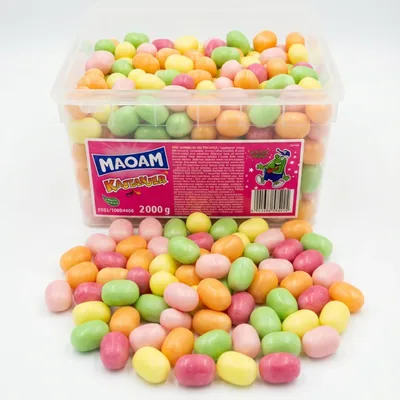
The Haribo MAOAM chews are the taffy-style, individually wrapped cubes: MAOAM Bubblegum Happy Chews in a 6.6 lb case, plus Happy Chews and Happy Chews Cola and Fizzy Beans in 4.41 lb cases. These are register products. We go deeper on the line in our MAOAM candy guide.
The Vidal XL range is the chewy bar format: long, dense, sugar-coated bars sold loose by weight. Vidal XL Sour Cola, Vidal XL Strawberry Cream and Vidal XL Sour Mango Passion Fruit all eat as a slow, substantial chew rather than a quick gummy. The XL bar is a pick-and-mix statement piece because it is visibly bigger than everything else in the wall.
On the soft end of chew, Lonka soft bites are a caramel-style bonbon rather than a fruit chew. We treat them separately in Lonka bonbons and soft caramels.
We publish dietary flags only where we hold the data. None of the MAOAM or Vidal cases above carry a dietary flag in our system, so we make no vegan, vegetarian or gelatin claim about them. If a customer needs one, check the pack. Where we do hold data, it is on the product page, and our gelatin explainer covers which parts of the range are flagged gelatin-free.
Chewy cases we stock
How to buy chewy candy wholesale
We import direct and ship from our Santa Fe Springs, California warehouse to retailers across the US and Canada. Domestic orders ship by UPS Ground or UPS Express. Canadian orders ship DDP, duties paid at checkout, in 3 to 5 days.
Order by the case, mix and match, with no order minimum, which makes chew an easy category to test. One MAOAM case at the register and one Vidal XL case in the wall tells you more in a month than any forecast will. Tier 1 list pricing is public on every product page, and approved accounts can be promoted to better volume tiers. Wholesale accounts approve automatically when you apply. With Earned Credit, an approved account's credit line equals its largest paid, delivered order (up to an account limit), spendable at checkout on NET-14 terms, with a card covering any difference. Shipping is UPS Ground or UPS Express, with a pallet option on orders of $2,000 or more, agreed by email.
Frequently asked questions
What makes candy chewy?+
A binder holding water inside a cooked sugar mass. Gelatin makes it springy, starch makes it short and clean, gum arabic makes it dense and slow. Taffy-style chews use a kneaded sugar and fat mass instead of a gel, which is why they stretch rather than snap.
Is chewy candy the same as gummy candy?+
No. Gummies are gelled and bouncy, and they usually release flavour quickly. Chews are denser, drier and worked longer in the mouth. In practice a gummy resists then gives, while a chew keeps resisting. Many shoppers strongly prefer one and reject the other.
Why do European chews taste different from American ones?+
European fruit chews are dried longer and pushed harder on acid and fruit flavour, so they read tart first. American chews lean on corn syrup and fat, so they read sweet and creamy first. It is a genuine matter of taste rather than a quality difference.
Does chewy candy contain gelatin?+
It depends entirely on the piece. Gelatin is one option among several, and plenty of chews use starch or a kneaded sugar mass instead. We only publish a gelatin claim where we hold the ingredient data, so check the individual product page rather than assuming by brand.
How should I merchandise chewy candy in a shop?+
Individually wrapped chews belong at the register as an impulse add-on. Loose chewy bars belong in the pick-and-mix wall, where their size does the selling. Both hold up better in a warm shop than soft gummies or foam, so they suit awkward, high-traffic spots.
Do chewy candies last longer on the shelf?+
Generally yes. Lower moisture and, for wrapped pieces, an individual barrier mean chews tolerate warmth and handling better than foam or soft gummy. Store them cool and dry anyway. Our [shelf life guide](/journal/swedish-candy-shelf-life) has the practical numbers.

Gustav Lindqvist · Candy Master
Gustav grew up in Sweden on a strict Saturday-candy schedule, mixing his lördagsgodis bag at the lösgodis wall before he could spell salmiak. He has spent years tasting his way across Scandinavian candy, and now curates the range at TheSweetsTruck, from BUBS sour skulls to the saltiest licorice most people cannot finish.
Last updated 9/25/2026