Gluten-Free Gummies: What to Look For on the Label
Some gummies contain wheat starch or wheat flour, so the claim on the pack matters. What gluten-free means on US and EU labels, what gluten-free wheat starch is, and the gluten-free-tagged gummies we import.
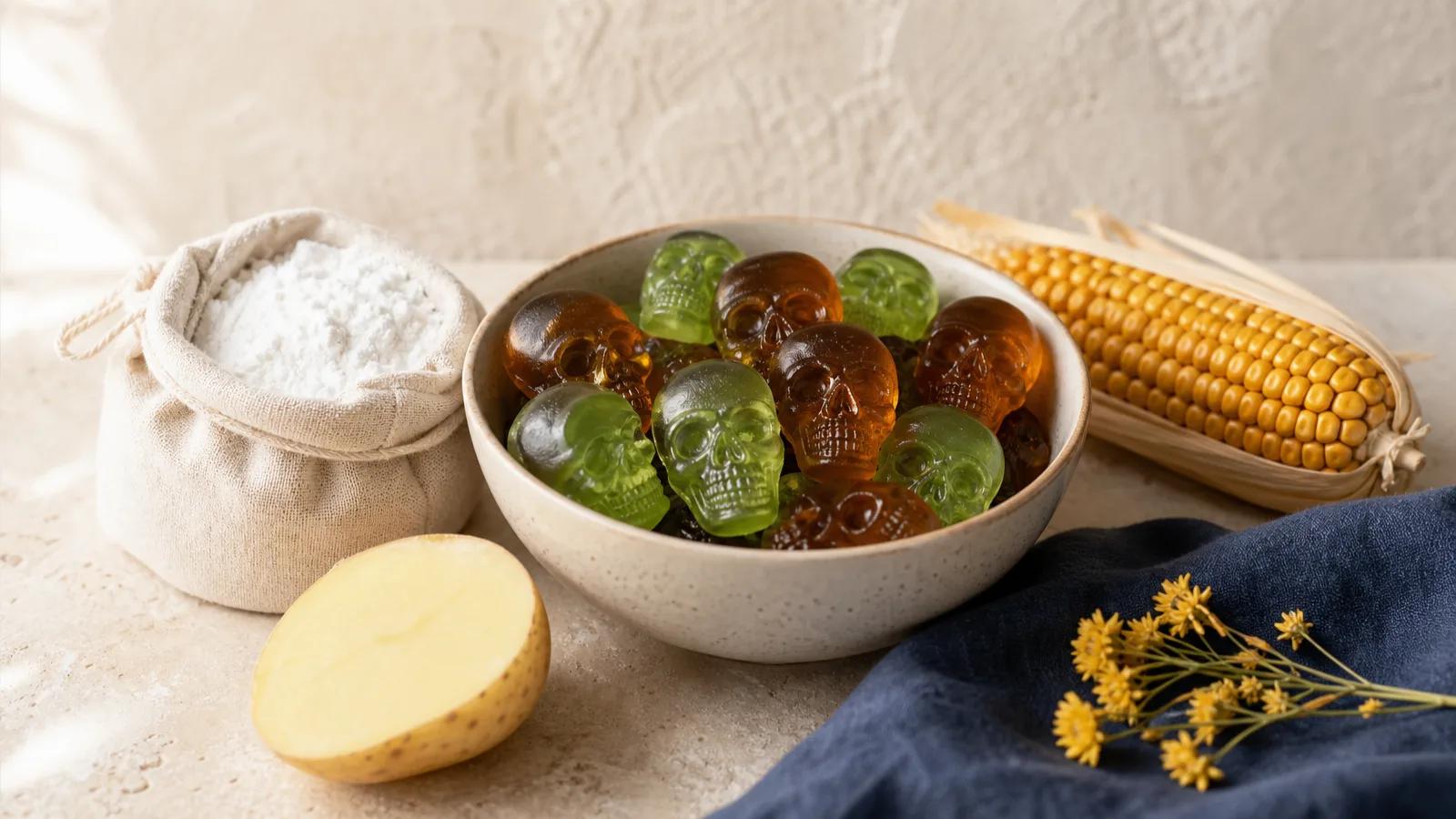
Gluten-free gummies are gummies labeled gluten-free, which in the US means, among other conditions, under 20 parts per million of gluten and in the EU no more than 20 mg/kg. Some gummies contain wheat starch or wheat flour, so read the ingredients for wheat, barley and rye, and never assume a vegan gummy is gluten-free.
We import European gummies, and the only in-stock gummies in our catalog tagged gluten-free are Matthijs skulls: the Swedish, Danish, Pinky, Cola, Melon and Fizzy Skulls. Some of our sour lines contain wheat, and we say so plainly below. Every tag on this page comes from the product listing, and the printed pack always has the final word.
What does gluten-free mean on a gummy label?
The threshold is the same in the US and the EU, because 20 ppm is 20 mg of gluten per kg of food. The rules around it differ a little.
- In the US: a food labeled gluten-free cannot contain wheat, rye or barley as ingredients, or ingredients such as wheat flour that still carry gluten. It can contain an ingredient processed to remove gluten, such as wheat starch, as long as the finished food stays under 20 ppm, and any unavoidable gluten must also stay under 20 ppm (21 CFR 101.91). The claim is voluntary (FDA).
- The US wheat asterisk: if a gluten-free food lists wheat, the word must be followed by an asterisk (or other symbol) pointing to the statement that the wheat has been processed to allow this food to meet FDA requirements for gluten-free foods. The same FDA rule sets this out.
- In the EU: a food may say gluten-free only if it contains no more than 20 mg/kg of gluten as sold, while very low gluten, up to 100 mg/kg, is reserved for foods made with cereal ingredients specially processed to reduce gluten (Regulation (EU) No 828/2014).
Which gummy ingredients contain gluten?
Watch for these on the ingredient list.
- Wheat starch: every ingredient list we hold for the S-Märke and Sura lines we stock names wheat starch. Treat those lines as wheat-containing, whatever else their tags say.
- Wheat flour: it cannot go into a food labeled gluten-free in the US. The ingredient lists we hold for Rainbow Rolls and XL Raspberry Rockets both name wheat flour, and the Candy People bites and Vidal lines we stock contain wheat too.
- Glucose syrup: it can be made from wheat. EU law exempts wheat-based glucose syrups, including dextrose, and wheat-based maltodextrins from the gluten allergen declaration (Regulation (EU) No 1169/2011, Annex II), so an EU label does not have to flag them. A gluten-free claim still depends on the finished food meeting the limit.
- Shared equipment: FDA's rule caps any unavoidable gluten in a gluten-free food below 20 ppm. An ingredient list cannot tell you about traces from a shared line. A gluten-free claim does not name the line either, but in the US it means any such traces stay below that limit.
What does gluten-free wheat mean on the Matthijs skulls?
The ingredient lists we hold for the Matthijs Swedish, Danish, Cola, Melon and Fizzy Skulls declare modified starch from gluten-free wheat, corn and potato. It reads like a contradiction, and it is not one.
FDA's rule gives wheat starch as its example of an ingredient derived from a gluten-containing grain and processed to remove gluten, and it allows such an ingredient in a gluten-free food if the food stays under 20 ppm. EU rules likewise let foods made with cereal ingredients specially processed to reduce gluten carry a gluten-free claim, provided they meet the 20 mg/kg limit. If a US pack pairs wheat with a gluten-free claim, look for the asterisk statement described above.
Pinky Skulls carries the same gluten-free tag, but we hold no ingredient list for it, so the tag is all we can report. Our Matthijs candy guide covers the brand in more depth.
Which gluten-free gummies do we stock?
These are the in-stock gummies in our catalog tagged gluten-free, all Matthijs skulls, sold as 4.41 lb (2 kg) bags with a case of six on the same product page. The Swedish, Danish, Pinky, Cola, Melon and Fizzy Skulls are each also tagged vegan, vegetarian and halal. Which one you prefer is a matter of taste.
Matthijs skulls tagged gluten-free
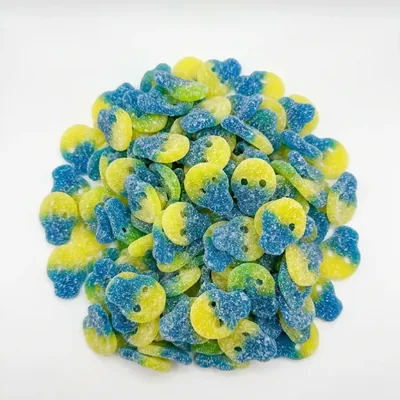
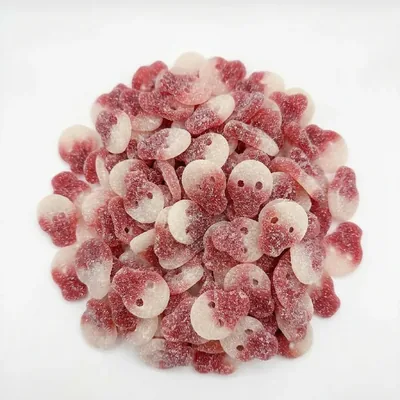


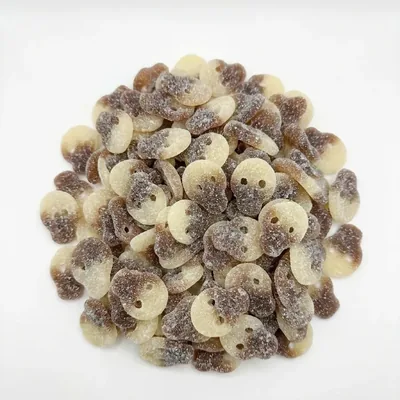
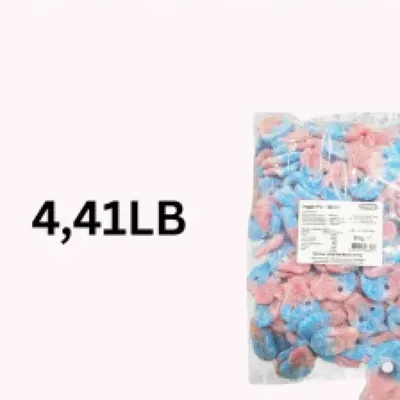
Outside Matthijs, no brand in our catalog carries a gluten-free tag. That does not mean every other line contains gluten; it means we make no gluten-free claim for it. A vegan tag is no substitute either, as our vegan gummies guide explains.
Are gluten-free gummies safe for people with celiac disease?
A gluten-free label is a legal threshold, not a medical promise, and we make no celiac-safety claims. Whether a product suits someone with celiac disease is a question for that person and their doctor. What we can tell you is where our information comes from: the tag on the product listing, which the printed pack always overrides.
Open bins add another risk. Cloetta's product page for Pastellfiskar, its pastel fish, warns that the scoops on a Swedish loose-candy shelf are used in different bins, so allergens can move between them. Our allergen guide for retailers recommends a dedicated scoop per bin and sealed packs for anyone with a serious allergy.
Are Swedish Fish gluten-free?
The classic US candy has its own page: are Swedish Fish gluten-free?. For pick-and-mix beyond the fish, see our gluten-free Swedish candy guide.
Browse the Matthijs skulls and the rest of the range in the store, where each product page shows its own dietary tags and Tier 1 price. If you buy for a shop, cafe or event business, apply for a wholesale account: applications approve automatically, and you order by the case, mix and match, with no order minimum.
Frequently asked questions
Are gummy bears gluten-free?+
Only the pack can tell you. Sugar, gelatin and pectin contain no gluten grain, but glucose syrup can be made from wheat, and a wheat ingredient or a shared production line can change the answer. If gluten matters to you, look for bears labeled gluten-free, a claim that in the US means the food contains under 20 parts per million of gluten.
Is wheat starch gluten-free?+
Not by default. Wheat starch comes from wheat, and FDA allows it in a gluten-free food only if the finished food stays under 20 ppm, while EU rules apply a 20 mg/kg limit to foods made with specially processed cereal ingredients. That is how an ingredient list can say gluten-free wheat, as the lists we hold for several Matthijs skulls do.
Is glucose syrup gluten-free?+
Glucose syrup can be made from wheat, and EU law exempts wheat-based glucose syrups, including dextrose, from the wheat and gluten allergen declaration, so an EU label does not have to flag them. In the US, a gluten-free claim depends on the finished food staying under 20 ppm, whatever the syrup came from. If gluten matters, look for a gluten-free claim on the pack rather than guessing about the syrup.
Are sour gummies gluten-free?+
Not all of them. The S-Märke and Sura sour lines we stock contain wheat. The Matthijs Fizzy Skulls, by contrast, are tagged gluten-free. Recipes differ from maker to maker and line to line, so check the ingredient list and look for a gluten-free claim on every pack rather than judging by the sour coating or the shape.
Does TheSweetsTruck stock gluten-free gummies?+
Yes. The Matthijs Swedish, Danish, Pinky, Cola, Melon and Fizzy Skulls are the in-stock gummies in our catalog tagged gluten-free, sold as 4.41 lb (2 kg) bags with a case of six on the same product page. The tag reflects the product listing and the printed pack is authoritative, so we make no celiac-safety promises. Retailers order by the case, mix and match, with no order minimum.
Keep reading

Gustav Lindqvist · Candy Master
Gustav grew up in Sweden on a strict Saturday-candy schedule, mixing his lördagsgodis bag at the lösgodis wall before he could spell salmiak. He has spent years tasting his way across Scandinavian candy, and now curates the range at TheSweetsTruck, from BUBS sour skulls to the saltiest licorice most people cannot finish.
Last updated 9/30/2026