Italian Candy: Torrone, Confetti, Licorice and Marshmallow Foams
Italian candy traditions, with a source for every date: torrone, Sulmona confetti, Calabrian licorice, Leone pastilles, gianduiotti and Baci, plus the three Bulgari marshmallow and fruit cases we import.
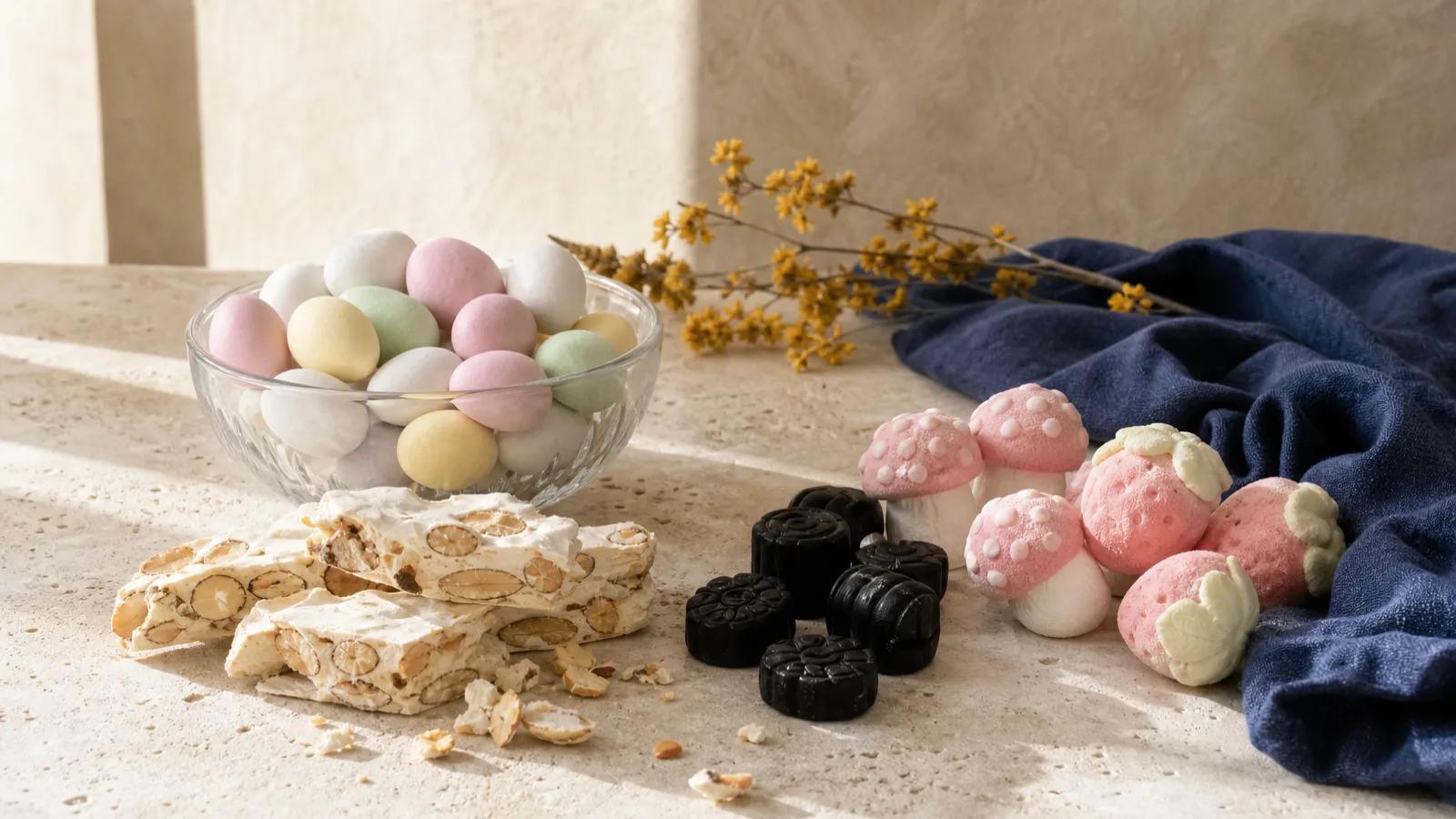
Traditional Italian candy includes torrone (almond nougat), confetti (sugared almonds), Calabrian licorice, small pastilles like Leone's, and chocolates such as the gianduiotto and Baci. The Italian candy we import is different again: 3D marshmallow shapes and fruit pieces from Bulgari.
Below, each tradition gets a source for every date. Then we cover the three Bulgari cases we stock, including what their ingredient lists say about gelatin and colors.
What is torrone?
Torrone is Italian nougat, and two documented examples show its range.
In Cremona, Enea Sperlari made torrone and mostarda from 1836 in a building on Via Solferino, according to the historic Sperlari shop.
In Calabria, Torrone di Bagnara became an EU protected geographical indication (PGI) in 2014 under Commission Implementing Regulation (EU) No 882/2014. Italy's agriculture ministry describes it as honey, sugar and toasted unpeeled almonds with cinnamon and clove, coated in granulated sugar or bitter cocoa, and made in Bagnara Calabra. Its EU application names the two versions: Martiniana, covered in granulated sugar, and torrefatto glassato, covered in unsweetened cocoa powder.
Spain has its own almond nougat, turrón, which our Spanish candy guide covers alongside Spain's jelly tradition.
What are Italian confetti?
Not the paper kind. Confetti are sugared almonds, and Pelino makes them in Sulmona, in Abruzzo. Il Sole 24 Ore reports that the business began in 1783 in Introdacqua as Berardino Pelino's almond trade, and that confetti came with his son Panfilo. It also reports that Pelino uses Avola almonds, Sicilian pistachios and refined white sugar, and that couples getting married are its main customers.
Why is Calabrian licorice famous?
Because the plant grows there and the name is protected. Amarelli, in Rossano, traces its interest in the licorice roots growing wild on its land to the 16th century, and in 1731 it established a concio, one of the first pre-industrial works for extracting the plant's juice.
Since 2011, Liquirizia di Calabria has been a protected designation of origin (PDO), registered by Commission Implementing Regulation (EU) No 1072/2011. The name covers fresh or dried licorice and its extract from the typica variety of Glycyrrhiza glabra, known in Calabria as Cordara. A PDO is stricter than a PGI: every part of production, processing and preparation must happen in the region.
What are Leone pastilles?
Small, fragrant pastilles from Piedmont. Luigi Leone started making them in Neive in 1857 and then opened a shop in Turin, Leone's history records, and its customers included Count Cavour, who was fond of its violet gummies, and the royal household. Giselda Balla Monero bought the company in 1934.
The early pastilles were digestives, eaten after meals, in flavors such as mint, cinnamon, clove, rhubarb and gentian, Gambero Rosso notes.
Which Italian chocolates should you know?
- Gianduiotto: Italy's Opportunitaly portal traces it to a time when the Napoleonic blockade made cocoa scarce and expensive, and to a cocoa and hazelnut paste perfected by Michele Prochet. The gianduiotto was presented at the 1865 Turin Carnival, linked to Gianduja, the carnival mask.
- Baci: Luisa Spagnoli created them in Perugia in 1922 and first called them Cazzotto, "punch," until Giovanni Buitoni suggested Baci, "kisses," Euronews reports. The love notes came later.
- Ferrero: founded in Alba in 1946, Ferrero launched Nutella in 1964, Kinder Chocolate in 1968, Tic Tac in 1969 and Ferrero Rocher in 1982. If you have had a Tic Tac, you have had candy from an Italian company.
Where does Italian marshmallow fit?
This is the Italian candy on our shelf. Bulgari Agostino, based in Pavone Mella in the province of Brescia, has worked in confectionery in Italy since 1880, and today it specializes in marshmallow: extruded marshmallow, 3D shapes, filled pieces and sour-coated versions.
Marshmallow is sugar syrup whipped with air and held by a foaming agent. Our marshmallow candy guide explains how extruded and molded pieces differ, and Bulgari candy introduces the maker.
Which Bulgari candy do we stock?
Three cases, all small, which makes them a low-risk trial for a pick-and-mix wall or a party table. The Tier 1 price for each is public on its product page.
- Bulgari Marshmallow Mushrooms, 1.98 lb (898 g): the ingredient list we hold names pork gelatin as the thickener. Its only listed color is E120.
- Bulgari Marshmallow Sour Strawberries, 1.98 lb (898 g): the list names gelatin without saying which animal it comes from, plus acidity regulators (sodium malate and malic acid). Its listed colors are E101, E120 and E133.
- Bulgari Fruits, 2.2 lb (1 kg): the list names both gelatine and pectin. Its listed colors are E100, E101(i), E120 and E133.
On the UK's approved additives list, E120 is cochineal or carmine and E133 is Brilliant Blue FCF. Carmine comes from insects, as FDA's 2009 labeling rule notes, and US rules require it to be named in the ingredient list. None of these cases carries a dietary tag in our data, so we make no dietary claim about them. Pork gelatin matters to anyone who avoids pork, and E133 matters to shoppers who avoid synthetic dyes, so put what the label says on your shelf tag. Recipes change, and the printed case label is the final word.
If a customer wants a foam piece made without gelatin, the BUBS Raspberry/Cool Hallonskalle skum bags we stock are tagged gelatin-free, halal and vegan.
The Italian Bulgari cases we stock
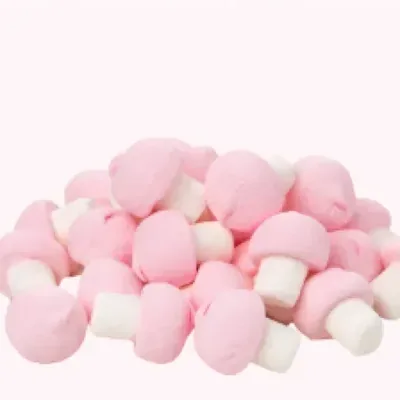

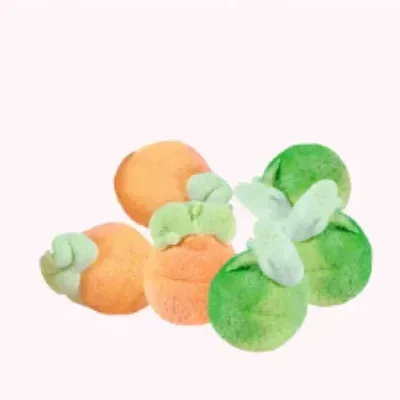
We do not sell torrone, confetti, Calabrian licorice, Leone pastilles or Italian chocolate. For how Bulgari's foam sits beside Swedish, Dutch, Spanish and German lines on one wall, see our European candy guide.
We do not import Italy's nougat, licorice or chocolate, but if Italian marshmallow is what your wall is missing, the three Bulgari cases are in our store. To order by the case, mix and match, with no order minimum, apply for a wholesale account.
Frequently asked questions
What candy is Italy famous for?+
Torrone, the almond nougat made in places such as Cremona and Bagnara Calabra; confetti, the sugared almonds of Sulmona; licorice from Calabria, which has protected status; pastilles such as Leone's from Piedmont; and chocolates including the gianduiotto from Turin and Baci from Perugia. Ferrero, founded in Alba in 1946, adds Nutella, Tic Tac and Ferrero Rocher.
What is torrone made of?+
Recipes vary. The protected Torrone di Bagnara, for example, uses honey, sugar and toasted unpeeled almonds with cinnamon and clove, then a coating of granulated sugar or bitter cocoa. Cremona has its own torrone history, including Enea Sperlari, who made torrone on Via Solferino from 1836.
What are Italian confetti?+
Sugared almonds, not paper confetti. Pelino makes confetti in Sulmona, in Abruzzo, and Il Sole 24 Ore reports that the business began in 1783 as an almond trade in Introdacqua, that its ingredients include Avola almonds, Sicilian pistachios and refined white sugar, and that couples getting married are its main customers. We do not import confetti.
Is Italian licorice different from other licorice?+
Calabrian licorice has a legal identity. Since 2011, Liquirizia di Calabria has been a protected designation of origin covering fresh or dried licorice and its extract from a local variety of the plant, with every stage of production in the region. Amarelli in Rossano set up its extraction works in 1731. We do not import Calabrian licorice.
Is Bulgari candy Italian?+
Yes. Bulgari Agostino, based in Pavone Mella in the province of Brescia, has worked in confectionery in Italy since 1880, and it specializes in marshmallow. We stock three Bulgari cases: Marshmallow Mushrooms and Marshmallow Sour Strawberries in 1.98 lb cases, and Bulgari Fruits in a 2.2 lb case.
Does Bulgari marshmallow contain gelatin?+
The ingredient lists we hold name gelatin in all three Bulgari cases we stock. The Marshmallow Mushrooms list specifies pork gelatin, while the Sour Strawberries and Fruits lists do not name the animal source. None carries a dietary tag in our data, and recipes change, so check the label on the case you receive.
Keep reading

Gustav Lindqvist · Candy Master
Gustav grew up in Sweden on a strict Saturday-candy schedule, mixing his lördagsgodis bag at the lösgodis wall before he could spell salmiak. He has spent years tasting his way across Scandinavian candy, and now curates the range at TheSweetsTruck, from BUBS sour skulls to the saltiest licorice most people cannot finish.
Last updated 9/28/2026