Jelly Fruit Candy: Real Fruit, Flavouring and the Finish
Fruit jelly candy explained: juice and puree versus flavouring, sugar-sanded versus glazed finishes, the European tradition, and cases we stock.
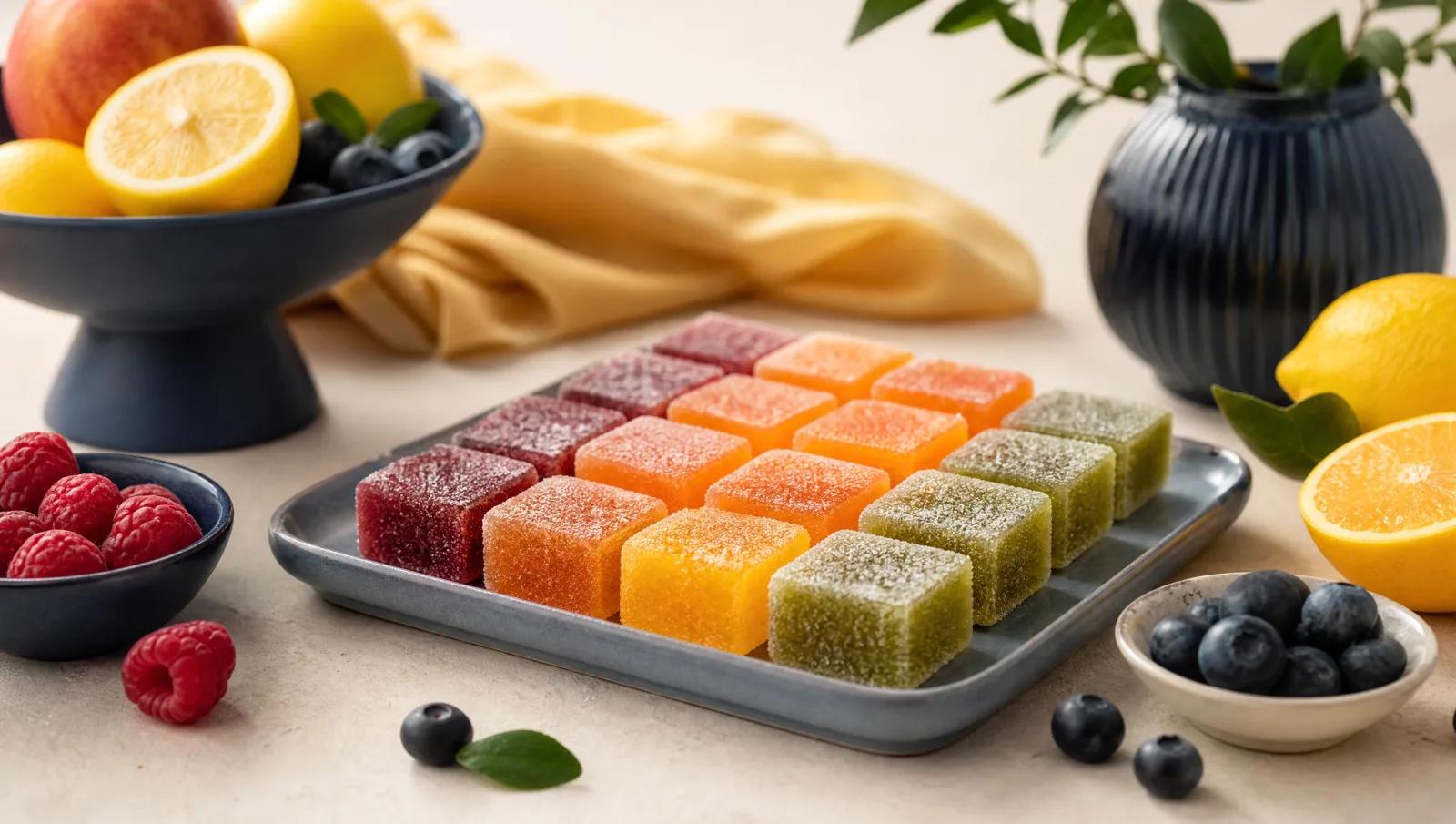
Fruit jelly candy is a soft jelly built so the flavour reads as fruit rather than as sugar. Premium versions use juice or puree set with pectin. Volume versions use flavouring over a plain base. The finish, sugar-sanded or glazed, changes the first second of the bite as much as the recipe does. We import Swedish and European candy into California. Fruit jelly is the category where the label language is loosest, so here is how to read one properly before you buy a pallet of it.
What "fruit" means on a jelly label
Four different things sit behind the word fruit on a jelly bag, and they are not interchangeable.
What it says: What it actually is: Effect on the candy
Fruit puree: Whole fruit pulped, sometimes sieved: Fullest flavour, natural colour, cloudy piece
Fruit juice: Pressed juice, often from concentrate: Clear, bright, thinner flavour than puree
Fruit juice from concentrate: Juice reduced then rehydrated: Cheaper, flatter, still legally fruit
Natural flavouring: Aroma compounds, no meaningful fruit: Clean and vivid, no body, no colour
A candy can carry a large photograph of a strawberry and contain no strawberry. That is not deception in the legal sense, it is a picture of a flavour. The ingredient panel is the only place the question gets answered, and the useful signal is where fruit sits in the ingredient order.
There is a second signal worth knowing. Pectin itself is made from fruit, usually citrus peel or apple pomace, so a pectin-set jelly contains fruit-derived material even when it contains no fruit juice. That is why "made with pectin" and "made with fruit" are not the same claim.
Why real fruit is hard to use
Fruit is a nuisance in a candy factory, which is why so many jellies skip it.
Fruit brings water, and water is the enemy of shelf life. It brings its own acid, which throws off a pectin set that depends on a narrow pH window. It brings colour that fades under light and heat. And it varies: the same variety of strawberry differs by season, by farm and by year, so a factory using puree has to re-tune its recipe constantly to hit the same taste.
Flavouring solves all of that at once. It is stable, identical every batch, and costs a fraction as much. The trade-off is body. A flavoured jelly delivers a sharp, clean, immediately recognisable note and then stops. A puree jelly is duller on the attack and carries much longer.
Neither is a scandal. They are different products at different prices. What matters is that you know which one you are buying and price the shelf accordingly.
The finish changes the bite
The outside of a fruit jelly is a separate manufacturing decision from the inside, and shoppers notice it first.
Sanded, or sugar-coated. The piece is tumbled in granulated sugar, often with citric or malic acid mixed in. This gives the crystalline crunch before the soft centre and, when acid is included, the sour hit. It also protects the piece slightly by putting a dry layer between the jelly and the air, though that coat dissolves once humidity gets to it.
Glazed, or polished. A thin food-grade coating, traditionally carnauba wax or beeswax, is applied so pieces stay glossy and do not stick together. No crunch, no added sourness, better bin behaviour, and a piece that looks like a jewel under shop lighting.
Oiled. A light coating of vegetable oil, used mainly to stop sticking in softer pieces. Barely noticeable in the mouth.
The commercial consequence is straightforward. Sanded pieces look and taste more exciting but fuse together faster in a warm, damp bin. Glazed pieces are the low-maintenance choice. If your shop runs hot, weight your set towards glazed and keep the sanded pieces in the coolest slot.
The European fruit-jelly tradition
Fruit jelly is old. The French pâte de fruit, a dense puree-and-pectin square rolled in sugar, has been made since long before industrial confectionery existed, and it is still the reference for what a fruit jelly can taste like. Iberian and Italian makers built large fruit-jelly industries on the same principle. Turkish delight is a separate branch of the same idea, set with starch instead of pectin.
The Nordic version went a different direction. Rather than a dense sugared square sold in a box, Swedish gelée is a lighter piece sold loose by weight from a pick-and-mix wall, usually sour coated, and eaten by the handful rather than the square. The wider category and how the different sets work is in our jelly candy guide.
Spain is worth calling out separately because so much of the fruit jelly on European shelves is Spanish. Spanish makers dominate the sugar-sanded, high-acid, bright-fruit end of the category, and that style has become the default for what a fruit jelly tastes like across Europe.
Reading a fruit jelly at the counter
Four quick checks before you commit to a case:
Look through it. Translucency means a jelly set. Opaque and springy means you are holding a gummy, which is a different category. Our Swedish gummy candy guide covers that side.
Check the coat. Crystals mean sanded and probably sour. Gloss means glazed and probably neutral.
Read the first five ingredients. If fruit appears there, it is a meaningful amount. If it appears after the colours, it is a rounding error.
Press it. A pectin jelly gives and then breaks. A starch jelly resists. A gelatin jelly springs back.
What we carry
Our fruit jelly and jelly-adjacent range runs across several makers.
Bulgari Fruits from Bulgari is the mixed fruit assortment in a 1 kg case, the classic multi-flavour fruit piece. Aroma Sour Strawberry Banana in a 3.97 lb case is the sour-coated Swedish gelée format, and Aroma has its own guide at Aroma.
From Vidal, Vidal Passion Fruit Slices in a 2.2 lb case are the sugar-sanded fruit slice, a Spanish staple and the single most recognisable fruit-jelly shape in Europe. More on the maker in Vidal candy.
For the small-format sanded piece, Strawberry Sugar Cubes, or sockerbitar jordgubb come in a 1.81 lb case and are one of the cheapest ways to add a sanded strawberry note to a wall.
We publish dietary flags only where we hold the ingredient data, and none of these four carry one in our system, so we make no vegan, vegetarian or gelatin claim about them. We also do not make fruit-content claims beyond what the panel on the case states.
Fruit jelly cases
If you are choosing flavours rather than formats, Swedish candy flavors explains which fruit notes actually anchor a Nordic wall and which ones are American assumptions.
How to buy fruit jelly candy wholesale
We import direct and ship from our Santa Fe Springs, California warehouse to retailers across the US and Canada. Domestic orders ship by UPS Ground or UPS Express. Canada ships DDP, duties paid at checkout, in 3 to 5 days.
Order by the case, mix and match, with no order minimum, which makes it easy to run a sanded piece and a glazed piece side by side and let the shop tell you which one it can handle. Tier 1 list pricing is public on every product page, and approved accounts can be promoted to better volume tiers. Wholesale accounts approve automatically when you apply. With Earned Credit, an approved account's credit line equals its largest paid, delivered order (up to an account limit), spendable at checkout on NET-14 terms, with a card covering any difference. Shipping is UPS Ground or UPS Express, with a pallet option on orders of $2,000 or more, agreed by email.
Frequently asked questions
Does jelly fruit candy contain real fruit?+
Sometimes. Some jellies use fruit puree or juice, many use flavouring over a plain sugar base, and both are sold as fruit candy. Pectin, the common setting agent, is itself made from fruit, which is a separate thing from fruit content. The ingredient panel is the only reliable answer.
What is the difference between fruit jelly and gummy candy?+
Fruit jelly is softer and usually translucent, typically set with pectin or starch, and finished with sugar or a glaze. Gummy is denser, springier, usually gelatin set, and holds a sharp moulded shape. Press one: a jelly breaks, a gummy bounces back.
Why are some fruit jellies coated in sugar and others shiny?+
Sanded pieces are tumbled in sugar, often with citric acid, which adds crunch and sourness. Glazed pieces get a thin food-grade coating so they stay glossy and do not stick. Sanded looks livelier on the shelf, glazed survives a warm shop with far less trouble.
What is pâte de fruit?+
A traditional French fruit jelly made from fruit puree set with pectin, cooked dense, cut into squares and rolled in sugar. It is the high-fruit end of the category and the reference point for what a fruit jelly can taste like when the recipe is not economising on fruit.
Are fruit jellies vegan?+
Only when the set is pectin or starch rather than gelatin and no other animal ingredient is used. Note that some glazes use beeswax or shellac, which rules out a piece for strict vegans even when the jelly itself is fine. We publish a dietary flag only where we hold the data.
How do I stop fruit jellies sticking together in the bin?+
Keep them cool and dry, away from doors, windows and warm-air vents. Refill from sealed cases instead of topping up a half-empty bin, and rotate stock so nothing sits open for weeks. If the shop runs hot, choose glazed pieces over sanded ones.

Gustav Lindqvist · Candy Master
Gustav grew up in Sweden on a strict Saturday-candy schedule, mixing his lördagsgodis bag at the lösgodis wall before he could spell salmiak. He has spent years tasting his way across Scandinavian candy, and now curates the range at TheSweetsTruck, from BUBS sour skulls to the saltiest licorice most people cannot finish.
Last updated 9/25/2026