Retro Candy: European Classics from the 60s to the 90s
A decade walk through European candy from the 60s to the 90s: what launched, what changed in the making, and which classics are still in production today.
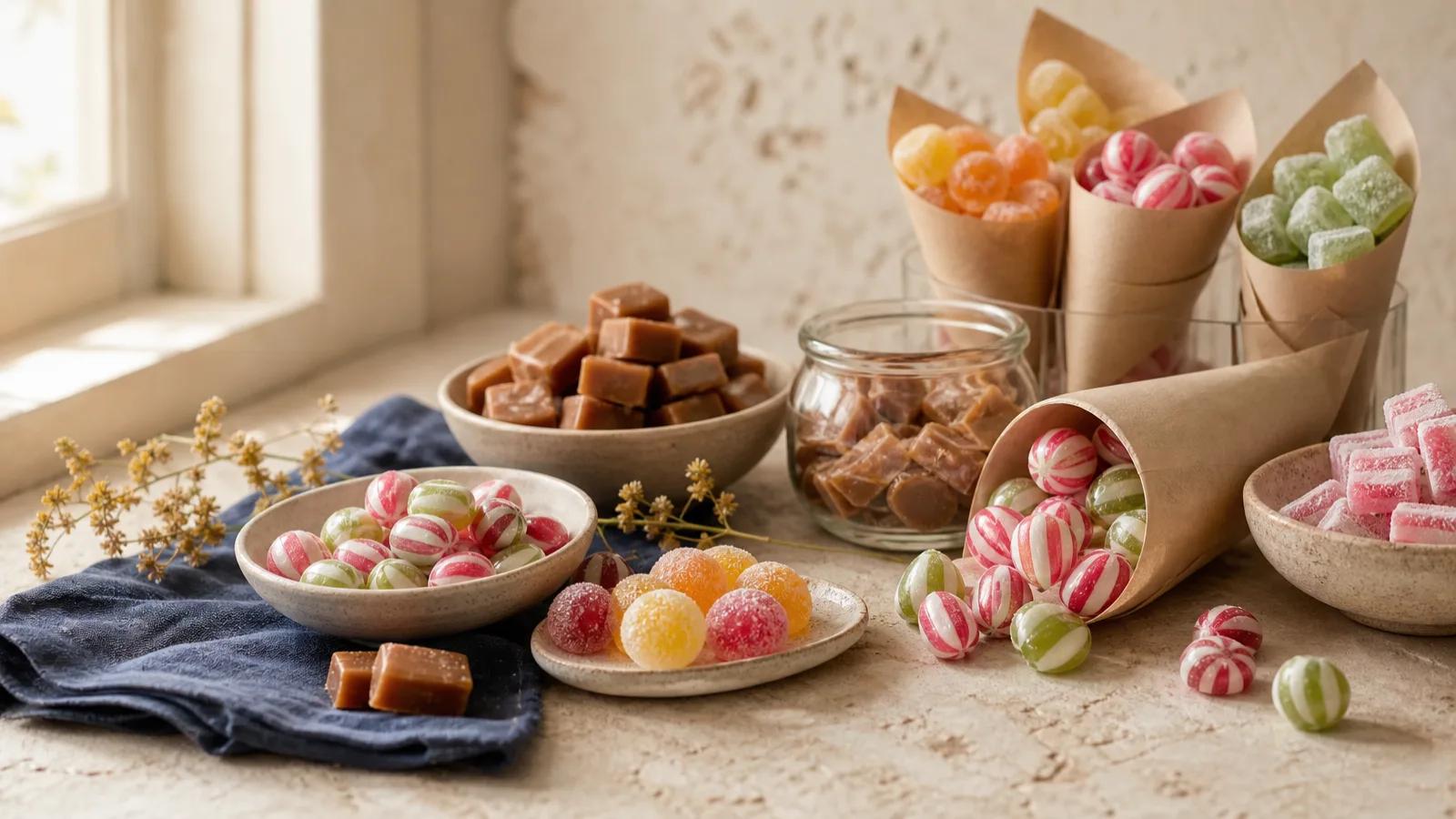
Retro candy in Europe means the classics that stayed in production from the 1960s through the 1990s: pick-and-mix pieces, sour shots, chews and licorice. This guide walks the decades, notes what changed in candy making, checks who owns which brand today, and names the cases we import.
We import European candy into California, and the retro shelf is the part of the range we handle most carefully, because these shapes have stayed the same for decades on purpose. The best proof is a maker like Grahns, which has run in Skövde, Sweden since 1949.
What counts as retro candy?
Retro describes candy that reads as older than the current fashion, usually the mid-century decades. In Europe that means the pick-and-mix era: the self-scoop walls, the striped rock, the chews that fill a Swedish godis shelf. Swedes fold all of it under one word, godis, which simply means candy, and what godis means is a short read of its own. Vintage candy is the broader term, stretching further back; retro is the 1950s to the 1990s slice.
For shops, the useful test is production, not design. A classic that never left the line, like the caramels Grahns has cooked in Skövde since 1949, is retro candy in the honest sense. A reissued shape made for a trend is not, and buyers can usually tell the difference on the ingredient panel.
- Retro: the mid-century decades, roughly the 1950s to the 1990s, and the pick-and-mix era shapes.
- Vintage: candy from any earlier era, including pre-war boiled sweets.
- Reproduction: a new shape styled to look old, which is not retro in the production sense this guide uses.
What was candy like in the 1960s?
The 1960s inherited the Swedish Saturday-candy habit, and that habit has a documented and uncomfortable origin. From 1945, the Swedish state ran a long nutrition study at Vipeholm Hospital near Lund, on patients who could not consent to it, to test how sugar affected teeth. The findings were clear, and a 1957 public health campaign followed with a message of moderation rather than prohibition: all the sweets you like, but only once a week. The custom of lördagsgodis, Saturday candy, grew out of that campaign, as Atlas Obscura recounts.
On the shelves, launch records from Cloetta, whose official history logs its brands by year, show the decade's pace:
- 1953, the run-up: Ahlgrens Bilar, the car-shaped foam, launches in Sweden.
- 1960: Tupla, the double countline bar, arrives in Finland.
- 1965: Chewits launches in the United Kingdom, and Polly arrives in Sweden.
- 1966: Bridgeblandning joins Polly in Sweden.
- The decade figure line: the first marshmallow Santas go on sale.
All five dates come from Cloetta's history page. For European candy, the period's defining change was that sweets moved from a rare treat to a weekly ritual with its own shopping day.
What changed in the 1970s?
The 1970s are when pick-and-mix took over. Loose candy by weight, scooped by the customer and paid for at the register, became the default in Sweden and spread from there, and the making changed with it: more standardised recipes, more packaging, and the first serious sugar-free experiments.
- The mixed bag arrives: Cloetta ties the launch of Gott & Blandat, the mixed candy bag, to the growing popularity of pick & mix during the 1970s and 1980s.
- 1972: Vidal, the Spanish gummy house, begins selling beyond Spain.
- 1973: Vidal opens its head office, expanding on its tenth anniversary.
- 1975, three shifts in one year: Vidal makes packaging its differentiator; the Trolli label starts its gummy range in Germany; and the first xylitol chewing gum launches in Finland under Jenkki.
The Vidal dates come from Vidal's own history, the Trolli line from the brand's about page, and the rest from Cloetta's history.
What did the 1980s change?
The 1980s are the decade the current shelf was set. The big shapes settled, sales lines got names, and the first genuinely sugar-free products proved they could sell, which pushed most makers to reformulate at least part of the range.
- 1981: Vidal's "Los Clásicos" line arrives.
- 1984: Vidal refreshes its brand image for the decade.
- 1988: Sportlife launches in the Netherlands as the sugar-free turn gathers pace.
Those dates come from the two maker timelines linked above, Vidal and Cloetta. The decade changed recipes more than it changed shapes, and the shapes it kept are the ones still in the wall today.
What makes 90s candy its own era?
Two things. First, consolidation: the big groups bought the mid-size makers, and much of today's ownership map was drawn in the 1990s. Second, and more fun for candy fans, the decade produced the brand the current global wave is built on.
- 1992: BUBS is founded in Huskvarna, Sweden, by the Lindström family, as BUBS tells it on its site.
- 1993: Leaf acquires Ahlgrens, adding Läkerol and Ahlgrens Bilar to its stable.
- 1994: Cloetta lists on the Stockholm stock exchange.
- 1997: CSM acquires Malaco.
- 1998: Cloetta acquires Candelia, home of Polly and Bridgeblandning.
The last four dates come from Cloetta's history. The full BUBS arc, from Huskvarna to the TikTok era, is in our BUBS story.
How did European candy making change between the 60s and the 90s?
Four changes matter for anyone buying candy today.
- The moulds got bigger and cheaper. Starch moulding scaled up: shapes are pressed into beds of corn flour, the candy mix is poured in, and the flour is dried and reused. BUBS still describes exactly this process on its own site, and it is why detailed foam shapes are affordable by the tonne.
- Plant-based setting agents arrived early. A large share of the European gummies we import now list starch, pectin or gum arabic instead of gelatin, a shift that happened in Europe before it reached the US industry. Which of our lines still use gelatin is laid out in our gelatin breakdown.
- Sugar-free became normal. The thread that started with xylitol gum in 1975 and Sportlife in 1988 reshaped recipes over the following decades.
- The era's shapes are the shapes you still buy. The launches from 1949 to 1966 are still in production, which the next section checks one by one.
Which European classics never left production?
This is the part that matters for a retro shelf: the classics that are still made, still sold, and still taste like the decade they came from.
- Cloetta, founded in 1862 by the three Cloëtta brothers in Copenhagen and later moved to Sweden, still makes Kexchoklad (launched 1938), Center (1941), Plopp (1949), Ahlgrens Bilar (1953), Polly (1965) and Bridgeblandning (1966), per its official history. Ownership has changed around the brands; the products are still in production.
- Grahns has produced caramels, jellies and chocolate in Skövde since 1949, around 4,400 tonnes a year by its own count. The house gets a longer profile in our Grahns brand story.
- Vidal, born in 1963 in Molina de Segura, Spain, still runs the gummy lines it built its name on, in more than 90 countries (Vidal's history).
- BUBS, the new classic of 1992, now sits inside Orkla Snacks: Orkla completed its purchase of 100% of Bubs Godis AB in early 2023 (Orkla's release).
The wider brand map, including the houses we do not stock, is in our Swedish candy brands guide.
Retro cases we stock
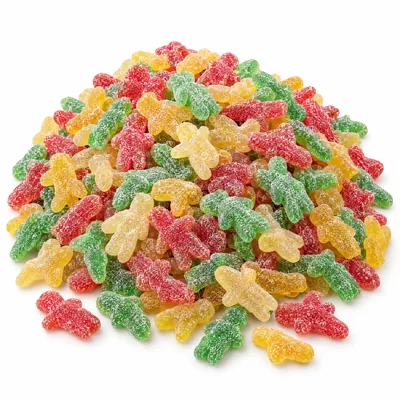
- Grahns Sega Gubbar (7.7 lb / 3.5 kg, $51.90, $6.73 per lb, computed from the published case price): a chewy character piece from the house that has run since 1949. The ingredient list we hold names gelatin, with malic acid as the acid. The listing makes no sour claim. Tags as listed: none.
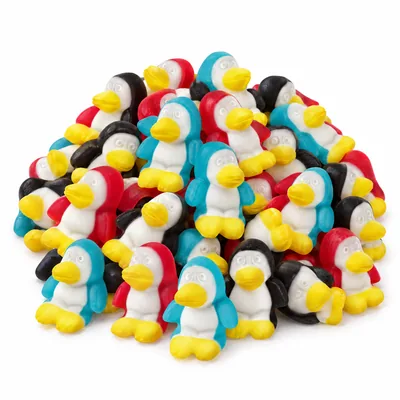
- Trolli Pingummi (2.2 lb / 1 kg, $18.90, $8.57 per lb, computed from the published case price): classic fruity gummi from a German label that has made gummies since 1975. The ingredient list names both gelatin and pectin, with curcumin and brilliant blue FCF among the colours. The listing makes no sour claim. Tags as listed: none.
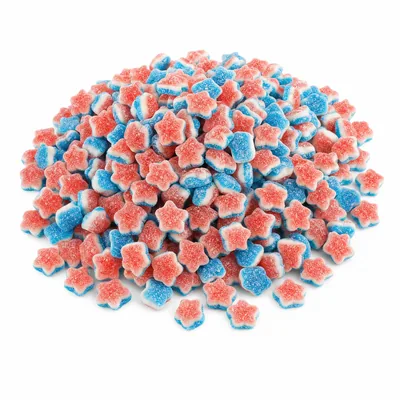
- Stardust (4.4 lb / 2 kg, $36.95, $8.38 per lb, computed from the published case price): a gummy built on gelatin and modified starch; the listing makes no sour claim. Among the colours listed are E120 and E133. Tags as listed: none.
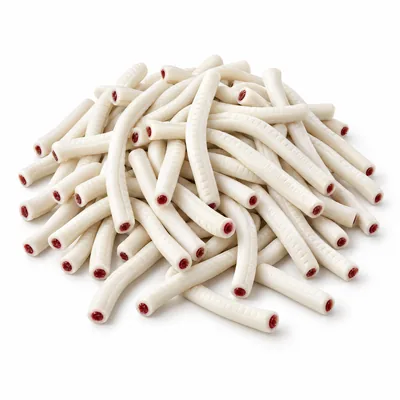
- Finnish Straps Sour Apple (8.82 lb / 4 kg, $76.90, $8.72 per lb, computed from the published case price): the giant 19.7 inch strap, soft and chewy under a sour coat. The ingredient list names gelatin, and also wheat. Tags as listed: none.
- Finnish Straps Vanilla Strawberry Filled (8.82 lb / 4 kg, $76.90, $8.72 per lb, computed from the published case price): the filled version, vanilla outside and strawberry inside. The ingredient list names gelatin, and also wheat. Tags as listed: none.
Retro cases we stock
Why does retro candy still sell?
Because recognition may be the strongest shelf talker there is. A shopper who last ate a Swedish chew in the 1980s buys it again for the memory, and a shopper who never had one buys it because it looks different from everything else in the aisle. Retro also reads as giftable, which lifts the average basket.
- For shops: a retro corner needs four or five cases, not forty: one chew, one gummi, one strap and one classic at the front. Apply for a wholesale account and the range opens up.
Ordering runs by the case, mix and match, with no order minimum, and applications approve automatically. US orders ship from Santa Fe Springs, California within 2 business days, and Canadian orders ship DDP, with duties and taxes paid at checkout, in 3 to 5 business days.
Two cases to start a retro set

The retro cases and their per-pound math are in the store, and the long background on the Saturday-candy decades is in our history of Swedish candy.
Frequently asked questions
What is retro candy?+
Retro candy is candy that reads as older than the current fashion, usually from the mid-century decades. In Europe that means the pick-and-mix era: chews, sours, licorice and the shapes that fill a Swedish candy wall. The test that keeps it honest is production: a classic still being made from the same recipe is retro, while a new shape styled to look old is not.
What is the difference between retro and vintage candy?+
Vintage is the older, broader word: candy from any earlier era, including pre-war boiled sweets. Retro describes the mid-century look and taste, roughly the 1950s to the 1990s. Shops use the two interchangeably in practice, and a Swedish pick-and-mix classic from 1965 can be filed under either one.
Why do Swedes eat candy on Saturdays?+
The habit comes from a public health campaign that followed the Vipeholm dental study near Lund. The study ran from 1945 and showed that sugar eaten between meals did the most damage to teeth. From the late 1950s, Sweden's advice was moderation rather than prohibition: all the sweets you like, but only once a week. Lördagsgodis, Saturday candy, grew from that.
What was candy like in the 1990s?+
The 1990s were a consolidation decade: big groups bought mid-size makers, and much of the ownership map settled into what you see today. In Sweden it also produced the modern classic, with BUBS starting in Huskvarna in 1992 and growing into the brand many candy fans now know first. The sour, chewy style of the current wave has roots in that period.
Which 90s candy is still made?+
Most of it. Cloetta still makes Kexchoklad, Center, Plopp, Ahlgrens Bilar and Polly, launched between 1938 and 1965, alongside Bridgeblandning from 1966. Grahns has made caramels and jellies in Skövde since 1949, and Vidal has produced gummies in Spain since 1963. BUBS, born in 1992, is the youngest of the group and has been owned by Orkla since 2023.
Why do European classics taste different from American candy?+
Texture and acid. European chews are usually drier and denser, and the sour family leans on acid first, so the bite stays tart rather than sweet. American versions of the same formats often soften the piece and put the acid in a sugar coating. It is a difference of style rather than of quality, and taste decides which one you prefer.
Can shops still buy these classics wholesale?+
Yes, the ones we import, ordered by the case and mixed freely across brands. Our retro range runs from Grahns chews to the giant Finnish straps, and every case shows its public Tier 1 price on the product page. Ordering takes a free wholesale account, and applications approve automatically.
Keep reading

Gustav Lindqvist · Candy Master
Gustav grew up in Sweden on a strict Saturday-candy schedule, mixing his lördagsgodis bag at the lösgodis wall before he could spell salmiak. He has spent years tasting his way across Scandinavian candy, and now curates the range at TheSweetsTruck, from BUBS sour skulls to the saltiest licorice most people cannot finish.
Last updated 10/14/2026