Sour Belts and Rolls: The Complete Guide
Belts, rolls, strips and laces are not the same candy, and the difference is mostly in the coating. Here is the shape glossary, how the acid layers work, and the six lines we stock.
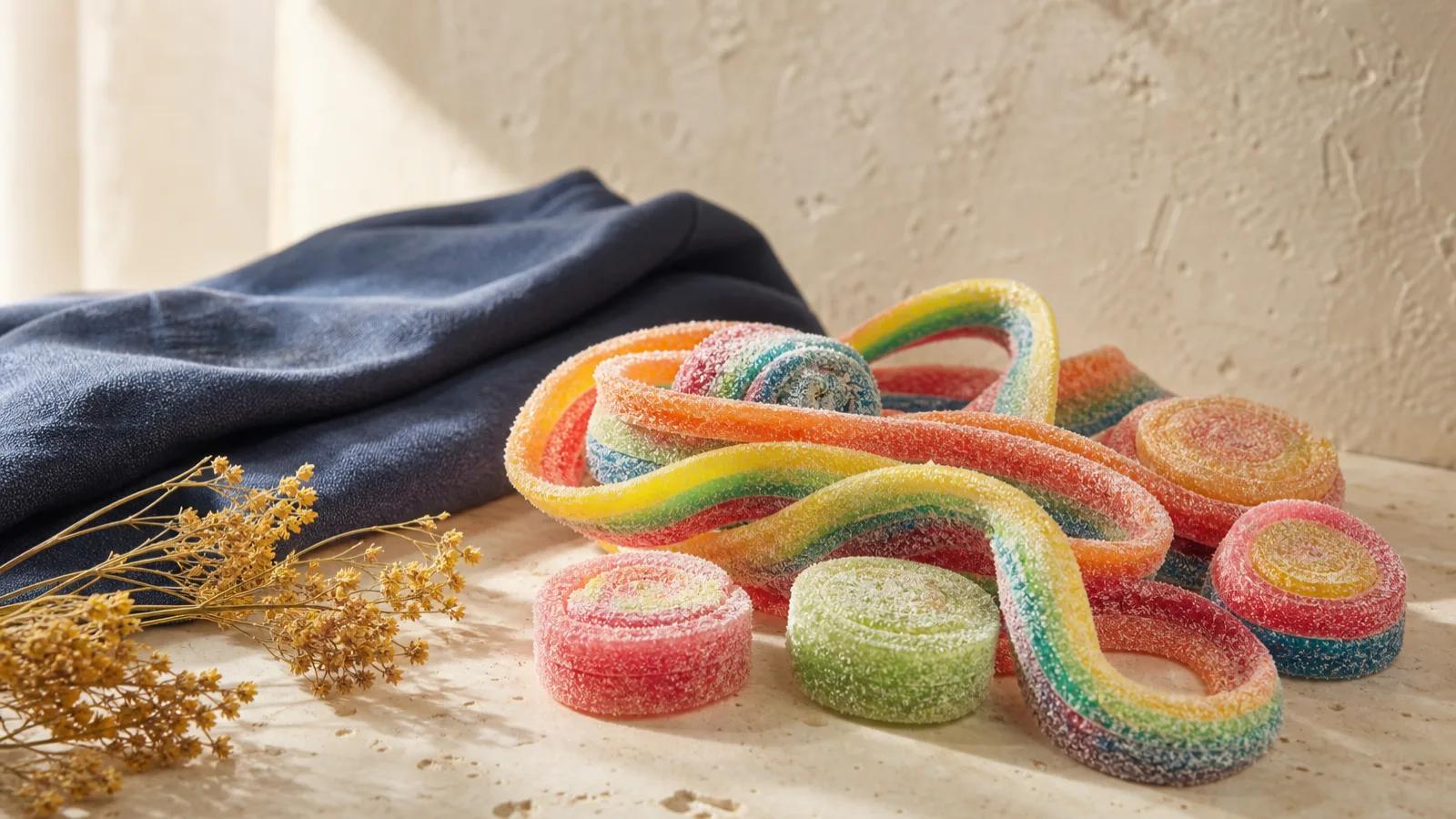
Sour belts are flat, sanded strips of chewy candy: the sugar and acid coating delivers the sourness, and the thin shape means plenty of coating per bite. Rolls are the European cousin, coiled, and the three rolls we stock list wheat flour. Coating, not shape alone, decides how sour a piece actually eats.
We import European candy by the case into Santa Fe Springs, California, and the six belt and roll lines below are what we actually stock. If you want the acid chemistry underneath all of this first, our sour candy guide is the place to start.
What is the difference between belts, rolls, strips and laces?
The vocabulary trips people up, because American shelves and European sweets walls use different words for similar candy. Here is the half-page glossary.
- Belts: a flat ribbon, usually a centimeter or so wide, cut long and chewy, finished in a sugar and acid sanding. This is the American candy-aisle word.
- Strips: the same idea, cut wider and often sold in bigger pieces. On a pick and mix wall, a strip is the broad-faced cousin of a belt.
- Rolls: a narrow strip coiled into a spiral, a fixture of the European sweets aisle. The coil gives the piece two textures: the outer edge first, the inner furl as it unwinds.
- Laces: round ropes rather than flat ribbons, most often licorice. Laces bend and knot; belts stay flat.
Shape matters commercially because it changes surface area. A flat, thin piece carries more coating per gram than a thick one, so belts and strips read sharper than their ingredients alone would suggest.
How does the sour coating actually work?
Two things are happening at once, and only the first one is obvious.
The acid sits mostly on the outside. A sanded piece is tumbled in a blend of sugar crystals and powdered acid, so the first seconds in the mouth are mostly coating, and the mouth reads that as an immediate sour hit. A sprayed piece carries even less sugar buffering the acid, so it hits harder still. Acid that is worked into the body of a gummy instead releases evenly and lasts through the whole chew, which is why the better lines use both.
The second thing is what happens after the coating is gone. Saliva dilutes what is left, and the taste receptors adapt, so the sourness fades whether or not any candy remains. The sugar inside the piece keeps releasing the entire time, which is why every sour belt gets sweeter as you chew it. A blend of acids is how formulators stretch the window: citric for the opening, malic or a slower acid for the tail.
There is a handling consequence as well: acid and sugar coatings are hygroscopic, meaning they pull moisture out of the air. That is why an open bin dulls over time and why the belts in a humid stockroom go tacky before they go stale.
Which belts and strips do we stock?
Three flat formats, all sanded, all sold by the case. None of the six lines in this article carries a dietary tag in our data, so we publish no vegan, vegetarian or gelatin-free claim for them; the pack is the authority.
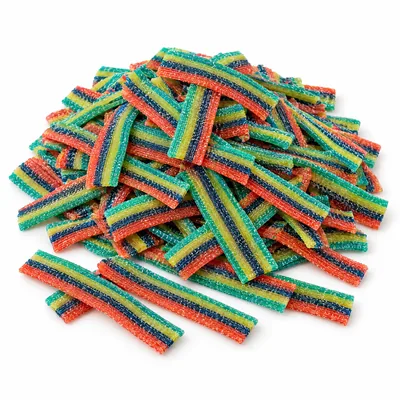
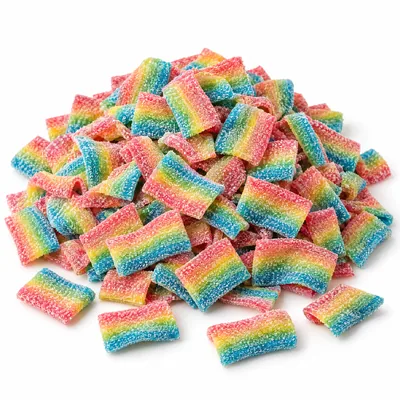
- Sour Rainbow Belts, 2.2 lb case: a thin sanded belt in rainbow colors, the sharpest opener of the bunch because the coating faces the tongue immediately. Case weight 2.20 lb. Tier 1 price works out to $7.67 per lb, computed from the published case price.
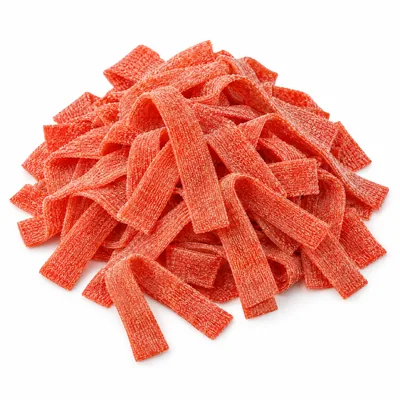
- Sour Strawberry Belts, 2.2 lb case: the same build in strawberry, softer flavor under the acid. Case weight 2.20 lb. Tier 1 price works out to $7.67 per lb from the published case price.
- Sour Rainbow Strips, 6.6 lb case: the wide-bodied version, more chew per bite and the format candy stores like for pick and mix. Case weight 6.61 lb. Tier 1 price works out to $8.00 per lb from the published case price.
Sanded belts and strips we stock
Which rolls do we stock?
The rolls come from Vidal, a Spanish confectioner founded in Molina de Segura in 1963 (Vidal). All three name wheat flour in the ingredient list we hold. That wheat note matters to shops: the rolls are not a wheat-free item, and the printed pack is what you check before signing a shelf.
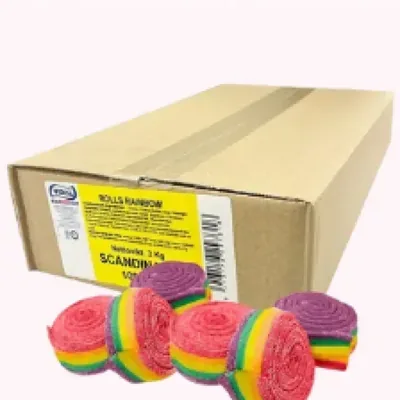
- Vidal Rainbow Rolls, 6.6 lb case (3 kg): the classic coil, rainbow-sanded, with a soft wheat-based chew under the acid. The ingredient list we hold names wheat flour (contains gluten). Case weight 6.61 lb. Tier 1 price works out to $6.96 per lb, computed from the published case price. The Rainbow Rolls case is the one most shops start with.
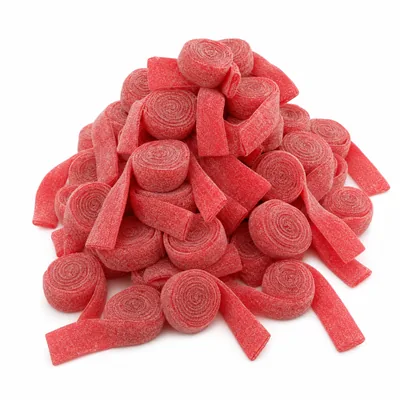
- Vidal Strawberry Rolls, 6.6 lb case: the single-flavor coil, strawberry through the base rather than only in the sanding. The ingredient list we hold names wheat flour (contains gluten). Case weight 6.60 lb. Tier 1 price works out to $6.97 per lb from the published case price.
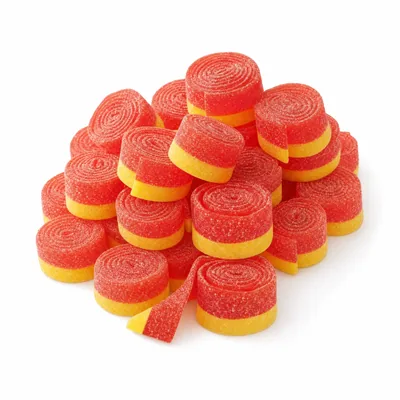
- Vidal Strawberry Lemon Roll, 6.6 lb case: the two-flavor roll, sweet strawberry against a bright lemon lift. The ingredient list we hold names wheat flour (contains gluten). Case weight 6.60 lb. Tier 1 price works out to $7.11 per lb from the published case price.
The rolls we stock
How sour does each shape eat?
Start with the honest answer: sourness has no official scale, so anything beyond "this one bites harder" is taste, not measurement. We took that argument apart in the most sour candy in the world, and it applies here too.
What we can say is how the formats are built, which sets their order for a tasting tray:
- Sour Rainbow Belts: the sharpest opener, because the thin ribbon is almost all coating-to-body at the first bite.
- Sour Rainbow Strips: a touch slower, because the wider face takes longer to dissolve and the chew underneath has more to do.
- Vidal Strawberry Lemon Roll: bright and layered, with the lemon arriving after the coil starts to unwind.
- Vidal Rainbow Rolls and Strawberry Rolls: the softest opening of the six, because the wheat-flour base reads mellow before the sanding finishes its work.
If you are building a bin for shoppers who are new to sour, start them at the rolls and let them work up. If the bin is for sour people, lead with the belts.
Where do belts sit beside pacifiers and other shapes?
Sour is a format category as much as a flavor, and a wall that repeats one texture reads as one candy. Belts fill the thin, coated, fast-opening slot in a set. Around them, the shapes that pull their weight are the ones we outlined in the sour gummy candy guide and the sura nappar piece.
- Pacifiers (nappar): flat and wide with a raised nub, so the shape holds more coating per gram than any belt. The sharpest surface in a soft piece.
- Belts and strips: thin and even, the fastest sour-to-sweet transition of the shapes here.
- Skulls and standard gummies: thicker bodies with less coating per bite, so the fruit arrives before the acid does.
That is the whole trick to a sour section: one thin piece, one wide piece, one thick piece, so the formats contrast instead of compete.
How should a shop stock and price belt candy?
Two things keep belts selling: they store dry, and they price by the pound. Case pricing is public on every product page, and folding out to a per-pound retail number is the same math as any pick and mix line.
- Storage first. Keep cases sealed until you fill, keep bin lids down, and fill shallower than you think you need. Coated belts pull moisture, and a bin that empties inside a week tastes different from one that empties inside a month.
- Run FIFO. Older cases to the front, new cases to the back, and never top off a bin; empty it, wipe it, refill it.
- Price from the case. The Rainbow Rolls land at $6.96 a pound at Tier 1, and the strips at $8.00; set your shelf or scoop price from those numbers and your margin target, not from a feeling.
- Position by dust. Sanded lines shed sugar into the bin below them, so park them at the bottom of a run, not over the gummies.
For shops: belts and rolls are sold by the case, mix and match, with no US order minimum, and Tier 1 pricing is public on every product page. Apply for a wholesale account and approval is automatic, so you can add one roll case to a first order and read the result honestly.
Add a shape that shoppers do not see everywhere: browse the store for the belt and roll cases, or read why sour gummies behave differently if you want the texture side of the same story before you stock.
Frequently asked questions
What is a sour belt made of?+
A chewy sugar base, usually glucose syrup, sugar and a starch or flour body, finished with a sugar and acid sanding. The acid is typically citric or malic and sits mostly on the surface, which is what makes the first bite the sourest one. The printed pack is the authority for any of them.
Are sour belts vegan?+
We publish no vegan, vegetarian or gelatin-free claim for any of the six belt and roll lines in this article, because our supplier data holds no dietary tags for them. Some belts internationally are built on plant bases, and some are not, so the printed pack is the only authority worth trusting at the shelf.
Do sour belts and rolls contain wheat?+
The three Vidal rolls name wheat flour (contains gluten) in the ingredient list we hold, so they are not a wheat-free item. The three belt and strip formats do not name wheat in the text we hold, but recipes change between production runs, so check the pack you receive before you label a shelf.
Why do sour belts go sticky in the bin?+
The coating absorbs moisture from the air. Once the sugar and acid film takes on water, it stops being a crisp sanding and becomes a syrup glaze, and the pieces start to clump. The candy is not spoiled; it has just lost its sparkle. Keep lids closed, keep the room dry, and rotate the bins faster than the rest of the wall.
Are belts and laces the same thing?+
No. Belts are flat ribbons, often a centimeter wide and sanded with a sugar and acid coat. Laces are round ropes, usually licorice, and they bend and knot where belts stay flat. If a customer asks for a lace and you stock belts, explain the difference; most people want the flat format once they see it.
How should a shop sell rolled candy?+
Sell the coil as the visible, scoopable piece on a pick and mix wall, and keep a case behind for refills. Price it by weight from the case cost, keep the bin shallow, and let the spiral do the look. If your shoppers are new to sour, the rolls are the gentlest entry point of the six.
Keep reading

Gustav Lindqvist · Candy Master
Gustav grew up in Sweden on a strict Saturday-candy schedule, mixing his lördagsgodis bag at the lösgodis wall before he could spell salmiak. He has spent years tasting his way across Scandinavian candy, and now curates the range at TheSweetsTruck, from BUBS sour skulls to the saltiest licorice most people cannot finish.
Last updated 10/27/2026