Swedish Fish Colors Explained: Red, White, Blue, and Colour in Sweden
What each colour is meant to taste like in the US product, why red white and blue is a season rather than a flavour set, and how colour really maps to flavour in Swedish candy.
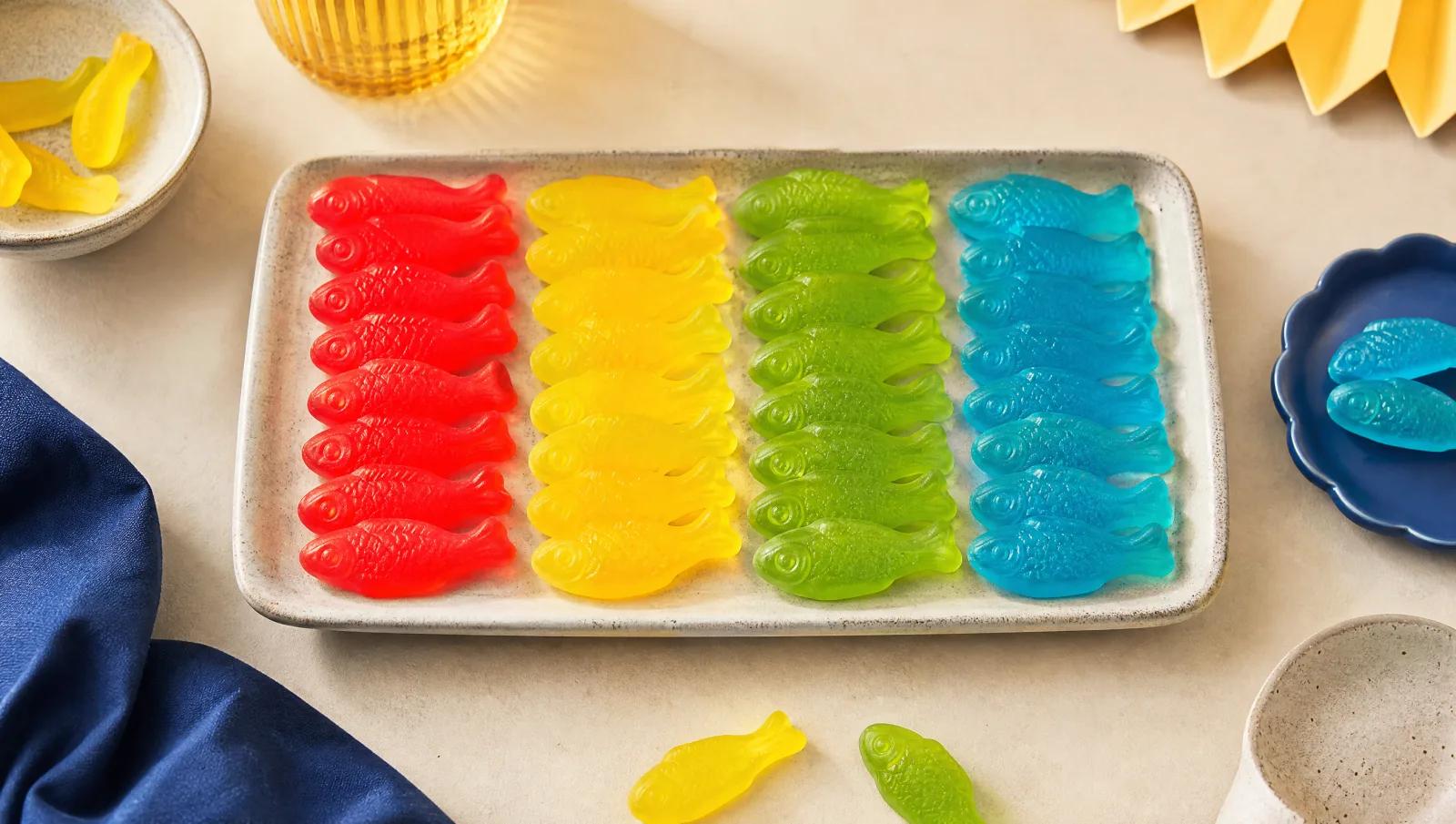
In American assortments each colour is meant to be a flavour: red is the original berry, yellow lemon, green lime, orange orange, blue raspberry. Red, white and blue packs are a July 4th merchandising idea, not a flavour set. In genuine Swedish fish candy, colour is a look, not a code.
The colour code in the US product
"Swedish Fish" is a registered US trademark of Mondelez International. We do not sell that product and are not affiliated with it, but since the colour question is almost always asked about their bag, here is what the American convention actually is.
Colour: Usually marketed as: Notes
Red: The original, sold simply as berry: The flagship piece. Fans frequently describe it as lingonberry-like, but no fruit is named on pack. What flavor are Swedish fish unpacks that argument properly.
Yellow: Lemon: Straightforward citrus
Green: Lime: Occasionally described as apple in some assortments
Orange: Orange: The least distinctive of the set
Purple: Grape: Appears in assorted and tropical packs rather than the standard bag
Blue: Blue raspberry, sometimes just "berry": A North American flavour convention with no fruit behind it
White or clear: Rarely given a fruit name: Exists mainly to complete a red, white and blue look
Two honest caveats. Assortments change, and the mix in a tropical or seasonal bag is not the mix in the standard one. And manufacturers are generally not obliged to publish a per-colour flavour list, so much of what circulates online is enthusiast consensus rather than label fact. Treat the table as a good working map, not a spec sheet.
Red, white and blue is a season, not a flavour
The red, white and blue pack is a US patriotic merchandising format that appears for Memorial Day through July 4th. The white piece is the giveaway: white is not a fruit, it is a colour needed to complete a flag palette. In practice a white gel piece is either lightly flavoured or reuses one of the existing fruits without the colour.
This is worth knowing if you are a buyer, because it means the format is easy to build yourself out of any catalogue that has a strong red, a strong blue and something white. You do not need a licensed seasonal pack to run a July display.
How colour works in genuine Swedish candy
Swedish assortments do not run a strict colour code. Colour is used to make a mixed bag look appealing and to signal broad categories (fruit, licorice, foam), not to promise a specific flavour. Ask a Swede what the pink one tastes like and you will often get a shrug.
Colour: What it usually signals in Swedish candy
Pastel pink, mint green, pale yellow: A soft mixed-fruit assortment. Differences between pieces are deliberately gentle
Deep red: Jordgubb (strawberry) or hallon (raspberry), the two dominant Swedish fruit flavours
Green: Apple, usually sour, sometimes pear
Yellow: Lemon or pineapple
Blue: Blue raspberry in sour lines, or bubblegum. Bilberry is far rarer in candy than outsiders expect
Black or dark brown: Lakrits or salmiak. Never fruit, and a real trap for American shoppers
White or cream: Usually a skum (foam) texture rather than a flavour statement
The single biggest difference: in Sweden, colour more often tells you about texture and category than about fruit. A white piece signals foam. A black piece signals licorice. That is more useful information at a pick-and-mix wall than a fruit name would be. Swedish candy flavors goes through the flavour vocabulary itself.
Why the two systems diverged
American candy grew up around a small set of fruit flavours sold in high volume, where colour had to work as a shorthand on a crowded shelf. Blue raspberry exists precisely because red was overcrowded.
Swedish candy grew up around losgodis, the pick-and-mix wall, where a customer sees the actual piece before buying and often knows the product by name. Colour never had to carry the whole message, so it was free to be decorative. The pastellfiskar format is the clearest example: pale, pretty, and only loosely flavour-differentiated. Pastellfiskar and pastel fish covers that specific product, and real Swedish fish and what Swedes actually eat covers the wider category.
Building a red, white and blue mix from Nordic stock
If you want the July display without the licensed pack, three bins will do it.
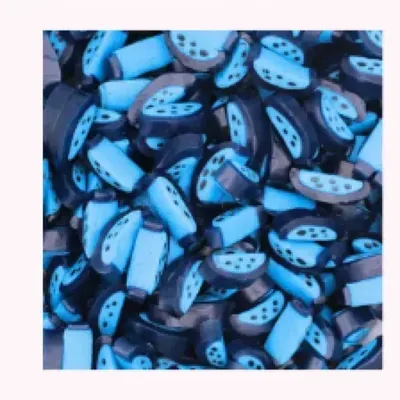
Blue. Blue Raspberry Licorice Slices, a 6.6 lb case. Licorice here means the soft layered slice format, not salty licorice flavour, which is a distinction worth putting on your bin label.
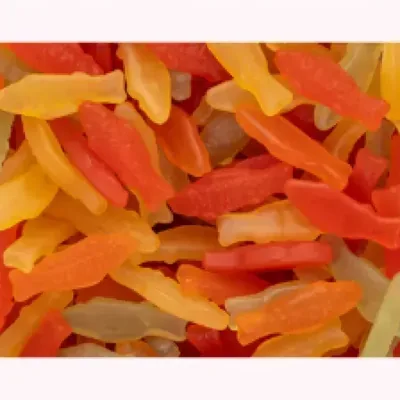
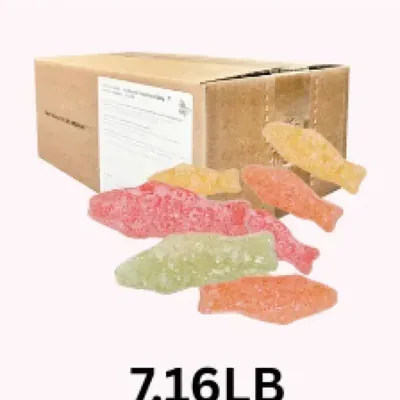
Red. Sour Swedish Fish, a 7.16 lb case, gives you a red-family fish shape with a sour finish. Pastel Fish gives you a softer classic if you want the polished version instead.
White. Foam is where white comes from in Nordic candy. Franssons Foam Strawberries in a 2.65 lb case bring pale foam texture into the display and break up two bins of gel.
None of those four carry a dietary claim in our listings, so read the case label if a customer asks.
A three-colour display, built from Nordic stock

Ordering
Cases ship from Santa Fe Springs, California, by UPS Ground or UPS Express. Canada ships DDP with duties paid at checkout, typically 3 to 5 days. Orders of $2,000 or more can move on a pallet, arranged by email.
Order by the case, mix and match across brands, no order minimum. Tier 1 wholesale pricing is public, so you can cost a three-bin seasonal display before you talk to anyone.
Frequently asked questions
What flavour is each colour of Swedish fish?+
In American assortments the usual mapping is red for the original berry, yellow lemon, green lime, orange orange, purple grape and blue raspberry. Manufacturers do not always publish a definitive list, and seasonal or tropical bags use a different mix, so treat any colour chart as a working guide.
What flavour is the red one?+
Red is the original and the one most people mean when they say they like the candy. It is sold as a berry flavour without a named fruit. The lingonberry theory is popular and plausible given the Swedish connection, but it is not a manufacturer claim.
Are red, white and blue Swedish fish a real flavour set?+
No. It is a seasonal pack built for Memorial Day and July 4th displays. White is a colour requirement rather than a flavour, which is why it is rarely given a fruit name. You can build the same look from any catalogue with a strong red, a blue and a white or cream piece.
Do Swedish fish colours mean anything in Sweden?+
Less than you would think. Colour in Swedish assortments signals category more than fruit: black means licorice or salmiak, white usually means foam texture, pastels mean a soft mixed-fruit bag. Within a pastel assortment the flavour differences are deliberately subtle rather than sharply coded.
Why is there no blue in traditional Swedish candy?+
Because blue raspberry solved an American problem. US assortments needed to separate several red flavours visually. Swedish assortments were built around a different flavour set, including licorice and foam, and never needed the fix. Blue in Swedish candy today usually arrives through sour lines built for export.
Can I mix colours across brands in one order?+
Yes. Cases are ordered individually and mixed freely across brands, with no order minimum, so a three-colour display can come from three different makers in the same shipment. Tier 1 pricing is visible on every product, so the cost of the display is easy to work out in advance.

Gustav Lindqvist · Candy Master
Gustav grew up in Sweden on a strict Saturday-candy schedule, mixing his lördagsgodis bag at the lösgodis wall before he could spell salmiak. He has spent years tasting his way across Scandinavian candy, and now curates the range at TheSweetsTruck, from BUBS sour skulls to the saltiest licorice most people cannot finish.
Last updated 9/25/2026