Pink and White Licorice Candy: What Those Pastel Pieces Are
Pink and white licorice candy is licorice layered with sweetened coconut paste. What the pieces are, where the coconut layer comes from, and what we honestly carry.

Pink and white licorice candy is the pastel corner of the licorice allsorts family. Each piece pairs a firm black licorice layer with a sweetened coconut paste tinted pink, white, yellow or blue. The coconut, not the licorice, sets the texture and carries most of the sweetness. It is a British and Northern European format, sold loose by weight. People usually meet these pieces on a pick-and-mix wall, decide they look like erasers, try one anyway, and then either love them or never touch them again. Here is what is actually in them, where the format came from, and what we do and do not import.
What is actually in the piece
There are only two components, and neither of them is a gummy.
The dark layer is licorice paste. Sugar syrup, molasses, a starch or flour binder, and licorice extract, cooked together, extruded, then cured in a warm room until it firms up. That curing step is why licorice has a dense, slightly resistant bite rather than the springy snap of gelatin candy.
The pale layer is coconut paste. Desiccated coconut bound with sugar syrup or fondant, colored, and rolled or sheeted. It is fatty, granular and very sweet. On its own it would be cloying. Against licorice it works.
The pieces are then assembled by lamination. Sheets of licorice and coconut are stacked, pressed, and sliced, or a licorice rod is wrapped in a coconut sheet and cut into rounds. Nothing is molded. That is why the edges are square and the layers are visible in cross section.
The main pastel formats
Piece: How it is built: What the bite is like
Coconut roll: A licorice rod wrapped in a coconut sheet, cut into rounds: Soft and crumbly outside, firm chew in the middle
Layer square: Alternating coconut and licorice sheets, pressed and cubed: Even chew, coconut leads, licorice finishes
Coconut wheel: A coconut disc with a licorice spiral set into it: Softest of the group, closest to fudge
Laminated slice: A layered block sliced thin, so the stripes run edge to edge: Firm, sliceable, holds its shape in a bin
The laminated slice is the format that travels furthest outside Britain. It is the shape you see on Swedish and Dutch pick-and-mix walls, and it is also the shape our own fruit-flavored slices use.
Where they come from
The allsorts idea is English. It is associated with Bassett's of Sheffield, and the company's own origin story has a salesman named Charlie Thompson dropping a tray of samples in front of a buyer in 1899, with the resulting jumble selling better than the tidy rows had. Treat that as company folklore rather than documented history, because that is what it is. What is not in doubt is that the mixed-shape licorice assortment became a British staple and then spread across Northern Europe.
The Netherlands took the coconut and licorice pairing seriously enough to make a breakfast product out of it. Kokosbrood is a layered pink and white coconut slab sold to put on buttered bread, and it is a close cousin of the candy. Dutch licorice culture in general runs deeper and saltier than the Swedish version, which we get into in Swedish vs Dutch licorice.
In Sweden the pastel coconut pieces sit in the licorice section of the lösgodis wall, usually next to the salty stuff. They are the gateway piece. Nobody starts on salmiak.
How they taste, honestly
Coconut arrives first, then anise, then the licorice. If you dislike licorice because you dislike anise, the coconut will not save you, because anise is the note that carries. If your objection to licorice is the salt and the mineral edge of salmiak, these are a different experience entirely, since sweet licorice contains no ammonium chloride. Whether that makes them worth eating is a matter of taste, and it splits people cleanly. Our piece on whether salty licorice is an acquired taste covers the harder end of the same shelf.
What we actually import
We should be straightforward here. We do not currently carry coconut licorice allsorts, and we do not carry salty licorice. Our range is Swedish and European gummy, foam, chew and sour lines.
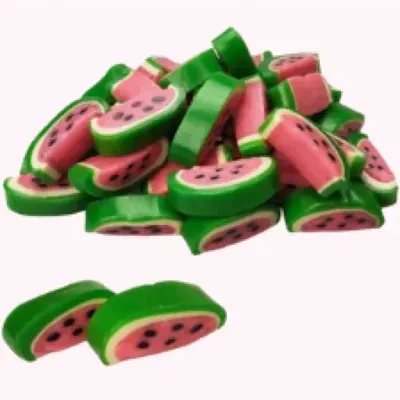
What we do carry is the laminated sliced format, in fruit flavors rather than coconut: Blue Raspberry Licorice Slices and Watermelon Licorice Slices, both in 6.6 lb cases. Same construction, same firm sliceable bite, different flavor world. Our supplier data does not carry dietary flags on either of those two items, so we publish none. If you need the spec on a specific case, ask and we will send exactly what we hold.
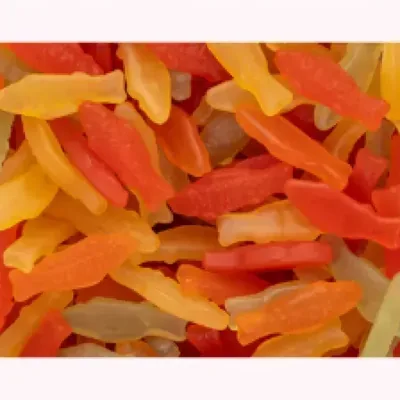
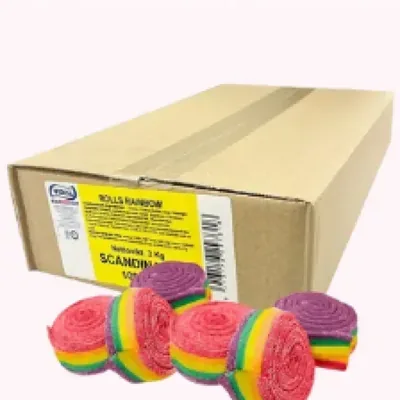
For the pastel look without the licorice, Pastel Fish and Rainbow Rolls do the same visual job on a wall.
For retailers
Pastel pieces earn their bin space on appearance before flavor. A Swedish candy wall drifts toward red, orange and yellow very quickly, and a run of soft pink, white and pale blue breaks that up better than another sour cherry ever will. Put them at eye level in the middle of a run, not at the end.
The other practical point: laminated slices behave well in an open bin. They do not clump the way sugared gummies do in warm weather, they do not lose their shape, and a scoop lifts them cleanly. That matters more than it sounds like it should, and we cover the rest of it in how to run pick and mix and the pick and mix wall guide.

Frequently asked questions
What is pink and white licorice candy?+
It is licorice paste layered with sweetened coconut paste that has been tinted pink, white or another pastel color. It belongs to the licorice allsorts family. The coconut layer supplies the sweetness and the soft texture, while the licorice supplies the color and the anise flavor.
Is the white layer coconut or fondant?+
Coconut, in the traditional versions. It is desiccated coconut bound with sugar syrup or fondant, which is why it is granular rather than smooth. Some cheaper pieces use a plain fondant with coconut flavoring instead, and you can usually tell by looking at the cut edge.
Are licorice allsorts the same as pink and white licorice?+
Pink and white pieces are a subset of allsorts. A full allsorts mix also includes plain licorice batons, jelly-topped rounds, and coated buttons. The pastel coconut pieces are the ones people picture when they search for pink and white licorice.
Do these taste strongly of licorice?+
Less than plain licorice does. The coconut layer dilutes it and adds fat and sugar, so the anise note is present but softened. They are nothing like salty licorice, which uses ammonium chloride and is a separate category. See [what is salmiak](/journal/what-is-salmiak) for that end of the shelf.
Do you sell coconut licorice allsorts wholesale?+
Not at the moment. We import Swedish and European gummy, foam, chew and sour lines, and we would rather say so than imply we can source anything with the word licorice on it. The closest format we stock is the fruit-flavored licorice slice.
What is the closest thing you carry to a pink and white licorice piece?+
The Blue Raspberry and Watermelon Licorice Slices. Same laminated, sliced, firm-bite construction, in fruit flavors. For the pastel color story on a wall, Pastel Fish is the other obvious pick.

Gustav Lindqvist · Candy Master
Gustav grew up in Sweden on a strict Saturday-candy schedule, mixing his lördagsgodis bag at the lösgodis wall before he could spell salmiak. He has spent years tasting his way across Scandinavian candy, and now curates the range at TheSweetsTruck, from BUBS sour skulls to the saltiest licorice most people cannot finish.
Last updated 8/23/2026