Sugar Free Licorice Candy: What Replaces the Sugar
Sugar free licorice uses sugar alcohols plus a high intensity sweetener. What each one does, the digestive caveat stated plainly, and what to tell customers.
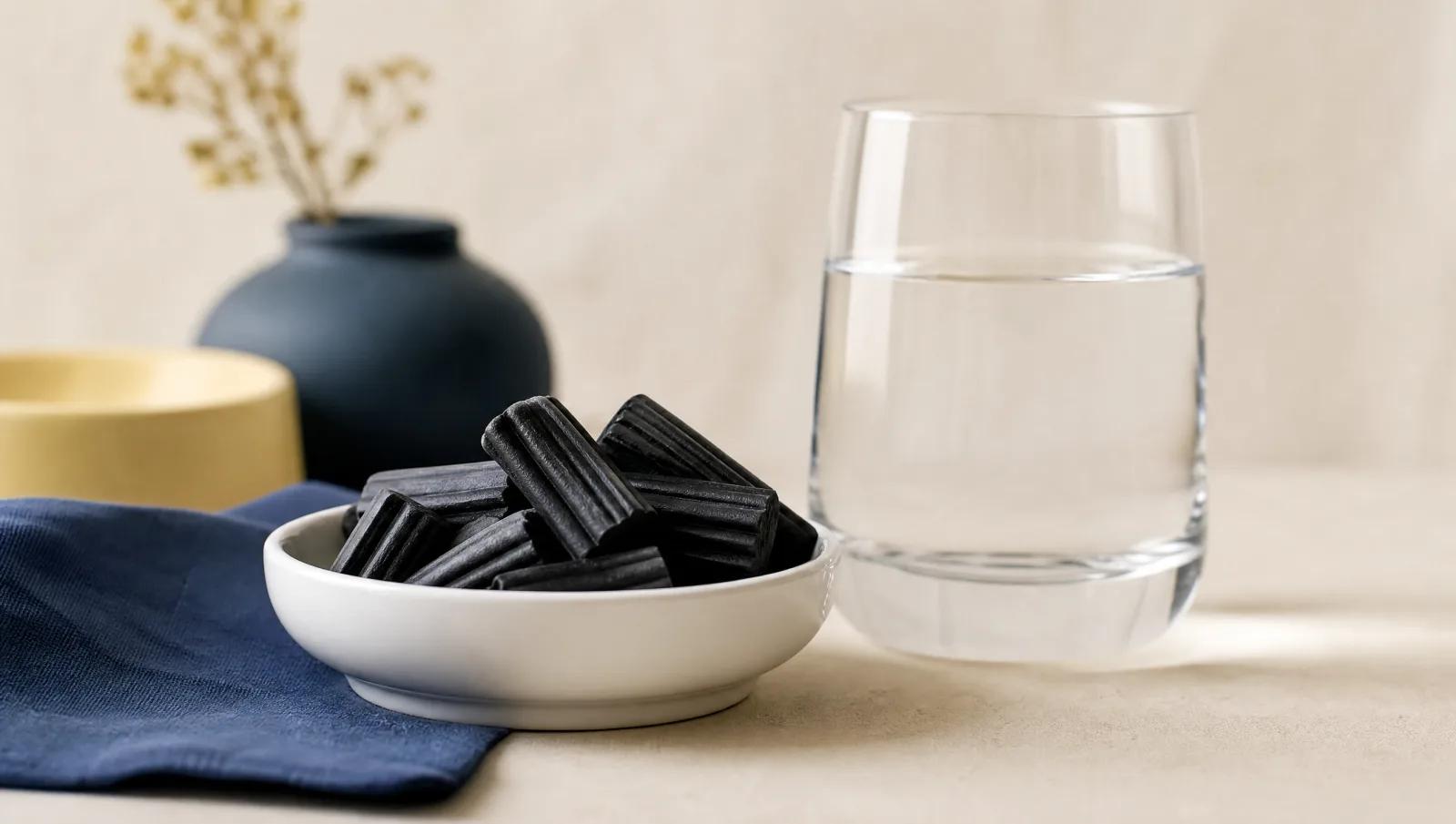
Sugar free licorice replaces sucrose and glucose syrup with sugar alcohols, usually maltitol, isomalt or sorbitol, plus a high intensity sweetener such as steviol glycosides or sucralose to restore the sweetness. Isomalt is the common base for hard licorice drops and maltitol syrup for soft licorice. Sugar free is not calorie free, and sugar alcohols upset some people's digestion. This is a category where the honest answer sells better than the enthusiastic one. Here is what goes into the piece, the caveat every retailer should be able to state in one sentence, and where we stand on stocking it.
Sugar does two jobs, so the swap needs two ingredients
In an ordinary licorice sweet, sugar is structural as well as sweet. It provides bulk, controls how the paste sets, holds water in the piece so it stays chewable, and in a boiled drop it forms the glass that makes the candy hard.
Take it out and you have to replace both jobs, which is why sugar free confectionery almost always uses two sweeteners rather than one.
A bulk sweetener does the physical work. These are the sugar alcohols, also called polyols. They are roughly as bulky as sugar but only partly as sweet.
A high intensity sweetener makes up the missing sweetness at tiny doses. Steviol glycosides (stevia), sucralose and acesulfame K are the usual choices. They contribute no bulk at all.
What each sugar alcohol is used for
Sweetener: Typical use in licorice: Notes
Isomalt: Boiled and hard pieces: Very stable, resists moisture pickup, low sweetness so it needs help
Maltitol syrup: Soft and chewy licorice: Closest handling to glucose syrup, which is why it dominates
Sorbitol: Soft pieces, humectant: Keeps the piece from drying out, the most laxative of the common polyols
Xylitol: Coatings, pastilles: Cooling mouthfeel, roughly as sweet as sugar
Erythritol: Blends and coatings: Almost no calories, mostly absorbed before the large intestine, so usually the gentlest
Stevia or sucralose: All formats: Sweetness only, no bulk, used at fractions of a percent
Roughly speaking, most sugar alcohols land somewhere near half to two thirds the calories of sugar, with erythritol close to zero. That is a real reduction, but it is a reduction, not an elimination. A sugar free licorice is a lower calorie confection, not a free food.
The digestive caveat, stated plainly
This is the part that gets glossed over, so here it is without softening.
Sugar alcohols are only partly absorbed in the small intestine. What is not absorbed passes into the large intestine, where it draws in water and gut bacteria ferment it. In practice that can mean gas, bloating, cramping and a laxative effect. Sorbitol and maltitol are the usual culprits. Erythritol is generally gentlest, because most of it is absorbed and excreted before it gets that far.
How much it takes varies enormously. Some people eat a whole bag with no effect. Others react to a handful. Anyone following a low FODMAP plan or managing IBS is likely to already know polyols are on their list.
US and EU labeling rules both require a laxative-effect statement on products above defined sugar alcohol thresholds, which is why you see wording along the lines of "excessive consumption may produce laxative effects" on the pack. That is a regulatory requirement, not a marketing disclaimer, and it is there because the effect is real and predictable.
We are candy importers, not clinicians. Nothing here is medical or dietary advice. If a customer is asking because of a medical condition, the correct answer is the ingredient panel and their own healthcare professional, not us and not you behind the counter.
Sugar free does not change the licorice
One point that gets missed entirely in the sugar free conversation.
Real black licorice is flavored with licorice root extract, whose sweetness comes from a compound called glycyrrhizin. Removing the sugar does nothing to the glycyrrhizin, because the two are unrelated ingredients. The US Food and Drug Administration has published a consumer advisory about eating large amounts of black licorice, aimed particularly at adults over forty, and it applies to the sugar free version exactly as it applies to the regular one. If that is relevant to a customer, point them at the FDA's own page rather than at a summary.
Many black candies are flavored with anise oil instead and contain little or no licorice root, which we get into in licorice hard candy. The label is the only reliable way to tell.
One genuine advantage: teeth
Sugar alcohols are not fermented by oral bacteria the way sucrose is, which is why sugar free gum and mints are the products allowed to make dental claims in most markets. That advantage is real and it is narrow. It is a claim about tooth decay, not about calories, weight, blood sugar or health in general, and it should not be stretched into one. Our piece on whether Swedish candy is healthier takes the wider version of that question.
What to tell customers, in three sentences
If you stock sugar free confectionery, train the counter on this and nothing more.
1. "Sugar free, not calorie free. It has fewer calories, not none."
2. "It is sweetened with sugar alcohols. Some people find they upset their stomach, so start with a small bag."
3. "The ingredients and the warning are on the back. If it matters medically, read it or ask your doctor."
That script is short, accurate, and it protects you. Overselling a sugar free product as healthy is how you end up with a returned bag. The labeling rules behind it are covered in FDA candy labeling.
Where we stand
Plainly: we do not currently import a sugar free licorice line, or a sugar free line of any kind. Everything on our list is sugar sweetened. We would rather state that than take an order we cannot fill.
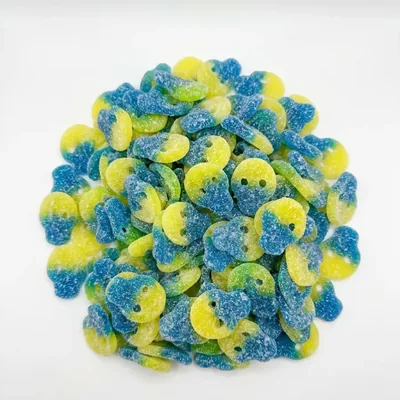
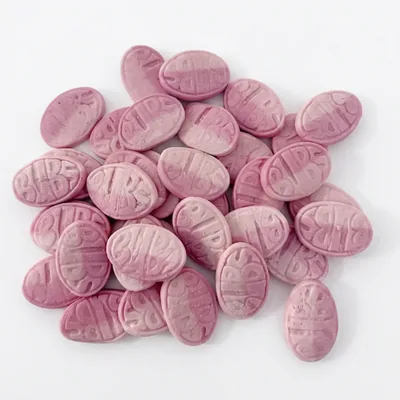
What we do publish carefully is dietary flags, and only the ones our supplier data actually carries. Every Matthijs item we hold is flagged gluten-free, halal, vegan and vegetarian, and most of the BUBS range is flagged gelatin-free and vegan. Where we have no data we publish nothing rather than guess, the same principle that stops us hand-waving about polyols. More in gluten-free Swedish candy and vegan Swedish candy.
Sugar sweetened lines with dietary flags we can stand behind
Frequently asked questions
What is sugar free licorice candy sweetened with?+
Usually a sugar alcohol doing the bulk work, most often maltitol syrup in soft licorice and isomalt in hard pieces, combined with a high intensity sweetener such as steviol glycosides or sucralose to restore the sweetness that the sugar alcohol does not provide.
Is sugar free licorice calorie free?+
No. Most sugar alcohols carry roughly half to two thirds the calories of sugar, with erythritol close to zero. Sugar free is a meaningful reduction and it is not an elimination. Treat it as lower calorie confectionery, nothing more.
Why does sugar free candy upset some people's stomachs?+
Sugar alcohols are only partly absorbed in the small intestine. The remainder passes into the large intestine, where it draws in water and is fermented by gut bacteria, which can cause gas, bloating and a laxative effect. Tolerance varies widely between individuals.
Which sugar alcohol is gentlest on digestion?+
Erythritol is generally gentlest of the common ones, because most of it is absorbed and excreted before reaching the large intestine. Sorbitol and maltitol are more often associated with discomfort. Tolerance still varies, so treat that as a pattern, not a guarantee.
Is sugar free licorice better for your teeth?+
Sugar alcohols are not fermented by oral bacteria the way sucrose is, which is the basis for the dental claims allowed on sugar free gum and mints in most markets. That is a specific claim about tooth decay and it should not be read as a broader health claim.
Do you sell sugar free licorice wholesale?+
No. We do not currently import a sugar free line in any category. Everything on our list is sugar sweetened, and we publish only the dietary flags our supplier data actually carries.

Gustav Lindqvist · Candy Master
Gustav grew up in Sweden on a strict Saturday-candy schedule, mixing his lördagsgodis bag at the lösgodis wall before he could spell salmiak. He has spent years tasting his way across Scandinavian candy, and now curates the range at TheSweetsTruck, from BUBS sour skulls to the saltiest licorice most people cannot finish.
Last updated 8/23/2026