Candy Store Business Plan: What Goes In It, With Real Case Prices
What goes in each section of a candy store business plan, in the order the SBA lists them, with a worked margin and break-even example built on real wholesale prices.
A candy store business plan sets out your concept, market, product mix, suppliers, pricing and margin, fit-out and startup costs, marketing and a first-year financial model. The numbers carry the plan, so build them from real wholesale case prices. At September 13, 2026 case prices, our example lands at $7.39 per lb and a 66 percent gross margin before shrink.
This guide follows the section order the US Small Business Administration lists and fills each part in for a candy shop. The practical steps to open, from lease to licensing to fixtures, live in how to start a candy store, so they are not repeated here.
What sections does a candy store business plan need?
The SBA's guide to writing a business plan describes two formats. A lean startup plan is a quick, high-level version. A traditional plan goes into detail and suits you if you plan to seek traditional financing. Its sections, translated for a candy shop:
- Executive summary: the shop, the location, the customer, the money you need and when you expect to break even. Write it last.
- Company description: your concept, in one sentence a customer could repeat.
- Market analysis: who buys candy near you, who already sells it, and at what price.
- Organization and management: who owns the shop, who works the counter, and when.
- Service or product line: the assortment, the suppliers and the case economics.
- Marketing and sales: how people find the shop and why they come back.
- Funding request: how much you need and what it pays for, if you are raising money.
- Financial projections: SBA suggests forecast income statements, balance sheets and cash flow statements for five years, with monthly or quarterly detail for the first year.
How do you write the concept and market sections?
Start with the concept, because it filters every later decision. "Swedish pick-and-mix with a gift counter" tells a lender or landlord far more than "a fun candy store", and our startup guide lists concepts that work.
For the market, SBA's market research guide asks you to assess demand, market size, economic indicators, location, market saturation and pricing, and it points to research resources such as the Census Business Builder. Make it concrete for candy:
- Competition: every shop within a short drive that sells candy by weight, imported candy or gift boxes.
- Price benchmark: what each of them charges per pound, which shows where your own price can sit.
- Traffic: the footfall your location depends on, and the days and seasons when it peaks.
What goes in the product line and supplier section?
List the opening assortment by format rather than flavor: sour, foam, gummy and licorice-style. Our startup guide suggests opening with a dozen to two dozen bins and expanding into what sells, and candy category management covers the prune-and-deepen rhythm once sales data arrives.
Then name each supplier and its terms, because terms drive cash flow. For our range, the plan should record:
- Ordering: by the case, mix and match, no order minimum. Tier 1 case prices are public on every product page, ordering needs a wholesale account, and applications approve automatically.
- Shipping: US orders ship from Santa Fe Springs, California, by UPS Ground or UPS Express. Orders of $2,000 or more can go by pallet, with freight agreed by email.
- Payment: card at checkout, or Earned Credit. An approved account's credit line equals its largest paid, delivered order, up to an account limit, and it can be spent at checkout on NET-14 terms, with a card covering any difference.
How do you show pricing and margin with real numbers?
At Tier 1 case prices on September 13, 2026, the worked example looks like this. Pull current prices from the product pages before you build your own model.
- BUBS Banana: $47.90 for a 6.17 lb (2.8 kg) case, or $7.76 per lb.
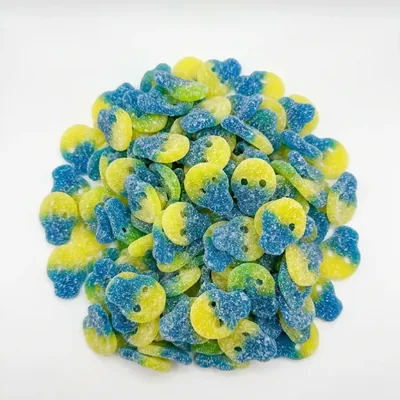
- Matthijs Swedish Skulls: $36.00 for a 4.41 lb (2 kg) bag, or $8.16 per lb. The same page also sells a case of six.
- S-Märke Sour Strawberry: $59.00 for an 8.81 lb (4 kg) case, or $6.70 per lb.
- Franssons Foam Strawberries: $19.90 for a 2.65 lb (1.2 kg) case, or $7.51 per lb.
Together that is $162.80 for 22.04 lb (10 kg), a blended $7.39 per lb before shipping. Add your UPS cost to each order to get a true landed cost.
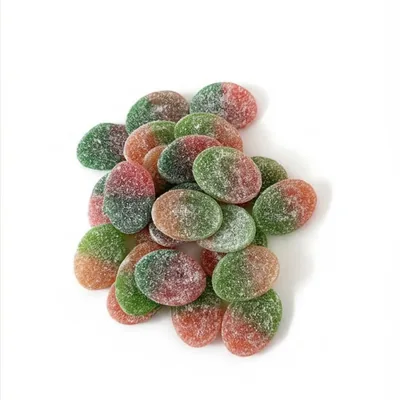
The four products in the worked example


Next, set the price. How to price Swedish candy treats keystone (2x cost, a 50 percent margin) as the floor and says most Swedish candy supports 3x to 4x, a 65 to 75 percent margin. At $22 per lb, just under 3x, this mix earns a 66 percent gross margin, and a quarter-pound scoop (4 oz, or 113 g) sells for $5.50. Our margin guide explains the same per-pound method for pick-and-mix.
Then allow for shrink. Our shrinkage guide treats 2 to 4 percent by weight as normal for a busy open-scoop wall. At 3 percent, you sell 21.38 lb of the 22.04 lb, take in about $470 and keep about $308 after the $162.80 product cost, a 65 percent gross margin before shipping.
How do you build the startup budget and first-year model?
Split costs the way SBA's startup cost guide does. One-time expenses include major equipment, permits, licenses and fees. Monthly expenses include rent, salaries and utilities, and SBA suggests counting at least one year of them and adding about 10 percent to your break-even analysis for costs you cannot predict. For a candy shop, add the fixtures from our startup guide (lidded bins, scoops, a legal-for-trade scale, bags and lighting), plus permits, deposits and the opening order.
Break-even follows from gross profit per pound. With 3 percent shrink spread across the pounds you sell, each pound at $22 carries about $7.62 of product cost and leaves about $14.38 of gross profit. So:
- Every $1,000 of monthly fixed costs needs about 70 lb (32 kg) of candy sold.
- In a 30-day month, that is about 2.3 lb (1 kg) a day, or roughly nine quarter-pound scoops.
Multiply by your own rent, wages and utilities, plus SBA's 10 percent, and you have the daily sales your location must deliver. Model the first year by quarter or even by month, as SBA suggests, and plan reorders on the steady weekly or two-week cadence our category guide recommends, so cash does not sit in slow bins.
Earned Credit belongs in the cash-flow tab. If your largest paid, delivered order came to $162.80, your credit line would be $162.80, subject to the account limit. A $250 reorder could then put $162.80 on NET-14 terms and $87.20 on a card.
When your plan is ready, apply for a wholesale account to order, or browse the store and build your own assortment from the public Tier 1 case prices.
Frequently asked questions
How do you write a business plan for a candy store?+
Follow the SBA's traditional format: executive summary, company description, market analysis, organization and management, product line, marketing and sales, funding request and financial projections. For a candy shop, the product line and the numbers carry the most weight, so price the assortment from real wholesale case prices and model the first year month by month.
How do you open a candy store?+
Write the plan, then work through the setup: a one-sentence concept, a one-page cost model, the lease, local licensing, fixtures, an opening assortment and suppliers. Buy the first order wide and shallow, track what sells for ninety days, and reorder into the winners. Ordering by the case with no order minimum keeps that first buy small.
How much does it cost to open a candy store?+
There is no honest single figure, because rent and fit-out vary so much by location. List one-time costs, such as fixtures, a scale, permits, deposits and opening inventory, separately from monthly costs like rent, wages and utilities. Count at least a year of monthly costs and add about 10 percent to your break-even analysis, as the SBA suggests.
What profit margin does a candy store make?+
It depends on markup and shrink. Pricing Swedish candy at 3x to 4x landed cost gives a 65 to 75 percent gross margin, with keystone (2x, a 50 percent margin) as the floor. In our worked example, four products at a blended $7.39 per lb (Tier 1 case prices on September 13, 2026), sold at $22 per lb with 3 percent shrink, earn about 65 percent before shipping.
How much candy do you need to sell to break even?+
Divide your monthly fixed costs by your gross profit per pound. In our worked example, selling at $22 per lb with 3 percent shrink, every $1,000 of rent, wages and utilities needs about 70 lb of candy sold, roughly 2.3 lb a day in a 30-day month. Add a buffer for costs you cannot predict.
Can a new candy store get payment terms from a supplier?+
Not from day one. With us, terms come through Earned Credit rather than a fixed term. An approved account's credit line equals its largest paid, delivered order, up to an account limit, and you can spend it at checkout on NET-14 terms, with a card covering any difference. Otherwise you pay by card at checkout.
Keep reading

Gustav Lindqvist · Candy Master
Gustav grew up in Sweden on a strict Saturday-candy schedule, mixing his lördagsgodis bag at the lösgodis wall before he could spell salmiak. He has spent years tasting his way across Scandinavian candy, and now curates the range at TheSweetsTruck, from BUBS sour skulls to the saltiest licorice most people cannot finish.
Last updated 10/7/2026