Why Swedish Candy Went Viral (and What Makes It Different)
The Swedish candy wave has a paper trail: New York shops in 2023, a TikTok supply squeeze in 2024, and coverage still going in 2025. Here is what made it travel, what it tastes like, and why imported cases cost more than candy made at home.
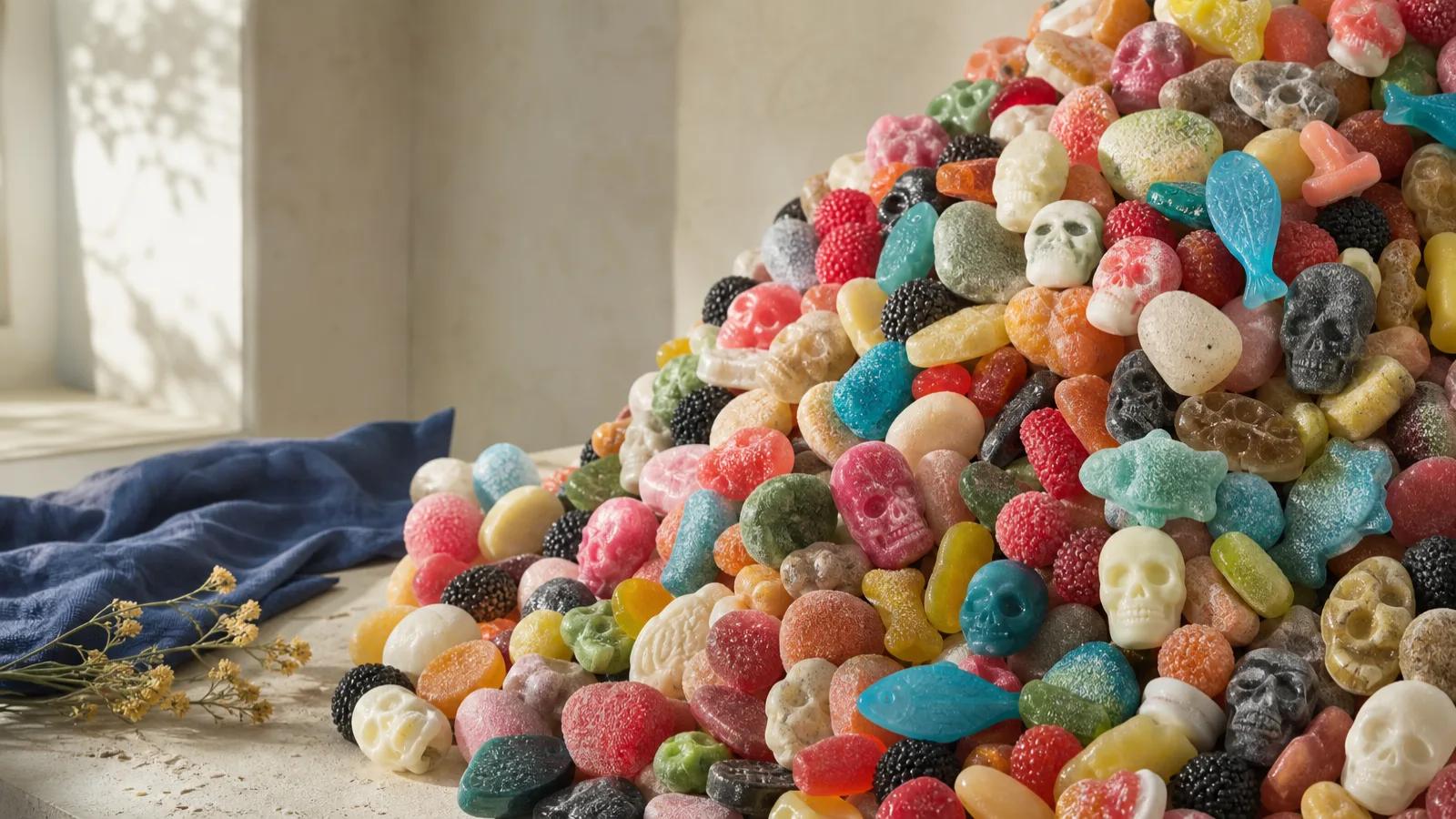
Swedish candy went viral because its bright shapes suit short video, its pick-and-mix format supplies endless variety, and it tastes different: sharper sour, more salt, softer foam. News coverage followed the shop scene from 2023 through 2025. The higher price in America reflects import costs more than anything else.
This page lays out the sourced timeline, what actually made the candy travel, and which in-stock cases show the style. The brand story is in our BUBS story: a family business in Huskvarna that grew into the candy many non-Swedes try first.
When did Swedish candy go viral?
The wave has a paper trail, and it starts with shops rather than algorithms. In September 2023, The New York Times reported that BonBon, a Swedish candy store, was expanding across New York City, adding an Upper East Side branch after opening on the Lower East Side and in Williamsburg.
By August 2024, demand had grown enough that Bloomberg reported TikTok-driven Swedish candy obsession was squeezing global supply chains, with no sign of slowing down.
In July 2025, TASTE described BonBon with five locations in New York City among six in total, a cult following on TikTok, and a pick-and-mix range imported entirely from Sweden. In October 2025, the Times Style section was still treating the candy counter as content, in a piece about candy shops as content for feeds.
Read those four dates together and the shape of the trend is clear. This was not one viral week that vanished. It was a slow build through physical retail, a spike when the videos found it, and a supply chain that has been playing catch-up since. The candy was already good; the timing was about cameras and shops.
What actually made it travel?
Four things, and only one of them is the candy itself.
- The look. Bright colors, unusual shapes and a wall of bins read instantly in a vertical video. The Times piece in October 2025 put color and a classic counter feel at the center of why these shops work on camera.
- The format. Pick-and-mix by weight means every visit and every clip looks different. Scooping is a small performance, and the permutations never end, which gives creators an endless supply of reasons to film the same shelf twice.
- The taste gap. Sour and salty are mainstream on a Swedish wall rather than niche, which made a first bag a story worth filming for viewers who had never met salmiak or a sour pacifier. The reaction is part of the content.
- The pressure. Demand outran supply. The August 2024 Bloomberg report was about global supply chains straining under the trend.
Notice what is not on that list: celebrity endorsements or a marketing campaign. The category grew the old way, through shops and word of mouth, with short video as the accelerator.
Which, by the way, is exactly how we ended up spending our weeks moving Swedish cases into US and Canadian stores. The demand is real on the receiving end.
Is Sweden actually a big candy country?
Yes, and the habit is far older than the trend. What is well documented: Sweden consistently sits among the top per-capita candy consumers, buying clusters on Saturdays instead of spread across the week, and the dominant retail format is pick-and-mix by weight. The specific number most people quote, kilograms per Swede per year, is exactly the kind of figure we refuse to repeat without its definition attached, because sources disagree on what gets counted. The shape of the habit is stable even when the digits are not. We go through what is and is not documented in Swedish candy consumption.
What makes Swedish candy different?
Texture first: a Swedish wall is built on contrast between soft foam (skum), dense chew, jelly, and coatings that carry real acidity. Flavor second: sour and salty run through the assortment, and the fruit register leans berry, cola and licorice rather than caramel and chocolate.
- Sourness: the sour end runs sharper than most US candy aisles expect, and it is a category rather than a novelty. The coating work is covered properly in our sour gummy explainer.
- Salt: salmiak, salty licorice, is a staple rather than an outlier, and it divides newcomers cleanly into two camps.
- Texture: foam pieces are whipped and light, chews are firm, and the mix inside one bag is wider than a typical American assortment.
- Format: sold loose by weight, which is why the pieces are shaped to be recognized in a bin rather than on a wrapper.
The long taste argument, including why the pick-and-mix format rewards quality, is in why Swedish candy is so good.
Why is Swedish candy so expensive in the US?
Mostly because a case crosses an ocean before it reaches a shelf. Freight, customs clearance and duties, inland trucking to the warehouse, storage and US distribution all sit inside the landed cost, and candy made domestically skips every one of those steps. Nothing is marked up for mystique; the import stack is simply real.
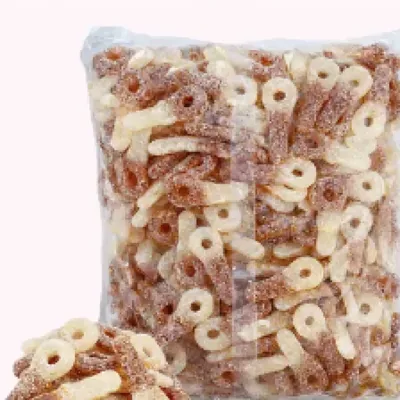
Here is the arithmetic from our own published case prices. BUBS Cola Skulls list at $50.90 for a 6.61 lb (3 kg) case, which works out to $7.70 per lb computed from that published case price, and Sura Cola Pacifiers at $49.90 for 6.61 lb (3 kg) come to $7.55 per lb the same way. Nothing in either ingredient list is rare or exotic. The logistics are the difference.
Ordering is by the case, mix and match, with no order minimum; ordering takes a free wholesale account, and applications approve automatically. We keep a wider look at tiers and landed math in what Swedish candy costs in the US.
Which Swedish candies do people try first?
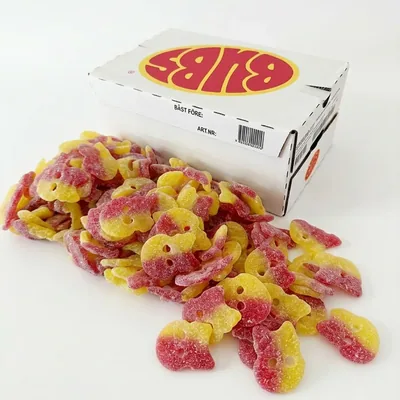
The starter set has held steady since the wave began: sour skulls, cola pacifiers, and raspberry shots. The two BUBS lines anchor the list, and the rest of their range is on the BUBS brand page. Sourness is a matter of taste, so read the notes as a guide rather than a measurement.
- BUBS Cola Skulls: soft foam-and-jelly skulls with a mild cola tang, the classic first pick. Texture: pillowy with a chewier face. Tags as listed: gelatin-free, vegan. A 6.61 lb (3 kg) case; $7.70 per lb computed from the published $50.90 case price.
- BUBS Lemon/Raspberry Skulls: the sharper half of the skull family, with lemon cutting through the berry. Texture: soft and giving rather than dense. Tags as listed: gelatin-free, vegan. A 7.05 lb (3.2 kg) case; $7.36 per lb computed from the published $51.90 case price.
- Sura Cola Pacifiers: flat, wide pacifier discs that carry more coating per gram than a standard gummy, so they eat sharper than they look. Tags as listed: halal, vegan, and the ingredient list we hold names wheat. A 6.61 lb (3 kg) case; $7.55 per lb computed from the published $49.90 case price.
- Hallonshots Raspberry Sour Shots: small chewy shots under a raspberry sour coating that fades slowly. Tags as listed: none. The ingredient list we hold names gelatin. A 7.72 lb (3.5 kg) case; $6.72 per lb computed from the published $51.90 case price.
The viral-era picks we stock


Is Swedish Fish the same thing as Swedish candy?
No. The red fish sold in American stores is an American candy that borrowed a Swedish-sounding name; it is not what a Swedish pick-and-mix wall is built from. The Swedish classics are skulls, foam ovals, sour discs and salty licorice, and the real story of what Swedes eat instead is in real Swedish fish. Clearing up that one confusion before you shop saves disappointment on both sides of the counter.
Is the Swedish candy trend over?
Not according to the coverage we can point to. TASTE treated the scene as thriving in July 2025, and the Times was still writing about it in October 2025. Demand also left a physical mark: Bloomberg's August 2024 report was about supply struggling to keep up, which matches what we see in the warehouse, where the sour lines are the ones that run down first. Restocking them is a standing job rather than a seasonal one.
If you sell candy, trend posts tend to outlive trends; the format is what lasts. A wall works because the candy was built for it, and that part long predates TikTok.
Browse the store to see the current cases, or start with what Swedish candy is if this is your first bag.
Frequently asked questions
Did Swedish candy really go viral on TikTok?+
Yes, and the timeline is documented rather than vibes. The New York Times covered the shop expansion in September 2023, Bloomberg reported TikTok-driven demand squeezing supply chains in August 2024, and TASTE and the Times were still covering the scene in 2025. That is the part we can source. The specific view counts and sales multiples that circulate online usually cannot be traced, which is why this page dates every claim instead of repeating them.
What makes Swedish candy different from American candy?+
The range does more in two directions: sour and salty. A Swedish wall carries foam, dense chew, jelly and heavy sour coating side by side, and salty licorice is a standard rather than an experiment. Texture contrast is the point of a mixed bag. Taste is personal, so treat all of that as a description of the range rather than a promise about any single piece.
Why is imported Swedish candy so expensive?+
Import costs. Cases cross the Atlantic, clear customs with duties, ride a truck to the warehouse and sit in storage before they ship onward, and none of those steps apply to candy made locally. The public Tier 1 price on any product page divided by the case weight shows the real per-pound number; the gap to domestic candy is logistics, not mystique.
Is Swedish candy vegan?+
Some of it, and the tags tell you which. The BUBS skull lines we stock carry gelatin-free and vegan tags. The Sura pacifier lines carry halal and vegan tags. Several other lines name gelatin in the ingredient text we hold. Tags come from the listing, recipes change between production runs, and the printed pack is always the final word.
What should a first-timer buy?+
One foam piece, one sour piece and one chewy piece makes a fair test flight: the cola skulls for foam, a sour pacifier or a sour skull for the sour end, and a raspberry shot for chew. Add salty licorice last, and only if you are curious. The point is contrast, because that is how a Swedish bag is built and how the wall is meant to be read.
Where do I start buying?+
The store carries these cases as single units for home, and shops order wholesale by the case from the same catalogue once a free account is open. If you liked the style in the videos, start where the videos started: a sour skull, a cola pacifier, and one piece that scares you a little.
Keep reading

Gustav Lindqvist · Candy Master
Gustav grew up in Sweden on a strict Saturday-candy schedule, mixing his lördagsgodis bag at the lösgodis wall before he could spell salmiak. He has spent years tasting his way across Scandinavian candy, and now curates the range at TheSweetsTruck, from BUBS sour skulls to the saltiest licorice most people cannot finish.
Last updated 10/16/2026