European Candy: A Country-by-Country Guide
European candy country by country: Swedish sour and foam, Dutch skull gummies and bonbons, Spanish XL jellies, German fruit chews and Italian marshmallow.
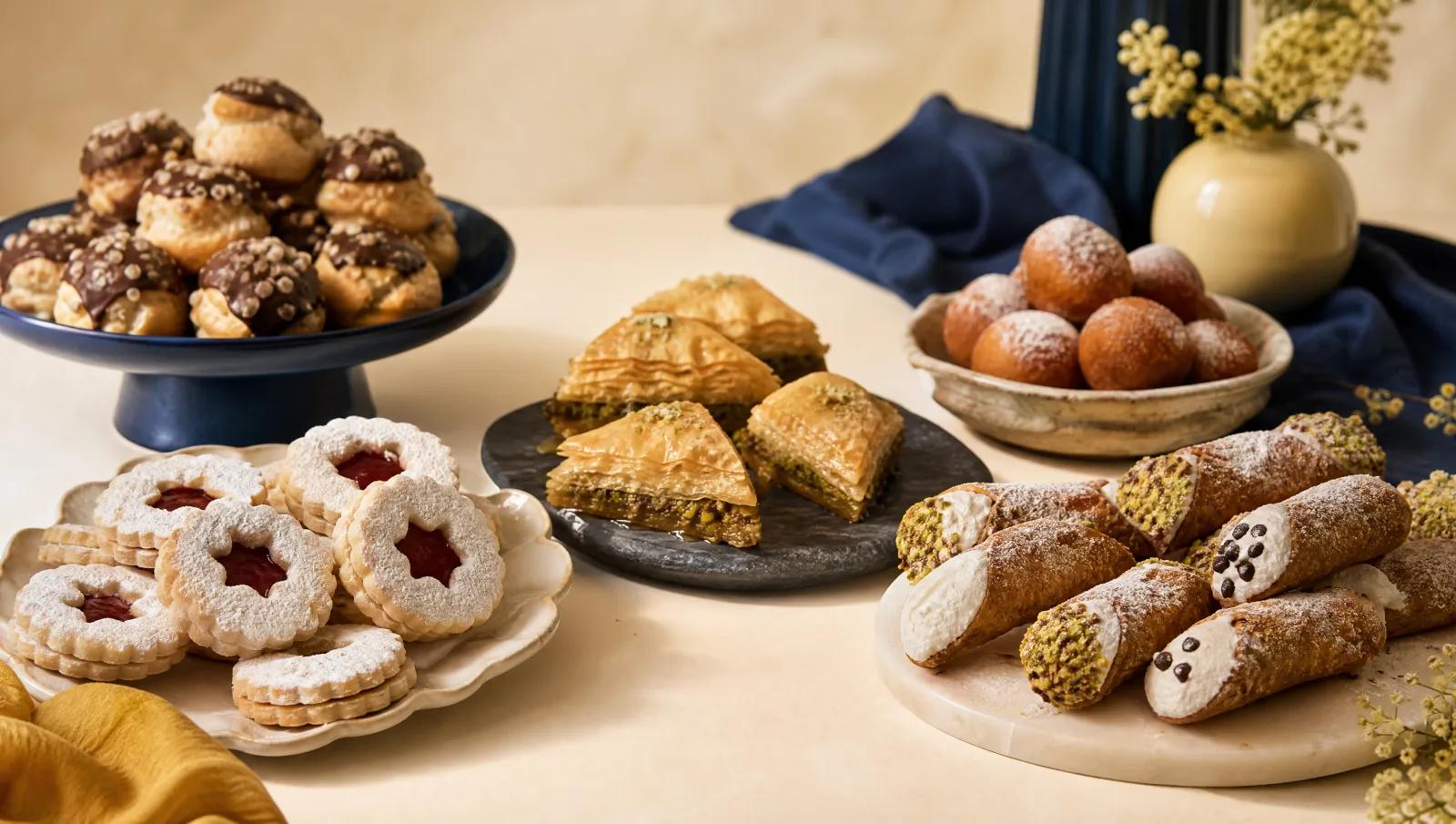
European candy is not one tradition but several. Sweden built its range around sour, fruity, foam-textured pieces sold loose by weight. The Netherlands supplies skull gummies and soft bonbons, Spain makes oversized jelly and sour formats, Germany owns the fruit chew, and Italy is the marshmallow specialist. Most European candy walls carry all five. We import from all five of those countries, so this guide is written from the loading dock rather than from a travel blog. Here is what each tradition actually does well, which makers we buy from, and how the countries fit together on one shelf.
"European candy" is a shipping term, not a flavor
Americans tend to say "European candy" the way they say "Asian food", as if it described a single style. It does not. What the phrase really describes is a continent where candy is mostly sold loose by weight, where sour is a serious category rather than a novelty, and where a handful of specialist makers supply the whole region across borders.
That last part matters more than most buyers realize. A Swedish pick-and-mix wall is not stocked exclusively by Swedish factories. Dutch, Spanish, Italian and German makers have supplied Swedish walls for decades, and Swedish shoppers pick up those pieces without ever wondering where they were made. So a genuine European candy set is cross-border by design. Our guide to what is Swedish candy covers that point in depth, and authentic Swedish candy explains why "made in Sweden" is the wrong test.
The five countries we import from
Country: Known for: Makers we carry
Sweden: Sour, fruity, foam (skum) textures, sold loose by weight: BUBS, S-Märke, Franssons, Grahns, Candy People, Mormor Lisas, Hallonshots, Aroma
Netherlands: Skull gummies, soft bonbons and caramels, foam skulls: Matthijs, Lonka, Frisia
Spain: XL jelly formats, fruit slices, heavy sour lines: Vidal
Germany: Individually wrapped fruit chews: Haribo (MAOAM)
Italy: Marshmallow and foam specialities: Bulgari
Sweden: sour, fruity, and sold by the scoop
Sweden's contribution is a whole retail format, not just a flavor. Lösgodis, loose candy bought by weight from a wall of bins, is how most Swedish candy is sold, and it shapes what gets made. When a shopper builds their own bag, variety of shape and texture beats a single hero product. That is why Swedish makers produce fish, skulls, pacifiers, mushrooms, shots, rockets and rolls rather than one flagship bar.
The two textures Sweden is best at are the firm fruit chew and skum, the light aerated foam that eats closer to a soft meringue than an American marshmallow. Our foam candy explainer covers the second one properly.
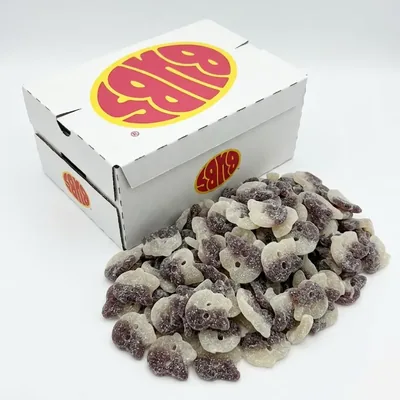
Sour is also treated as a real category with a range of intensity, not as a single gimmick flavor. S-Märke makes the big embossed sour discs, in strawberry, apple, blue raspberry, blackcurrant and watermelon, all in an 8.81 lb case. BUBS makes the chewy skulls and ovals that carried Swedish candy onto phone screens worldwide. Franssons, Grahns, Candy People and Mormor Lisas fill in foam, fizzy and sour formats around them.
For the full Swedish picture, start with Swedish candy brands and the Nordic candy guide.
The Netherlands: skulls, bonbons and foam
The Dutch are Europe's quiet suppliers. Three of the makers we buy from sit in the Netherlands, and between them they cover three completely different formats.
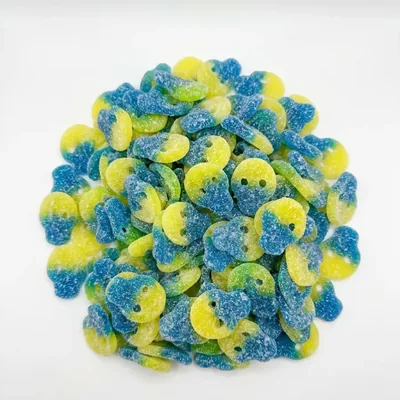
Matthijs is a Dutch family confectioner founded in 1920 and it is the skull specialist. Its pieces, including skulls named for the Swedish and Danish flags, are gummy rather than foam, and every Matthijs case we carry is flagged gluten-free, halal, vegan and vegetarian. That combination clears almost any dietary question a shopper can ask at the counter, which is rarer than it sounds.
Lonka sits at the other end of the range with soft bonbons and caramels: a tender, melt-in-the-mouth chew aimed at the coffee crowd rather than the sour crowd. Frisia makes foam skulls, which is the airy version of the Matthijs silhouette. Its name comes from the Frisian coastal region that runs along the Netherlands and northern Germany.
The Netherlands also has a licorice tradition (drop) that is genuinely national, and one we do not import. Swedish vs Dutch licorice covers that difference, and Matthijs, Frisia and Lonka covers the three makers side by side.
Spain: everything, but bigger
Spain is a major exporter of jelly and gummy confectionery within Europe, and its house style is scale. Where a Swedish piece is designed to be one of thirty things in a mixed bag, a Spanish XL piece is designed to be noticed on its own.
Vidal is the maker we buy from, and the range is built around three ideas: XL sour pieces, fruit slices in a sugared wedge, and cream-filled jellies. On a scoop wall, the XL pieces do a job no small piece can do, which is stop a shopper walking past. We cover the whole range in Vidal candy and in the Spanish candy guide.
Germany: the fruit chew
Germany's export to the world is the chew. Haribo is the name everyone knows, and MAOAM is its chewy fruit line: small, individually wrapped, taffy-like, and priced to be an impulse buy at a register rather than a shared bag. We carry the bubblegum MAOAM case plus two Happy Chews cases in the same family.
Wrapped chews solve a specific retail problem. They do not need a scoop, a bin or a scale, they survive a warm car, and they let you put a European product at the till without rebuilding the counter. If you want the wider Haribo comparison, see Swedish candy vs Haribo and the MAOAM guide.
Italy: marshmallow and foam
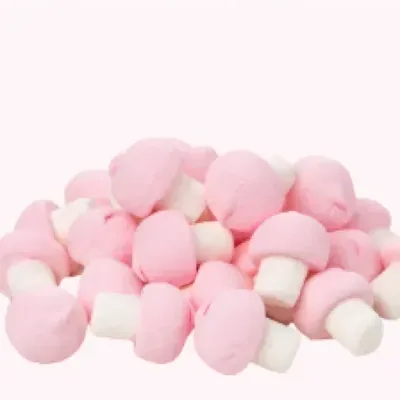
Italy's confectionery reputation abroad is usually chocolate and anise, but the piece that ends up on Northern European candy walls is marshmallow. Bulgari is the marshmallow specialist we buy from, and its mushrooms, sour strawberries and ice cream cones have anchored European walls for generations.
These are the pieces that make a candy wall look like a candy wall. They are light, so they fill a scoop bag fast, and the shapes read instantly from across a shop. Bulgari also makes a fruit jelly mix in a 2.2 lb case for the shops that want a smaller entry size. More in Bulgari candy.
What we do not import, plainly
Two honest gaps, because you will find them in any real European candy guide and not on our shelf.
We do not carry salmiak or salty licorice, from any country. We also do not carry chocolate, so the Swedish, Dutch and Italian chocolate traditions are outside our range entirely. If a customer asks for either, we would rather point you elsewhere than sell you a substitute under a European label.
Putting the countries on one wall
The practical version of all this is simple. Build the base from Sweden, because Swedish formats give you the most shapes and textures per foot of shelf. Add the Netherlands for skulls that clear dietary questions and for a soft bonbon that appeals to an adult buyer. Add Spain for the oversized pieces that create visual anchors. Add Italy for foam volume. Add Germany at the register, wrapped, where no scoop is needed.
That is five countries, five jobs, and one coherent set. Case weights and how they map to bin sizes are in our case weights reference, and the retail mechanics are in the pick and mix guide.
Frequently asked questions
What counts as European candy?+
Confectionery made by European producers in European formats, which in practice means sour and fruit jellies, foam (skum), skull-shaped gummies, licorice, wrapped fruit chews and marshmallow. It is a cross-border category: a Swedish candy wall routinely carries Dutch, Spanish, Italian and German pieces alongside Swedish ones.
Which European country has the best candy?+
That is a matter of taste, so here is the useful version instead. Sweden gives you the widest range of shapes and textures, the Netherlands gives you skull gummies and soft bonbons, Spain gives you oversized sour and jelly formats, Germany gives you the wrapped fruit chew, and Italy gives you marshmallow.
What countries do you import candy from?+
Sweden, the Netherlands, Spain, Germany and Italy. Swedish makers include BUBS, S-Märke, Franssons, Grahns, Candy People, Mormor Lisas, Hallonshots and Aroma. Outside Sweden we carry Matthijs, Lonka and Frisia from the Netherlands, Vidal from Spain, Haribo MAOAM from Germany and Bulgari from Italy.
Is European candy different from American candy?+
Yes, in permitted colorings, in sweetness and sourness balance, in how it is portioned, and in price positioning. We wrote a full comparison in [European vs American candy](/journal/european-vs-american-candy) and a Sweden-specific version in [Swedish candy vs American candy](/journal/swedish-candy-vs-american-candy).
Do you sell European licorice or salmiak?+
No. Nothing in our catalog is salmiak or salty licorice, and we do not carry chocolate either. We stock the sour, jelly, chew and foam side of the European range, and we will say so plainly rather than substitute something else.
Can US shops buy European candy wholesale without importing it themselves?+
Yes. We are the importer of record, so we land the product, handle duties and labeling, and ship from our Santa Fe Springs, California warehouse. You order by the case, mix and match, with no order minimum. Canadian orders ship DDP with duties paid at checkout.

Gustav Lindqvist · Candy Master
Gustav grew up in Sweden on a strict Saturday-candy schedule, mixing his lördagsgodis bag at the lösgodis wall before he could spell salmiak. He has spent years tasting his way across Scandinavian candy, and now curates the range at TheSweetsTruck, from BUBS sour skulls to the saltiest licorice most people cannot finish.
Last updated 8/23/2026