Ribbon Candy: How It Is Made, Why It Breaks, and Why It Is Only Sold at Christmas
What Christmas ribbon candy actually is: the pulled-sugar process, the crimping rollers, why it is so fragile, why it only appears in Q4, and how to display it.
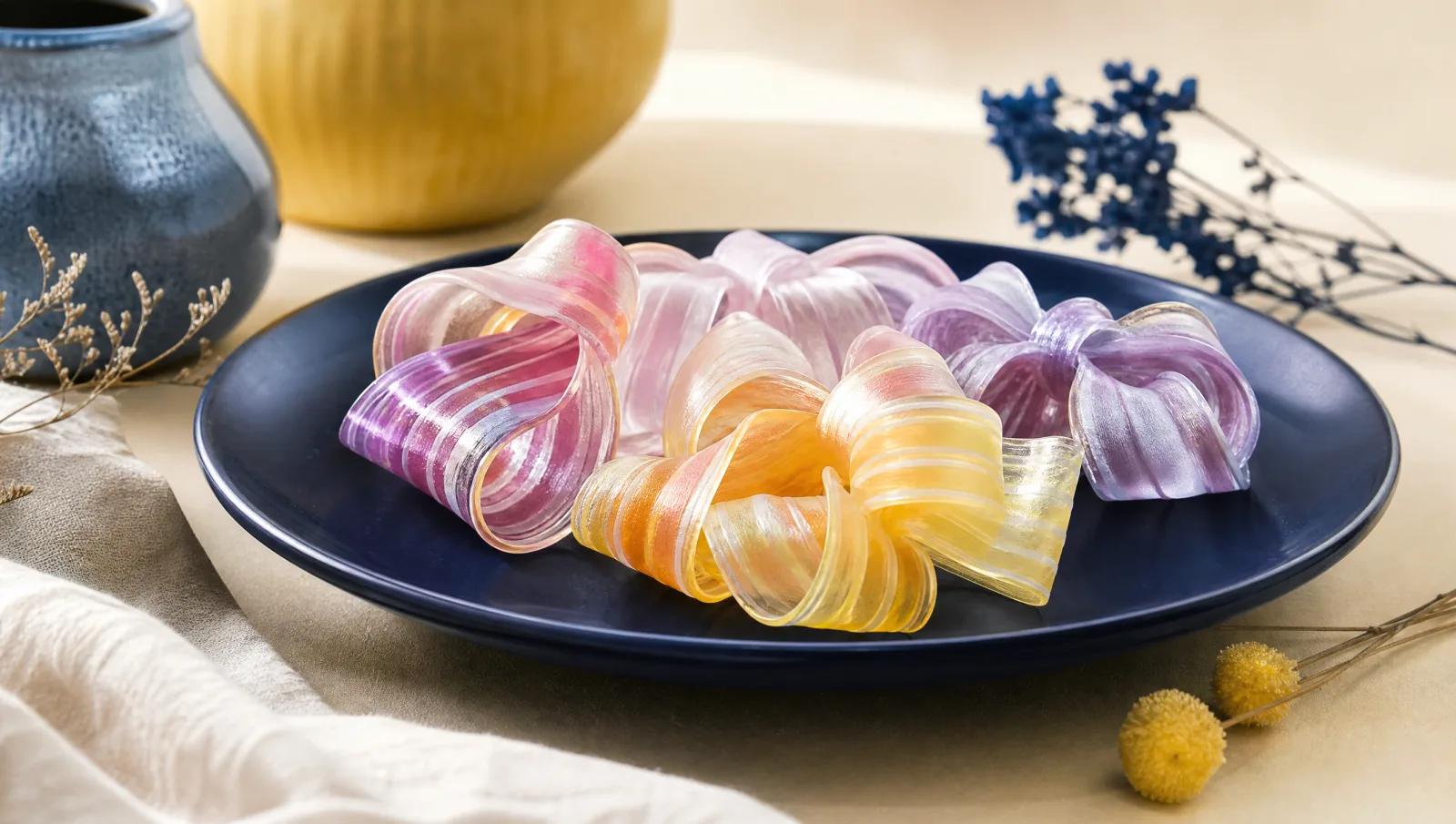
Ribbon candy is boiled sugar pulled by hand, striped, run through crimping rollers into a thin ribbed sheet, then folded into an accordion while still warm. It breaks easily because it is a thin sugar glass with folds and crimps acting as stress points, and it is seasonal because the folding is manual and the demand is decorative. We do not import ribbon candy. We import bulk Swedish and European loose candy, and ribbon candy is not part of our range. But shop buyers ask about it every autumn, so here is what it actually is, why it costs what it costs, and what to do with it on a shelf.
What ribbon candy is
A Victorian-era Christmas confection, originally hung on trees the way glass ornaments later were, before it moved into bowls and tins on the table. Structurally it is the same family as candy canes, clear toys and Swedish polkagrisar: hard-boiled sugar, worked by hand while plastic, and set as a glass.
What separates ribbon candy from the rest of that family is the finishing. The candy is thinned into a sheet, ribbed with fine parallel ridges, and folded rather than rolled or moulded. That is where all the beauty and all the problems come from.
How it is made
The process has not changed much, which is a large part of why it is still expensive.
Cook. Sugar, glucose syrup and water are boiled to the hard crack stage, roughly 300 to 310°F. At that point almost all the water is driven off and the syrup will set as a brittle glass rather than a chewy mass.
Cast and flavour. The batch is poured onto a cooled steel table. Flavour, acid and colour are folded in by hand as the edges begin to firm.
Pull. A portion of the batch goes onto a pulling hook and is stretched and folded repeatedly. This works air into the sugar in fine strands, which is what turns a clear amber batch into an opaque satin white. Pulled sugar is lighter, whiter and slightly more forgiving to work than unpulled.
Stripe. Coloured ropes are laid along the outside of the white or clear loaf. The stripe is built into the cross-section at this stage, so it survives everything that happens next. Nothing is painted on.
Rope and rib. The loaf is drawn out into a rope, flattened, and fed through a set of crimping rollers that both thin it and emboss the fine ridges. That ribbing is why ribbon candy catches light the way it does.
Fold. Still warm and still plastic, the sheet is cut and folded into the accordion, by hand or with a folding machine. This is a narrow window. A few degrees too hot and the folds slump into each other. A few degrees too cool and the sheet snaps instead of bending.
Cool and pack. It is cooled quickly to set the glass, then packed with dividers because the pieces cannot touch each other in transit.
Why it is so fragile
Four things stack up, and they all point the same way.
Hard candy is a glass, not a solid. Sugar cooked to hard crack sets as an amorphous glass, which means it does not deform under load. It takes stress until it fails, then it fails all at once. There is no bending phase.
It is thin. A ribbon is a sheet a millimetre or two thick with almost no mass to absorb a shock. A boiled fruit drop of the same weight is a compact lump and survives being dropped. A ribbon does not.
The crimps and folds are stress risers. Every ridge and every fold is a geometric discontinuity, which is exactly where a crack in a brittle material starts. The feature that makes it pretty is the feature that makes it break.
Sugar glass pulls water out of the air. Hard candy is hygroscopic. Left open in a humid room the surface picks up moisture, goes tacky, and adjacent pieces fuse. Then someone separates them and they shatter. Over longer periods the absorbed water can also trigger recrystallisation, which turns the piece cloudy and more brittle than it started. The general storage rules that follow from this are in Swedish candy shelf life.
Add shipping vibration and stacking pressure to that list and you have arguably the worst geometry in confectionery to move around a country. If you order ribbon candy, expect breakage in the box as normal rather than as a fault, and expect the packaging to cost real money.
Why it is only sold at Christmas
Three reasons, in order of importance.
The demand is decorative. Ribbon candy is bought to be looked at. Most of it is never eaten. Decorative demand attaches to an occasion, and the occasion has been Christmas since the tree-ornament days. There is no reason to buy it in June.
The labour does not scale. Hand-pulling, hand-striping and hand-folding are not processes you run continuously. Makers do a Q4 run, sell it, and move on. Limited runs and a seasonal window reinforce each other.
It does not keep well on an open shelf. Fine in a sealed tin, poor in a bowl in a warm shop. A year-round programme would mean a year-round breakage and stickiness problem for very little turnover.
The result is a product that is genuinely a Q4 item rather than a product that is merchandised as one. That is unusual, and it changes how you should buy it.
How to display and sell it
Treat it as a display item that sells the shelf around it, not as a volume item.
Never put it in a gravity bin or on a scoop wall. A bulk bin will destroy it in a day and the crumbs will migrate into everything below. If you run a wall, keep ribbon candy off it entirely. The wall rules are in how to run pick and mix.
Sell it in the container it arrived in, or in a jar. A lidded glass jar or a tin, on a counter, at eye level. Lid on when nobody is looking at it.
Handle it once. Every transfer is breakage. Do not decant, re-portion or re-merchandise it mid-season.
Keep it away from heat and steam. Not next to a coffee machine, not in a sunny window, not near a door that opens onto humid air.
Sell small units at a high price per pound. Nobody buys a large bag of ribbon candy. They buy a small beautiful one. Price accordingly.
Put it near the register. It is a pure impulse and nostalgia purchase, which is a behaviour we go through in old-fashioned Christmas candy.
What we carry that fills the same slot
To repeat, because it matters: we do not stock ribbon candy. What we do stock are bulk cases with a striped, rolled or visually decorative character that hold up in a bin and do not shatter in transit.
Tier 1 list prices below, current at the time of writing. The product page is always the authority.
Case: Case size: Tier 1 price: Why it works on a nostalgia shelf: Dietary flags we publish
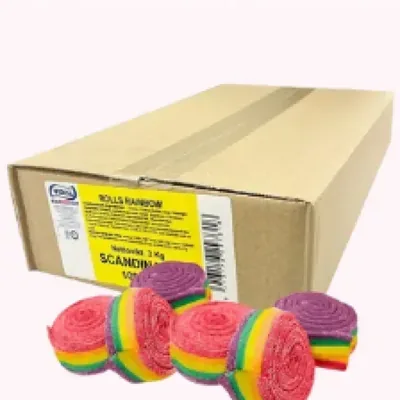
Rainbow Rolls: 6.6 lb: $42: Rolled and multicoloured, a spiral instead of a ribbon, robust in a bin: None on file
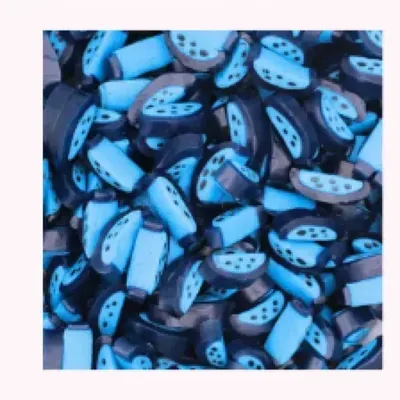
Blue Raspberry Licorice Slices: 6.6 lb: $46: Striped cross-section, sliced format, reads as decorative: None on file
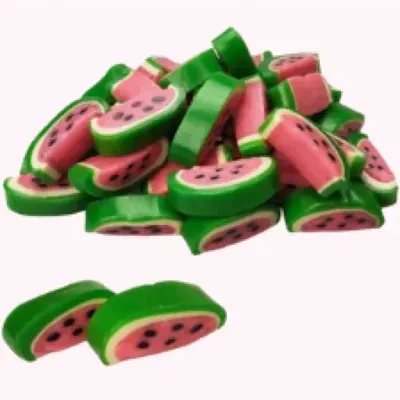
Watermelon Licorice Slices: 6.6 lb: $39: Layered colour, holds shape, high visual impact per bin: None on file
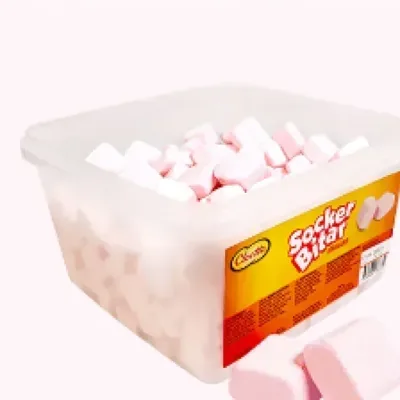
Strawberry Sugar Cubes (Sockerbitar): 1.81 lb: $10: Small unit, sugar-rolled, jars beautifully next to a tin: None on file
None of those four carry dietary flags in our supplier data, so we publish no claim on any of them. If you need a bin you can sign confidently, the Matthijs line is flagged gluten-free, halal, vegan and vegetarian.
Decorative formats that survive a bin
If it is the hard-candy character you are after rather than the ribbon shape, licorice hard candy covers the boiled-sugar end of the Nordic range, and Swedish candy textures explains where hard, chewy, foam and gummy sit relative to each other.
Ordering
Order by the case, mix and match across brands, with no order minimum. If you are building a Christmas nostalgia table, one striped case and one small sugar-cube case is a cheap test.
We ship from Santa Fe Springs, California, by UPS Ground or UPS Express, about two business days across the US. Canada ships DDP with duties paid at checkout, typically three to five days. Orders of $2,000 or more can go by pallet, arranged by email. Tier 1 pricing is public, wholesale accounts approve automatically when you apply, and NET payment terms are offered to selected partners based on order history.
Frequently asked questions
What is ribbon candy made of?+
Sugar, glucose syrup and water boiled to the hard crack stage, roughly 300 to 310°F, then coloured, flavoured, pulled by hand to aerate it, striped, ribbed through crimping rollers and folded warm into the accordion shape.
Why is ribbon candy so fragile?+
It is a very thin sugar glass. Glass does not bend, it fails outright, and the ribs and folds concentrate stress exactly where a crack wants to start. Humidity makes it worse by fusing pieces together, which then break when they are separated.
Why is ribbon candy only available at Christmas?+
The demand is decorative and attached to Christmas, the pulling and folding are manual so makers do a single seasonal run, and the candy does not hold up on an open shelf in a warm shop for months at a time.
How should ribbon candy be stored?+
Sealed, cool and dry, with dividers between layers so pieces do not touch. Keep the lid on any display jar, and keep it away from coffee machines, sunny windows and humid doorways.
Do you sell ribbon candy wholesale?+
No. We import bulk Swedish and European loose candy by the case. For a nostalgia shelf we can supply striped, rolled and sugar-rolled formats that survive a bin and a UPS trip, which ribbon candy does not.
Is there a minimum order?+
No. Order by the case, mix and match, with no order minimum, so testing one decorative case costs very little.

Gustav Lindqvist · Candy Master
Gustav grew up in Sweden on a strict Saturday-candy schedule, mixing his lördagsgodis bag at the lösgodis wall before he could spell salmiak. He has spent years tasting his way across Scandinavian candy, and now curates the range at TheSweetsTruck, from BUBS sour skulls to the saltiest licorice most people cannot finish.
Last updated 8/23/2026