Gummies From Around the World: A Country-by-Country Guide
A country-by-country guide to gummies, with a source for every date: Germany's gummy bear, Sweden's foam cars, Dutch and Danish wine gums, Norway's jelly men, Spanish and Italian makers, Meiji's Cola Up and Turkish lokum.
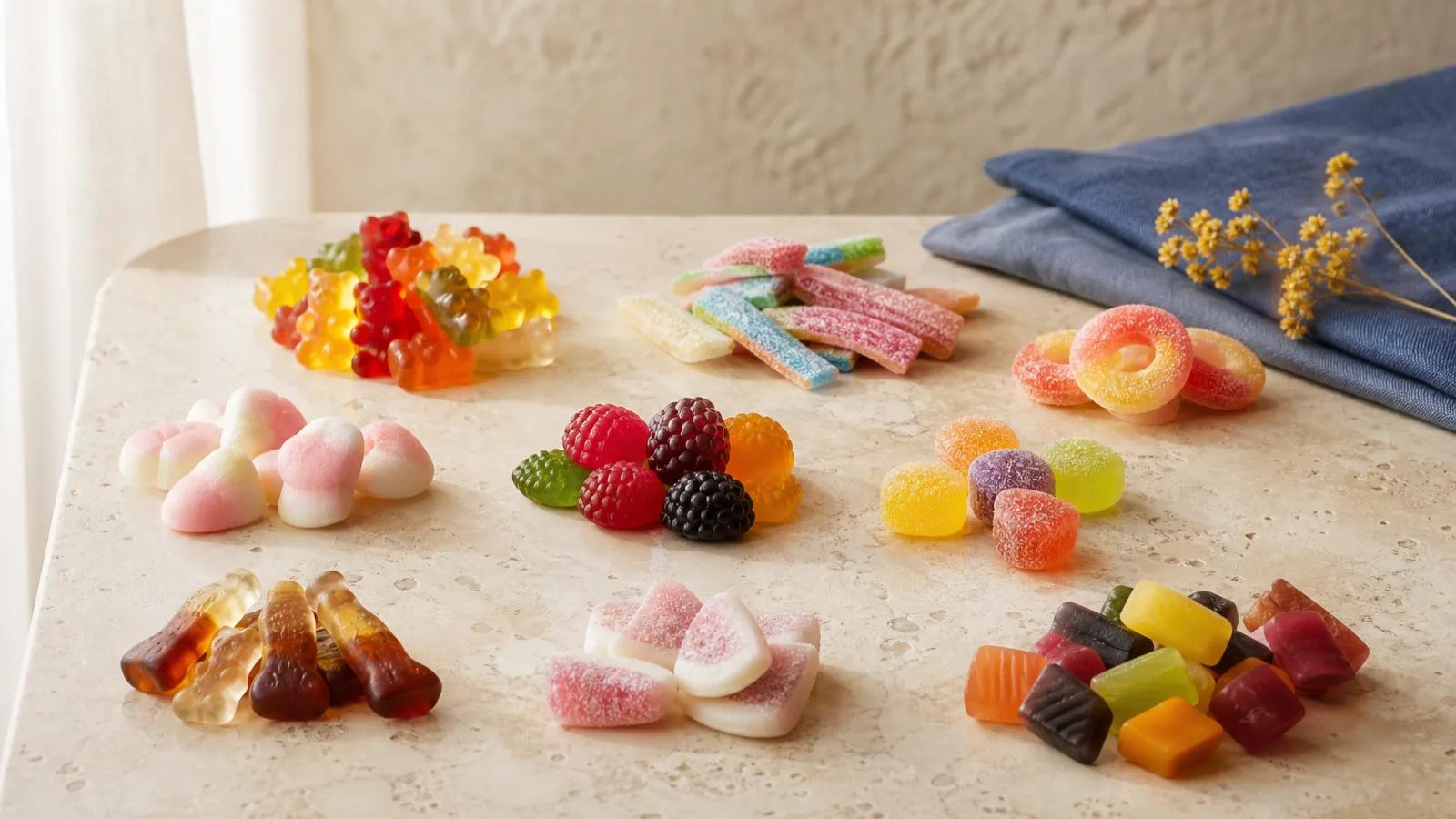
The gummy bear is German: Smithsonian Magazine calls Haribo's bears, dating to 1922, the world's first. Other countries built their own classics, including Sweden's foam cars, Norway's jelly men, wine gums in the Netherlands and Denmark, Spanish gummies and Italian marshmallow shapes. Japan's first gummy, Meiji says, arrived in 1980, and in Turkey, Hacı Bekir made lokum with starch.
Here is the country-by-country version, with a source for each date, links to our deeper country guides, and the international gummies we import by the case.
What changes from one country's gummy to the next?
Two differences are easy to check, one on the label and one on the shop floor:
- The gelling agent: Haribo's US Goldbears list gelatin as their third ingredient, while Hacı Bekir made lokum with starch (see Turkey below). Every BUBS case we import is tagged gelatin-free and vegan, and the ingredient lists we hold for them name corn starch.
- The way it is sold: Swedish shops sell lösgodis, loose candy scooped from bins and sold by weight, and Denmark has its own pick-and-mix, bland selv. One bag holds whatever mix of shapes the shopper picks.
What are the classic gummies, country by country?
Northern Europe
- Germany: Hans Riegel founded Haribo in Bonn in 1920 and launched the Dancing Bear in 1922, and the Goldbear followed in 1960, per Haribo. Our German candy guide covers MAOAM chews, Katjes licorice and Lübeck marzipan.
- The Netherlands: Walther Matthijs began developing licorice recipes at home on January 14, 1920, and the company added wine gums decades later. Matthijs, the maker of the skull gummies we stock, is based in the south of the Netherlands. More in our Dutch candy guide.
- Denmark: Haribo's Matador Mix, a bag of wine gums (vingummi), licorice and dragées, has been around since 1983. Our Danish candy guide covers Danish licorice and wine gums.
- Sweden: Ahlgrens bilar, foam cars in pink, green and off-white, came out of an attempt to make marshmallows at a factory in Gävle in 1953, Cloetta says. BUBS, whose foam candy we import, is Swedish too.
- Norway: Nidar dates its Laban jelly men to 1965. They were first made by Kiellands under the plain name Seigmenn and took the Laban name after a national naming competition in 1983, per Nidar. See our Norwegian candy guide.
- Finland: salmiakki, black licorice spiced with ammonium chloride, is a Finnish specialty with a vast fan base, This is Finland reports, sold as drops, lozenges and powder. Our Finnish candy guide explains the flavor. We do not import salmiak.
Southern Europe
- Spain: Vidal was founded in Molina de Segura, in Murcia, on November 18, 1963, and says it became the first Spanish company to make gummy candy industrially, in 1970. Our Spanish candy guide covers its XL pieces.
- Italy: Bulgari Agostino, based in Pavone Mella in the province of Brescia, has worked in confectionery in Italy since 1880 and specializes in marshmallow, from extruded pieces to 3D shapes. Our Italian candy guide covers the rest of Italy's sweets.
Beyond Europe
- United States: the Herman Goelitz Candy Company, now Jelly Belly, made the first American gummy bears in 1981, Smithsonian Magazine reports, and Haribo opened its first US office, in Baltimore, in the early 1980s.
- Japan: Meiji says it released Japan's first gummy candy, Cola Up, in 1980, and followed it with Juicy Gummy in 1988.
- Turkey: Hacı Bekir opened a small shop in Istanbul's Bahçekapı district in 1777, and the company credits him with improving lokum, or Turkish delight, by combining sugar with starch.
Which international gummies do we import?
Five of those countries are on our shelf, and the Tier 1 price for each is public on its product page.
- Sweden, BUBS Cool Fruity Pear: a 5.73 lb (2.6 kg) case, tagged gelatin-free, halal and vegan.
- The Netherlands, Matthijs Cola Skulls: a 4.41 lb (2 kg) bag, with a case of six on the same product page, tagged gluten-free, halal, vegan and vegetarian.
- Spain, Vidal XL Sour Watermelon: a 6.61 lb (3 kg) case. We hold no dietary tags or ingredient list for it, and its allergen statement lists wheat, soybeans and mustard.
- Italy, Bulgari Fruits: a 2.2 lb (1 kg) case. The ingredient list we hold names gelatine and pectin.
- Germany, Haribo Happy Chews: a 4.41 lb (2 kg) case. Strictly a chew rather than a gummy, from the MAOAM side of Haribo, and we hold no ingredient list for it.
Gummies from five countries we stock

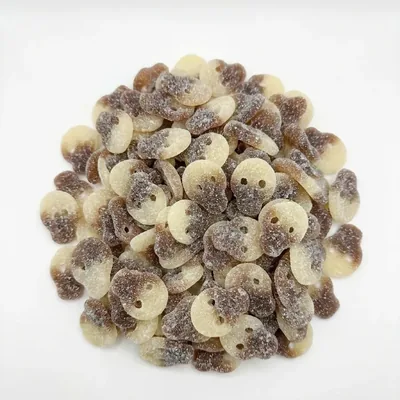

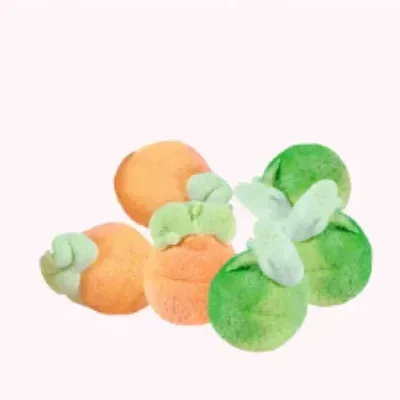
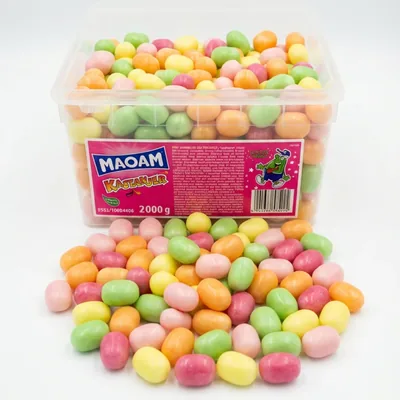
Our European candy guide shows how Swedish, Dutch, Spanish, Italian and German pieces share one pick-and-mix wall.
One way to taste your way around the world is a mixed case order. Browse the store, and keep the country guides above open while you pick.
Frequently asked questions
Who invented the gummy bear?+
Hans Riegel, the founder of Haribo. He started the company in Bonn, Germany, in 1920 and launched the Dancing Bear in 1922, a larger and slimmer ancestor of today's Goldbear, which followed in 1960. Smithsonian Magazine calls Haribo's bears the world's first gummy bears.
Which country makes the best gummies?+
That depends on what you like. Try Germany for the original gummy bear, Sweden for foam cars and other foam candy, the Netherlands and Denmark for wine gums, Spain for Vidal's gummies and Italy for Bulgari's marshmallow shapes. A mixed bag from several countries is the fairest test.
When did gummy bears come to the United States?+
American production started in 1981, when the Herman Goelitz Candy Company, now Jelly Belly, made the first gummy bears in America. Haribo opened its first US office, in Baltimore, in the early 1980s. Haribo's own first bear, the Dancing Bear, dates to 1922 in Germany.
Are gummies from other countries made with gelatin?+
Some are and some are not, so check the pack rather than the country. Haribo's US Goldbears list gelatin, and the Bulgari Fruits case we stock lists gelatine and pectin. Every BUBS case and the Matthijs Cola Skulls we stock are tagged vegan, and Hacı Bekir made lokum with starch.
Can I buy gummies from around the world wholesale?+
Yes, from five countries in one order, with a wholesale account that approves automatically. We stock Swedish, Dutch, Spanish, Italian and German lines, with Tier 1 prices public on every product page. Order by the case, mix and match, no order minimum. We ship from Santa Fe Springs, California, by UPS Ground or UPS Express in the US, and to Canada DDP in 3 to 5 business days.
Keep reading

Gustav Lindqvist · Candy Master
Gustav grew up in Sweden on a strict Saturday-candy schedule, mixing his lördagsgodis bag at the lösgodis wall before he could spell salmiak. He has spent years tasting his way across Scandinavian candy, and now curates the range at TheSweetsTruck, from BUBS sour skulls to the saltiest licorice most people cannot finish.
Last updated 9/29/2026